Why Do Hornbills Have Large Beaks
You've probably seen pictures of hornbills and thought, "Wow, what's up with that beak?" It's a totally fair question, because these birds sport some of the most distinctive and frankly enormous beaks in the animal kingdom. In our research, we found that this impressive feature isn't just for looks; it's a complex adaptation serving multiple vital functions for survival.
These large beaks, often crowned with a casque, are finely tuned tools. For instance, the size and vascularization of the casque have been shown to play a role in thermoregulation, with some studies suggesting it can help dissipate heat much like a radiator. Understanding precisely why hornbills have large beaks means diving into their unique ecological niche and evolutionary journey.
Quick Answer
Hornbills have large beaks primarily for foraging and feeding on fruits and other food items. The beak also acts as a tool for nest construction, thermoregulation by radiating heat, and amplifying vocalizations for communication. The distinctive casque atop the beak further aids in these functions and can serve as a visual display.
The Beak: Nature's Multi-Tool
The hornbill's beak is a prime example of evolutionary ingenuity. It's far more than just a tool for cracking seeds; it's a multi-functional appendage that influences nearly every aspect of a hornbill's life, from finding its next meal to raising its young. As of 2026, ornithological research continues to uncover the full extent of its capabilities.
Foraging and Feeding
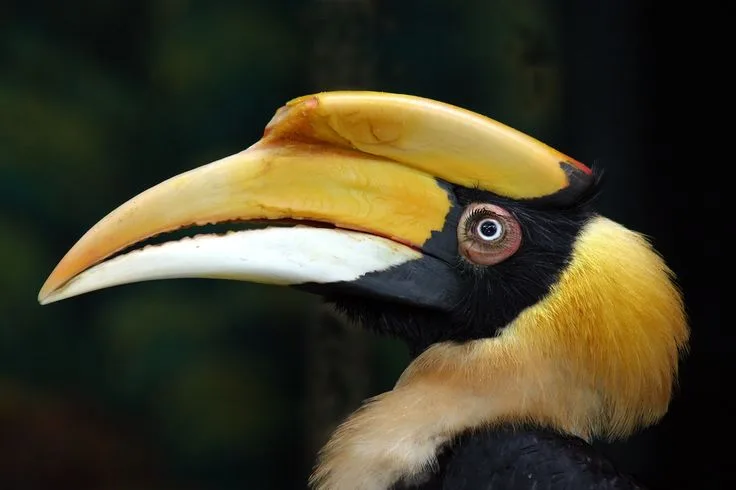
Let's start with the most obvious function: eating. Hornbills are often fruit-eaters, and their large, curved beaks are perfectly suited for reaching, plucking, and manipulating large fruits that smaller birds simply couldn't handle. They can use the tip of the beak to detach a fruit and then toss it back into their throat to swallow whole.
This efficiency is crucial for birds that rely heavily on fruit, which can be bulky and sometimes awkwardly shaped. Beyond fruit, their beaks are also used to capture insects, small reptiles, and even other small animals, demonstrating their versatility as a predatory tool.
Nesting and Protection
This is where the hornbill's beak gets really fascinating, especially for certain species. Many hornbills nest in tree cavities. In some species, like the Great Hornbill, the female seals herself inside the cavity for the entire nesting period, leaving only a narrow slit for the male to pass food through.
The female uses mud, food, and droppings to reinforce the walls of the cavity from the inside, creating a secure, almost fortress-like environment for her eggs and chicks. Her beak is essential for this construction and maintenance, acting as a trowel and builder's tool.
Staying Cool and Communicating
Birds, lacking sweat glands, need efficient ways to regulate their body temperature. Research suggests that the hornbill's large beak, with its extensive network of blood vessels, acts as a radiator. When the bird feels overheated, blood can be directed into the beak, allowing heat to dissipate into the surrounding air.
This natural air-conditioning system is vital in warm, tropical climates where hornbills typically live. Furthermore, the casque, the bony structure on top of the beak, can resonate and amplify the bird's calls. Different casque shapes can alter the sound, allowing for distinct vocalizations used for territorial warnings, mating displays, or simply staying in touch with their flock.
Casque: More Than Just Decoration
The casque is that prominent, often colorful structure that sits atop the hornbill's upper mandible. It's not merely an ornamental feature; it plays several critical roles. For some species, like the Rhinoceros Hornbill, the casque is relatively lightweight and hollow, primarily contributing to sound amplification and visual display.
For others, like the Great Hornbill, the casque is solid and significantly heavier, potentially aiding in defense or even in combat between males. The casque's structure and size vary widely among species, indicating specialized evolutionary pressures and functions unique to each. Its presence certainly makes a hornbill stand out.
Variety in Size and Shape
You might assume all hornbills look alike, but a closer look reveals incredible diversity in their beaks and casques. This variation is directly linked to their specific ecological niches and diets. For example, the terrestrial-dwelling Ground Hornbill has a more flattened, less elaborate beak designed for foraging on the ground for insects, small mammals, and reptiles.
In contrast, arboreal species that feed on large fruits often possess larger, more curved beaks, and some have dramatically sized casques. This biological tailoring ensures each species is optimally equipped for its particular way of life and the resources available in its habitat.
Hornbill Beaks in Action: Real-World Use
The practical applications of a hornbill's large beak are best understood by observing them in their natural environment. These aren't abstract biological theories; they are functions that directly contribute to survival and successful reproduction. For instance, you'll see hornbills using their beaks to carefully select ripe fruit, avoiding unripe or overripe specimens that might be less nutritious or even harmful.
When a hornbill targets a particular fruit, its beak allows for precise plucking without damaging surrounding foliage unnecessarily. This careful foraging not only benefits the bird but can also play a role in seed dispersal, an important ecological function. Similarly, during nesting, the beak's role in reinforcing the cavity is a critical behavior that protects vulnerable chicks from predators and the elements.
Frequently Asked Questions About Hornbill Beaks
Why are hornbill beaks so large?
Hornbills have large beaks for a variety of essential reasons, including efficient foraging of fruits and other food items, building and reinforcing their nests, regulating body temperature by radiating heat, and amplifying their calls for communication.
Is the casque on a hornbill's beak heavy?
The weight and composition of the casque vary by species. Some casques, like those on the Great Hornbill, are solid and can be quite heavy, potentially used in male-male competition. Others, such as those on the Rhinoceros Hornbill, are lighter and more hollow, primarily serving sound amplification and display functions.
Do all hornbill species have a casque?
No, not all hornbill species possess a prominent casque. While many do, the size, shape, and prominence of the casque differ significantly across species, correlating with their specific ecological roles and behaviors. Some ground-dwelling hornbills have much less developed casques.