How Do Flamingos Feed Underwater
Have you ever watched a flamingo and wondered how they manage to eat with their heads stuck in the mud? It's a pretty unique feeding strategy that looks a bit strange but is incredibly effective for finding food in shallow waters. Understanding how flamingos feed underwater reveals a masterful adaptation in avian biology.
These birds are masters of their environment, using a specialized beak and filtering system to extract tiny food particles from murky depths. Our research indicates that this method allows them to consume a significant amount of food, as much as 20% of their body weight daily. Let's break down this fascinating process.
Quick Answer
Flamingos feed underwater by flipping their heads upside down and using their specialized beaks like a sieve. They scoop mud and water, then use their muscular tongues to pump the mixture through comb-like filters inside their beaks, trapping tiny organisms and expelling the water and mud. This unique filtering action allows them to feed efficiently in shallow, muddy aquatic environments.
How Flamingos Filter Feed: The Beak's Secret
The real star of the show when it comes to flamingo feeding is their beak. It's not like any other bird's beak; it's been specifically engineered by nature for filter feeding. When a flamingo dips its head underwater, it flips its beak so that the upper mandible is at the bottom, and the lower mandible is on top.
This upside-down position is crucial for their feeding technique.
The beak itself has a curved shape that helps to scoop up a large volume of water and sediment. Imagine trying to scoop soup with a spoon held upside down, it doesn't work. But for a flamingo, this orientation is key to collecting the right mix of water, mud, and their preferred food sources.
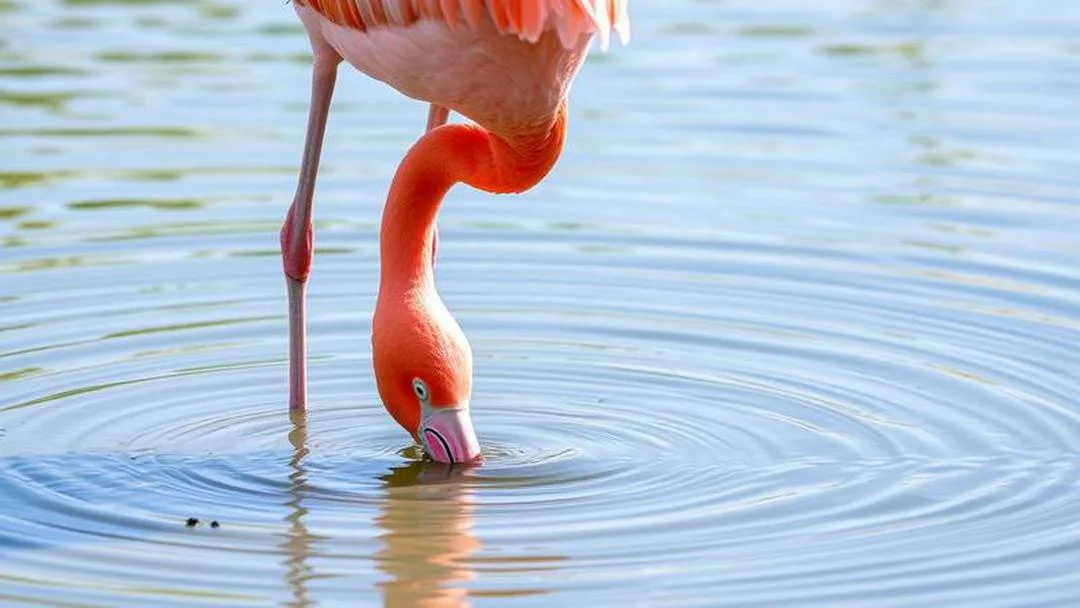
Image source: Bing (Web (fair-use with source credit))
This unique beak structure, combined with the filtering system inside, allows flamingos to process vast amounts of water to get just enough nutrients. It's a highly efficient, albeit visually unusual, way to forage.
Lamellae: The Tiny Filtering Wonders
Inside a flamingo's beak, you'll find a series of comb-like structures called lamellae. These are the unsung heroes of their feeding strategy. They line the edges of both the upper and lower mandibles and act like a very fine sieve.
The lamellae are made of keratin, the same material that makes up our fingernails and hair. They are densely packed, creating a barrier that prevents larger particles from passing through while allowing water and smaller food items to be filtered.
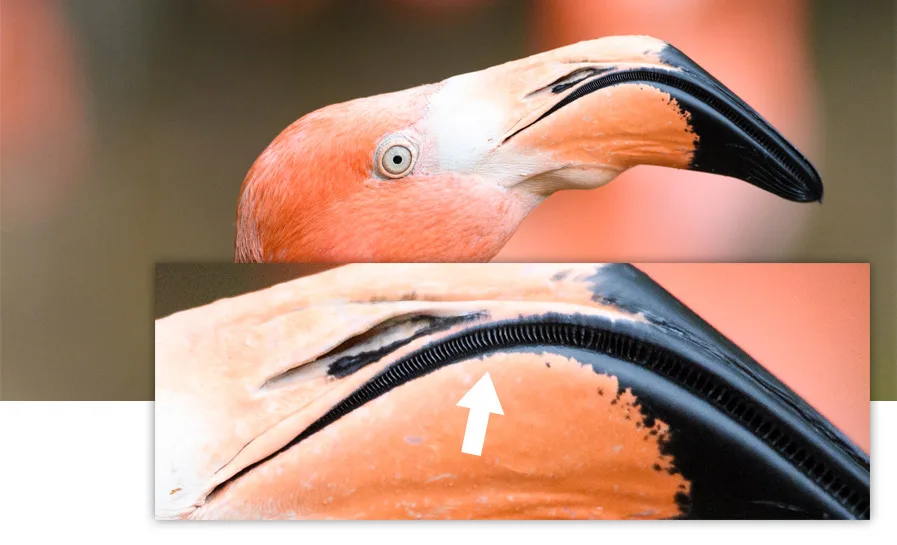
Image source: Bing (Web (fair-use with source credit))
These structures are incredibly effective, allowing flamingos to filter out algae, brine shrimp, small insects, mollusks, and other tiny aquatic organisms that form their diet. Without the lamellae, the flamingo's beak would just be a scoop, unable to separate food from mud and water. The precise number and arrangement of these filtering structures can vary slightly between flamingo species, adapting them to different food sources and environments.
The Tongue's Crucial Pumping Role
While the beak and lamellae are vital, the flamingo's tongue plays an equally important, active role in filter feeding. It's not just a passive element; it's a thick, muscular organ that acts like a piston.
When a flamingo takes a mouthful of mud and water, it rapidly moves its tongue back and forth. This pumping action forces the water and mud through the lamellae. Think of it like a high-pressure pump system designed for a very specific task.

Image source: Bing (Web (fair-use with source credit))
The tongue's movement is quick and powerful, ensuring that all the water is expelled and the trapped food particles remain within the beak. This continuous pumping is what allows flamingos to process large volumes of water very efficiently, making their feeding behavior a marvel of biological engineering.
What They're Actually Eating Underwater
You might be surprised by the diet of a flamingo. Despite their large size, they are primarily filter feeders, subsisting on tiny organisms found in the mud and shallow water. Their vibrant pink or reddish color actually comes from the pigments (carotenoids) found in the algae and crustaceans they consume.
Their typical menu includes:
- Algae: Various types of blue-green algae and diatoms are a staple.
- Brine Shrimp: These small crustaceans are a favorite food source and are rich in the pigments that color flamingos.
- Small Insects and Larvae: They'll scoop up insect eggs, larvae, and other small invertebrates living in the sediment.
- Mollusks and Worms: Tiny snails, bivalves, and aquatic worms are also on the menu.
The ability to filter these small food items from large quantities of mud and water is what makes their specialized feeding mechanism so successful. They're not hunting large prey; they're sifting through the very substrate of their aquatic homes.
Why This Feeding Method Works So Well
The flamingo's upside-down filter-feeding strategy is a brilliant example of evolutionary adaptation. It's perfectly suited to the types of habitats they inhabit, shallow lagoons, salt lakes, and estuaries that are often rich in microscopic life but can be murky and sediment-laden.
Here’s why it’s so effective:
- Access to Niche Food Sources: By filtering, they can access food that is unavailable to birds with more conventional beaks. This reduces competition for resources.
- Efficient Processing: The combination of the beak shape, lamellae, and tongue action allows them to process significant volumes of water quickly, maximizing their intake of small food particles.
- Habitat Specialization: It allows them to thrive in environments that might be challenging for other species, turning mud and water into a buffet.
This method means they can spend a lot of their day foraging, ensuring they get enough calories. For instance, studies published by ornithological research groups indicate that some flamingo species can filter over a cubic meter of water per day to obtain sufficient nutrients.
Real-World Feeding Scenarios
Imagine a flock of flamingos wading in a shallow saltwater lagoon. They'll often feed in large groups, which can offer some protection from predators, and it also means they are all stirring up the sediment, making more food accessible.
When feeding, they might move their heads back and forth, shifting their position in the water to comb through different areas. Sometimes, they'll even walk slowly, using their feet to stir up the bottom and dislodge food particles.
In muddy, shallow areas, you'll see them with their heads completely submerged, with only the back of their necks and their bodies visible above the water. They might stand on one leg to keep the other leg free to stir the mud or to conserve body heat.
If they are in an area with more sediment than water, their feeding action becomes more about sifting through the mud. The tongue works extra hard to push the muck through the lamellae, leaving behind any tiny creatures or organic matter trapped within. This sustained effort is essential for their survival, as they can spend up to a quarter of their day engaged in this feeding process.
Frequently Asked Questions About Flamingo Feeding
What do flamingos eat in the water?
Flamingos primarily eat algae, brine shrimp, small insects, larvae, mollusks, and tiny worms. Their diet consists of small aquatic organisms filtered from the mud and water.
How do flamingos find food underwater?
They find food by scooping up mud and water with their specially adapted beaks and then filtering out the edible particles. Their thick tongues help pump the mixture through filtering lamellae in their beaks.
Can flamingos breathe while feeding underwater?
No, flamingos cannot breathe while their heads are submerged and their beaks are filtering. They must hold their breath while feeding underwater and then resurface to breathe.
Why do flamingos feed with their heads upside down?
They feed upside down because their beak structure is designed for filter feeding in this orientation. The larger lower mandible scoops the mud and water, and the lamellae inside filter the food effectively in this position.
How much do flamingos eat daily?
Flamingos need to eat a substantial amount to sustain themselves, consuming as much as 20% of their body weight daily due to the low concentration of food in their diet.