Why Can Albatrosses Fly so Far
You've probably seen them, those incredible seabirds that seem to hang in the air for hours, covering vast distances over the ocean without a visible effort. If you've ever wondered why can albatrosses fly so far, the answer lies in a perfect marriage of specialized anatomy and a deep understanding of wind physics. They aren't just born with stamina; they've evolved a unique way to harness the environment.
These ocean wanderers can travel over 10,000 miles in a single year, with some journeys logged exceeding 1,000 miles in just one go. This remarkable feat is largely thanks to their exceptionally adapted wings and a technique called dynamic soaring, a method of flight that allows them to gain energy from wind gradients.
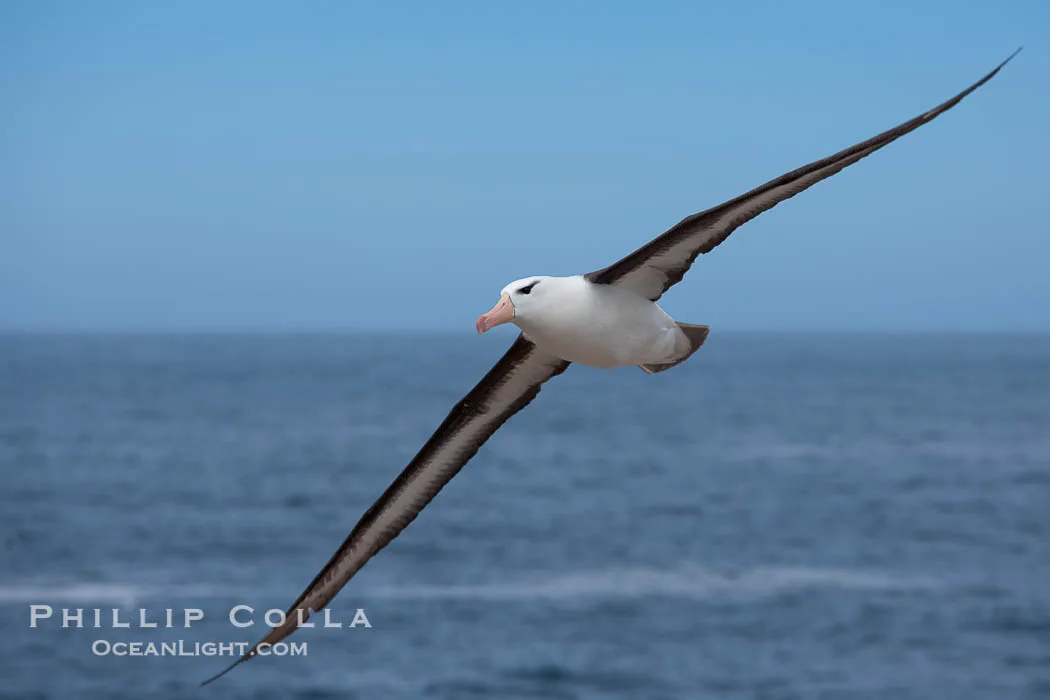
Image source: Bing (Web (fair-use with source credit))
Quick Answer
Albatrosses fly so far due to their massive, long, and slender wings combined with dynamic soaring. This technique uses wind speed differences above the ocean to gain energy. They descend into faster winds, turn upwind near the water, and climb using the gained momentum, requiring minimal flapping.
Albatross Wings: Nature's Secret to Miles of Flight
You've probably seen them, those incredible seabirds that seem to hang in the air for hours, covering vast distances over the ocean without a visible effort. If you've ever wondered why can albatrosses fly so far, the answer lies in a perfect marriage of specialized anatomy and a deep understanding of wind physics. They aren't just born with stamina; they've evolved a unique way to harness the environment.
These ocean wanderers can travel over 10,000 miles in a single year, with some journeys logged exceeding 1,000 miles in just one go. This remarkable feat is largely thanks to their exceptionally adapted wings and a technique called dynamic soaring, a method of flight that allows them to gain energy from wind gradients.
Image source: Bing (Web (fair-use with source credit))
Quick Answer
Albatrosses fly so far due to their massive, long, and slender wings combined with dynamic soaring. This technique uses wind speed differences above the ocean to gain energy. They descend into faster winds, turn upwind near the water, and climb using the gained momentum, requiring minimal flapping.
The Physics of Effortless Gliding: How Albatrosses Stay Airborne
When we talk about why albatrosses can cover such immense distances, we're really talking about efficient energy management. Unlike many birds that rely on constant flapping to generate lift and thrust, albatrosses are masters of gliding. Their entire physiology is geared towards staying aloft with the least amount of effort possible, which is crucial for a life spent foraging over the open ocean where food can be scarce and spread out.
This ability isn't just about having big wings; it's about the type of big wings and how they're used. The principles at play are rooted in aerodynamics, the science of how air moves around solid objects. For albatrosses, this translates into a flight style that's more akin to a glider pilot expertly using thermals than a racehorse running a marathon.
Wing Shape: Long, Slender, and Aerodynamic
The most striking feature of an albatross is its enormous wingspan. These can reach up to 11 feet (3.5 meters) in some species, the largest of any bird alive. But it's not just the size; their shape is key.
- High Aspect Ratio: Albatross wings are long and very narrow, a characteristic known as a high aspect ratio. Think of a long, thin ruler versus a short, wide one. This shape is incredibly efficient for gliding. It minimizes induced drag, a type of drag created by the wingtips as air flows from the high-pressure underside to the low-pressure top.
- Reduced Drag: The slender design slices through the air with less resistance. This means they can travel further on the same amount of momentum compared to birds with shorter, broader wings.
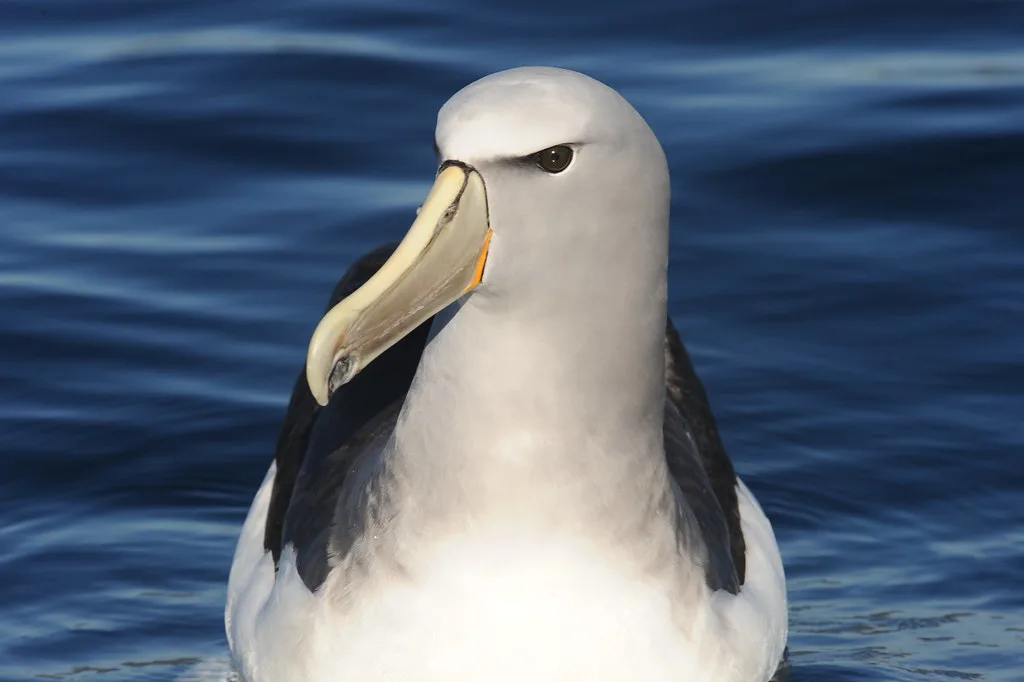
Image source: Bing (Web (fair-use with source credit))
Dynamic Soaring: Surfing the Wind for Energy
This is the most ingenious part of their long-distance flight. Dynamic soaring is a specialized technique where the albatross uses the wind gradient, the difference in wind speed at different heights above the ocean surface, to gain energy. It’s a continuous cycle that allows them to stay airborne for days, even weeks, without needing to flap their wings for propulsion.
The process looks like this: the bird flies downwind, gaining speed as it descends. Near the water's surface, where the wind is slower due to friction, it turns into the wind. Using the speed it generated and the difference in wind speed between higher altitudes and the surface, it generates lift and climbs back up.
This cycle repeats, effectively using the wind's energy to propel itself forward and upward.
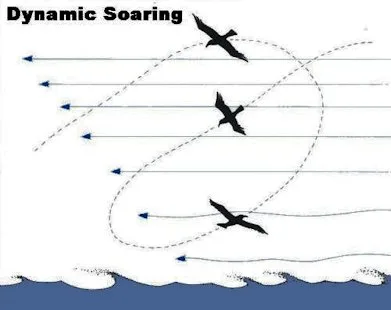
Image source: Bing (Web (fair-use with source credit))
How Albatrosses Use Wind Gradients
The ability of albatrosses to undertake such extensive journeys hinges on their mastery of dynamic soaring. This technique isn't just a passive glide; it's an active exploitation of a natural phenomenon. The ocean surface creates a zone of slower-moving air due to friction, while winds higher up move much faster.
Albatrosses have evolved to leverage this difference with remarkable precision.
Their flight path isn't a simple straight line; it's a series of swooping turns and climbs designed to maximize energy gain from these wind variations. By understanding and utilizing these gradients, they can achieve incredible flight efficiency, making long-distance travel sustainable.
The Downwind Descent and Speed Gain
The cycle of dynamic soaring begins with the albatross flying downwind, essentially letting the wind push it along. As the bird descends from higher altitudes towards the ocean surface, it enters progressively faster wind speeds. This increase in relative wind speed translates directly into an increase in the bird's own airspeed.
Think of it like a car going downhill, gravity helps it pick up speed. For the albatross, it's the wind gradient providing the accelerating force. This gained speed is critical for the next stage of the maneuver, providing the momentum needed to climb.
The Upwind Turn and Energy Capture
Once the albatross has descended into the faster downwind flow and built up considerable airspeed, it performs a sharp turn, typically heading into the wind. This is where the magic happens. As it turns and begins to climb, it moves from the faster wind layer near the surface into the slower wind layer higher up.
The bird's wings are angled to take advantage of this change. The difference in airspeed between the air it's moving through and the air it's climbing into generates a powerful lifting force. This lift, combined with the stored kinetic energy from its downwind descent, allows it to gain significant altitude.
It's this captured energy that fuels its subsequent downwind glide, completing the cycle.
Why This Flight Style Matters for Albatrosses
The entire lifestyle of an albatross is shaped by its unique flight capabilities. Their reliance on dynamic soaring dictates where they live, how they find food, and their incredible migratory patterns. This specialized form of locomotion is not just a neat trick; it's the fundamental reason they can thrive in the vast, often food-scarce expanses of the world's oceans.
Without this energy-efficient method, their existence would be impossible. The ability to glide for hours, even days, with minimal effort allows them to cover the immense distances required to find enough sustenance to survive and reproduce.
Covering Vast Oceanic Distances
The most obvious benefit of dynamic soaring is the ability to traverse immense distances. Albatrosses are pelagic birds, meaning they spend most of their lives far out at sea, rarely coming ashore except to breed. Their foraging trips can take them thousands of miles from their nesting colonies.
This extended range is essential because their prey, such as fish and squid, are often patchily distributed across the ocean. Dynamic soaring allows them to efficiently cover large areas in search of these food sources, ensuring they can find enough to eat without burning excessive energy.
Conserving Energy on Long Journeys
Flapping flight is incredibly demanding. For a bird the size of an albatross, flapping continuously would require a massive caloric intake, which would be difficult to sustain given their oceanic habitat. Dynamic soaring, however, is remarkably energy-efficient.
By utilizing the wind's energy, they can travel for days with little to no flapping. This conservation of energy means they can dedicate their metabolic resources to other vital functions, like digestion, growth, and reproduction. It’s this ability to minimize energy expenditure that makes their marathon flights not just possible, but sustainable.
Visualizing Albatross Flight: Key Identifiers
Understanding how albatrosses fly so far isn't just about knowing the physics; it's also about recognizing the visual cues that demonstrate their unique capabilities. When you observe an albatross in flight, several key features stand out that point directly to their specialized adaptations. These visual markers help explain their endurance and efficiency over the vast ocean.
Think of it like identifying a high-performance sailing yacht compared to a rowboat. You can see the differences in design that indicate their purpose and capabilities. For albatrosses, their physical traits are clear indicators of their mastery of long-distance aerial travel.
- The Gigantic Wingspan: The most obvious feature is their wingspan, which is disproportionately large compared to their body size. For example, the Wandering Albatross can have a wingspan exceeding 11 feet (3.5 meters). This expansive wing surface is designed for maximum lift with minimal drag.
- Wing Shape and Stance: Their wings are long, narrow, and stiff, held rigidly outstretched. They rarely flap these wings, unlike many other birds. Instead, they are held in a slight 'dihedral' angle (angled slightly upward from the body) which provides stability during their wind-riding maneuvers.
- Low-Altitude Gliding: You'll often see them flying low over the water, tracing the contours of the waves. This close proximity to the surface is crucial for dynamic soaring, as it allows them to effectively exploit the wind gradient.
- Effortless Gliding: The defining characteristic is the appearance of effortless flight. They seem to hang suspended, making graceful arcs and turns without apparent exertion. This contrasts sharply with the more labored, flapping flight of other seabirds.
Common Misconceptions About Albatross Flight
Even with the amazing adaptations of albatrosses, some common misunderstandings about their flight persist. People often assume their long flights are purely about endurance, like a marathon runner, or that they simply have incredibly strong muscles for constant flapping. However, the reality is far more nuanced and relies heavily on leveraging their environment.
It's easy to fall into the trap of thinking their flight is simply an extension of what we observe in more common birds. But the albatross has evolved a fundamentally different approach to aerial locomotion that bypasses the need for relentless flapping.
- Myth: They flap constantly for thousands of miles.
The reality is that albatrosses flap very little during their long-distance foraging flights. Their primary method is dynamic soaring, which uses wind energy. Flapping is usually reserved for takeoff, landing, or maneuvering in specific conditions.
- Myth: Their flight is solely due to extreme physical endurance.
While they are certainly fit, their ability to fly far isn't just about having a powerful heart and lungs. It's about the efficiency of their wings and their skill in utilizing wind gradients. It's a technique, not just brute strength.
- Myth: They can fly anywhere, anytime.
Dynamic soaring requires specific wind conditions. While albatrosses are adapted to the open ocean, their flight patterns and efficiency can be affected by weather systems and wind speeds. They are masters of the prevailing winds, not omnipotent flyers.
Frequently Asked Questions About Albatross Flight
Why are albatross wings so long?
Albatross wings are long and slender, giving them a high aspect ratio. This shape is aerodynamically efficient for gliding, reducing drag and allowing them to stay airborne for extended periods with minimal effort.
How do albatrosses generate lift without flapping much?
They use a technique called dynamic soaring. This involves using the difference in wind speed between higher altitudes and the slower wind near the ocean surface to gain energy and lift.
Can albatrosses take off from land easily?
Taking off from land can be challenging for albatrosses due to their large wingspans and the need for a running start to generate enough speed for lift. They typically nest on open islands or coastlines where this is possible.
Do albatrosses sleep while flying?
While not fully understood, it's believed that albatrosses can enter a state of unihemispheric slow-wave sleep, where one half of their brain rests while the other remains alert. This allows them to conserve energy during their long periods at sea.
What do albatrosses eat?
Albatrosses primarily feed on squid, fish, and krill, which they catch by surface-seizing or shallow dives. Their extensive flight capabilities are essential for locating these often dispersed food sources across vast ocean territories.
The Physics of Effortless Gliding: How Albatrosses Stay Airborne
When we talk about why albatrosses can cover such immense distances, we're really talking about efficient energy management. Their entire physiology is geared towards staying aloft with the least amount of effort possible, which is crucial for a life spent foraging over the open ocean where food can be scarce and spread out.
This ability isn't just about having big wings; it's about the type of big wings and how they're used. The principles at play are rooted in aerodynamics, the science of how air moves around solid objects. For albatrosses, this translates into a flight style that's more akin to a glider pilot expertly using thermals than a racehorse running a marathon.
Wing Shape: Long, Slender, and Aerodynamic
The most striking feature of an albatross is its enormous wingspan. These can reach up to 11 feet (3.5 meters) in some species, the largest of any bird alive. But it's not just the size; their shape is key.
- High Aspect Ratio: Albatross wings are long and very narrow, a characteristic known as a high aspect ratio. Think of a long, thin ruler versus a short, wide one. This shape is incredibly efficient for gliding. It minimizes induced drag, a type of drag created by the wingtips as air flows from the high-pressure underside to the low-pressure top.
- Reduced Drag: The slender design slices through the air with less resistance. This means they can travel further on the same amount of momentum compared to birds with shorter, broader wings.
Image source: Bing (Web (fair-use with source credit))
Dynamic Soaring: Surfing the Wind for Energy
This is the most ingenious part of their long-distance flight. Dynamic soaring is a specialized technique where the albatross uses the wind gradient, the difference in wind speed at different heights above the ocean surface, to gain energy. It’s a continuous cycle that allows them to stay airborne for days, even weeks, without needing to flap their wings for propulsion.
The process looks like this: the bird flies downwind, gaining speed as it descends. Near the water's surface, where the wind is slower due to friction, it turns into the wind. Using the speed it generated and the difference in wind speed between higher altitudes and the surface, it generates lift and climbs back up.
This cycle repeats, effectively using the wind's energy to propel itself forward and upward.
Image source: Bing (Web (fair-use with source credit))
How Albatrosses Use Wind Gradients
The ability of albatrosses to undertake such extensive journeys hinges on their mastery of dynamic soaring. This technique isn't just a passive glide; it's an active exploitation of a natural phenomenon. The ocean surface creates a zone of slower-moving air due to friction, while winds higher up move much faster.
Albatrosses have evolved to leverage this difference with remarkable precision.
Their flight path isn't a simple straight line; it's a series of swooping turns and climbs designed to maximize energy gain from these wind variations. By understanding and utilizing these gradients, they can achieve incredible flight efficiency, making long-distance travel sustainable.
The Downwind Descent and Speed Gain
The cycle of dynamic soaring begins with the albatross flying downwind, essentially letting the wind push it along. As the bird descends from higher altitudes towards the ocean surface, it enters progressively faster wind speeds. This increase in relative wind speed translates directly into an increase in the bird's own airspeed.
Think of it like a car going downhill, gravity helps it pick up speed. For the albatross, it's the wind gradient providing the accelerating force. This gained speed is critical for the next stage of the maneuver, providing the momentum needed to climb.
The Upwind Turn and Energy Capture
Once the albatross has descended into the faster downwind flow and built up considerable airspeed, it performs a sharp turn, typically heading into the wind. This is where the magic happens. As it turns and begins to climb, it moves from the faster wind layer near the surface into the slower wind layer higher up.
The bird's wings are angled to take advantage of this change. The difference in airspeed between the air it's moving through and the air it's climbing into generates a powerful lifting force. This lift, combined with the stored kinetic energy from its downwind descent, allows it to gain altitude.
It's this captured energy that fuels its subsequent downwind glide, completing the cycle.
Why This Flight Style Matters for Albatrosses
The entire lifestyle of an albatross is shaped by its unique flight capabilities. Their reliance on dynamic soaring dictates where they live, how they find food, and their incredible migratory patterns. This specialized form of locomotion is not just a neat trick; it's the fundamental reason they can thrive in the vast, often food-scarce expanses of the world's oceans.
Without this energy-efficient method, their existence would be impossible. The ability to glide for hours, even days, with minimal effort allows them to cover the immense distances required to find enough sustenance to survive and reproduce.
Covering Vast Oceanic Distances
The most obvious benefit of dynamic soaring is the ability to traverse immense distances. Albatrosses are pelagic birds, meaning they spend most of their lives far out at sea, rarely coming ashore except to breed. Their foraging trips can take them thousands of miles from their nesting colonies.
This extended range is essential because their prey, such as fish and squid, are often patchily distributed across the ocean. Dynamic soaring allows them to efficiently cover large areas in search of these food sources, ensuring they can find enough to eat without burning excessive energy.
Conserving Energy on Long Journeys
Flapping flight is incredibly demanding. For a bird the size of an albatross, flapping continuously would require a massive caloric intake, which would be difficult to sustain given their oceanic habitat. Dynamic soaring, however, is remarkably energy-efficient.
By utilizing the wind's energy, they can travel for days with little to no flapping. This conservation of energy means they can dedicate their metabolic resources to other vital functions, like digestion, growth, and reproduction. It’s this ability to minimize energy expenditure that makes their marathon flights not just possible, but sustainable.