Where Do Ospreys Build Nests
Curious about where ospreys choose to build their massive nests? These fascinating birds of prey have specific requirements, prioritizing height, safety, and immediate access to their primary food source: fish. Understanding their nesting habits helps us appreciate their ecological role and how they've adapted to various environments.
Our research shows that ospreys look for elevated, stable platforms near abundant water bodies, often favoring man-made structures over natural ones. For instance, according to the National Wildlife Federation, many ospreys will readily nest on specially designed platforms, which can significantly improve their breeding success by offering a secure and accessible home.
Quick Answer
Ospreys build nests on high, stable structures near water. They prefer elevated spots like utility poles, channel markers, tall trees, or man-made platforms. Proximity to fish is essential for survival.
What Makes a Good Osprey Nest Spot?
When an osprey is on the hunt for a place to build its home, it's not just picking a spot at random. There are a few really crucial factors that go into their decision-making process. Think of it as their checklist for prime real estate.
The absolute top priority is height. Ospreys need to be up high for a couple of big reasons. First, it gives them an incredible vantage point to scan the water below for fish, their main meal.
Second, that elevation acts as a natural defense, helping them spot approaching predators like raccoons or large birds of prey. It’s all about keeping their precious eggs and hungry chicks safe.
The Big Three: Height, Water, and Stability
Beyond just being high up, a good osprey nesting site needs a few more things to tick all the boxes.
- Proximity to Water: This is non-negotiable. Ospreys are specialized fishing birds, so they need to live within easy flying distance of a reliable source of fish. We're talking lakes, rivers, reservoirs, or coastal waters. The closer the water, the less energy they expend flying back and forth, which is vital, especially when feeding young.
- Stable Platform: Osprey nests are enormous. We're talking structures that can be several feet wide and weigh hundreds of pounds, sometimes even more. The foundation has to be incredibly sturdy to support this massive weight, especially during strong winds or storms. A wobbly or weak base simply won't do.
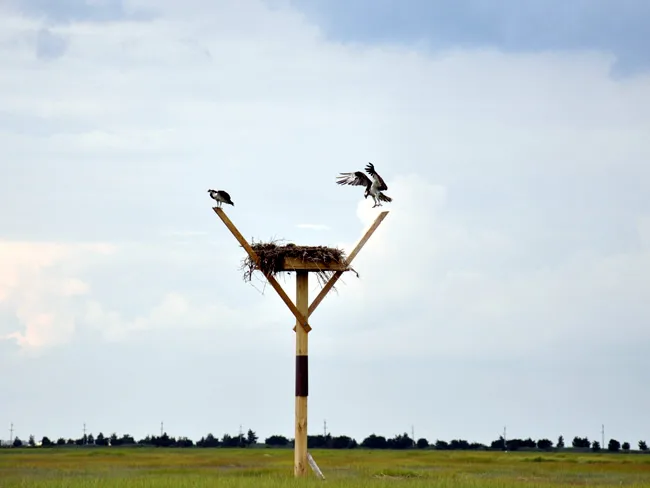
Image source: Bing (Web (fair-use with source credit))
Common Osprey Nest Locations
So, where do you typically find these ideal conditions coming together? Ospreys have shown a remarkable adaptability, and over time, they've become quite fond of nesting in places that might surprise you.
Favorite Man-Made Perches
In many areas, especially those with a lot of human activity, ospreys have increasingly turned to man-made structures for their nesting needs. These spots often provide the perfect combination of height, stability, and an unobstructed view.
- Utility Poles: These are incredibly popular. Power companies often install nesting platforms on top of utility poles specifically to accommodate ospreys, reducing the risk of bird-related power outages and providing a safe haven for the birds.
- Channel Markers and Buoys: In navigable waterways, these markers provide a consistent, elevated, and often isolated spot above the water.
- Docks and Pilings: Especially in coastal regions or along large lakes, the sturdy structures of docks and pilings offer excellent nesting opportunities.
- Church Steeples and Silos: In rural settings, these tall structures can serve as impromptu nesting sites if they offer the right attributes.
- Water Towers: Another tall, prominent structure that can attract nesting ospreys.
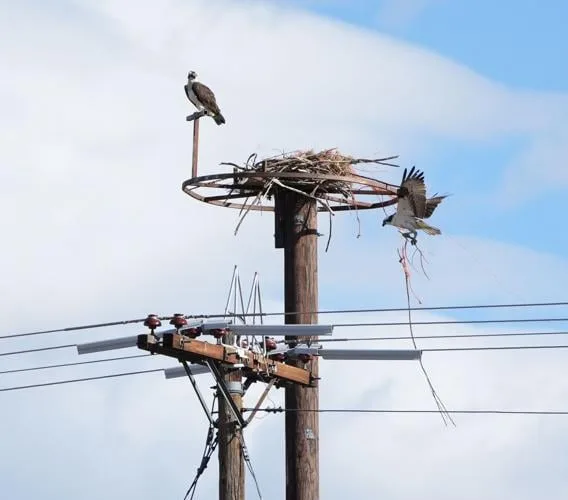
Image source: Bing (Web (fair-use with source credit))
Natural Spots Ospreys Prefer
While man-made structures are a big hit, ospreys still utilize natural locations when available and suitable. These often require specific conditions within the natural landscape.
- Tall Trees: Ospreys often favor dead or dying trees that have lost some branches, creating a natural platform. They usually prefer trees that are relatively isolated and offer a clear flight path to the water. Their nests can become so large they sometimes cause the tree to break or fall.
- Cliffs and Rock Ledges: In coastal areas or near canyons, ospreys might build on secure, inaccessible ledges.
- Cattail or Reed Beds (Rare): In a few specific environments, ospreys have been documented building on exceptionally large and dense clumps of cattails or reeds, though these are less stable than other options.
What Makes a Nest Sturdy?
The sheer size and weight of an osprey nest mean that the foundation is everything. A nest can be built up over years, with the birds adding more material each season. This means it needs to withstand not only the elements but also the cumulative weight of many years of construction.
Materials and Construction
Ospreys are industrious builders. They gather large quantities of sticks and twigs, weaving them together with a variety of other materials they find. This can include:
- Sticks and Twigs: The primary building material, often gathered from nearby trees.
- Seaweed and Grasses: Common in coastal areas, providing flexibility and binding.
- Reeds and Mud: Used to fill gaps and add stability.
- Fishing Line and Plastic Debris: Unfortunately, ospreys sometimes incorporate man-made litter into their nests, which can pose entanglement risks.
- Feathers and Down: Used to line the inner cup of the nest for comfort.
The construction process is ongoing. Each year, the returning ospreys will repair and add to their existing nest, making it larger and more substantial. This consistent expansion is what leads to those impressive, sometimes tree-breaking, dimensions.
Why Seeing is Believing: Visual Cues for Osprey Nests
When you're trying to spot an osprey nest, your eyes are your best tool, but knowing what to look for makes all the difference. It's less about a perfect, manicured structure and more about identifying those key attributes that signal an osprey has been busy.
Imagine looking at a tall utility pole. If you see a massive, messy bundle of sticks perched right on top, that's a strong clue. It won't look like a tidy birdhouse; it's usually a sprawling, bowl-shaped construction that's easily several feet in diameter.
The sheer volume of material is the first visual cue.
Think about the surroundings, too. Is this structure or tree situated near a significant body of water like a lake, river, or coastline? Is it one of the tallest, most prominent features in the immediate area?
These environmental cues, combined with the visible nest material, are your strongest indicators. You might also see adult ospreys circling the nest or perched nearby, which is another definitive sign.
Keeping Ospreys Safe: Protecting Nesting Sites
As we've seen, ospreys often rely on specific types of locations and structures for their homes. This reliance also means they can be vulnerable to human activities or changes in their environment. Protecting their nesting sites is crucial for their conservation.
One of the most impactful ways to help is by minimizing disturbance around known nest sites, especially during the breeding season (typically spring through summer). This means keeping pets on leashes, avoiding excessive noise, and not approaching nests too closely. Ospreys can abandon their nests if they feel threatened or constantly disturbed.
Providing artificial nesting platforms is another key conservation effort. In areas where natural nesting sites are scarce or have been lost, these man-made platforms mimic the ideal locations ospreys seek. These platforms are often installed on tall poles or existing structures and have proven highly effective in attracting ospreys and ensuring successful breeding.
According to the Cornell Lab of Ornithology, the presence of well-maintained nesting platforms can significantly increase local osprey populations.
Common Mistakes When Approaching Nests
Even with the best intentions, people can accidentally harm nesting ospreys. A common error is getting too close for a photograph. While the desire for a great shot is understandable, getting within 50-100 yards of a nest can cause stress to the birds.
This stress can lead to them abandoning their nest, particularly if it happens early in the nesting cycle. Another mistake is assuming a nest is abandoned simply because you don't see the adults. Ospreys often leave their nests for short periods to hunt.
What to Look For When Building a Platform
If you're interested in helping ospreys in your area, building a nesting platform can be a fantastic project. It requires a bit of planning, but the rewards of seeing ospreys utilize it are immense. The key is to replicate the features they naturally seek.
First, choose a location that meets the osprey's core needs: it must be near a good fishing spot, and the platform needs to be high off the ground. Think 20-50 feet, or even higher, to provide that critical advantage over predators. The platform itself should be substantial.
A common design uses a base of untreated lumber, about 3-4 feet square, with sturdy sides. This ensures ample space for the osprey to build its massive nest without materials falling off.
Do Ospreys Reuse Their Nests?
Yes, absolutely. Ospreys are highly faithful to their nesting sites and will often return to and reuse the same nest year after year. This is a significant advantage for them, as constructing such a large nest is a tremendous effort.
They begin repairs and expansions as soon as they return for the breeding season. This reuse of nests means that over time, these structures can become enormous, weighing hundreds of pounds and sometimes even leading to the collapse of the supporting tree limb or structure. This fidelity to a site also means that if a nesting site is lost or becomes unsuitable, it can take time for ospreys to find and establish a new one.
Frequently Asked Questions About Osprey Nests
How large do osprey nests get?
Osprey nests can become enormous, often measuring 3 to 6 feet in diameter and up to 6 feet deep. Some nests built up over many years have been reported to weigh as much as 1,000 pounds.
Can ospreys build nests anywhere?
No, ospreys have specific habitat requirements. They need to nest on a stable, elevated structure that is close to a reliable source of fish, such as a lake, river, or coastal area.
When do ospreys build their nests?
Ospreys typically return to their nesting grounds in early spring and begin rebuilding or constructing their nests soon after. Nest building and maintenance continue throughout the breeding season.
What happens if an osprey nest falls down?
If a nest falls, especially due to human construction or maintenance interference, wildlife agencies might assist in rebuilding it on a nearby platform. Ospreys often return to the same site.
Are osprey nests protected by law?
Yes, in many countries, including the United States under the Migratory Bird Treaty Act, ospreys and their nests are protected. It is illegal to disturb or destroy an active nest without proper permits.