Why Do Ospreys Dive Into Water
Ever watched a nature show and seen an osprey suddenly plummet from the sky into a lake or river? It’s a breathtaking display of avian athleticism and a primary way these birds secure their meals. Understanding why do ospreys dive into water involves looking at their specialized hunting tactics and the unique adaptations that make them such efficient fishers.
This specialized behavior is crucial for their survival, as fish make up nearly their entire diet. In fact, scientific observations indicate that ospreys have a fish-capture success rate of approximately 50-70% per dive, a testament to their finely tuned hunting skills.
Quick Answer: Hunting Fish with a Splash
Ospreys dive into water primarily to catch fish, their main food source. They possess specialized adaptations like reversible toes, sharp talons, and protective eye membranes that enable them to plunge into water, grasp slippery prey, and fly away with their catch. This focused hunting strategy is vital for their survival and diet.
The Osprey's Dive: How It Works
The dramatic dive ospreys perform is a finely tuned hunting sequence designed for one purpose: catching fish. It's not a random plunge but a calculated maneuver that involves several distinct stages, each perfected over generations. Their success depends on precise timing, keen eyesight, and specialized physical attributes.
Scouting for a Meal
Before the plunge, an osprey spends considerable time hovering or circling high above the water's surface. This allows them to scan the clear depths with their exceptionally sharp vision, searching for the tell-tale shimmer of a fish near the top. They are looking for fish that are close enough to the surface and large enough to make the dive worthwhile.
The Dramatic Plunge
Once a suitable target is identified, the osprey enters its hunting phase. It will tuck its wings tightly against its body, transforming into a streamlined projectile. This dramatic plunge, often from heights of 30 to 100 feet, allows them to gain significant speed and momentum, helping them penetrate the water effectively.
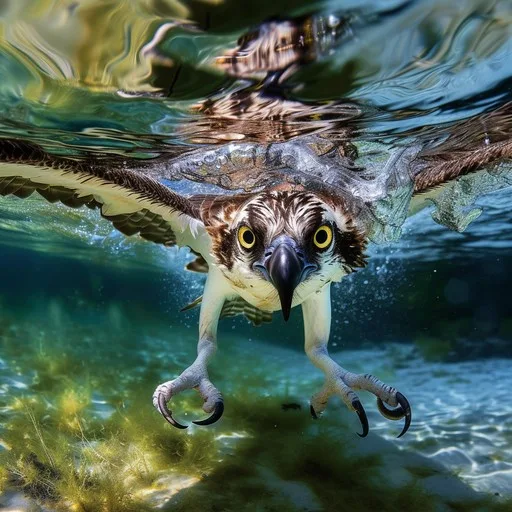
Image source: Bing (Web (fair-use with source credit))
Grabbing and Gripping
As the osprey hits the water, its feet are extended forward, talons ready. The goal is to strike the fish and immediately secure it with those powerful claws. Their leg and foot structure is designed for this exact purpose, ensuring a firm hold on their often slippery prey.
Osprey's Built-In Diving Gear
Ospreys have evolved a suite of remarkable physical adaptations that turn them into efficient aquatic hunters. These aren't just average bird features; they are specialized tools that make a difficult task possible, allowing them to thrive in environments where other birds of prey might struggle.
Talons and Feet: Nature's Fish Hooks
The osprey's feet are arguably their most critical hunting tools. Their talons are long, sharply curved, and barbed, providing an exceptional grip on fish. Perhaps even more uniquely, their outer toe can rotate backward, enabling them to grip a fish with two toes in front and two in back.
This configuration, often referred to as anisodactyly, provides a much more secure hold than the typical three-forward, one-back arrangement found in many other birds.
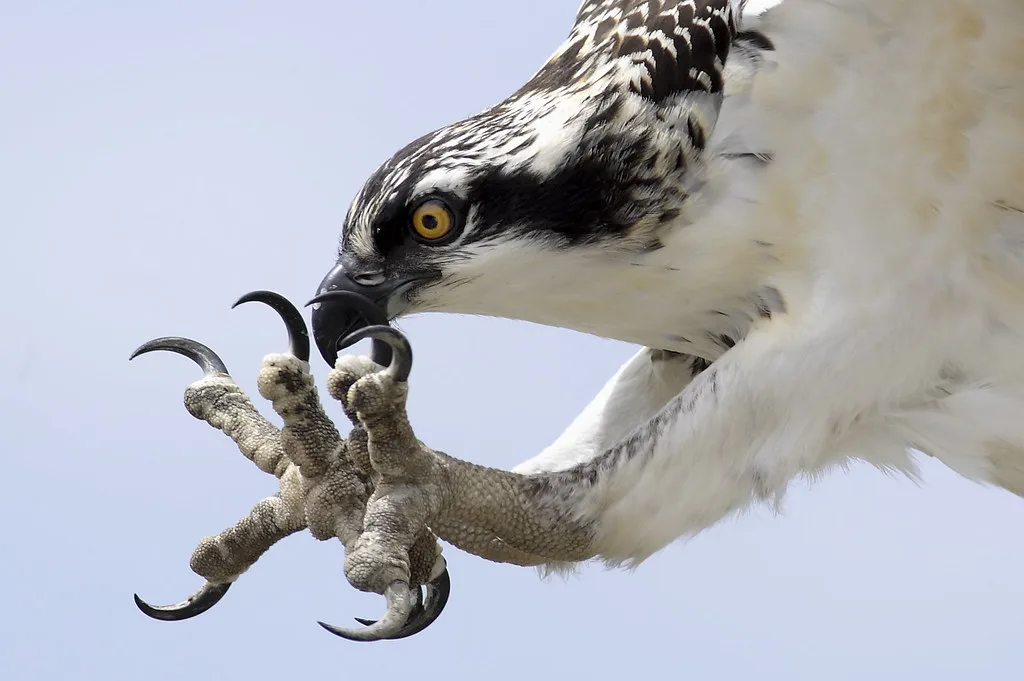
Image source: Bing (Web (fair-use with source credit))
Eye Protection: The Osprey's Goggles
Diving into water at high speed can be harsh on the eyes. Ospreys have a built-in protective mechanism: a clear inner eyelid, or nictitating membrane. This membrane sweeps across the eye just before impact, shielding it from water pressure, debris, and the shock of entering the water.
It allows the osprey to maintain vision underwater during the brief moment of capture without injury.
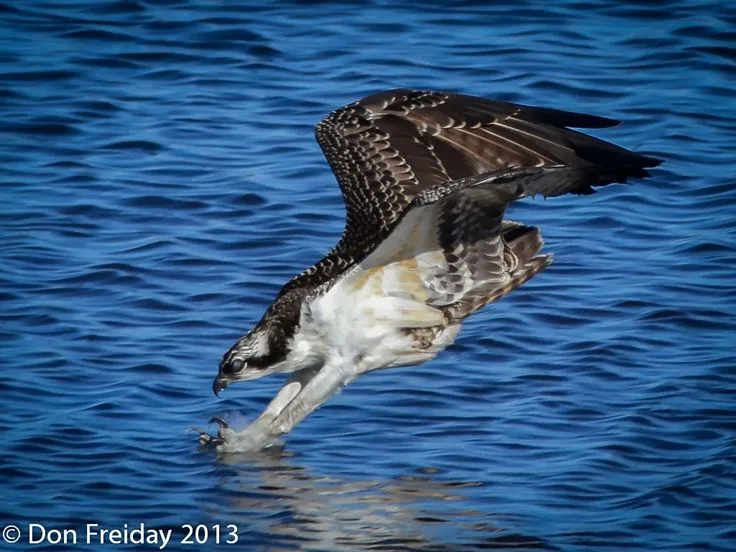
Image source: Bing (Web (fair-use with source credit))
When the Dive Doesn't Go as Planned
While ospreys are incredibly skilled hunters, their dives aren't always successful. Nature is full of challenges, and even these specialized predators face moments of failure. Understanding these less-than-perfect outcomes reveals more about their resilience and the unpredictability of their food source.
The Missed Catch
It’s not uncommon for an osprey to dive and come up empty-handed, or rather, empty-taloned. A fish might dart away at the last second, or the osprey might simply misjudge its angle or speed. The water's surface can distort distances, and fish are fast and agile.
When this happens, the osprey often shakes off the water and immediately looks for another opportunity.
Getting Out of the Water
Lifting a slippery, often surprisingly heavy fish out of the water requires significant effort. Once a fish is caught, the osprey’s powerful wings beat furiously to gain altitude. They will often try to reposition the fish so it faces forward, streamlining their flight and reducing drag as they carry their meal away to a perch for consumption.
Sometimes, if the fish is too large, they might struggle to get airborne, presenting a vulnerable moment.
Beyond the Dive: The Osprey's Diet
Ospreys are highly specialized piscivores, meaning their diet consists almost exclusively of fish. This dietary focus shapes their entire life cycle, from where they nest to how they hunt. Unlike many other birds of prey that have a varied diet including mammals, reptiles, or other birds, ospreys are dedicated fish-eaters.
This specialization means that the availability and health of fish populations directly impact osprey populations. In areas where fish are abundant and accessible near the surface, ospreys tend to thrive. Conversely, declines in fish stocks or degradation of water quality that affects fish can pose significant challenges for these birds.
This reliance makes them an excellent indicator species for the health of aquatic ecosystems.
Frequently Asked Questions About Osprey Dives
Why do ospreys hover before diving?
Ospreys hover to get a clear, unobstructed view of potential prey in the water below. This vantage point allows them to precisely locate fish near the surface and judge the distance and speed needed for a successful strike.
Can ospreys swim?
While ospreys are adept at diving into water, they are not truly swimmers. They can propel themselves forward briefly using their wings after a dive, but they lack the adaptations for efficient, sustained swimming. Their primary method of moving through water is by flying.
What happens if an osprey can't catch a fish?
If an osprey misses a fish, it will typically shake off the water and immediately begin scanning for another opportunity. They will continue to dive as needed until they successfully catch a meal, as fish are essential for their survival.
How deep can an osprey dive?
Ospreys typically dive to catch fish near the surface, usually no more than a few feet below. While they can plunge into the water from significant heights, their hunting range is limited to the upper layers of aquatic environments where fish are accessible.