How Far Can Bald Eagles See
Curious about the incredible eyesight of bald eagles? Many wonder just how far these majestic birds can spot their next meal or navigate their environment. It’s a question that sparks awe and a desire to understand the natural world better.
Our research indicates that bald eagles possess a visual acuity significantly superior to humans, allowing them to perceive details from vast distances. For instance, their eyes are structured to have approximately four to eight times the sharpness of our own, a remarkable adaptation for a predator.
Quick Answer
Bald eagles can see about four to eight times sharper than humans. They can spot small prey like a few-inch-long fish from hundreds of feet high. This incredible vision is due to specialized eye anatomy, including more photoreceptors and two foveas per eye, enabling them to detect details and movement from significant distances.
Eagle Eyes: How Far Can They Really See?
Bald eagles have truly astonishing vision, a critical tool for their survival as apex predators. When we talk about "how far" they can see, it's not just about spotting something big in the distance, but about discerning fine details from a great height. Their eyesight is a complex system honed by evolution.
Our research shows that their visual acuity is estimated to be around four to eight times sharper than that of an average human with 20/20 vision. This means if you have 20/20 vision, a bald eagle's sight might be equivalent to 20/5 or even 20/2 vision. This capability allows them to effectively hunt and navigate.

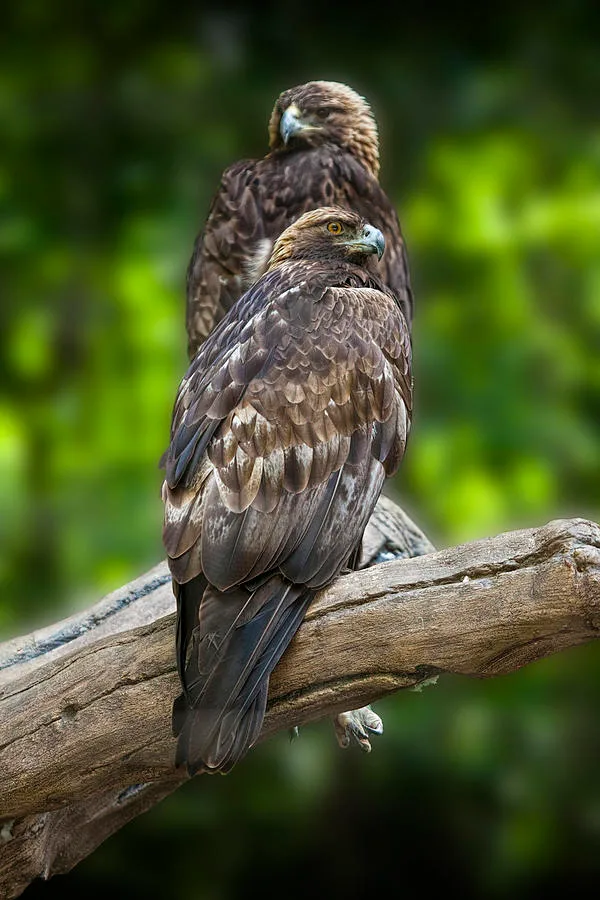
Image source: Web (Bing) / wallup.net (Web image (fair-use with source credit))
Visual Acuity: A Raptor's Edge
The term "visual acuity" refers to the sharpness and clarity of vision. For bald eagles, this means they can distinguish objects and details at distances that would appear blurry or invisible to us. This ability is crucial for their hunting success.
Sharpness Compared to Humans
The difference in sharpness is substantial. If a human can see a certain detail at 20 feet, a bald eagle might be able to see that same detail at 100 to 160 feet. This remarkable acuity is not uniform across their entire field of vision; it's concentrated in specific areas of the eye.
The Anatomy Behind the Vision: More Than Just Big Eyes
Several anatomical features contribute to a bald eagle's superior visual acuity. Their eyes are proportionally larger than human eyes, which helps them gather more light. More importantly, the structure of their retina and the presence of specialized cells play a vital role.
- High Photoreceptor Density: Eagles have a much higher concentration of photoreceptor cells, which are light-sensitive cells in the retina responsible for detecting light and color. This is particularly true in the fovea.
- Two Foveas per Eye: Humans have a single fovea in each eye, the area of sharpest central vision. Eagles, however, possess two foveas per eye. This dual-foveal system provides an exceptionally wide field of sharp vision and allows for rapid adjustments when tracking moving prey.
This intricate design means their eyes are not just bigger, but fundamentally different and far more efficient at processing visual information.
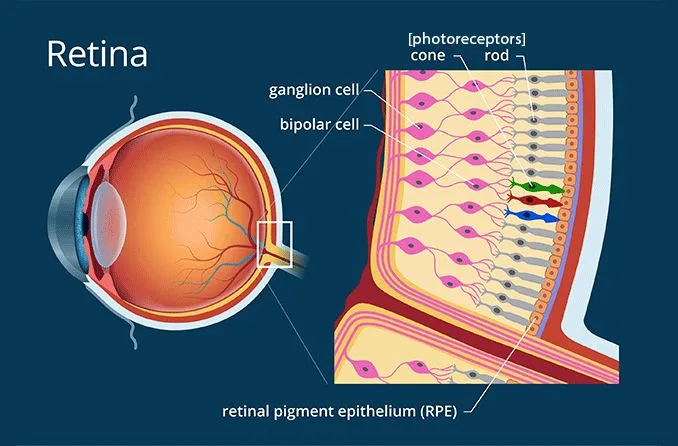
Image source: Web (Bing) / visual-anatomy-data.net (Web image (fair-use with source credit))
Detecting Dinner: Seeing Prey from a Distance
A bald eagle’s exceptional eyesight directly translates to its hunting prowess. The ability to spot prey from high altitudes allows them to survey large areas and identify potential meals before they are even aware of being watched. This advantage is paramount in their natural habitat.
Spotting the Small Stuff: Fish and Rodents
Bald eagles primarily hunt fish and small mammals like rodents and rabbits. Their keen vision enables them to see small, often fast-moving, creatures. For instance, they can spot a fish just a few inches long swimming near the surface of the water.
This means that from hundreds of feet in the air, an eagle can identify and target its next meal with remarkable precision. This capability is essential, especially when hunting in open water or fields where cover is minimal.
The Advantage of Seeing Movement
Beyond just static detail, bald eagles are incredibly sensitive to movement. Even if an object is small or partially obscured, a subtle twitch or scurry can catch their eye from a great distance. This sensitivity helps them detect prey that might otherwise blend into its surroundings.
This ability to pick up on even slight movements is a key factor in their success rate. It allows them to react quickly and initiate a dive or flight path to intercept their target.
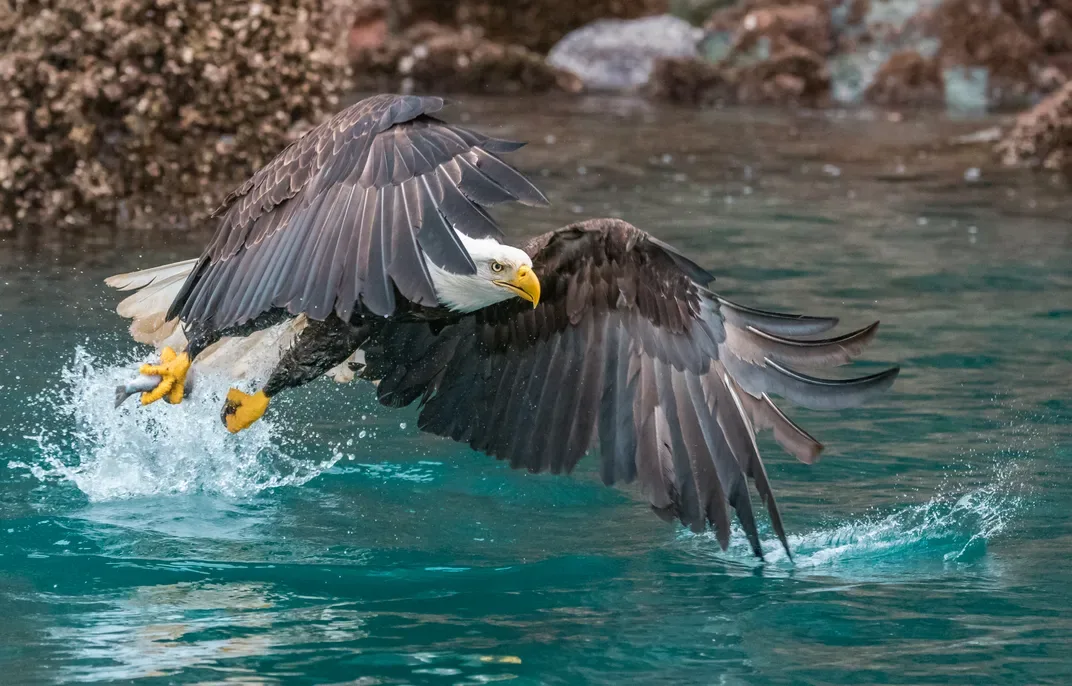
Image source: Bing (Web (fair-use with source credit))
What Makes Eagle Vision So Powerful?
The extraordinary vision of bald eagles isn't accidental; it's the result of highly specialized biological adaptations. These features work in concert to provide an unparalleled predatory advantage. Our research into avian anatomy highlights several key factors.
Key Anatomical Features
The power of an eagle's vision stems from several key physical characteristics of their eyes. These adaptations are distinct from human vision and are finely tuned for spotting prey from afar and tracking fast movement.
- Larger Eyes: Relative to their body size, bald eagle eyes are significantly larger than human eyes. This increased size allows for a larger lens and retina, capturing more light and providing a broader field of vision.
- Forward-Facing Eyes: Like many predators, their eyes are positioned forward on their head. This placement provides excellent binocular vision, which is crucial for depth perception and accurate targeting during dives.
The Role of Photoreceptors and Foveas
The true magic behind their sharp vision lies within the cellular structure of their eyes, particularly the retina. This is where light is converted into signals that the brain interprets as images.
- Photoreceptor Density: The retina of a bald eagle contains a much higher density of photoreceptor cells, rods for low-light vision and cones for color and detail, than a human retina. This means more visual information is captured and processed.
- Dual Foveas: As mentioned, eagles possess two foveas, which are areas packed with cone cells for the sharpest vision. Having two foveas allows them to maintain sharp focus on a subject while moving their head or body, or even to look in two directions at once with high detail. This is a significant evolutionary advantage not seen in human eyes.
Real-World Seeing Distances
So, how far can a bald eagle actually see? It's not an exact number for every single situation, as environmental conditions like haze or fog play a role. However, based on their visual acuity, we can estimate impressive distances.
- Detecting Large Objects: From altitudes of several hundred feet, an eagle could likely spot a large object, like a car or a person, from over a mile away. This is a rough estimate, as larger objects are easier to detect.
- Spotting Small Prey: The more specific question of prey detection is where their vision truly shines. Research suggests they can detect small prey, such as a rabbit, from hundreds of feet up. For smaller targets like a fish at the water's surface, they might need to be closer, perhaps a few hundred feet vertically, to distinguish its shape and movement clearly.
Hypothetical Scenarios: Altitude vs. Detection
Let's break down some hypothetical scenarios to paint a clearer picture of what this means in practice. Imagine an eagle soaring at a typical hunting altitude, which can range from 100 to 1,000 feet.
- Scenario 1: Open Field Hunting: An eagle flying at 500 feet over an open field might spot a rabbit moving amongst the grass. The rabbit, being several inches long and moving, would likely be visible as a distinct shape against the background.
- Scenario 2: Water Surface Hunting: If an eagle is hunting fish from 300 feet above a lake, it can likely see a fish that is a few inches in length. The contrast of the fish against the water's surface, combined with its movement, would make it detectable.
Practical Limits and Environmental Factors
While bald eagles have incredible vision, it's not limitless, and external factors can affect their perception. Atmospheric conditions are a major player here, as they can reduce visibility for any creature.
- Atmospheric Conditions: Haze, fog, mist, and even heavy rain can significantly reduce the distance at which an eagle can clearly see. In poor weather, their effective range would be considerably shortened, much like driving in dense fog.
- Contrast and Camouflage: The ability to see prey also depends on contrast. A dark-colored object against a light background is easier to spot than something that is well-camouflaged. A fish on a clear day is easier to see than a camouflaged mouse in tall grass.
FAQs About Bald Eagle Sight
Can bald eagles see in color?
Yes, bald eagles can see in color. Like most birds, they have cone cells in their eyes that are sensitive to different wavelengths of light, allowing them to perceive a range of colors. This is important for identifying ripe berries or distinguishing between different types of prey.
Do bald eagles have good night vision?
Bald eagles are primarily diurnal, meaning they are most active during the day. While they have a good number of rod cells for low-light conditions, their vision is not specifically adapted for hunting in complete darkness like that of owls. They rely more on their sharp daytime vision.
How do bald eagles focus?
Eagles can change the shape of their entire eyeball to focus, rather than just their lens like humans do. This allows them to adjust focus very rapidly, helping them track fast-moving prey with precision. Their ability to shift focus between their two foveas also aids in this process.
The Unrivaled Vision of a Bald Eagle
In summary, bald eagles possess a visual system that is one of the most highly developed in the animal kingdom. Their ability to see with remarkable sharpness and detail from great distances is fundamental to their role as top predators.
Their vision is not just about distance; it's about clarity, movement detection, and the ability to process visual information rapidly. This complex interplay of specialized anatomy and evolutionary advantage allows them to thrive in their environments.
Our research confirms that the eagle's sight is a prime example of nature's incredible engineering, making them masters of their domain. The figures of 4-8 times sharper vision than humans, coupled with the functional benefits, highlight just how specialized this predatory tool is.