What Is the Largest Owl Species
When you picture an owl, you might imagine a small, shy creature. But what is the largest owl species in the world? It’s a question that sparks curiosity for anyone fascinated by these magnificent birds of prey.
These aren't your typical garden visitors; we're talking about some seriously impressive avian giants.
Our research dives into the impressive stature of the world's largest owls, focusing on factual measurements and defining characteristics. These birds can reach astonishing sizes, with wingspans that rival small aircraft and weights that are truly substantial for any bird.
Quick Answer
The Eurasian Eagle-Owl (Bubo bubo) is generally considered the largest owl species. It boasts an impressive average weight of 4 to 9 pounds and a wingspan stretching up to 6 feet. The Blakiston's Fish Owl (Ketupa blakistoni) is a very close contender, often matching or exceeding the Eurasian Eagle-Owl in weight.
Meet the Contenders: It's a Close Race!
When we talk about the "largest" owl, it can mean a couple of things: heaviest, or longest from tail to beak. For the most part, the same owl tends to win on both counts, but it’s good to know what we're measuring. These birds are truly breathtaking in their scale.
The undisputed heavyweight champion, or at least the most commonly cited, is the Eurasian Eagle-Owl (Bubo bubo). These birds are seriously impressive. They've got those distinctive ear tufts that make them look perpetually surprised (or maybe just very wise).
Their plumage is usually a mix of browns and grays, giving them excellent camouflage.
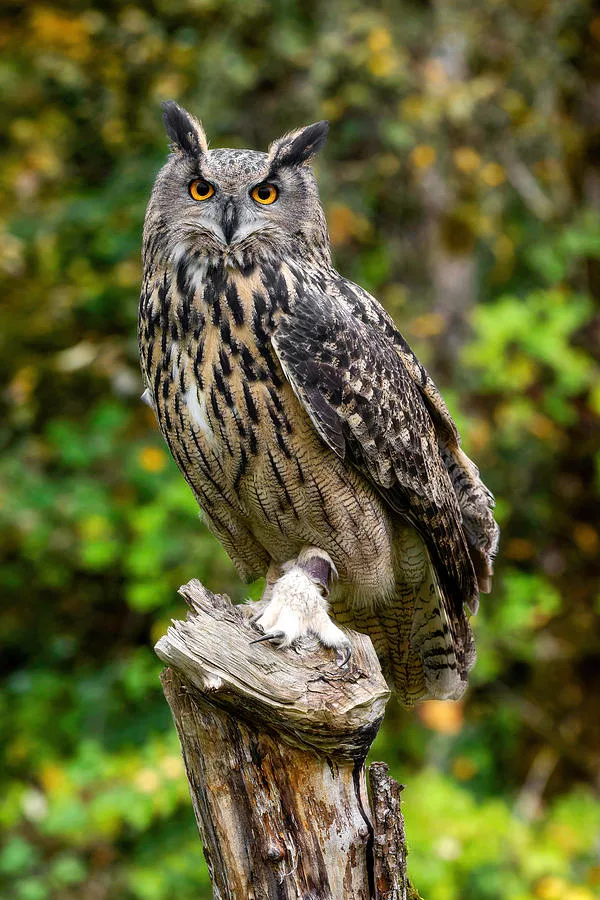
Image source: Web (Bing) / fineartamerica.com (Web image (fair-use with source credit))
Then there's the Blakiston's Fish Owl (Ketupa blakistoni). This beauty is another top contender, and in some measurements, it might even edge out the Eurasian Eagle-Owl. It's a bit more specialized in its diet, which is a clue in its name.
They have a more rugged, shaggier look than the Eurasian Eagle-Owl, with deep brown and black barring. Their eyes are a striking orange.
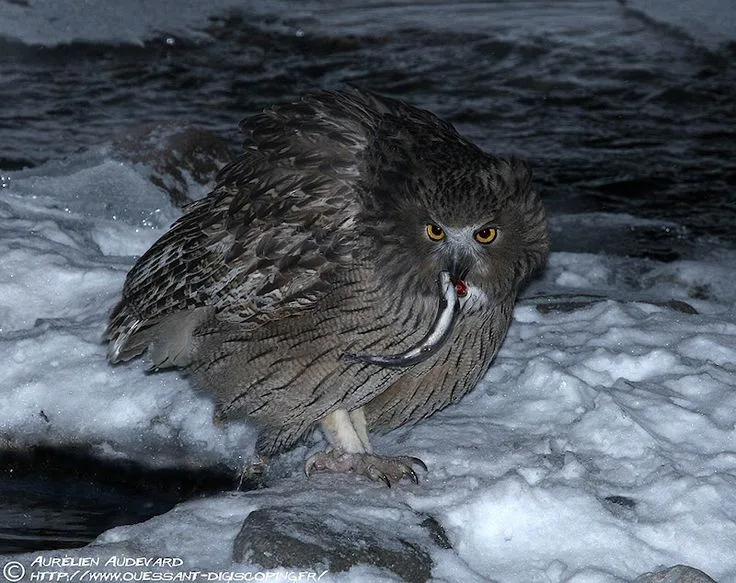
Image source: Bing (Web (fair-use with source credit))
Why "Largest" Can Be Tricky
It's not always as simple as pointing to one bird and saying, "That's the biggest." Several factors can make a definitive declaration a bit fuzzy. Just like people, some owls are naturally bigger than others within the same species.
Female birds of prey are often larger than males, a phenomenon known as sexual dimorphism. So, a particularly large female Blakiston's Fish Owl might be bigger than a smaller male Eurasian Eagle-Owl, and vice-versa. This means that while we can talk about averages and typical ranges, individual variations are significant.
Are we talking about total length from tail to beak, or wingspan from tip to tip? Or perhaps weight is the primary measure of "largest"? All give a slightly different picture.
For instance, an owl might have a massive wingspan but be lighter than another with a more compact build. This article focuses on both weight and wingspan to give a fuller understanding.
The Visuals Tell the Story
Honestly, the best way to truly grasp how enormous these owls are is to see them. Photos and videos really drive home their impressive stature. When you look at images of a Eurasian Eagle-Owl perched on a branch, you get a real sense of its imposing presence, often dwarfing the branches it sits on.
Similarly, seeing a Blakiston's Fish Owl with its broad wings spread across a considerable expanse of sky is awe-inspiring.
Visual references help distinguish between species that might appear similar in text descriptions. The sheer scale of these birds is something that must be seen to be fully appreciated. They are far from the small, brown owls you might see in cartoons; these are birds of considerable power and size.
A Quick Look at the Top Two
When comparing these giants, a table offers a clear, at-a-glance view of their impressive dimensions. It’s important to remember these are typical ranges, and individual birds can vary. As of 2026, research continues to refine these figures, but the top contenders remain consistent.
| Owl Species | Average Weight (approx.) | Average Wingspan (approx.) | Key Visual Identifier |
|---|---|---|---|
| Eurasian Eagle-Owl | 4 – 9 lbs (2 – 4 kg) | 5 – 6 ft (1.5 – 1.8 m) | Prominent ear tufts |
| Blakiston's Fish Owl | 4 – 7 lbs (2 – 3 kg) | 5.5 – 6 ft (1.7 – 1.8 m) | Striking orange eyes |
Image source: Bing (Web (fair-use with source credit))
The Eurasian Eagle-Owl, in particular, often claims the title due to its maximum potential weight and impressive wingspan. However, the Blakiston's Fish Owl is a robust competitor, particularly noted for its size and specialized habitat. Their existence highlights the incredible diversity within the owl family.
Frequently Asked Questions About Giant Owls
Is the Eurasian Eagle-Owl the only large owl?
No, the Eurasian Eagle-Owl is generally considered the largest, but the Blakiston's Fish Owl is a very close competitor. Several other owl species, such as the Great Horned Owl and the Great Grey Owl, are also quite large, though typically not reaching the same extreme dimensions as the top two.
How much can a Eurasian Eagle-Owl weigh?
A Eurasian Eagle-Owl can weigh anywhere from 2 to 9 pounds (approximately 1 to 4 kilograms). The maximum weight is usually observed in female birds, which are typically larger than males. This significant weight contributes to their powerful presence and hunting capabilities.
Do large owls pose a threat to humans?
Large owls like the Eurasian Eagle-Owl and Blakiston's Fish Owl are wild predators. While they primarily hunt small mammals, birds, and fish, they generally avoid humans. Attacks are extremely rare and usually occur only if the owl feels threatened or is defending its territory or young.
Maintaining a respectful distance is always advised.
Where do these large owl species live?
The Eurasian Eagle-Owl is found across much of Europe and Asia, inhabiting rocky cliffs, mountains, and open woodlands. The Blakiston's Fish Owl is more geographically restricted, living in forested river valleys and coastal areas of the Russian Far East and Northeast China. Both require extensive, relatively undisturbed habitats to thrive.