Golden Eagle Facts
Learning about golden eagle facts is the best way to appreciate one of nature’s most formidable hunters. These raptors are massive birds of prey that dominate the skies across much of the Northern Hemisphere.
As of 2026, scientific data from the U.S. Fish and Wildlife Service confirms these birds maintain wingspans reaching up to 7.5 feet. They rely on their incredible eyesight and raw power to survive in rugged, mountainous landscapes.
Quick Answer
The golden eagle is a large, powerful raptor species.
They inhabit vast mountainous regions across the Northern Hemisphere.
These birds hunt small mammals like rabbits and ground squirrels.
They often mate for life and maintain large territories.
Adult birds display a distinct golden sheen on their heads.
The Golden Eagle Jizz: Mastering Visual Identification
When birders talk about "jizz," they mean the overall impression of a bird. You recognize a Golden Eagle by its massive silhouette and deliberate flight style. These aren't twitchy or nervous birds.
They move with a heavy, confident grace that commands attention.
If you are looking at a raptor in the distance, start by checking the wing shape. A soaring bird often holds its wings in a slight, shallow V-shape, technically known as a dihedral. This is a common way for them to maintain stability while catching thermals.
Don't be fooled by their size alone. While they are enormous, their flight feels surprisingly agile for such a heavy animal. You'll notice they rarely flap their wings unless necessary.
They prefer to conserve energy by gliding, which is a key trait of an efficient long-range predator.
Anatomy of an Apex Predator: Key Physical Traits
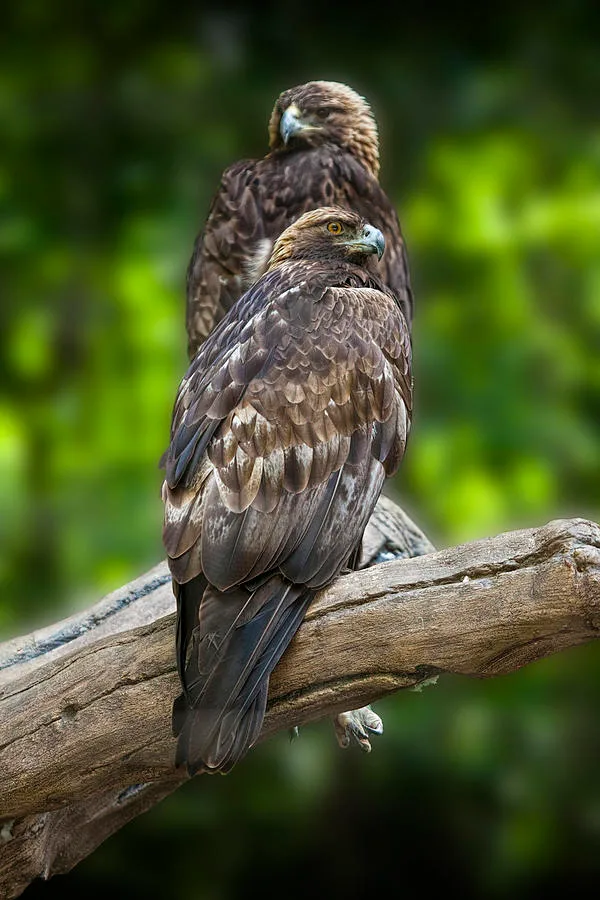
The physical build of the Golden Eagle is optimized for high-speed strikes and long hours of soaring. They possess thick, powerful legs equipped with talons designed to secure prey instantly. Their dark, chocolate-brown plumage serves as excellent camouflage against rocky mountain backgrounds.
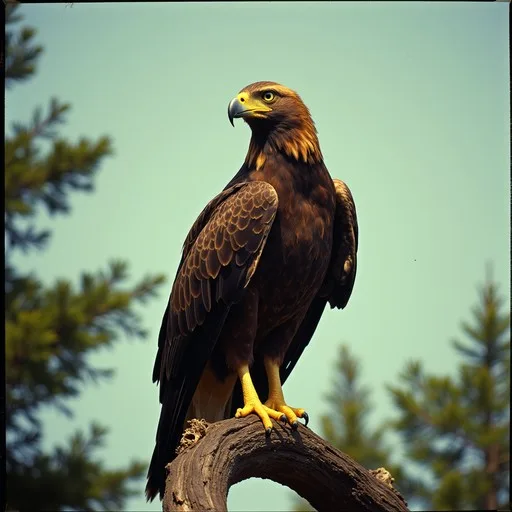
Image source: Web (Bing) / stockcake.com (Web image (fair-use with source credit))
The most iconic feature is the golden-colored feathers on the back of the neck and head. You'll see this color best when the bird turns its head in direct sunlight. Young birds look slightly different from adults, featuring white patches on the wings and base of the tail that gradually fade as they reach maturity at five years old.
Understanding these traits helps you filter out other birds quickly. Their beak is dark and hooked, specialized for tearing into small mammals. Because they live in cold, high-altitude climates, they have dense feathers that provide excellent insulation against harsh mountain winds.
Mastering the Skies: Aerial Behavior and Hunting Patterns
Golden Eagles are active, intelligent hunters that use the terrain to mask their approach. They don't just fly randomly, searching for a meal. You will often see them hugging the contours of a ridge or cliff face.
By flying low against the ground, they stay hidden from prey until the very last second. Once they spot a target like a hare or ground squirrel, they transition into a powerful stoop. This dive allows them to reach high speeds, catching prey before it has a chance to scramble into a burrow.
They are also patient. It isn't uncommon to spot one perched on a rocky outcropping, staring intensely at a meadow for hours. They understand the patterns of their prey perfectly.
This high level of focus is what makes them one of the most successful predators in their habitat.
Navigating the Wilderness: Habitat and Territory Dynamics
You will generally find these raptors in open, rugged country. They thrive in mountainous areas where steep cliffs provide safe, inaccessible nesting sites. According to research from the Cornell Lab of Ornithology, they require vast expanses of land to support their hunting needs.
A single pair may defend a territory covering more than 50 square miles. This scale is necessary because they need a reliable food supply year-round. They are philopatric, meaning they have a strong tendency to return to the same nesting cliff year after year.
These birds aren't fans of dense forests or sprawling urban developments. They need wide-open spaces to see long distances and maneuver in the air. If the local food population crashes, they will shift their hunting range, but they prefer to stick to a familiar territory if the hunting remains productive.
Avoiding Identification Pitfalls: Distinguishing from Bald Eagles and Vultures
The most common mistake is confusing a young Golden Eagle with a Turkey Vulture or a Bald Eagle. Vultures appear wobbly in the air, holding their wings in a deep V-shape. Golden Eagles keep their wings flatter, creating a much more stable and powerful flight profile.
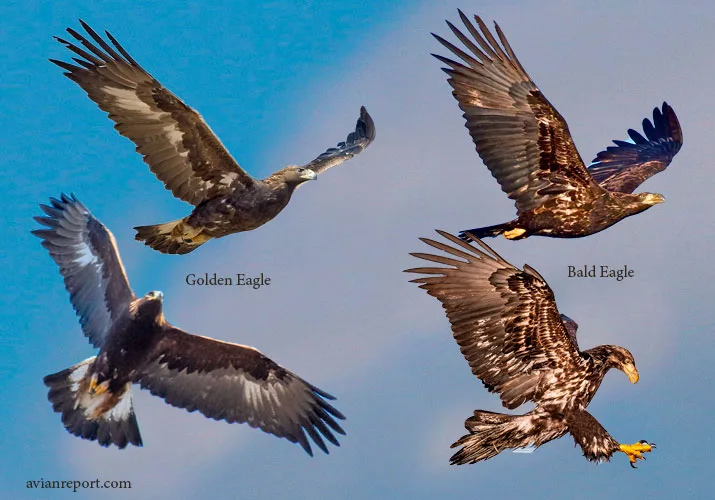
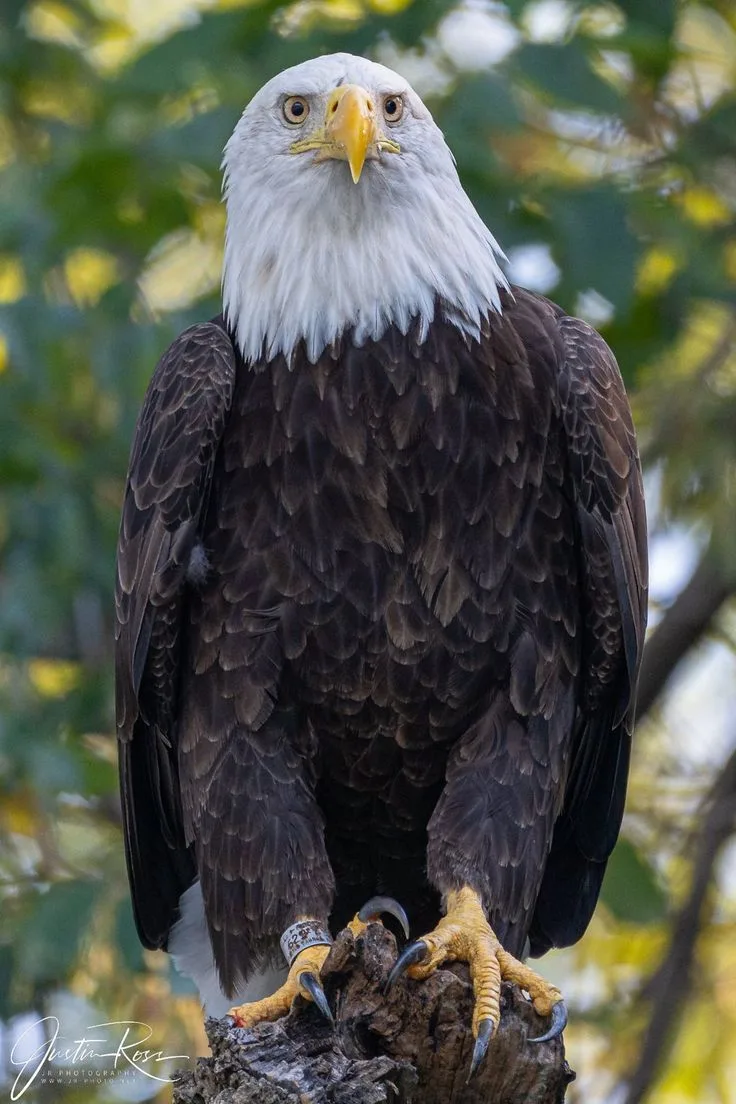
Image source: Bing (Web (fair-use with source credit))
Bald Eagles are often larger in body mass, but they lack the intense golden nape. When you look at a Bald Eagle, the head looks disproportionately large compared to its body. A Golden Eagle looks more proportional, with a sleeker, more predatory shape.
| Feature | Golden Eagle | Bald Eagle | Turkey Vulture |
|---|---|---|---|
| Wing Posture | Shallow "V" | Flat / Plank-like | Deep "V" / Wobbly |
| Head | Small, dark | Large, white (adult) | Small, red/bald |
| Tail Shape | Rounded | Fan-shaped | Long, narrow |
If you see a bird soaring and it looks like it's constantly tipping to one side, it is almost certainly a vulture. Focus on the tail shape if you get a good look. Golden Eagles have a rounded tail, while Bald Eagles often look like they have a squared-off or fan-shaped tail when fully spread.
Ethical Fieldcraft: Safety, Legal Protections, and Observation Best Practices
Observing these majestic raptors requires a commitment to ethical standards. Federal laws, specifically the Bald and Golden Eagle Protection Act, provide strict legal safeguards for this species in the United States. You must maintain a significant distance if you encounter a nesting site or a perched bird.
Disturbing an active nest is a serious violation of federal regulations. If your presence causes an adult to flush from the nest, you are too close. Use high-quality binoculars or a spotting scope to enjoy the view without intruding.
Your goal should always be to observe natural behavior rather than trying to provoke a reaction.
Responsible wildlife photography requires similar restraint. Avoid using drones, as they can cause immense stress and may be perceived as a territorial threat by the eagles. Stick to marked trails and avoid wandering into sensitive habitat during the spring nesting season.
Following these guidelines ensures that these predators remain undisturbed in their environment.
Frequently Asked Questions About Golden Eagles
Where do Golden Eagles live in the summer?
They primarily inhabit mountainous, open country across the Northern Hemisphere. You will often find them in the western United States, throughout Canada, and across large parts of Eurasia. They prefer rugged terrain with cliffs or tall rock formations for nesting.
How fast can a Golden Eagle fly?
When engaging in a hunting stoop, they can reach speeds exceeding 150 miles per hour. This speed allows them to surprise ground-dwelling prey before the animal can react. In normal flight, they move much more slowly, relying on soaring to cover ground efficiently.
What is the difference between a juvenile and an adult?
Juvenile eagles show large white patches on their wings and a clear white band at the base of their tail. These markings are not present in fully mature adults. These white patterns gradually disappear as the bird molts over a period of about five years.
Do they ever eat larger animals?
While their diet consists mostly of small to medium-sized mammals, they are capable of taking down larger prey. They have been documented hunting young deer or mountain goats in rare scenarios. However, these attempts are energy-intensive and carry a high risk of injury to the bird.
How can I report an eagle sighting?
You can contribute to citizen science by recording your observation through platforms like eBird. This data helps researchers track population trends and habitat use over time. Always ensure your report includes specific location data and photos if possible for verification.