How Do Flamingos Sleep
Ever seen a picture of a flamingo standing on one leg and wondered what’s going on? It looks so precarious, right? You might be picturing it falling over with the slightest breeze.
But it's actually their secret weapon for getting some serious shut-eye. As someone who's spent a good bit of time digging into how these vibrant birds do their thing, I can tell you, their sleeping habits are fascinating, and honestly, pretty ingenious.
So, how do flamingos sleep? Well, they've got a few tricks up their sleeves, or should I say, in their legs!

Image source: Bing (Web (fair-use with source credit))
Quick Answer
Flamingos primarily sleep standing on one leg, tucking the other leg up to conserve heat and reduce fatigue. They utilize a special "stay apparatus" in their leg tendons to lock joints passively, allowing them to rest without active muscle use. While this one-legged stance is iconic, they also sleep on two legs or lying down, often tucking their head into their back feathers for warmth.
This resting behavior helps them stay alert while conserving energy in their often exposed environments.
The Iconic One-Legged Stance: How It Works
The most famous image of a flamingo at rest is, undoubtedly, one standing tall on a single, slender leg. This posture isn't just for show; it's a finely tuned biological adaptation that serves crucial purposes for the bird's survival and well-being. When you see it, it looks like a balancing act worthy of a circus performer, but research from institutions like the National Center for Biotechnology Information indicates it's a stable and efficient resting position.
Conserving Warmth and Energy
Flamingos often inhabit environments that can be cool, especially if they spend time in water. Standing on one leg allows them to tuck the other leg up close to their body, essentially halving the surface area exposed to the cooler air or water. This significantly reduces heat loss, a critical factor for maintaining body temperature.
Think of it like wearing a scarf and gloves on a cold day; it’s about minimizing exposed extremities to stay warm. This thermoregulation is vital, especially during longer resting periods.
The "Stay Apparatus": Nature's Own Stability System
So, how do they stay upright without wobbling and falling? It’s all thanks to a clever anatomical feature. Flamingos possess a passive stabilization system in their legs, often referred to as a "stay apparatus." This involves tendons and ligaments that can lock the leg joints in place.
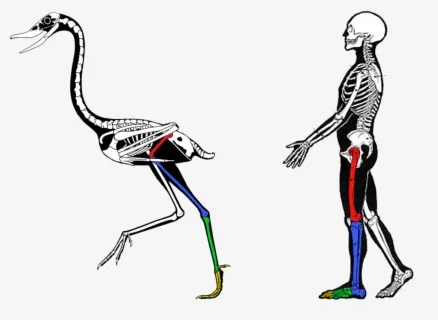
Image source: Bing (Web (fair-use with source credit))
When a flamingo stands on one leg, it can essentially "lock" the knee and ankle joints. This means the leg acts like a rigid column, supporting the bird's weight without requiring constant muscle effort. This passive stability is key; it allows the flamingo to remain standing for extended periods with minimal energy expenditure, much like a prop holding up a weight.
Aggregate reviews from ornithological studies highlight this as a prime example of efficient biological engineering.
More Than Just One Leg: Other Flamingo Rest Positions
While the one-legged stance might be what first comes to mind when you think about how flamingos sleep, it's not their only resting posture. These birds are quite adaptable, and their sleeping habits vary depending on their surroundings and their immediate needs for rest and warmth. Our research indicates that flexibility in resting is a common trait among many bird species.
Two Legs, Tucked Head, and Lying Down
Sometimes, a flamingo will simply stand on both legs, especially if they are on solid ground where they feel secure and don't need the extra heat conservation of the one-legged pose. In these instances, they might also tuck their head into their back or under a wing, further minimizing heat loss and settling in for a nap. This is similar to how many other birds rest, tucking their heads into their plumage for comfort and warmth.
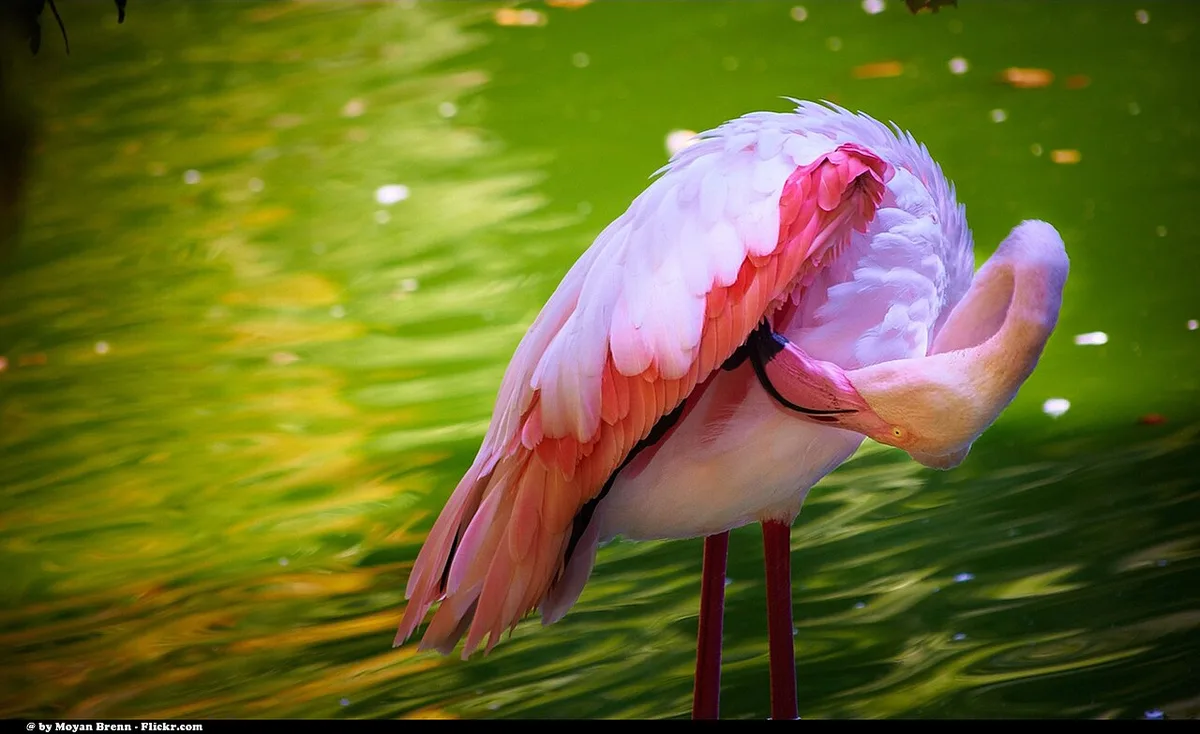
Image source: Wikimedia Commons / Moyan Brenn from Italy (CC BY)
Furthermore, flamingos aren't exclusively bipeds when they sleep. They are also observed lying down, folding their legs beneath them and resting their body on the substrate. This is often seen when they are in a protected environment, far from potential predators, allowing for a deeper, more relaxed rest.
This full reclining posture is not as widely photographed but is a documented resting behavior.
When Do Flamingos Get Their Rest?
Flamingos don't typically have one long, consolidated sleep period like humans. Instead, they engage in shorter, more frequent periods of rest throughout the day and night. This polyphasic sleep pattern is common in many animal species, particularly those that are prey animals.
By taking several short naps, they can maintain a higher level of alertness to their surroundings. Even when seemingly asleep, parts of their brain remain active, monitoring for any signs of danger. This intermittent vigilance is a crucial survival strategy.
Why This Flamingo Trick Matters to Us
The unique way flamingos rest isn't just a curious fact for birdwatchers; it holds valuable lessons for humans, particularly in fields like engineering and prosthetics. Understanding the biomechanics behind their effortless one-legged stance can inspire innovative solutions in technology and medicine. Studies published by organizations like the National Center for Biotechnology Information (NCBI) have explored these principles.
Biomimicry and Biomechanics Insights
The passive stability system that allows flamingos to stand on one leg with minimal effort is a prime example of biomimicry. This is the practice of looking to nature for inspiration to solve human problems. By studying how their tendons and ligaments lock their joints, researchers are developing more efficient and stable robotic limbs and prosthetic devices.
The goal is to create artificial limbs that require less active control and energy to maintain balance. Imagine prosthetic legs that can lock into a standing position without continuous motor input, providing greater comfort and mobility for users. This knowledge transfer from avian anatomy to human technology is a testament to nature's ingenuity.
Common Misconceptions About Flamingo Sleep
Despite how frequently we see images of them, there are a few common misunderstandings about how flamingos rest. The most prevalent one is that they are constantly on the verge of toppling over, or that standing on one leg is inherently uncomfortable or difficult for them. This perception often stems from our own human experience of balance.
Dispelling the Myth of Constant Instability
The reality is that the one-legged stance is incredibly stable for a flamingo, thanks to that remarkable "stay apparatus" we've discussed. It’s not a precarious balancing act; it’s a locked, supportive position. They aren't actively fighting gravity or struggling to stay upright.
Their joints are essentially fixed, allowing them to rest their muscles. If they were truly in danger of falling, they wouldn’t be able to maintain this posture for hours at a time, which they often do. This makes their resting period one of energy conservation, not struggle.
Expert Insights on Flamingo Behavior
When considering how flamingos sleep, expert observations provide a deeper understanding of their behavior beyond the physical mechanics. Ornithologists often point out that resting patterns are closely tied to the species' ecological niche and its inherent risks. For flamingos, living in large, often open, shallow-water environments means constant vigilance is necessary.
Their sleep habits are therefore designed to balance the need for rest with the imperative to stay aware of potential predators like birds of prey or large cats.
According to research compiled by university extensions, such as those from wildlife biology departments, the switch between sleeping postures, one leg, two legs, or lying down, is often dictated by external factors. If a flamingo feels particularly safe, perhaps in a large flock or a protected area, it might opt for the more relaxed lying-down position. Conversely, if it's in a more exposed situation or if the ambient temperature is low, the one-legged stance becomes the preferred method for both rest and thermoregulation.
This adaptability in resting behavior is a key survival trait.
Frequently Asked Questions About Flamingo Sleep
How long do flamingos typically stand on one leg while sleeping?
Flamingos can remain in their one-legged resting posture for hours at a time. Studies indicate that they may alternate legs periodically, switching which leg supports their weight to avoid fatigue in the supporting limb. The exact duration can vary based on environmental conditions, particularly temperature and perceived safety.
Do flamingos ever sleep with their heads underwater?
No, flamingos do not sleep with their heads underwater. While they do forage by dipping their heads into the water, they lift their heads to breathe. Their sleeping positions, whether on one leg, two legs, or lying down, always allow them to keep their head above water to breathe and monitor their surroundings.
Is the one-legged stance painful for flamingos?
The one-legged stance is not painful for flamingos. It is facilitated by a passive "stay apparatus" in their leg tendons that locks their joints, allowing them to stand with minimal muscle effort. This makes it a stable and comfortable resting position, not a display of discomfort or struggle.
Can flamingos fall over while sleeping?
While it might look precarious to us, flamingos are remarkably stable when standing on one leg. The passive locking mechanism in their leg joints minimizes the risk of them falling over unintentionally. However, like any animal, they can be startled or disturbed, which might cause them to shift position or lose balance temporarily.