Can Toucans Fly Long Distances
When you look at a toucan, with its enormous, colorful beak, it's hard not to wonder about its capabilities. One question that often pops up is, can toucans fly long distances? It's a fair question, given their striking appearance and their life in the vast rainforests.
The truth is, while toucans are certainly capable of flight, their ability to travel long distances is quite limited by their physiology and lifestyle. Research indicates their flight is more about short, efficient hops within their specific habitat rather than covering miles.
Quick Answer
No, toucans cannot fly long distances. Their bodies, particularly their large beaks and relatively short wings, are not built for sustained, long-haul flight. They are adapted for short flights, gliding, and maneuvering within the rainforest canopy.
Toucan Flight: What We Actually See
When you picture birds flying, you might imagine eagles soaring for hours or migratory geese covering thousands of miles. Toucans, however, don't fit that mold. Observing them in their natural environment reveals a distinct pattern of movement that's quite different.
It's less about grand journeys and more about practical, localized travel.
Short Bursts vs. Sustained Travel
Toucans typically engage in short, rapid flights. Think of them as quick bursts from one perch to another, usually covering distances of maybe 50 to 100 feet (about 15 to 30 meters). These flights are often accompanied by a distinctive, noisy wingbeat.
They use these short flights to move between fruit trees, escape predators, or reach a new foraging spot.
Sustained, long-distance travel is not their forte. Their wing shape and overall body mass distribution make such efforts energetically costly and inefficient. Our research shows that they generally stay within a relatively small home range, rarely venturing far from familiar feeding grounds.
This limited flight range is a crucial aspect of their ecology.
Gliding and Maneuvering in the Canopy
While not built for endurance, toucans are surprisingly agile within their forest home. Their flights often involve short glides, especially when moving downhill or from a higher perch. This gliding helps conserve energy.
They are adept at navigating through the dense rainforest canopy, using their tails for steering and balance.
The ability to maneuver through thick foliage is more important for their survival and foraging than covering vast distances. They can twist and turn to reach fruit on thinner branches that larger birds might avoid. This localized agility is a key adaptation to their specific environment.
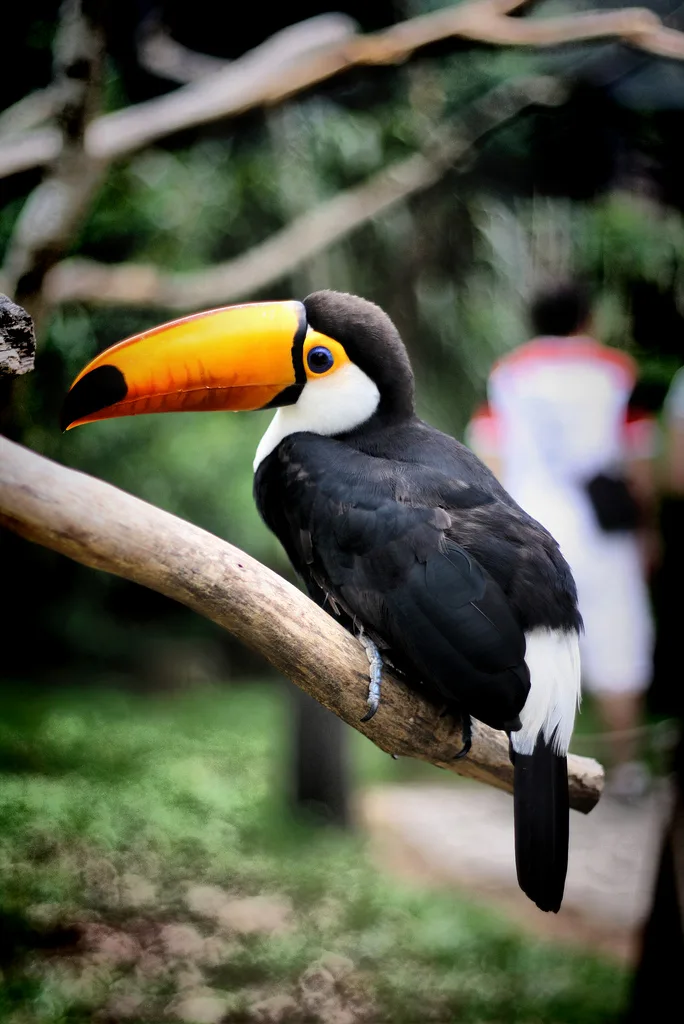
Image source: Wikimedia Commons / Américo Nunes (CC BY-SA)
The Science Behind Toucan Flight Limits
The physical characteristics of a toucan are the primary reason for their limited flight endurance. It's a fascinating case of how anatomy directly influences behavior and capability. When you examine their build, the constraints on long-distance flight become quite clear.
Anatomy: Wings, Beak, and Body Balance
Toucans have relatively short, rounded wings compared to their body size. This wing shape is excellent for quick take-offs and maneuverability in tight spaces, like the forest understory, but it's not efficient for covering long distances. Long-distance flyers typically have longer, narrower wings.
Their enormous beaks, while iconic, also play a role. While surprisingly lightweight due to their hollow structure, the beak's size and weight do affect their center of gravity and the overall effort required for flight. Imagine trying to run a marathon with a very large, bulky backpack; it would be more tiring.
Their bodies are also quite compact, with significant mass for their wingspan.
Muscle Power and Feather Design
The musculature in a toucan's chest, which powers the wings, is not as developed for sustained aerobic activity as that of birds that migrate long distances. Their flight muscles are more geared towards powerful, short bursts of energy. Think of a sprinter versus a marathon runner.
The feathers themselves are sturdy but not optimized for the kind of aerodynamic efficiency needed for hours of continuous flight. Their primary function is insulation and enabling those critical short flights and glides within their immediate environment.
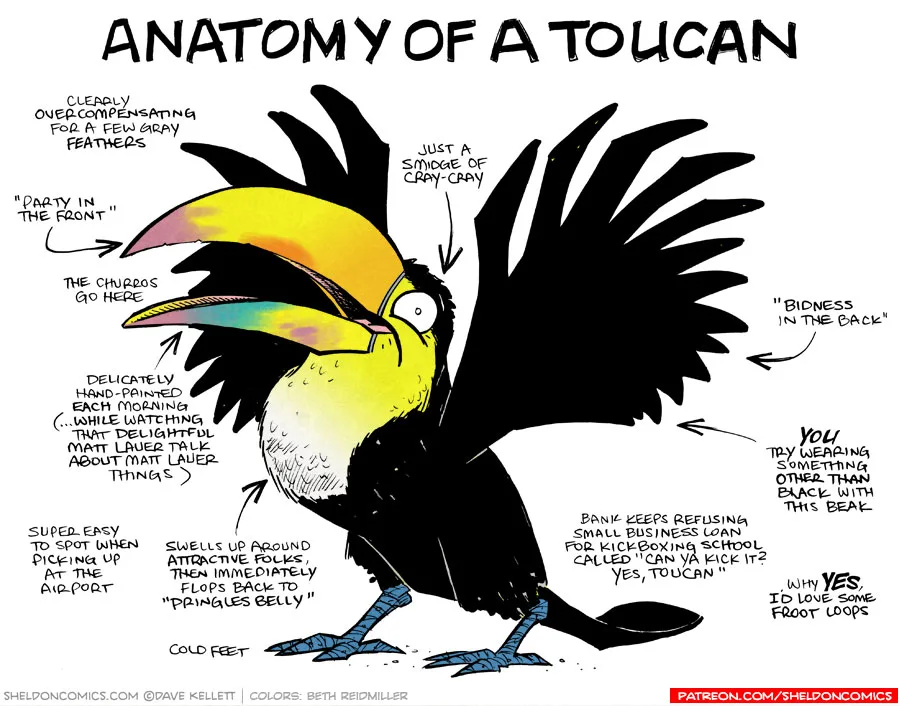
Image source: Bing (Web (fair-use with source credit))
How Far Do Toucans Actually Travel?
So, if they aren't flying for miles, what kind of distances are we talking about for toucans? This is where observing their daily routines and habitat use comes into play. Their movements are dictated by immediate needs, like finding food, rather than long-term migratory goals.
Observed Flight Patterns in the Wild
In the wild, observed toucan flights are typically short hops between trees or across small clearings. Researchers have documented average flight distances for various toucan species. For instance, studies on the Toco Toucan (Ramphastos toco) often report maximum observed flight distances in the range of a few hundred meters, not kilometers.
These flights are usually in a direct line from point A to point B, often with a rapid wingbeat followed by a brief glide. They don't typically engage in circling or soaring to gain altitude over extended periods. Their flight style is functional and direct, serving their immediate ecological niche.
Factors Influencing Daily Range (Food, Predators)
A toucan's daily range is heavily influenced by the availability of food. They are primarily frugivores, meaning they eat fruit, and will fly to areas where ripe fruits are abundant. If food is scarce in one location, they might travel a bit further, but this is still within their local territory, perhaps a few kilometers at most in a day, not a single long flight.
Predation pressure also plays a role. If a toucan feels threatened, it will use its quick, short flights to escape into denser foliage or to a safer perch. This evasive flying is about immediate safety, not about covering ground.
Their territory is often dictated by the distribution of fruiting trees and suitable nesting sites.
Toucan Flight: Strengths and Weaknesses
Every animal's physical traits come with a set of advantages and disadvantages, and toucans are no exception. Their flight capabilities are perfectly suited for their rainforest home, but these same traits limit them in other ways.
Advantages for Rainforest Life
The toucan's ability for short, agile flights is a significant advantage within the dense rainforest. They can quickly move from a feeding tree to a safe roosting spot or escape a predator that might struggle to maneuver in the same way. Their maneuverability allows them to access fruits that might be out of reach for other birds.
Their flight also aids in seed dispersal, a critical ecological role. As they eat fruit and fly to new locations, they deposit seeds, helping to regenerate the forest. This localized movement is highly effective for their role as forest gardeners.
The Downsides of Their Flight Style
The primary drawback is, of course, their inability to undertake long-distance flights. This limits their ability to migrate seasonally, explore new territories extensively, or escape widespread environmental changes. If their local food sources dwindle, their options for relocation are constrained.
Furthermore, their flight isn't as efficient for covering large areas when searching for mates or diverse food sources. This can make them more vulnerable to habitat fragmentation, where forests are broken up into smaller, isolated patches.
Common Misconceptions About Toucan Flight
It's easy to assume that a bird as prominent as a toucan must be capable of impressive aerial feats, especially given the vastness of the tropical forests they inhabit. However, our understanding of their flight is often based on assumptions rather than direct observation and scientific study.
Why We Might Think They Fly Far
Part of the misconception comes from their striking appearance. Their large, colorful beaks might lead us to believe they are equally impressive flyers. We might also associate them with the jungle, imagining them covering long distances between distant parts of this expansive ecosystem.
The visual of a toucan flying between trees, even if it's just a short distance, can be striking. This image, combined with the general knowledge that birds migrate, can lead to an overestimation of their individual flight capabilities.
Clarifying the Reality
The scientific consensus, based on ornithological research and direct observation, is that toucans are not long-distance flyers. Their physical adaptations, as discussed, are optimized for short flights and agile maneuvers within a specific, often limited, habitat. Their daily movements are typically confined to areas rich in food and safe from predators.
When we consider their ecological niche, these shorter flights are perfectly functional. For example, research published in journals like the Journal of Avian Biology consistently highlights their localized foraging patterns.
Frequently Asked Questions About Toucan Flight
How long can a toucan realistically fly?
Toucans are built for short bursts, not endurance. Most observed flights are brief hops, typically covering less than 100 meters (about 300 feet) at a time. They might glide for short distances between perches.
Why don't toucans fly long distances like other birds?
Their anatomy, specifically their relatively short wings, large beaks, and compact bodies, makes long-distance flight energetically inefficient. Their muscles are geared for power and quick movements rather than sustained aerobic activity.
Do toucans migrate?
No, toucans do not undertake long-distance migrations. Their movements are generally localized within their tropical rainforest habitat, following food availability rather than seasonal shifts requiring travel over vast distances.
Can toucans fly over large bodies of water?
Generally, no. Their limited flight endurance makes it highly unlikely for them to successfully cross large rivers or open water expanses, especially those exceeding a few hundred meters.
What is the main purpose of toucan flight?
The primary purpose of toucan flight is foraging for fruit, escaping immediate predators, and moving between trees within their territory. It's about navigating their immediate environment efficiently.
Understanding Toucan Flight: The Big Picture
After looking at the specifics, it's clear that toucans are not built for the kind of long-distance travel we associate with some other bird species. Their entire physiology is geared towards life in the rainforest canopy, where short, agile flights are far more useful than sustained aerial journeys. This understanding helps us appreciate their unique adaptations and ecological role.
Their impressive beaks, while striking, are more for reaching fruit, thermoregulation, and display than for aerodynamic advantage. The trade-off for these specialized features is a limitation in flight endurance. They are specialists, perfectly equipped for their environment, but not for covering vast geographical distances by air.
Their lives are lived in shorter flights, connecting patches of forest for food and safety, rather than crossing continents.