How Long Can Emperor Penguins Stay Underwater
Ever wondered how emperor penguins manage those incredible underwater feats? We're talking about holding their breath for lengths of time that seem impossible for us. It’s a remarkable display of nature's engineering, and understanding it sheds light on extreme animal adaptations.
As of 2026, research confirms these birds are built for the deep. While the average emperor penguin dive lasts around 2 to 3 minutes, their capabilities stretch far beyond that. Some have been observed staying submerged for an astounding 15 to 20 minutes, showcasing physiological adaptations that allow them to thrive in their icy marine environment.
Quick Answer: The Bottom Line on Penguin Breath-Holding
Emperor penguins can hold their breath for a remarkable amount of time. Most dives last 2-3 minutes. However, they can extend this to 15-20 minutes when needed.
This is due to specialized physiological adaptations.
What Powers Those Epic Underwater Feats?
Emperor penguins possess an extraordinary array of biological tools that allow them to remain underwater for extended periods, far exceeding human capabilities. It's not just about willpower; it's a sophisticated suite of adaptations honed by evolution to master their challenging Antarctic environment.
Image source: Bing (Web (fair-use with source credit))
The Science Behind Long Dives
The ability of emperor penguins to undertake lengthy dives is rooted in their unique physiology. Scientists have identified several key factors that contribute to their remarkable breath-holding capacity, making them some of the most accomplished divers in the avian world. These adaptations are crucial for their survival, enabling them to forage effectively and avoid predators in the vast Southern Ocean.
Built-in Oxygen Tanks: Blood and Muscle
One of the primary reasons emperor penguins can stay submerged for so long is their exceptional capacity for oxygen storage. They've evolved to maximize the oxygen available to their muscles and brain during dives, significantly reducing the need to surface frequently. This biological advantage is critical for their hunting success and overall well-being in an environment where food can be deep and far.
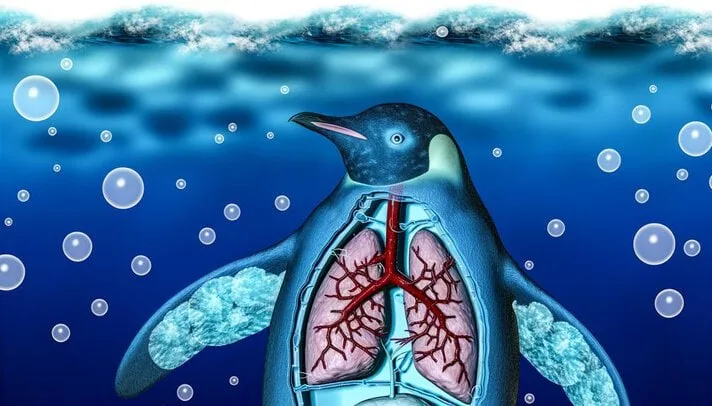
Image source: Bing (Web (fair-use with source credit))
- Oxygen Storage Capacity: Emperor penguins have a significantly higher blood volume compared to many other birds. This means they carry more oxygen-rich blood throughout their bodies.
- Myoglobin Concentration: Their muscles are packed with myoglobin, a protein that binds and stores oxygen. This provides a readily available oxygen reserve directly within the muscle tissue, allowing it to function longer without fresh oxygen from the bloodstream.
- Efficient Respiration: While not directly an oxygen storage mechanism, their efficient lungs and circulatory system ensure that oxygen is taken in effectively and distributed optimally.
The Real Numbers: Average vs. Maximum Dive Durations
When we talk about how long emperor penguins can stay underwater, it's important to distinguish between their typical behavior and their extreme capabilities. These figures provide a clear picture of their diving prowess and the range of their abilities in different situations.
Average Dive Time: Most of the time, when an emperor penguin is foraging for food, its dives will last between 2 to 3 minutes. This is sufficient time to locate prey like fish and squid in the relatively shallow zones they often frequent.
Maximum Recorded Dive Time: However, when faced with the need to pursue deeper prey or evade a predator, emperor penguins can push their limits significantly. Scientific observations have recorded dives lasting an astonishing 15 to 20 minutes. This extended duration showcases their physiological resilience and the effectiveness of their oxygen conservation strategies.
This data is crucial for understanding their energy expenditure and how they manage oxygen resources during foraging trips that can take them many meters below the surface.
Why Such Long Dives Matter for Survival
The ability to hold their breath for extended periods isn't just a cool biological fact; it's absolutely fundamental to an emperor penguin's survival. These extended dive times directly impact their success in finding food and avoiding danger in the harsh Antarctic environment.
Foraging Success in the Deep
The Southern Ocean is a vast and deep ecosystem. For emperor penguins, their primary food sources, fish, squid, and crustaceans, can be found at considerable depths. Being able to dive for 15 to 20 minutes allows them to explore a much wider vertical and horizontal range in search of these prey items.
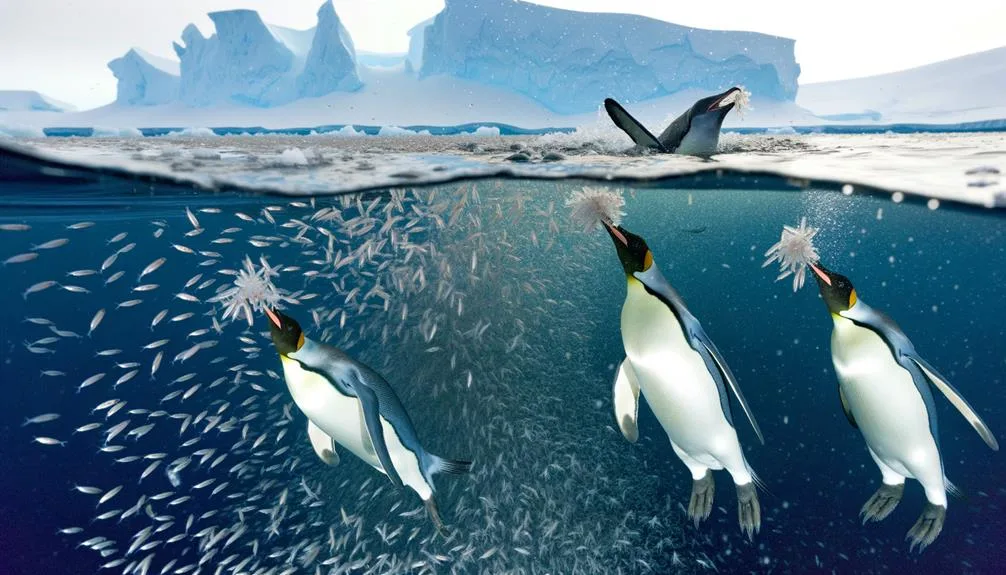
Image source: Bing (Web (fair-use with source credit))
This prolonged underwater time means they can be more efficient hunters, increasing their chances of securing enough food to sustain themselves and their chicks. It's a direct link between their physiological capacity and their ability to thrive in a challenging food landscape.
Escaping Danger
While their main predators, such as leopard seals and orcas, are also formidable in the water, extended dive times can offer an escape route. A penguin's ability to stay submerged longer can allow it to outmaneuver a predator or reach deeper, less accessible areas where the predator might not be able to follow or may have difficulty hunting. It provides a critical advantage in predator-prey interactions, enhancing their chances of survival.
What Other Marine Life Can Teach Us
Comparing the emperor penguin's diving abilities to those of other marine animals offers fascinating insights into the diverse strategies life has developed for underwater survival. While all marine creatures need to manage oxygen, the specific adaptations vary greatly, highlighting evolutionary pressures.
For instance, marine mammals like whales and seals often exhibit incredible dive times, with some species like sperm whales descending to extreme depths for over an hour. They achieve this through similar mechanisms of oxygen storage and reduced metabolic rates, but their anatomy and physiology differ significantly from birds. Seals, for example, have even higher concentrations of myoglobin and a more pronounced ability to collapse their lungs.
On the other hand, many fish species have gills and can extract oxygen directly from the water, negating the need for breath-holding altogether. Their challenge is different, dealing with pressure and finding oxygenated water. Even within other seabirds, there's a wide spectrum; some, like terns, are primarily surface feeders and have much shorter dive times, whereas species like cormorants also demonstrate impressive diving capabilities, though generally not to the extreme durations seen in emperor penguins.
This comparison underscores that while the challenge of underwater life is universal, the solutions are remarkably varied.
Frequently Asked Questions About Penguin Diving
Can they get the bends?
Emperor penguins are remarkably adapted to avoid decompression sickness, commonly known as "the bends." Their diving strategy includes controlled ascents and physiological changes, such as collapsing their lungs, which minimizes the amount of dissolved nitrogen that can enter their tissues under pressure. This prevents the formation of gas bubbles that cause painful and dangerous symptoms in humans.
Do all penguins dive for so long?
No, not all penguins possess the same extreme diving capabilities as emperor penguins. While most penguins are excellent swimmers and divers, their depth and duration underwater vary significantly by species. Smaller penguins, for example, tend to have shorter dives, focusing on different prey and facing different predator threats than their larger Antarctic cousins.
How do we even know these dive times?
Researchers use a variety of sophisticated methods to track emperor penguin dives. These include attaching small, non-invasive electronic devices to the penguins that record depth, duration, and time spent underwater. These tags transmit data, providing scientists with precise metrics on individual dives and overall foraging behavior, allowing for detailed analysis of their underwater activities.