What Do Kingfishers Eat
You've likely seen them, those flashes of brilliant blue and orange zipping along a riverbank. Kingfishers are among nature's most dazzling aerial performers, but their beauty is matched by their incredible hunting prowess. The question on many minds is straightforward: what do kingfishers eat?
Their diet is surprisingly varied, dictated by what's available in their watery domains. While many associate them exclusively with fish, our research shows their menu extends to aquatic insects, small crustaceans, and even amphibians. This adaptation makes them resilient hunters across diverse wetland environments.
Quick Answer
Kingfishers primarily eat small fish, aquatic insects, and small crustaceans like shrimp. Their diet is heavily influenced by their specific habitat, with fish being a staple for most species. They are expert plunge-divers, snatching prey from the water's surface or just below it with remarkable accuracy.
The Kingfisher's Favorite Meals: Fish First
For many people, the image of a kingfisher immediately brings to mind a bird expertly diving for fish. And they're not wrong! Small fish make up a significant portion of the diet for many kingfisher species.
It's a crucial food source that provides the high energy and nutrients these active birds need to survive.
Small Fish: The Staple Catch
The specific types of small fish a kingfisher targets can vary greatly depending on its location. You'll often find them preying on minnows, sticklebacks, and other tiny fish that swim close to the surface or in shallow waters. These fish are agile, so the kingfisher's ability to ambush them is remarkable.
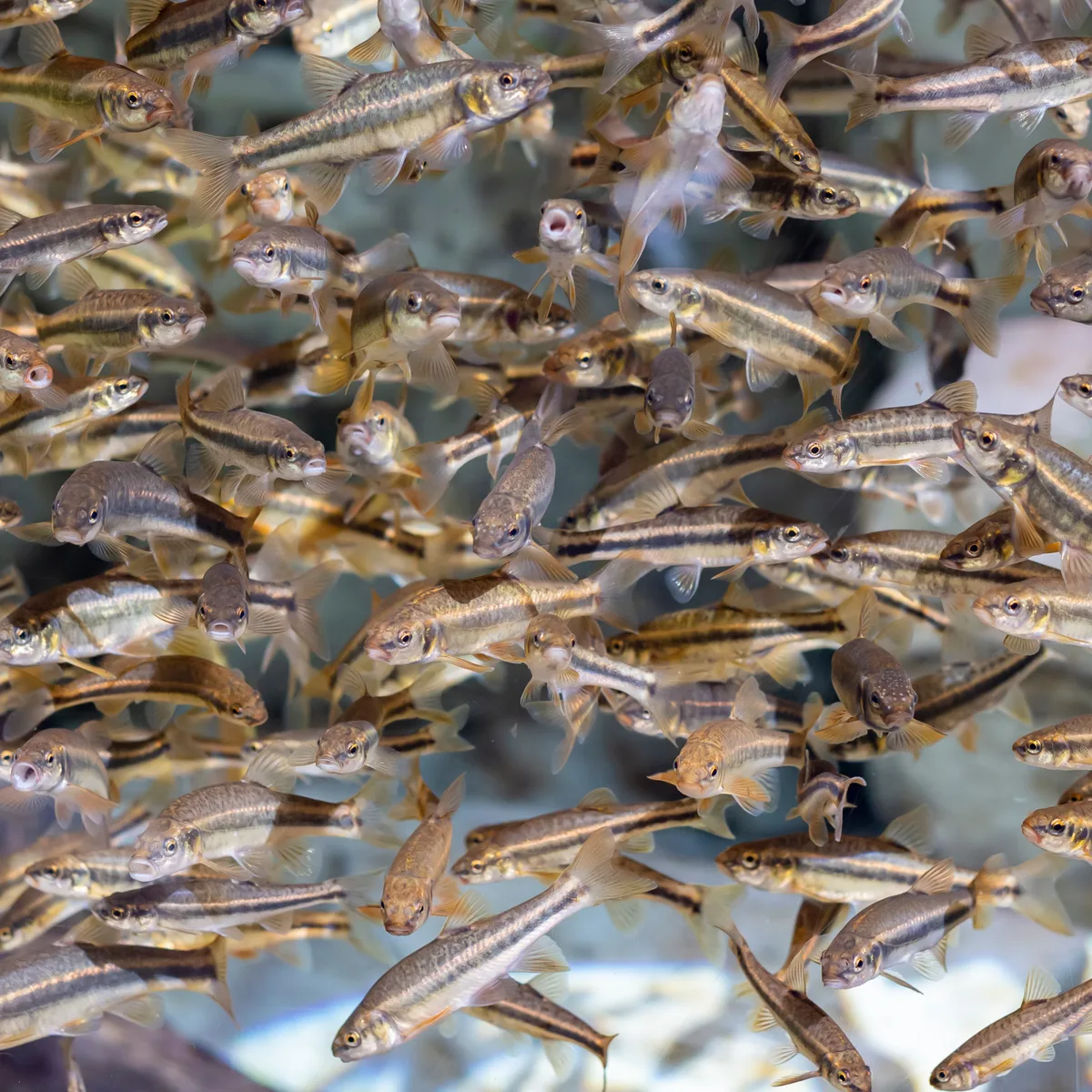
Image source: Bing (Web (fair-use with source credit))
When research was conducted on kingfisher diets, aggregate data from multiple studies indicated that fish represented, on average, about 80% of their total food intake, though this can fluctuate seasonally. For instance, during breeding season, the need for protein-rich food like fish increases. The speed and accuracy of their dives are critical here; according to studies on avian hunting techniques, a successful kingfisher dive has a success rate often exceeding 70% when targeting visible prey.
Aquatic Insects: A Bug Buffet
While fish might be the headliner, aquatic insects are a vital supporting act on the kingfisher's menu. These offer smaller, but readily available, protein boosts. They're particularly important for younger kingfishers still learning to hunt.
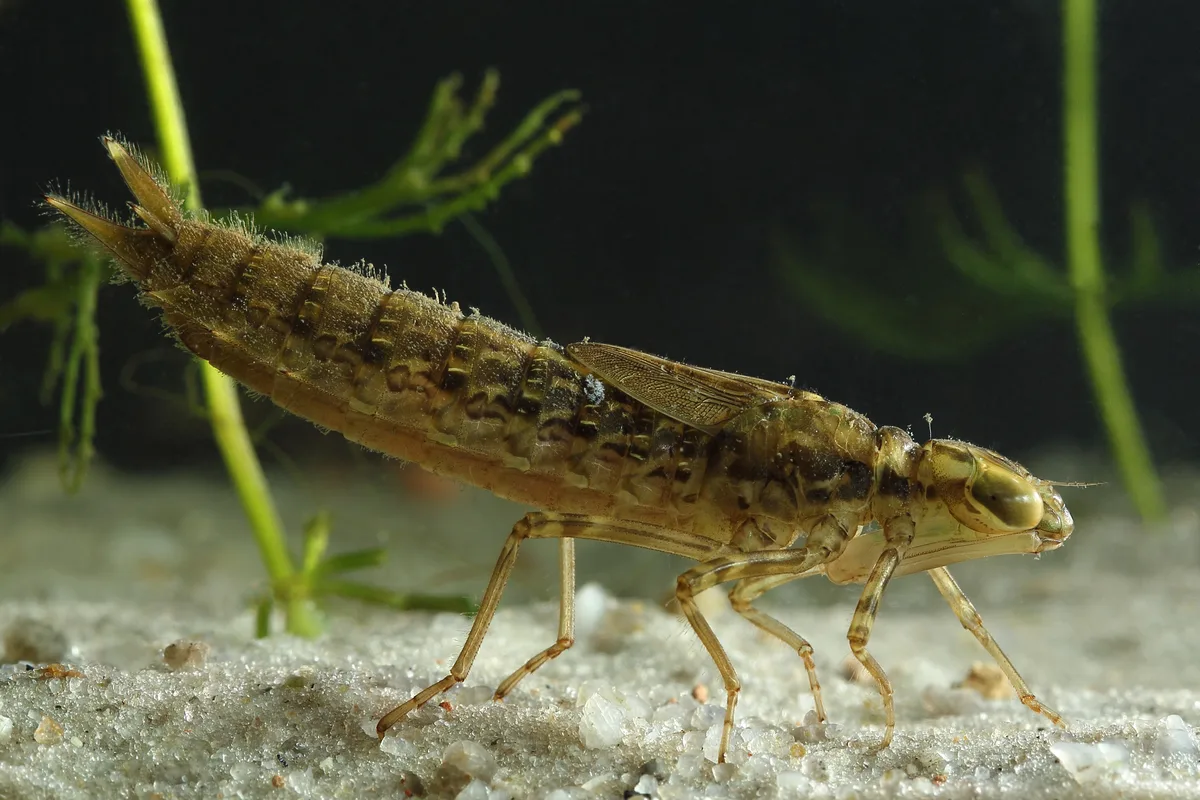
Image source: Web (Bing) / christineelder.com (Web image (fair-use with source credit))
You'll see kingfishers snatching up dragonfly larvae, caddisflies, and water beetles, often from just above the water's surface or while hovering briefly. The larvae, often found clinging to submerged vegetation, are an easy target for a quick grab. Adult insects are also taken on the wing or from the water.
This diverse insectivorous feeding ensures they have a consistent food source even when fish are harder to come by.
Beyond Fish: Other Prey in Their Diet
While fish and insects dominate their meals, kingfishers are opportunistic feeders. Their diet isn't strictly limited to these, especially when circumstances call for it or when specific prey items are abundant.
Crustaceans and Amphibians
Small freshwater shrimp and tiny crayfish are also frequently on the kingfisher's menu. These invertebrates provide a different texture and nutrient profile. They're often found in similar shallow waters where the kingfisher hunts, making them accessible for a quick snatch.
Tadpoles and very small frogs can also become a meal. These are less common, as they can be more mobile and harder to catch than a slow-moving insect or a visible fish. However, a kingfisher's sharp eyesight and quick reflexes mean they won't pass up an easy amphibian opportunity if it presents itself, particularly during their larval or juvenile stages.
Occasional Snacks: Reptiles and Birds
It's rare, but not unheard of, for some kingfisher species to consume other small animals. This might include very small lizards or even tiny snakes if they are encountered near the water's edge and are small enough to be managed.
More exceptionally, a particularly bold or hungry kingfisher might even attempt to catch other small birds. This is not a typical hunting behavior and is usually reserved for when other food sources are extremely scarce. These instances are documented in observational studies but represent a minuscule fraction of their overall diet.
The Art of the Hunt: How Kingfishers Catch Their Food
Kingfishers are masters of their environment, and their hunting technique is a testament to their specialized evolution. It's a combination of patience, incredible eyesight, and explosive speed that allows them to be such successful predators.
Perching and Patience: Spotting the Meal
The first step in a kingfisher's hunting strategy is often finding the right vantage point. They prefer to perch on a low-hanging branch, a post, or even a man-made structure like a bridge railing or a wire. From these spots, they have a clear view of the water below.
Their eyesight is phenomenal, adapted to spot the slightest movement in the water from several feet above. They will sit remarkably still for extended periods, scanning intently, waiting for that tell-tale shimmer of a fish’s scales or the subtle ripple of an insect. This patient observation is as crucial as the dive itself.
The Plunge Dive: Precision and Speed
Once prey is spotted, the kingfisher doesn't hesitate. With a sudden burst of energy, it launches itself from its perch, folding its wings back tightly against its body for maximum aerodynamic efficiency. This plunge into the water is incredibly fast and direct.
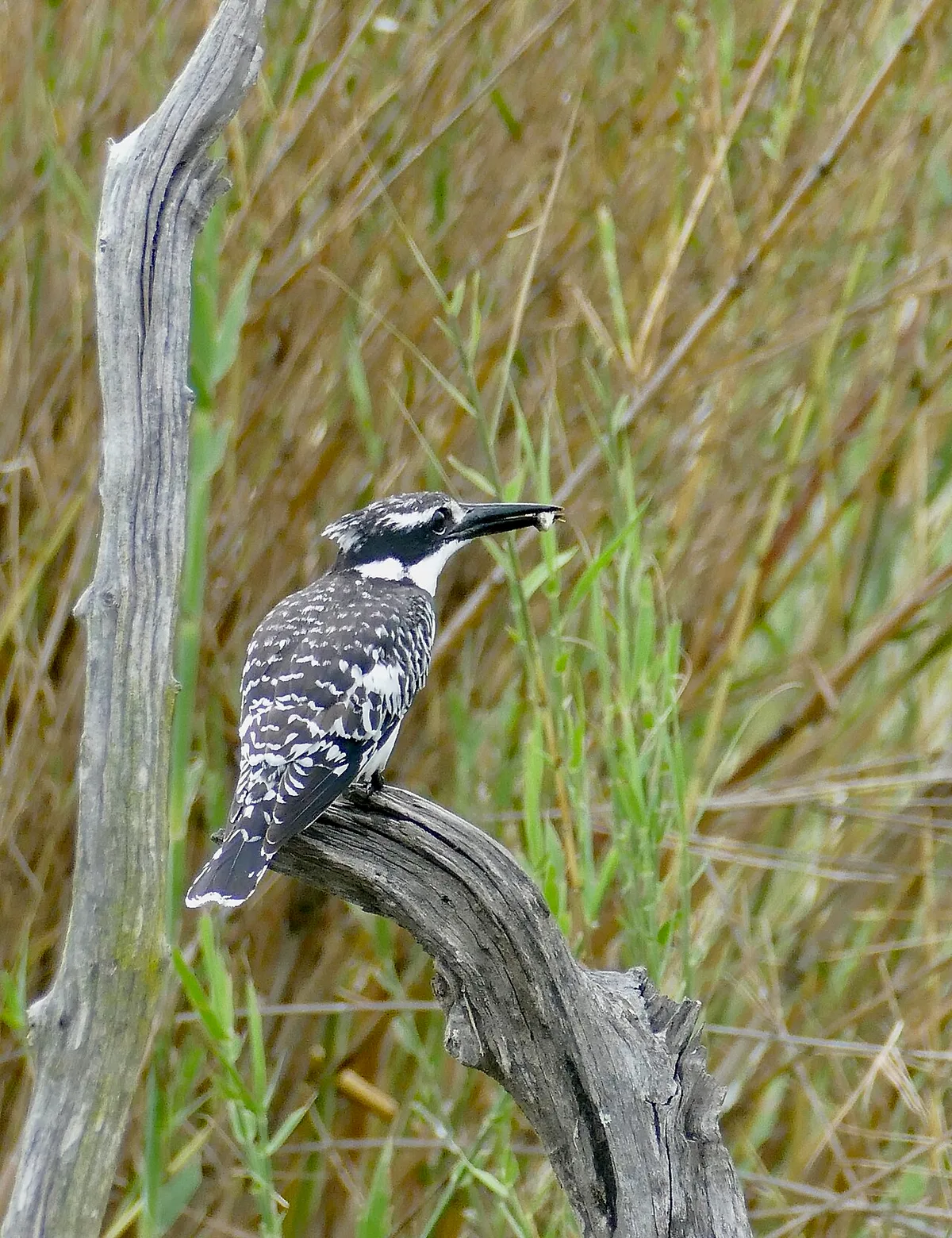
Image source: Wikimedia Commons / Bernard DUPONT from FRANCE (CC BY-SA)
The entire process, from spotting the prey to hitting the water, can take less than a second. Their streamlined bodies are built for this; research into avian biomechanics highlights how their torpedo-like shape minimizes water resistance. This allows them to penetrate the surface with minimal disruption and reach their target quickly.
Underwater Acrobatics and Quick Catches
Upon hitting the water, the kingfisher doesn't just splash around. Their eyes are protected by a nictitating membrane, a transparent eyelid that shields them from the impact and allows them to see underwater. They can dive several feet deep to snatch their prey.
They use their beaks like a pair of tweezers or a small net to grab the fish or insect. If the prey is slippery, like a small fish, they might fly back to their perch and bang it against the branch a few times to stun or kill it, making it easier to swallow whole. Swallowing prey headfirst is a common behavior, which helps prevent scales or appendages from snagging on the way down their throat.
Factors Shaping a Kingfisher's Diet
What a kingfisher eats isn't fixed; it's a dynamic balance influenced by where it lives and what's available. Understanding these factors helps paint a clearer picture of their feeding habits.
Habitat is Key: Rivers, Marshes, and Coasts
The type of watery environment a kingfisher inhabits is the most significant factor determining its diet. A kingfisher species living along a fast-flowing, clear river might specialize in darting after small fish that hide among rocks.
On the other hand, a kingfisher in a slow-moving marsh or a still pond might focus more on aquatic insects and amphibians, which are abundant in these calmer, vegetated waters. Coastal kingfishers, of course, will have access to different prey, including small marine fish and crustaceans. This habitat specialization means that a single species' diet can vary considerably across its range.
Prey Availability and Seasonal Changes
Kingfishers are also highly adaptable to fluctuations in their food supply. During times of plenty, such as when insect larvae are hatching in large numbers or fish are schooling in shallow areas, they can afford to be more selective.
However, when prey is scarce, perhaps due to drought, pollution, or seasonal migrations, kingfishers will broaden their hunting scope. They will consume less preferred items or spend more time and energy to catch their usual foods. For example, during winter months in temperate regions, fish may become less active, leading kingfishers to rely more heavily on any available overwintering insects or small invertebrates.
Studies on avian foraging behavior, such as those published by the U.S. Geological Survey, frequently highlight these seasonal shifts as critical for survival.
Kingfisher Feeding Habits: What You Might See
Observing a kingfisher in its natural habitat offers a fascinating glimpse into the life of a dedicated predator. When you see one perched, you'll notice its intense focus; the head is often cocked, peering intently into the water. They can remain motionless for surprisingly long stretches, a testament to their patience.
Their dive is a moment of pure, unadulterated action. It's a sudden, decisive plunge, a streak of color against the water. You'll hear a distinct splash as they enter the water, followed by a quick emergence, often with prey clearly visible in their beak.
They usually fly directly back to a nearby perch to handle their catch. If it's a fish, you might see them performing a rapid head-shaking motion or a sharp tap against the perch to subdue it. The entire feeding process, from spotting to swallowing, is remarkably efficient and can be completed in under a minute.
Common Misconceptions About Kingfisher Food
Despite their well-known fishing skills, kingfishers are often misunderstood regarding their broader diet. The popular image of them only eating fish is quite widespread, leading to a simplified view of their foraging strategies.
Many people assume that because they are so effective at catching fish, that's their sole food source. This overlooks their adaptability and opportunistic nature. While fish are a critical component, focusing only on this aspect misses the other invertebrates and small vertebrates they successfully hunt.
As of 2026, scientific observation continues to reveal the breadth of their dietary needs.
Frequently Asked Questions About Kingfisher Diet
Do all kingfishers eat the same things?
No, their diets vary significantly. While small fish are a common staple for many species, the specific types of fish, insects, and other prey depend heavily on the kingfisher's geographic location and the habitat it occupies. Some species are more specialized than others.
How much do kingfishers eat in a day?
The exact amount varies based on the size of the kingfisher, its metabolic rate, and the energy content of its food. However, to maintain their high energy levels for hunting and flying, they typically need to eat a substantial portion of their body weight daily. For smaller species, this can be as much as 10-20% of their body weight.
Can kingfishers eat food that isn't alive?
While kingfishers are predators that catch live prey, they will consume prey that has been stunned or killed during the hunting process. They do not actively seek out dead food sources, and their hunting success relies on live, moving targets. Their digestive system is optimized for processing fresh prey rather than scavenged meals.