Do Flamingos Have Teeth
You've probably seen flamingos and wondered, "Do flamingos have teeth?" It's a question that pops into mind when you look at their long, uniquely shaped beaks. Many birds have beaks, but the idea of teeth in such a striking creature is intriguing and, frankly, a little confusing.
Our research confirms that flamingos, in fact, do not possess teeth at all. Instead, their beaks are equipped with specialized structures called lamellae, which function as an incredibly efficient filter-feeding apparatus. These tiny, comb-like filaments lining the inside of their beaks allow them to strain food from water and mud.
This adaptation is crucial for their survival, enabling them to consume small invertebrates, algae, and seeds.
Quick Answer
No, flamingos do not have teeth. Their beaks are lined with comb-like structures called lamellae. These lamellae act as a filter, allowing flamingos to strain food from water and mud.
This unique adaptation is what enables them to feed effectively.
Flamingo Beaks: Not What You Think They Are
When you picture a flamingo, you often imagine that distinctive, down-curved beak. It looks pretty unique, right? Well, it's even more fascinating than you might think.
The flamingo's beak isn't just for show; it's a highly specialized tool perfectly designed for its specific feeding habits. Unlike many other birds that use their beaks for pecking or tearing, the flamingo's beak works like a sophisticated sieve.
This beak is actually used upside down when feeding. The bird dips its head into the water, or mud, and then uses its tongue to pump water in and out. The lamellae on the inside of the beak catch the tiny food particles while letting the water and mud escape.
It’s a brilliant piece of natural engineering that has allowed flamingos to thrive in watery environments.
What's Inside a Flamingo's Beak? Lamellae Explained
Let's get down to the nitty-gritty of what's actually inside a flamingo's beak. Forget about sharp incisors or molars; what you'll find instead are these amazing little structures called lamellae. Think of them like the bristles on a brush or the teeth on a comb, but much finer and adapted for filtering.
These lamellae are rows of tiny, fleshy, comb-like filaments that line the edges of both the upper and lower mandibles of the beak.
When a flamingo feeds, water and mud are drawn into the beak. The lamellae then trap small food items like brine shrimp, algae, and insect larvae. The flamingo's tongue, which is surprisingly large and fleshy, plays a crucial role here too.
It acts like a piston, pushing the water and mud back out through the gaps in the lamellae, leaving the food behind to be swallowed. It's this intricate system that makes their specialized diet possible.
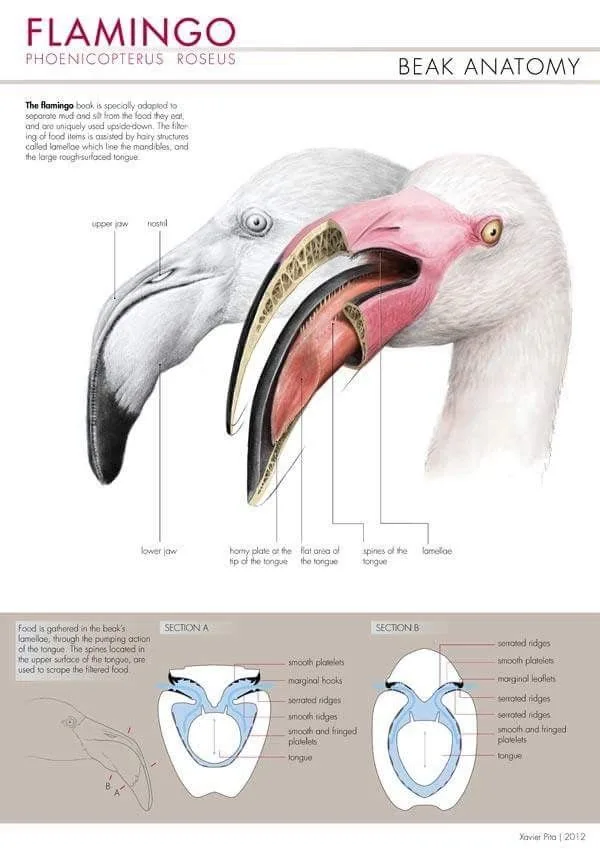
Image source: Bing (Web (fair-use with source credit))
How Flamingos Filter Feed: A Specialized System
Filter feeding is the name of the game for flamingos, and their beaks are the stars of the show. This method is common in aquatic animals, but flamingos have a particularly sophisticated terrestrial version. They feed primarily in shallow lakes, lagoons, and mudflats, environments rich with the tiny organisms they eat.
Their feeding posture is quite remarkable; they often stand on one leg with their head completely submerged and their beak upside down.
The process involves an active pumping action. The flamingo uses its broad, fleshy tongue to create a suction, drawing water and mud into the beak. As the water is expelled, the lamellae catch and hold onto small food particles.
It's a continuous cycle that can last for hours, allowing them to consume substantial amounts of food. This intricate system is a testament to evolutionary adaptation, showing how species can develop unique methods to exploit available resources.
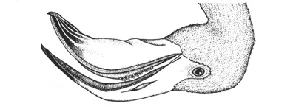
Image source: Bing (Web (fair-use with source credit))
Why We Think Flamingos Might Have Teeth (And Why It's Wrong)
So, why does the question "do flamingos have teeth?" even come up? It's understandable, really. When we think of animals eating, teeth are usually the first thing that comes to mind.
Many birds do have beaks that are sharp or serrated, which can look a bit like teeth, leading to some confusion. Plus, the sheer size and strange shape of a flamingo's beak might make us wonder what other dental-like features it could possess.
However, the biological reality is quite different. The evolutionary path for birds diverged significantly from mammals long ago. While ancestral birds did have teeth, modern avian species, including flamingos, have lost them over millions of years.
Instead of developing complex dentition, they've evolved other specialized structures, like beaks and gizzards, to process their food. The lamellae in the flamingo's beak are a perfect example of this adaptation, serving the function teeth might otherwise, but in a completely different, beak-integrated way.
The Real Deal: How Flamingos Eat Without Teeth
If flamingos don't have teeth, how do they actually eat? It all comes back to that incredible beak and a highly efficient filter-feeding mechanism. When a flamingo feeds, it dips its head into the water, often inverting its beak so the upper mandible is on the bottom.
It then uses its powerful, muscular tongue to create a suction. This action pulls water and mud into the beak cavity.
The magic happens next. The tightly packed lamellae, which are located along the edges of both the upper and lower beak parts, act like a sieve. As the flamingo pushes the water and mud back out with its tongue, the lamellae trap any small food particles.
These trapped food bits are then swallowed. It’s a clever, two-way system that works tirelessly to extract nutrients from their watery dining environments. This process is vital for their survival, as it allows them to access food sources unavailable to many other birds.
Avoiding Misinformation: Common Myths About Flamingo Dentition
It's easy for myths to spread, especially when it comes to unique animal adaptations. One common misconception is that flamingos might have some sort of vestigial teeth or tooth-like structures hidden within their beaks. This often stems from a misunderstanding of what the lamellae actually are.
They function like teeth in that they help process food, but they are fundamentally different in structure and origin.
Another myth might involve oversimplifying their feeding. People might imagine them just scooping up water and swallowing whatever is in it. In reality, their feeding process is precise and requires a controlled expulsion of water to isolate the food particles.
Understanding the true mechanics prevents these kinds of inaccuracies from taking root and helps us appreciate the flamingo's unique biology.
Experts Weigh In: What Ornithologists Say
Ornithologists, the scientists who study birds, have a clear understanding of flamingo anatomy. Their research confirms that flamingos, along with all modern bird species, lack teeth. This absence of teeth is a defining characteristic of the avian class.
Instead, birds have evolved beaks for a wide variety of functions, and the flamingo's beak is a prime example of specialization.
According to findings from institutions like the Cornell Lab of Ornithology, the focus is on the beak's morphology and the associated feeding mechanisms. Experts emphasize the importance of the lamellae and the tongue in the flamingo's diet. They explain that while ancestral birds once possessed teeth, these structures were lost during evolution, with beaks and other digestive adaptations taking over their roles.
FAQs About Flamingo Feeding
Do flamingos have gums?
Flamingos do not have gums in the way mammals do. Their beaks are covered by a tough, keratinous material, similar to fingernails or hair. The lamellae are fleshy projections within this structure, not independent gum tissue.
What is the pink color of flamingos related to their diet?
The vibrant pink or reddish color of flamingos comes from carotenoid pigments found in their food, such as algae and brine shrimp. This pigment is metabolized, coloring their feathers, legs, and beak. If they didn't eat these specific food items, they would likely be a pale white or gray.
How do flamingos sleep?
Flamingos often sleep standing on one leg. This position helps them conserve energy and reduces heat loss from their bodies. Their leg joints have a special locking mechanism that allows them to stand without expending much muscle effort.
Can flamingos see well?
Yes, flamingos have good eyesight. They need it to spot potential food sources in often murky waters and to watch out for predators. Their eyes are positioned on the sides of their heads, giving them a wide field of vision.