How Far Do Birds Migrate
How far do birds migrate? For some species, the answer is astonishing. The Arctic Tern flies roughly 44,000 miles in a single year, crossing from Arctic breeding grounds all the way to Antarctic waters and back again.
Other species barely leave their local wetland.
Research from the USGS Bird Banding Laboratory and satellite tracking studies on species like the bar-tailed Godwit have given us precise migration distances for hundreds of bird species. The numbers range from under 500 miles to over 40,000. Here's how the data breaks down, species by species and flyway by flyway.
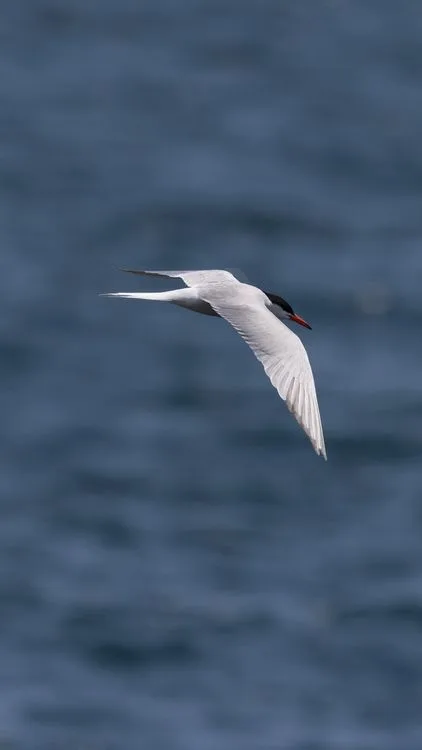
Image source: Web (Bing) / pexels.com (Web image (fair-use with source credit))
Quick Answer
How far do birds migrate? It depends on the species. The Arctic Tern migrates roughly 44,000 miles in a round trip.
The Ruby-throated Hummingbird flies 500 miles nonstop across the Gulf of Mexico. Most migrating songbirds cover 1,000 to 3,000 miles each season.
The Record Holders: Which Birds Travel the Farthest?
Several species are built for extreme distance. The Arctic Tern tops the list at roughly 44,000 miles round trip. That's the longest migration recorded for any animal on Earth.
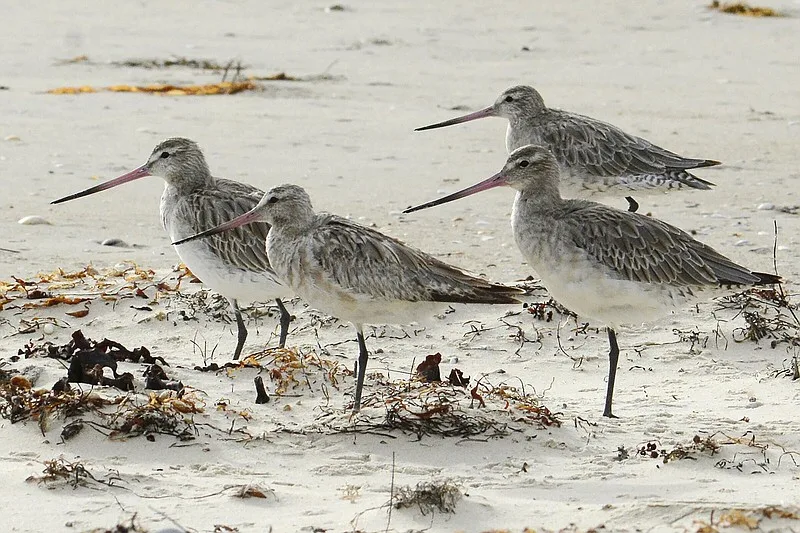
Image source: Web (Bing) / arkansasonline.com (Web image (fair-use with source credit))
The bar-tailed Godwit holds the record for the longest single nonstop flight. In 2020, satellite tracking confirmed one individual flew about 7,145 miles from Alaska to New Zealand without landing. That's roughly seven to eleven days of continuous flight over open ocean.
Other long-distance record holders include:
- Sooty Shearwater: roughly 40,000 miles per year, following a figure-eight route across the Pacific Ocean
- Northern Wheatear: over 7,500 miles from Arctic breeding grounds in Alaska and Canada to sub-Saharan Africa
- Red Knot: approximately 9,300 miles from Arctic breeding grounds to wintering sites in Tierra del Fuego
- Swainson's Hawk: around 12,000 miles round trip from Canadian prairies to South American pampas
What makes these species special isn't just distance. It's endurance. They've evolved wing shapes, fat storage strategies, and metabolic fuel management that let them push far past what seems possible for a small-bodied animal.
How Migration Distance Varies by Species: From 500 Miles to 44,000
Not all migratory birds travel the same distances. Some species barely move 100 miles between seasons. Others cross entire oceans and continents.
Here's a snapshot of migration distances across common species:
| Species | One-Way Distance | Round-Trip Distance | Notes |
|---|---|---|---|
| Arctic Tern | ~22,000 miles | ~44,000 miles | Longest migration on Earth |
| Bar-tailed Godwit | ~7,145 miles | ~14,290 miles | Nonstop record holder |
| Sooty Shearwater | ~20,000 miles | ~40,000 miles | Figure-eight Pacific route |
| Swainson's Hawk | ~6,000 miles | ~12,000 miles | Crosses two continents |
| Red Knot | ~9,300 miles | ~18,600 miles | Tierra del Fuego wintering grounds |
| Northern Wheatear | ~7,500 miles | ~15,000 miles | Arctic breeding to African wintering |
| Ruby-throated Hummingbird | ~2,500 miles | ~5,000 miles | Includes Gulf of Mexico crossing |
| Blackpoll Warbler | ~1,800 miles | ~3,600 miles | Transatlantic overflight |
| American Robin | ~100 miles | ~200 miles | Short-distance regional mover |
As of 2026, these figures come from a combination of satellite telemetry data, banding recovery records, and citizen science observations. Short-distance migrants like the American Robin cover a fraction of what oceanic species manage. But both groups face serious risks on their routes.
What Drives the Difference: Body, Route, and Survival Strategy
Three main factors explain why one bird species migrates 500 miles while another flies 40,000.
Body size and wing shape matter more than most people think. Species with long, narrow wings like terns and shearwaters are built for gliding and endurance. Songbirds with short, rounded wings can't sustain long flights over open water.
Food availability is the biggest driver. Birds follow their food. If a species breeds in the Arctic and eats insects, it must move south when insects disappear.
Species that migrate the farthest are chasing seasonal food that only appears in specific places.
Stopover quality shapes the route. A bird that can't refuel efficiently has to stick to corridors with reliable wetlands and shorelines. The availability of good stopover sites determines whether a species crosses an ocean or hugs the coast.
Breeding range matters too. Species breeding near the poles migrate the farthest because there's more distance to cover before reaching suitable winter habitat. All three factors interact.
A long-winged bird with access to productive stopover sites is evolutionarily positioned to migrate enormous distances.
Tracking the Data: How We Know How Far Birds Actually Fly
We know how far birds migrate because of two long-running research methods. One is traditional. The other is modern.
The traditional method is bird banding. Researchers fit small aluminum bands to a bird's leg, record its identity, and release it. If the bird is recaptured or found elsewhere, that recovery point gives researchers a data point for distance calculation.
The USGS Bird Banding Laboratory has been collecting this data since the 1930s.
The modern method is satellite telemetry. Tiny GPS transmitters attached to a bird's back send location data to researchers in real time. For species like the bar-tailed Godwit and Arctic Tern, satellite tags have produced the precise migration distances we cite today.
The Cornell Lab of Ornithology uses this technology alongside citizen science data from eBird.
Geolocators fill another gap. These lightweight loggers measure light levels to estimate a bird's position throughout its journey. They're especially useful for small species that can't carry GPS tags.
The result is an increasingly accurate picture of how far birds migrate, species by species.
Real Numbers, Real Routes: Migration Distances by Flyway
Bird migration doesn't happen randomly. Species follow established flyways, continent-scale corridors shaped by millions of years of evolution. Understanding these routes is how we answer how far birds migrate with any precision.
The North American system uses four major flyways:
- Atlantic Flyway: coastal migrants traveling from Arctic Canada and Greenland down to the Gulf of Mexico and Caribbean
- Mississippi Flyway: interior migrants following river systems from Hudson Bay to the Gulf of Mexico
- Central Flyway: open-prairie migrants crossing the Great Plains from northern Canada to Central and South America
- Pacific Flyway: western migrants from Alaska and western Canada to California, Mexico, and beyond
In Asia and Oceania, the East Asian-Australasian Flyway is equally critical. Red Knots, shorebirds, and waterfowl travel from Arctic Siberia to Australia and New Zealand along this corridor.
Distances within each flyway vary enormously. On the Central Flyway, Swainson's Hawks cover roughly 12,000 miles round trip. On the Atlantic Flyway, Blackpoll Warblers make a 1,800-mile transatlantic crossing over open water.
Each flyway demands its own conservation strategy. Protecting a stopover wetland in Louisiana doesn't help a bird following the Central Flyway through Kansas. That's why flyway-level planning matters.
Why Stopover Sites Decide Whether Migration Works or Fails
Long-distance migration is only possible because birds can refuel along the way. Stopover sites are the wetlands, estuaries, and shorelines where migratory birds rest and rebuild fat reserves. Without them, ocean-crossing species couldn't survive the journey at all.
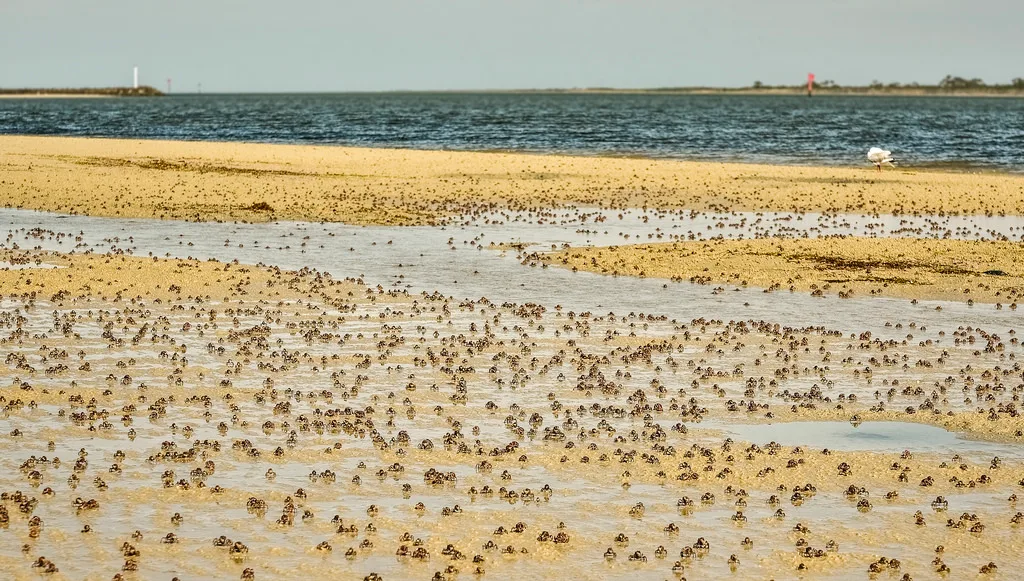
Image source: Bing (Web (fair-use with source credit))
Species like the Red Knot depend on specific stopover points. On their southbound journey to Tierra del Fuego, they hit the Delaware Bay and the coast of Maranhão in Brazil. If either site degrades, the birds can't build enough fat to continue.
Declining horseshoe crab egg populations at Delaware Bay have measurably affected Red Knot body condition.
The quality of stopover habitat directly influences how far a bird can migrate in one bout. A bird that hits good habitat can double its body weight in fat within days. A bird that doesn't may die before reaching winter grounds.
Conservation groups like BirdLife International use stopover mapping to protect the sites that matter most along each flyway. If you're involved in local land management near a flyway corridor, the wetland on your land could be a critical link for species migrating thousands of miles.
How Climate Change Is Shrinking Migration Distances
Climate change is altering migration patterns across the board, and distances are shifting in both directions.
Some species are migrating shorter distances. In Europe, several populations of White Storks and Blackcaps have shortened their routes as winters have warmed. Food that used to require a flight to Africa is now available closer to home.
Some populations have stopped migrating entirely.
Other species are shifting routes rather than shortening them. Shorebirds on the East Asian-Australasian Flyway are experiencing later spring arrivals as Arctic breeding grounds warm earlier. Timing mismatches between migration arrival and peak food availability are increasing mortality in some populations.
Here's what the research shows:
| Effect | Examples | Typical Distance Change |
|---|---|---|
| Shorter migration | White Stork, Blackcap | 200 to 1,000+ miles shorter |
| Route shift | Arctic shorebirds | Same total distance, different timing |
| Earlier spring arrival | Swallow, Warbler species | Arrival dates advance 1 to 3 weeks |
| Residency increase | Some northern songbirds | Distance drops to near zero |
As of 2026, these trends are accelerating. For birdwatchers and researchers alike, tracking how far birds migrate over time is one of the clearest indicators we have of how fast ecosystems are changing.
Frequently Asked Questions
What is the longest bird migration recorded?
The Arctic Tern holds the record at roughly 44,000 miles per year. This figure comes from geolocator tracking data showing round trips between Arctic breeding colonies and Antarctic feeding grounds. It remains the longest known animal migration on the planet.
How far do small songbirds migrate?
Most migrating songbirds travel between 1,000 and 3,000 miles per season. Species like the Blackpoll Warbler fly about 1,800 miles nonstop over the Atlantic Ocean. Smaller species with less fat storage typically migrate shorter distances or use more stopover sites.
Do all birds migrate every year?
No. Roughly 40% of bird species are migratory, and not all species migrate every year. Some are partial migrants where certain populations move and others stay resident.
Others, like many North American gulls and crows, stay within a local range year-round.
How do birds know how far to migrate?
Birds use a combination of the sun's position, star patterns, magnetic field detection, and learned routes from older birds. These navigation systems tell them when to depart. The distance is hardwired into the species' migratory program.
Can a bird die during migration?
Yes. Migration is the most dangerous period in a bird's life. Birds face exhaustion, storms, collisions with buildings and power lines, and habitat loss at stopover sites.
Long-distance species like the Red Knot and Arctic Tern are especially vulnerable because a single failed stopover can be fatal.
How has tracking technology changed what we know about migration distances?
Satellite GPS tags and geolocators have revealed that many species migrate far farther than banding recovery data suggested. The bar-tailed Godwit's 7,145-mile nonstop flight was only confirmed when lightweight trackers could ride along. Modern data shows distances we couldn't have measured before.