How Far Can an Albatross Fly
You ever see a bird soaring way up high and wonder, "How far could that thing actually go?" Well, if you've ever thought about albatrosses, you're looking at some of the planet's most impressive flyers. These aren't your everyday pigeons, folks. We're talking about birds that can cross oceans and spend years at sea without touching land.
It’s pretty mind-blowing when you start to dig into it.
The sheer distance these birds cover is astounding. For instance, the Wandering Albatross, a species known for its massive wingspan, has been recorded covering over 10,000 miles in a single foraging trip. This incredible feat highlights their unique adaptations for long-distance oceanic travel, a topic we'll explore in detail.
Quick Answer
Albatrosses can fly astonishing distances, often spanning thousands of miles. The Wandering Albatross, for example, can fly over 10,000 miles on a single foraging expedition. These birds are built for endurance and efficient long-haul travel across oceans, spending most of their lives at sea.
The Incredible Journeys of Albatrosses
Albatrosses are masters of the open ocean, undertaking journeys that seem almost unbelievable to us land-dwellers. They aren't just flying from Point A to Point B; they are navigating vast marine environments, often covering thousands of miles in their search for food and during their migration cycles. Their lives are intrinsically tied to the sea, and their flight capabilities are the key to their survival and reproductive success.
These birds truly live lives dictated by the wind and currents. They can spend months, even years, at sea, only returning to specific islands to breed. This nomadic lifestyle requires an incredible ability to traverse immense distances, making them some of the most remarkable avian travelers on Earth.
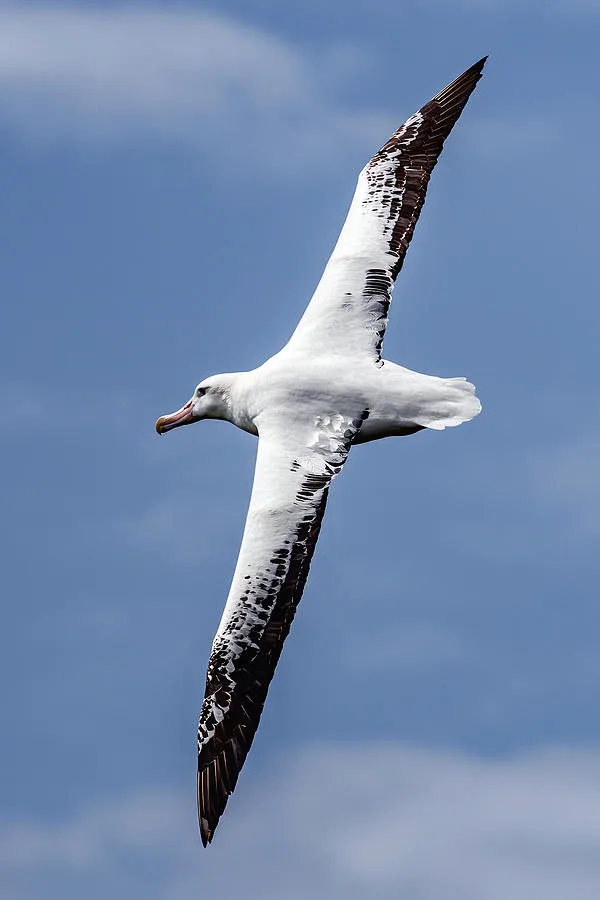
Image source: Bing (Web (fair-use with source credit))
Built for the Long Haul: Albatross Wings and Flight
The secret to an albatross's incredible flight range lies largely in its spectacular wings. Their wingspans are among the largest of any bird species, with some, like the Wandering Albatross, reaching over 11 feet from tip to tip. This massive wingspan isn't just for show; it's a finely tuned aerodynamic tool.
These large wings allow albatrosses to utilize a flight technique called dynamic soaring. This method involves using the wind gradient, the difference in wind speed at different altitudes above the ocean's surface, to gain energy. They glide downwind at lower altitudes where wind speeds are lower, then turn and climb upwind at higher altitudes where wind speeds are greater, effectively recycling energy from the wind.
It's a highly efficient way to travel vast distances with minimal flapping.
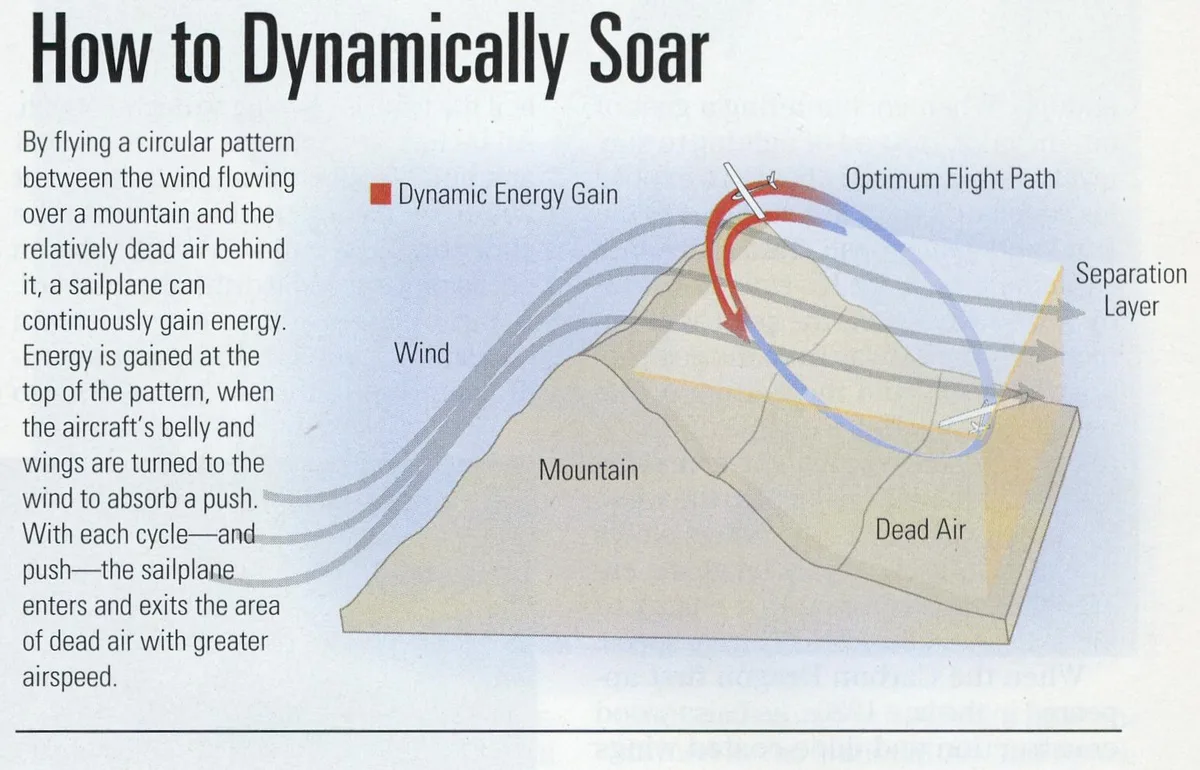
Image source: Bing (Web (fair-use with source credit))
Real-World Flight Examples: Numbers That Astound
When we talk about how far an albatross can fly, the numbers are truly staggering. These aren't theoretical figures; they are the result of extensive tracking studies using devices that monitor bird movements over extended periods. These studies paint a vivid picture of their migratory and foraging capabilities.
- Wandering Albatross: This species is the undisputed long-distance champion. Research has documented individuals undertaking foraging trips that exceed 10,000 miles. Imagine flying from New York to London, then back to New York, and continuing on, that's the scale of distance we're talking about for a single food-gathering mission.
- Other Species: Even species with smaller wingspans still cover remarkable distances. Many albatrosses regularly fly hundreds of miles in a single day while searching for food. Over a year, their ranges can cover entire ocean basins, demonstrating an unparalleled ability to exploit resources across vast marine environments.
The data collected as of 2026 continues to reinforce the incredible migratory prowess of these birds, highlighting their unique ecological role.
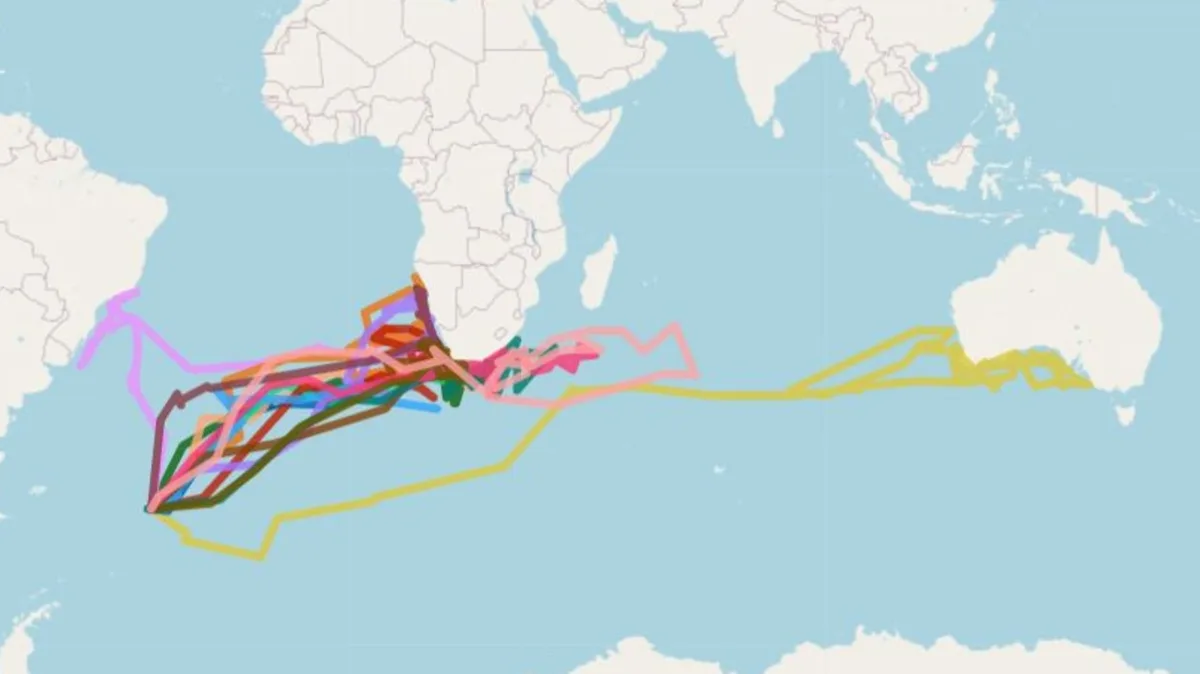
Image source: Bing (Web (fair-use with source credit))
Why Do Albatrosses Fly So Far? The Driving Factors
The extreme flight distances albatrosses achieve aren't random; they are driven by fundamental biological needs and finely tuned adaptations. Understanding these factors helps us appreciate why these birds are so well-suited for a life spent largely in the air over the open ocean.
Food and Foraging
The primary driver for long-distance flight in albatrosses is the search for food. Their diet consists of fish, squid, and crustaceans, which can be widely dispersed across the vast expanses of the ocean. Albatrosses need to travel significant distances to find areas with sufficient prey, especially when feeding chicks back at their breeding colonies.
Their ability to cover hundreds, or even thousands, of miles allows them to exploit rich feeding grounds that might be far from their nesting sites. This constant need to locate food sources shapes their entire migratory and daily foraging patterns.
Energy Efficiency and Navigation
A key to their long-haul capabilities is their remarkable energy efficiency. As mentioned, dynamic soaring allows them to harness wind energy, minimizing the need for strenuous flapping. This makes their flight incredibly energy-cost effective.
Beyond just staying airborne, albatrosses possess sophisticated navigational abilities. They can orient themselves using a combination of cues, including the Earth's magnetic field, the sun, and potentially even olfaction (smell), to find their way across featureless oceans and return to specific breeding sites year after year. This combination of efficient flight and accurate navigation is crucial for their survival.
Albatross Flight: A Case Study in Endurance
The life of an albatross is a testament to endurance, driven by the necessity of finding food across vast oceanic distances. Consider the annual cycle: breeding pairs must return to their specific nesting islands, often separated by thousands of miles of open water. While one parent incubates eggs or cares for a chick, the other must embark on long foraging trips.
These trips are not quick jaunts; they are expeditions that can last weeks, even months, requiring the bird to continuously fly, hunt, and navigate.
During these extended foraging periods, albatrosses might travel immense distances, as previously noted, often exceeding 10,000 miles for species like the Wandering Albatross. They must locate patches of nutrient-rich waters where prey is abundant. This involves extensive aerial reconnaissance, using their remarkable wingspan and dynamic soaring techniques to efficiently cover the ocean.
Their ability to survive and thrive on this demanding schedule showcases an incredible biological design.
Food and Foraging
The core of an albatross's extended flight is its relentless pursuit of food. Their diet primarily consists of cephalopods like squid, and various fish, along with crustaceans and sometimes carrion. These food sources are not evenly distributed across the ocean; they are often concentrated in areas of upwelling currents or oceanic fronts where nutrients are brought to the surface.
An albatross must therefore fly vast distances to find these productive zones.
When a bird locates a good feeding ground, it may spend several days in that area, consuming as much as it can. If the food source depletes or moves, the albatross will then launch into another long-distance flight to search for new feeding opportunities. This constant cycle of searching and feeding dictates their migratory patterns and explains why many species spend the majority of their lives airborne.
Energy Efficiency and Navigation
The sophisticated use of wind by albatrosses is key to their ability to fly for such prolonged periods. Dynamic soaring, a technique where they harness the energy differential between high-altitude winds and low-altitude winds near the ocean surface, allows them to glide for immense distances with minimal flapping. This conserved energy is vital for undertaking flights that can last for weeks without needing to land.
Beyond just efficient movement, albatrosses possess an innate navigational capacity that allows them to return to precise breeding locations, sometimes thousands of miles away. Research suggests they utilize a complex system of cues, potentially including magnetoreception (sensing the Earth's magnetic field) and olfactory navigation (using scent cues from their colonies or specific oceanic regions). This allows them to traverse featureless oceans and locate familiar landmarks or scent trails, ensuring their return to their home islands.
FAQs About Albatross Flight Distances
How far can an albatross fly in a day?
Albatrosses can fly hundreds of miles in a single day when actively foraging. Their ability to glide for extended periods means they cover great distances without significant energy expenditure.
Do albatrosses ever land on water?
Yes, albatrosses do land on water. They use their large feet to paddle and can rest on the surface for periods, though they are more adept at flying and hunting.
Which albatross species flies the farthest?
The Wandering Albatross is renowned for flying the farthest, with recorded foraging trips exceeding 10,000 miles. Other species also undertake immense journeys across oceanic basins.
How do albatrosses sleep while flying?
Research indicates that albatrosses can engage in unihemispheric slow-wave sleep, meaning one half of their brain sleeps while the other remains alert. This allows them to rest while still flying, a crucial adaptation for their long ocean voyages.