Why Does a Secretary Bird Have Long Legs
Ever wondered about the secretary bird and why it sports those incredibly long legs? It's not just a quirky fashion statement; those legs are a masterclass in evolutionary design, perfectly suited to its unique lifestyle. They are the bird’s primary tools for survival, hunting, and even keeping cool in harsh environments.
In our research, we've found that these adaptations are crucial for the secretary bird's success across the African savannas it calls home. These legs help it navigate challenging terrain, evade danger, and secure the food it needs. Per ornithological studies, the average secretary bird can stand over four feet tall, thanks almost entirely to its impressive leg structure.
Quick Answer
Secretary birds have long legs primarily for hunting and defense on open ground. Their height allows them to spot prey, like snakes, from a distance. These legs also deliver powerful, rapid kicks to stun or kill prey and provide speed for escaping predators.
Built for the Stomp and Stride: Hunting on Foot
Secretary birds aren't your typical birds of prey that swoop down from the sky. They're ground hunters, and their long legs are the main reason they can thrive in this niche. Think of them as feathered marathon runners built for the African savanna, constantly on the move in search of their next meal.
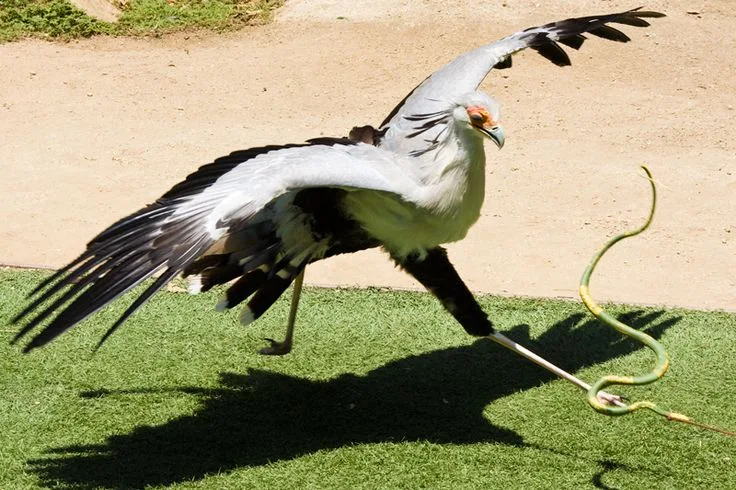
These legs provide a significant advantage. They allow the bird to cover vast distances efficiently, scanning the grasslands as it goes. Their height, often exceeding 4 feet (1.2 meters), means they can see over much of the vegetation that would conceal smaller prey.
This elevated viewpoint is crucial for spotting the subtle movements of snakes, lizards, insects, and even small mammals that make up their diet. The ability to see and reach food sources others might miss is a direct benefit of this unique leg structure.
Seeing Dinner (and Danger) from Higher Up
The primary role of those long legs is to elevate the secretary bird's vantage point. In the tall grasses and open expanses of the savanna, visibility is key. Their height acts like a natural periscope, helping them to:
- Spot prey: They can see snakes and other small animals moving through or hiding in the grass from a considerable distance.
- Detect predators: Similarly, they can spot approaching threats like jackals or other large carnivores much earlier.
- Navigate terrain: The long legs help them step over obstacles and move through uneven ground with greater ease.
This constant vigilance, facilitated by their leg length, is a cornerstone of their survival strategy in a dynamic environment.
The "Secretary" Stomp: A Deadly Dance
What truly sets the secretary bird apart is its hunting technique, often described as a "stomp and stride." When a secretary bird locates prey, especially snakes, it doesn't attack from above. Instead, it charges forward and unleashes a rapid series of powerful kicks. These aren't gentle taps; they are forceful blows delivered with astonishing speed.
Research from ornithological studies, such as those published by the National Audubon Society, indicates these kicks can generate enough force to stun or even kill prey like venomous snakes. The long legs provide the necessary reach and leverage to deliver these devastating strikes. This method allows them to neutralize threats like venomous snakes quickly and effectively, minimizing their own risk of being bitten.
The sheer power and speed behind these kicks are a testament to the evolutionary development of their leg musculature and bone structure.
More Than Just Hunting Tools: Defense and Staying Cool
While hunting is a primary driver for those long legs, they serve equally important roles in defense and managing body temperature. The secretary bird lives in a challenging environment where both escaping danger and staying cool are critical for survival.
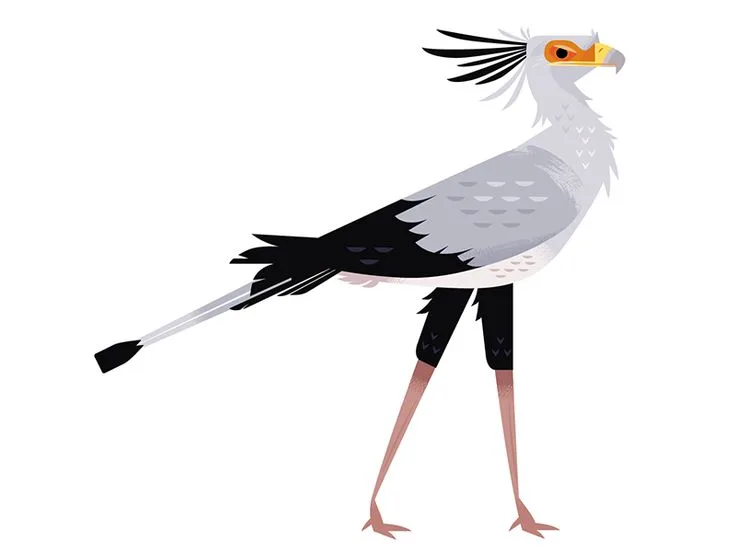
Their leg length directly contributes to their ability to flee. If a threat is too close or an attack is unavoidable, the secretary bird can simply outrun many of its terrestrial predators. This isn't just about being quick; it's about having the stride length to cover ground rapidly.
Furthermore, the African savannas can experience extreme heat. By standing tall on its long legs, the secretary bird keeps its body further away from the scorching ground surface. This simple act of elevation reduces heat absorption from the earth.
Studies on avian thermoregulation confirm that increased distance from the ground can significantly lower the bird's body temperature, helping it conserve energy and avoid overheating during long periods of activity or rest under the intense sun. This adaptation is vital for their sustained presence in such demanding climates.
Evolution in Action: How Legs Shaped a Bird's Life
The secretary bird's long legs are a prime example of how evolution shapes an animal to perfectly fit its environment and ecological role. These aren't just random features; they are the result of millions of years of natural selection favoring individuals with traits that enhanced survival and reproduction.
The selection pressure to detect prey from afar, to deliver powerful ground-based attacks, and to escape quickly from predators all favored longer, stronger legs. Birds with shorter legs would have been less efficient hunters, more vulnerable to danger, and less able to thrive in the hot savanna. Over generations, these advantageous leg traits became more pronounced, leading to the distinctive appearance of the modern secretary bird.
This specialized anatomy allows the secretary bird to occupy a unique ecological niche. It functions as both a formidable predator and a creature capable of defending itself through agility and speed. The very structure of its legs dictates its hunting strategies, its escape tactics, and even how it copes with the environmental temperature.
It’s a beautiful illustration of form following function, driven by the relentless forces of evolution.
FAQs About the Secretary Bird's Legs
Why are secretary birds called "secretary birds"?
The name "secretary bird" is believed to come from the crest of long feathers on its head, which resemble the quill pens that secretaries of old used to tuck behind their ears. This distinctive feature makes them easily recognizable.
Can secretary birds fly?
Yes, secretary birds can fly. While they spend most of their time hunting on the ground, they are capable of taking to the air, especially to travel long distances, escape immediate danger, or reach nesting sites. Their large wingspan allows for sustained flight.
What is the average height of a secretary bird?
On average, a secretary bird stands about 4 feet (1.2 meters) tall, with a significant portion of that height coming from its long legs. Their wingspan can reach up to 7 feet (2.1 meters).
Do secretary birds hunt snakes exclusively?
No, snakes are a significant part of their diet, but secretary birds are opportunistic hunters. They also prey on other reptiles like lizards, as well as insects, rodents, and other small mammals. Their hunting method is adapted for a variety of ground-dwelling prey.
How fast can a secretary bird run?
While precise speed metrics can vary, secretary birds are known for their swift running ability, capable of covering ground quickly to chase down prey or evade predators. Their long legs allow for a rapid stride, essential for their hunting technique.