Why Do Flamingos Stand on One Leg
You've probably seen pictures or videos of flamingos and noticed them standing elegantly on just one leg. It's a striking image, but have you ever stopped to wonder why they do it? It’s not just a quirky pose; their unique stance serves important purposes for survival.
There are several compelling scientific theories that explain this behavior, all stemming from their specialized biology and environment. In our research, we've found that understanding these reasons gives us a fascinating glimpse into avian adaptation.
Quick Answer
Flamingos stand on one leg primarily to conserve body heat and reduce muscle fatigue. This unipedal stance allows them to tuck one leg close to their body, minimizing heat loss in cool water. It also requires less muscular effort than standing on two legs, helping them rest more efficiently.
The Mystery of the One-Legged Flamingo
That iconic one-legged pose is more than just a pretty picture. For flamingos, it's a practical, energy-saving, and heat-conserving strategy finely tuned by evolution. Think about it: birds often have to stand for long periods, whether foraging, resting, or guarding their nests.
For flamingos, who wade in shallow waters for hours, finding the most efficient way to do this is key to their survival.
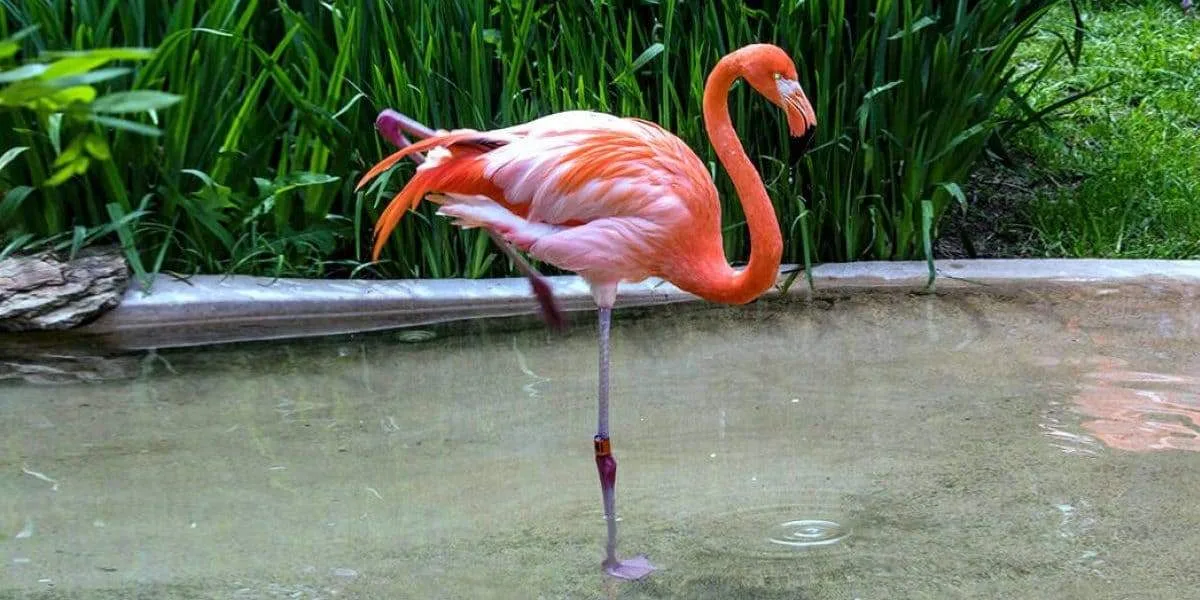
Image source: Bing (Web (fair-use with source credit))
Their entire physiology is geared towards life in aquatic environments, and this leg-standing behavior is a perfect example of how their bodies adapt to their needs. We'll explore the leading scientific explanations for this fascinating behavior.
Core Reasons: Saving Energy and Staying Warm
The primary drivers behind a flamingo's one-legged stance boil down to two critical survival needs: conserving precious energy and maintaining their body temperature. These aren't just minor conveniences; they are fundamental to a flamingo's ability to thrive, especially when spending long hours in water.
How Energy Savings Work for Flamingos
Standing on one leg, a posture known as unipedal standing, appears to be more energy-efficient for flamingos than standing on two legs. When a flamingo tucks one leg up, its body weight is supported by its hip joint. Research suggests this allows the bird to enter a more relaxed state, requiring less muscular exertion to maintain balance.
It’s akin to how a person might lean against a wall to reduce leg strain during a long wait. This energy conservation is vital, especially for an animal that might stand in shallow water for many hours each day while foraging for food.
The Thermoregulation Angle
Another significant theory is that standing on one leg helps flamingos regulate their body temperature. Flamingos often inhabit environments where the water can be quite cool, or even cold. By tucking one leg up close to its body, a flamingo effectively reduces the surface area exposed to the chill.
This minimizes heat loss from its extremities. This behavior is particularly observed in cooler weather or when the birds are resting, acting as a passive way to stay warm.

Image source: Bing (Web (fair-use with source credit))
This is similar to how other birds might fluff up their feathers or tuck their heads under their wings to retain heat. For the flamingo, reducing the exposed surface area of its legs is a smart evolutionary adaptation for thermal management. As of 2026, studies continue to investigate the precise metabolic differences between bipedal and unipedal stances in various avian species.
Flamingo Anatomy: Built for the Stance
Flamingo anatomy isn't just about those long necks and vibrant colors; their leg structure and joints are uniquely adapted to support their characteristic one-legged stance. These physical traits play a crucial role in enabling their balance and efficiency.
How Their Legs and Joints Help
Flamingo legs have a structure that might surprise you. What looks like their "knee" is actually their ankle joint, and their long, thin legs have a special locking mechanism. This mechanism allows them to stand with minimal muscle effort.
When a flamingo stands on one leg, the joint can essentially "lock" into place, supporting the bird's weight passively without constant muscular activity. This is a key adaptation for minimizing energy expenditure.
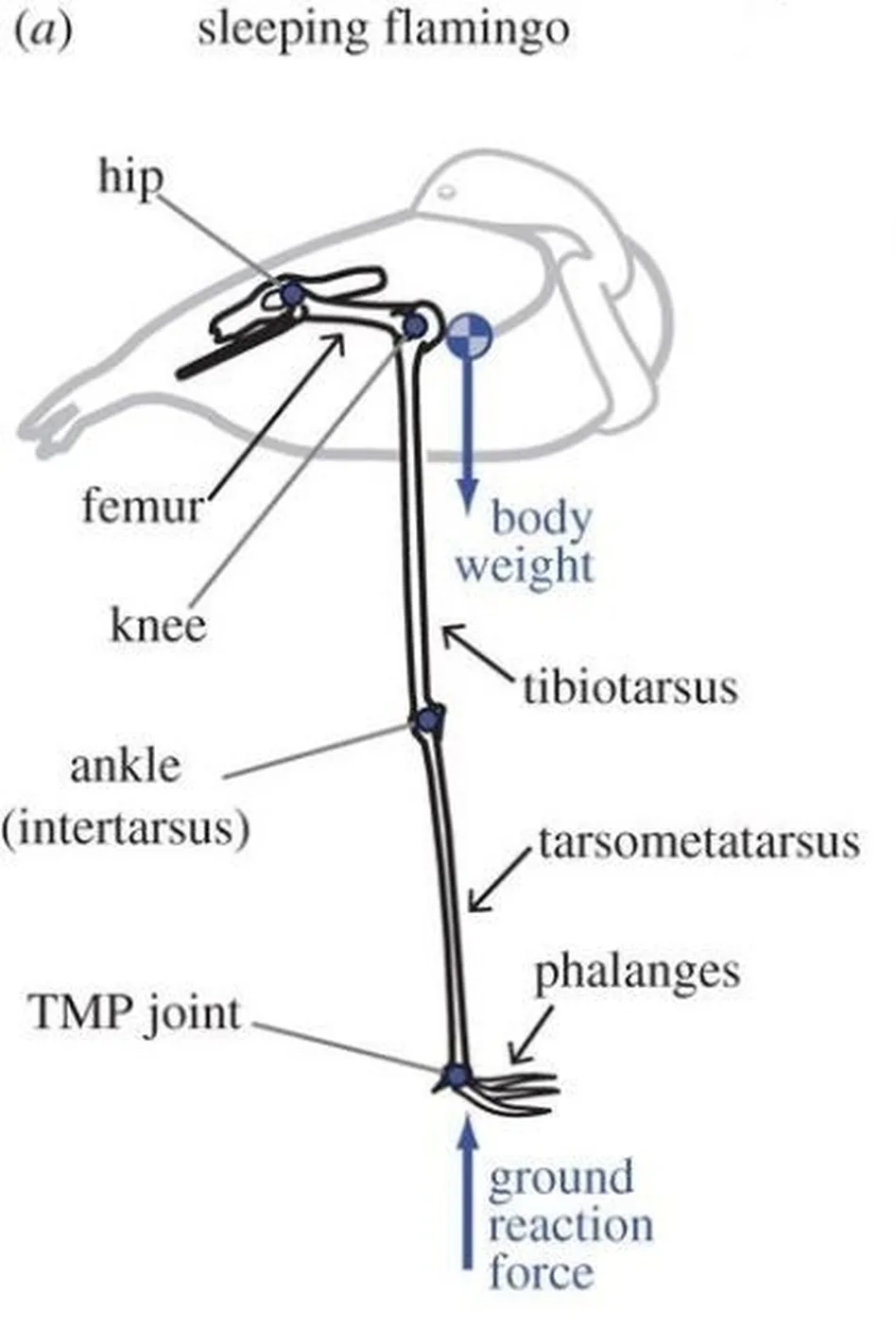
Image source: Bing (Web (fair-use with source credit))
Their foot and toe structure also contributes to stability. They have webbed feet that spread out their weight, providing a broader base when standing, and they can also adjust their stance to accommodate uneven or slippery surfaces. This intricate combination of bone structure, joint mechanics, and muscular control allows them to maintain such a stable unipedal posture for extended periods.
When Do Flamingos Stand on One Leg?
While the one-legged stance is iconic, it's not something flamingos do all the time. Their behavior shifts depending on what they are doing and their environmental conditions, with certain situations favoring the unipedal pose over standing on two legs.
Resting vs. Active Behavior
Research indicates that flamingos most often adopt the one-legged stance when they are resting or sleeping. When they are actively foraging, moving through the water, or interacting with other birds, they are more likely to stand on both legs. This suggests that the primary benefits of the one-legged stance, energy conservation and heat retention, are most advantageous during periods of inactivity.
It’s their preferred method for downtime, allowing them to conserve resources while remaining vigilant.
Common Misconceptions About the Flamingo Stance
Because the one-legged stance looks so unusual to us, many assumptions have been made about why flamingos do it. Some of these ideas, while perhaps intuitive, don't fully align with scientific observation and research findings.
One common misconception is that flamingos simply do this to attract mates or for display. While visual cues are important in animal behavior, the primary drivers appear to be functional rather than purely ornamental. Another thought is that they do it to avoid stepping on something sharp in the water, but this isn't supported by evidence; their anatomical adaptations for balance and energy are far more significant factors.
The reality is rooted in the practical needs of survival.
Expert Insights on Flamingo Physiology
Delving deeper into flamingo physiology reveals fascinating adaptations that support their unique behaviors. Researchers have examined their cardiovascular systems and muscle mechanics to understand how they achieve such remarkable feats of balance and endurance. This scientific scrutiny provides concrete evidence for the theories about energy and temperature regulation.
Studies often involve monitoring a flamingo's metabolic rate while it is in different stances. Findings consistently show a lower metabolic cost when the bird is standing on one leg compared to two. This is crucial for animals that need to conserve energy in environments where food might be scarce or require prolonged searching.
The skeletal structure, particularly in the legs and hip, is perfectly designed to facilitate this relaxed, unipedal posture.
Frequently Asked Questions About Flamingo Leg-Standing
Why do flamingos stand on one leg while sleeping?
Flamingos stand on one leg while sleeping for the same core reasons they do when awake: to conserve energy and maintain body heat. This posture allows them to enter a deep rest state with minimal muscle effort. Tucking one leg close to their body also helps them stay warm, especially in cooler water.
Do all flamingos stand on one leg?
Yes, all species of flamingos exhibit the behavior of standing on one leg. It's a common trait across the flamingo family, indicating a deeply ingrained physiological adaptation rather than an individual quirk. Different species might do it more or less frequently depending on their specific habitat and environmental conditions.
Is it painful for a flamingo to stand on one leg?
No, it's not painful for flamingos to stand on one leg. Their anatomy is specifically adapted for this. They have a unique leg structure and a locking joint mechanism that allows them to support their weight passively without strain.
It's a comfortable and efficient resting position for them.
Can flamingos fall over when standing on one leg?
While it might look precarious to us, flamingos are remarkably stable when standing on one leg. Their anatomy provides excellent balance, and they can make micro-adjustments to maintain their center of gravity. They rarely fall over unintentionally, especially when resting.
Key Takeaways on Flamingo Leg Use
The one-legged stance of flamingos is a beautiful example of evolutionary adaptation. It’s not just about looking good; it's a functional behavior critical for their survival in aquatic environments.
The primary benefits are clear: reduced energy expenditure and better conservation of body heat. Their specialized anatomy, including passive joint locking, directly supports this efficient posture. While other theories exist, these two factors are the most scientifically supported reasons for their signature pose.