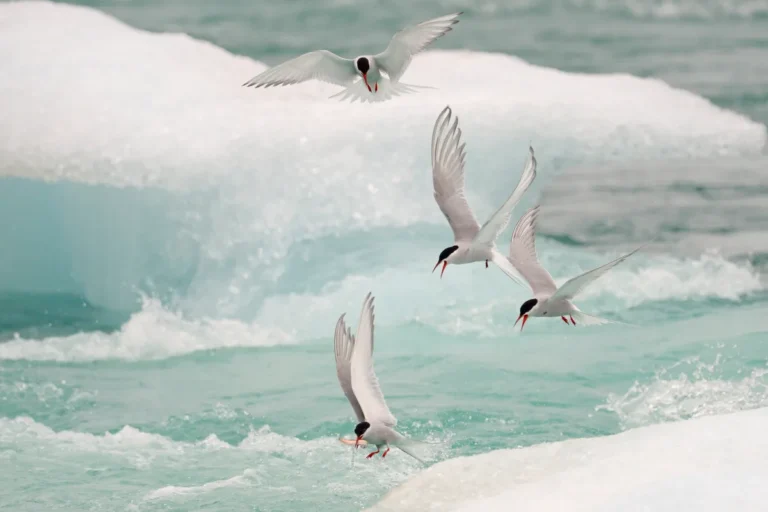
Why Do Birds Migrate
Why do birds migrate? The answer comes down to food, safety, and daylight. Every autumn, billions of birds leave their breeding grounds.
Come spring, they return along routes their ancestors have followed for millennia.
Roughly 40 percent of the world's 10,000-plus bird species migrate regularly. That's about 4,000 species, from tiny hummingbirds to swans weighing 10 kilograms. Their strategies vary wildly depending on where they live and what they eat.
Here's how the biology actually works.


Image source: Bing (Web (fair-use with source credit))
Quick Answer: The Real Triggers Behind Migration
Why do birds migrate? They move to find food, breeding grounds, and safer climates. Changing day length triggers the hormonal shifts that push them to travel.
About 4,000 species out of the world's 10,000-plus birds migrate regularly. The main reason is winter food scarcity.
How Day Length Triggers Migration: Photoperiodism, Zugunruhe, and Hormonal Cascades
What actually kicks off migration isn't temperature dropping or food running low. It's day length. Birds sense photoperiod, the amount of daylight in a 24-hour cycle, through their eyes and pineal gland.
As days shorten in autumn, their bodies start preparing for a journey they've never made before.
Why do birds migrate when bears simply hibernate? Because their food disappears entirely. Insects die off in winter.
Fruit stops ripening. Water freezes solid. A bird that stays behind starves.
Migration solves that problem at the cost of stored energy.
The five core triggers stay remarkably consistent across species:
- Food availability: the single biggest driver for most species
- Day length (photoperiod): the biological signal that initiates the entire process
- Temperature: extreme cold makes survival significantly harder
- Breeding opportunity: Arctic summers offer 20-plus hours of daylight for intensive feeding
- Predator pressure: wintering grounds often carry fewer predators
The hormonal chain that follows is precise. Shorter days are detected by photoreceptors in the retina. The pineal gland responds by increasing melatonin production.
The hypothalamic-pituitary-gonadal axis shifts into motion. Birds develop or shrink reproductive tissues depending on season. And finally, Zugunruhe onset begins, usually 2 to 4 weeks before departure.
Zugunruhe, literally translated as "migration restlessness" in German, is one of the clearest signs a bird is preparing to fly. Scientists at the Cornell Lab of Ornithology use activity monitors to detect it in captive birds. Even in cages with no way to actually migrate, the restlessness appears on schedule.
The body knows.
Simultaneously, birds enter a phase called hyperphagia. This is intensive, almost compulsive eating. In species like the blackcap warbler, body mass can jump from 15 grams to 25 grams in just two weeks.
Fat deposits, not muscle, provide the primary fuel for flight. Some species store fat equal to half their total body weight before departure.
If you've ever seen a flock of swallows gathering on power lines in late August in the UK, that's Zugunruhe in action. They're restless, noisy, and packed tight together. Their hormonal clocks have already flipped.
As of 2026, long-term monitoring by Cornell Lab of Ornithology confirms migration timing is calibrated with remarkable precision. Some species depart within a 48-hour window across entire populations.
The trigger isn't a single signal. It's a cascade. Day length initiates it.
Hormones carry it forward. Fat stores sustain it through weeks of flight.
Three Migration Strategies: Latitudinal, Altitudinal, and Oceanic Compared
Not all bird migration looks the same. A barn swallow crossing continents looks nothing like a hummingbird shifting 500 meters up a mountainside. The routes vary enormously in distance, geography, and the reasons birds follow them.

Here's how the three main strategies compare:
| Strategy | Typical Distance | Key Drivers | Examples |
|---|---|---|---|
| Latitudinal | 1,000 to 15,000 km | Food scarcity, winter cold | Arctic terns, barn swallows, warblers |
| Altitudinal | 100 to 2,000 km | Seasonal food shifts, temperature | Andean hummingbirds, Himalayan species |
| Oceanic | 5,000 to 70,000 km | Breeding habitat availability | Arctic terns, bar-tailed godwits, shearwaters |
Latitudinal migration is what most people picture when they think about why birds migrate. Birds fly between high-latitude breeding grounds and low-latitude wintering areas. An Arctic tern travels roughly 70,000 kilometers annually, pole to pole.
A blackpoll warbler crosses the Atlantic in a single 2,800-kilometer overwater flight.
Altitudinal migration happens on a much smaller scale. Andean hummingbirds move between elevations as flower blooms shift with the seasons. In the Himalayas, species drop to valleys in winter and climb to alpine meadows in summer.
The triggers are the same: food and temperature.
Oceanic migration involves seabirds that cross open water without landing. Bar-tailed godwits fly approximately 13,000 kilometers nonstop from Alaska to New Zealand. They can't stop.
There's no land between them and their destination.
A key concept tying all three strategies together is stopover ecology. Migrating birds need refueling sites, especially on long land crossings. Wetlands, grasslands, and coastal forests serve as critical pit stops.
When those habitats disappear, entire populations struggle to complete the journey.
What Changes Inside a Migrating Bird: Fat, Hemoglobin, and Magnetoreception
Migration isn't just about motivation. Birds undergo dramatic physical and neurological changes to survive journeys that would kill most other animals. Researchers have mapped many of these adaptations with GPS tracking and lab studies, revealing just how specialized a migrating bird becomes.
Fat storage is the first adaptation. Before departure, birds enter hyperphagia and pack on lipid reserves. A blackcap warbler can double its body mass in two weeks.
Fat is energy-dense, weighing less than carbohydrates per calorie. That makes it ideal fuel for sustained flight.
Solenocytes, specialized kidney cells, let birds produce concentrated uric acid instead of dilute urine. This conserves water during long flights, especially over ocean crossings where drinking isn't an option. A diagram of a bird's renal system would show how different its kidneys look from a chicken's.
Hemoglobin variants also shift. Some migratory species carry hemoglobin isoforms optimized for efficient oxygen delivery at altitude. High-altitude migrants like the bar-headed goose carry hemoglobin with higher oxygen affinity than their resident relatives.
Same species, different internal chemistry.
Magnetoreception is perhaps the most fascinating adaptation. Birds detect Earth's magnetic field using two mechanisms:
- Cryptochrome proteins in the retina that respond to blue light and create a chemical signal linked to magnetic orientation
- Magnetite particles in the upper beak that act like a biological compass needle
If you've ever watched a migrating bird circle over a coastline, it might be recalibrating its magnetic sense. Wind direction, cloud cover, and landmark changes can all shift orientation. Birds compensate in real time.
The bottom line: a migrating bird isn't the same bird it was two weeks ago. Its body restructures itself for the journey.
Migration vs. Staying Resident: The Real Trade-offs
Why don't all birds migrate? Because staying put has real advantages too. Roughly 60 percent of bird species never leave home.
Understanding this comparison clarifies why migration isn't always the winning strategy.
Here's how the two strategies stack up:
| Factor | Migrating | Staying Resident |
|---|---|---|
| Food access in winter | Abundant at wintering grounds | Scarce; relies on caching or seed-eating |
| Breeding territory | Found early by migrating fast | Claimed year-round; no competition risk |
| Energy cost | Extremely high (up to 50% body mass in fat) | Low to moderate |
| Predation risk | High during migration; low at wintering grounds | Consistent year-round |
| Climate stress | Avoided entirely | Must tolerate cold, ice, and storms |
| Reproductive timing | Late arrival risks missing peak food | Early breeding possible with cached resources |
Resident species like chickadees, wrens, and many tropical birds survive winter by changing their diet, building fat reserves, or caching food. They avoid the dangers of migration entirely. Per [U.S.
Fish and Wildlife Service](https://www.fws.gov) monitoring, some tropical residents like vultures in Africa stay put because resources never disappear.
Migratory species pay a steep energy price for a significant payoff. The Arctic's 20-plus hours of daylight in summer mean nearly round-the-clock foraging. For a warbler feeding chicks, that translates into higher breeding success than any winter habitat could offer.
The trade-off is simple: migrate and you risk death in exchange for resources. Stay resident and you risk starvation in exchange for safety. Evolution has produced both strategies because both work, depending on the species and its environment.