Kingfisher Facts
If you have ever spent time near a quiet stream, you might have caught a sudden flash of vibrant color darting across the water. These birds are kingfishers, and they are far more than just beautiful wildlife. Gathering accurate kingfisher facts helps us appreciate how these specialized predators dominate their riparian environments.
As of 2026, scientific classification identifies over 90 distinct species within the Alcedinidae family, ranging from tropical forest dwellers to expert water hunters. Understanding their biology reveals a masterclass in evolutionary adaptation, from specialized vision to unique body structures. Let's look at how these birds survive and thrive in such competitive ecosystems.
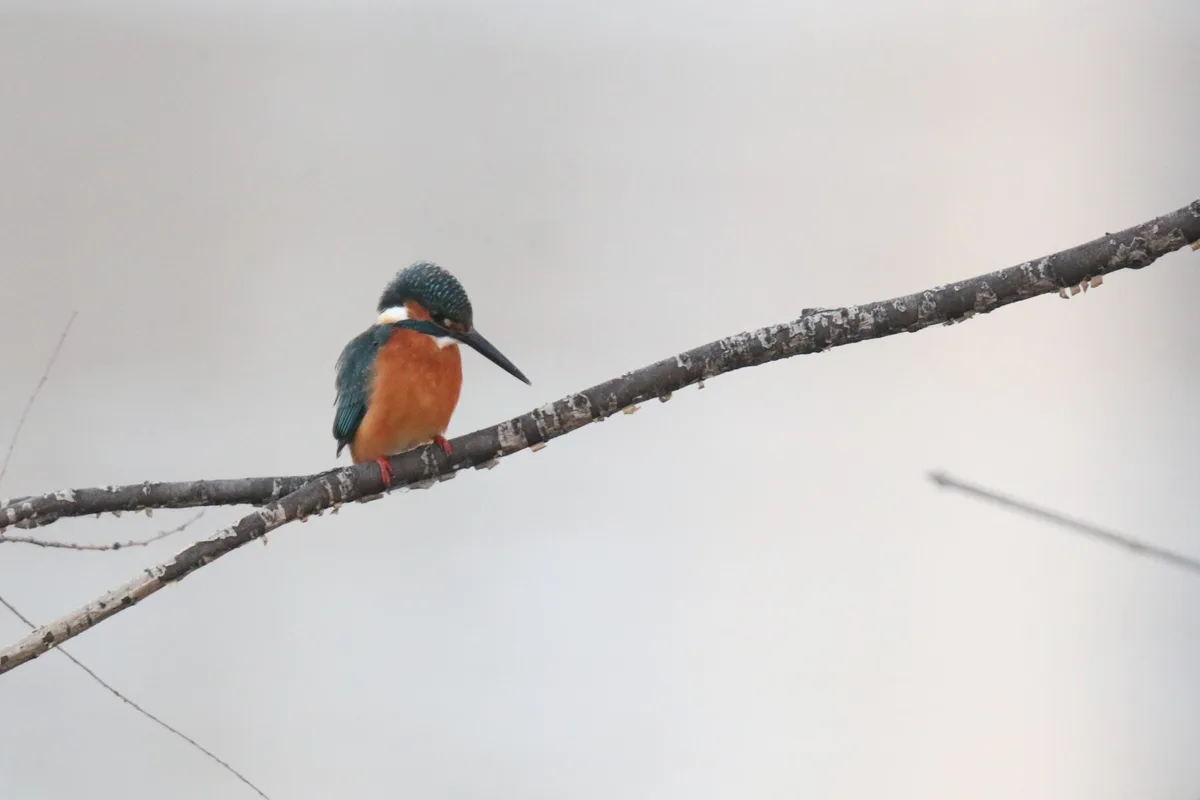
Image source: Openverse / Brandon Zhang
Quick Answer
Kingfishers belong to the Alcedinidae family of birds. Most species are small to medium sized with bright plumage. They specialize in hunting fish or insects near water.
These birds use high speed dives to capture prey. Many nest in burrows dug into vertical riverbanks.
The Physics of the Plunge: How Kingfishers Hunt
Kingfishers are famous for their ability to enter water at high speeds to catch fish. This act is not as simple as it looks. The bird must calculate the position of its prey while accounting for the refraction of light.
Light bends when it passes from air into water, which creates an optical illusion of where the fish actually is.
To overcome this, the bird adjusts its strike trajectory in a fraction of a second. Once it enters the water, it keeps its wings tucked tightly against its body to reduce drag. Research published by the Cornell Lab of Ornithology highlights that this hydrodynamic efficiency allows them to strike with enough force to stun prey without sustaining physical injury.
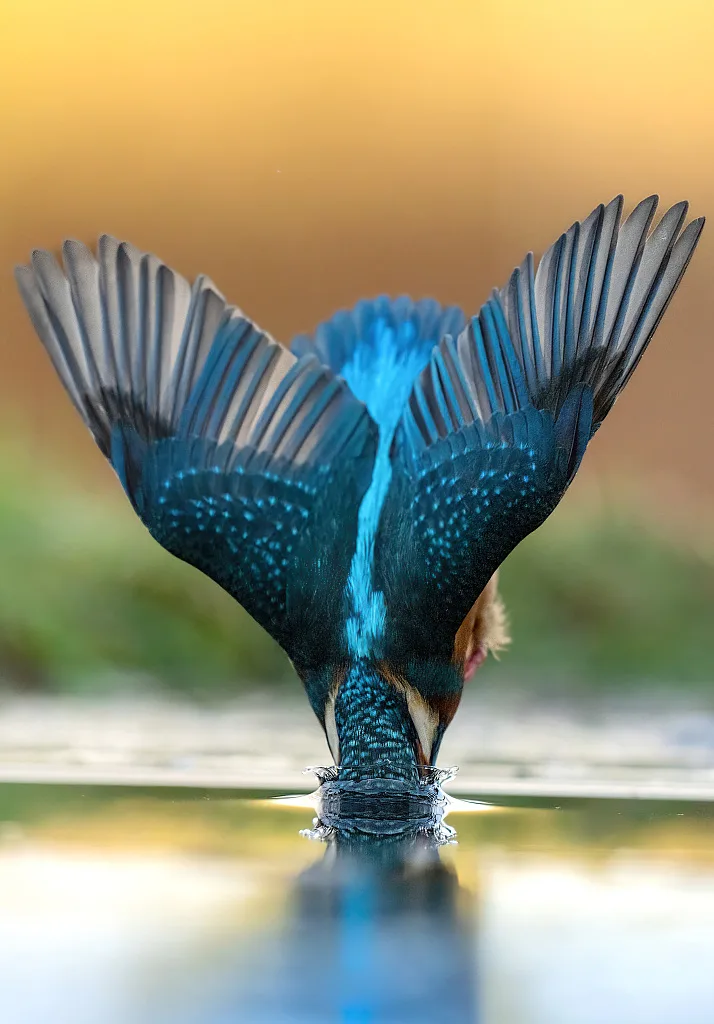
Image source: Bing (Web (fair-use with source credit))
| Hunting Phase | Action Taken |
|---|---|
| Detection | Perched or hovering; eyes track movement |
| Calculation | Refraction correction for depth |
| Strike | High speed plunge with tucked wings |
| Recovery | Exit to surface and return to perch |
Anatomical Adaptations for High-Speed Precision
The survival of a kingfisher depends on specific physical tools. Their most striking feature is the dagger-shaped bill. This structure is perfectly suited for grasping slippery prey and holding it firmly during the return trip to the surface.
It serves as both a weapon and a precise pair of tweezers.
Their eyes are another marvel of engineering. When the bird hits the water, it protects its sight with a nictitating membrane. This is a secondary, translucent eyelid that acts as a pair of goggles.
It prevents water impact from damaging the eye while allowing the bird to maintain a visual lock on its target even while submerged.
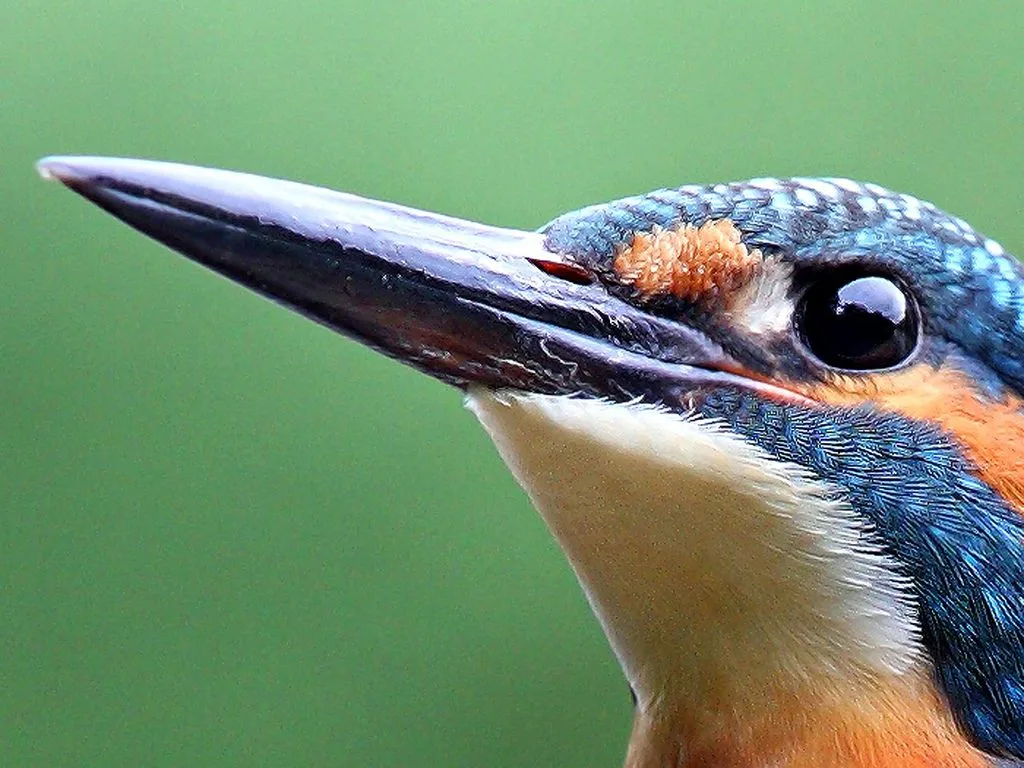
Image source: Bing (Web (fair-use with source credit))
These birds also possess syndactyl feet, which are characterized by toes that are fused together for most of their length. This structure provides extra stability when the bird is perched on thin, swaying branches overlooking a stream. It allows them to maintain a steady aim for long periods while waiting for the perfect hunting opportunity.
Visual Cues for Identifying Kingfisher Species
Identifying a kingfisher often comes down to observing color patterns and body size. While many people assume all kingfishers are bright blue, the plumage varies widely across species. The Common Kingfisher is easily identified by its brilliant azure back and orange underparts, while others might feature dramatic crests or chestnut-colored patches.
Size is another key indicator. You can categorize them into three main groups based on habitat and size.
- River Kingfishers: Generally small, vibrant, and highly dependent on clear, freshwater streams.
- Tree Kingfishers: Larger, often found in forests, and typically consume insects or small lizards.
- Water Kingfishers: Frequently feature crests and are known for their ability to hover while searching for food.
Pay attention to the shape of the bill. A longer, thinner bill usually indicates a primary diet of fish. A broader, flatter bill is more common in species that favor insects or small crustaceans found on the forest floor.
The Sit-and-Wait vs. Hover-and-Strike Dilemma
Kingfishers generally utilize one of two hunting strategies. The sit-and-wait method is the most energy-efficient approach. The bird chooses a vantage point on a branch, often just a few feet above the water, and remains completely still.
It may wait for an hour or more until it sees a fish pass directly beneath its perch.
The hover-and-strike method is more active and energy-intensive. Species like the Pied Kingfisher will hover in mid-air, scanning the water below for surface-level prey. This requires incredible muscular control and coordination.
Hovering is essential in habitats where perches are scarce or where the target fish are found in open, deep water.
- Sit-and-Wait Pros: Minimal energy usage; high surprise factor for prey.
- Sit-and-Wait Cons: Requires a reliable, well-positioned perch; limited range.
- Hover-and-Strike Pros: Covers a larger area; effective in open water.
- Hover-and-Strike Cons: Extremely high caloric burn; requires intense focus.
Why Kingfishers Are Key Indicators of River Health
Kingfishers are sensitive to their environment, which makes them excellent biological indicators. They require clean, oxygen-rich water to thrive. If a river or stream becomes polluted with chemical runoff or suffers from high sediment levels, the fish populations decline.
When the fish population drops, the kingfishers are forced to move elsewhere.
Their presence suggests that the water clarity is high enough for them to hunt effectively. Since they must see through the water to track their prey, murky or contaminated rivers make it impossible for them to feed. Organizations like the United States Geological Survey monitor river quality through various ecological proxies, and the nesting success of these birds often reflects the overall health of a riparian zone.
If you notice a pair of kingfishers nesting in a riverbank, it is a strong sign of a stable, healthy ecosystem. They rely on vertical, earthen banks to dig their nesting tunnels. The stability of these banks is just as important as water quality.
Erosion from heavy boat traffic or landscaping can destroy these nesting sites, pushing the local population out of the area.
Common Mistakes When Spotting and Photographing Kingfishers
The biggest mistake most people make is moving too fast. Kingfishers possess incredible peripheral vision and will detect your movement long before you notice them. If you approach a shoreline with heavy footsteps or bright, contrasting clothing, the bird will likely flush before you even get your binoculars up.
Avoid making sudden sounds or jerky motions. If you are photographing them, use a blind or hide behind natural vegetation to blend into the surroundings. Most successful observers set up in position at least 30 minutes before they expect the birds to arrive.
This allows the local wildlife to return to their normal behavior after being disturbed by your arrival.
Another common error is ignoring the wind direction. If you are downwind of the bird, your scent may reach them, which will alert them to your presence even if you stay perfectly still. Always scout your location with the wind in your face to ensure you aren't broadcasting your location.
If you are using a camera, remember that shutters can be loud. Use a silent shutter mode if your gear supports it to avoid scaring them away after the first shot.
Frequently Asked Questions About Kingfisher Behavior
Why do kingfishers bash their prey against a branch?
Kingfishers bash prey against a branch to stun or kill it before consumption. This behavior prevents the fish from struggling inside their throat, which could cause injury or choking. It also helps them align the fish to swallow it head-first, ensuring fins don't get stuck during the process.
Do all kingfishers eat fish?
While the family is named for its fishing ability, many species are actually insectivores or generalists. Some kingfishers in the wood-dwelling group prefer hunting insects, small reptiles, or even earthworms. You should not assume every species you see is searching for aquatic prey, especially if they are located far from water.
How do they build their nesting tunnels?
Kingfishers excavate long tunnels into steep, vertical earthen banks using their sharp bills and feet. These tunnels can extend several feet deep into the soil. The small entrance hole helps protect their eggs and chicks from larger predators that cannot fit into the narrow opening.
Can I attract kingfishers to my backyard?
Attracting these birds requires a specific set of features that most average yards do not provide. You would need a permanent, clean water source like a small pond stocked with small, minnow-sized fish. You also need to provide clear, unobstructed perches nearby, such as sturdy wooden poles or overhanging branches, to make the area attractive.
How long do these birds typically live?
Kingfisher lifespans in the wild are generally short due to the high energy costs of their hunting lifestyle. Many individuals may only live for two or three years. Factors like harsh winters, water pollution, and competition for prime hunting territories significantly impact their long-term survival rates in the wild.