How Do Birds Find Their Way Home
How do birds find their way home? Scientists have chased this question for over a century, and the answer keeps getting layered. Birds don't run on a single compass.
They stack multiple navigation systems together and shift which one they trust based on conditions.
The Arctic tern completes a roughly 70,900 km round trip between the Arctic and Antarctic every year. As of 2026, magnetic sensing appears to be the foundational layer for most species. Let's dig into what the science actually shows.

Problem / Pain Point — Why Everyone Gets Bird Navigation Wrong
Most explanations of bird navigation oversimplify. They say birds use "magnetic fields, stars, and the sun," as if each bird picks one tool per trip. That's not how it works at all.
Species use overlapping systems simultaneously. A barn swallow at noon might lean on a sun compass. A starling flying after dark relies on star patterns and magnetic sensing together.
They cross-check everything against landmarks stored in memory.
The biggest misunderstanding? Birds have at least two separate magnetoreception mechanisms, not one.
- Cryptochrome radical pair mechanism. A protein called cryptochrome sits in the bird's retina. Under blue light, radical pairs form and respond to the orientation of Earth's magnetic field. It works like a quantum compass embedded in the eye.
- Magnetite-based receptors. Tiny iron-oxide crystals sit in the upper beak of many species. These act like a fixed compass needle, giving the bird a sense of magnetic inclination, the angle at which field lines meet the ground.
Neither mechanism alone explains full navigation. The radical pair system seems to handle fine-tuned orientation during flight. The magnetite system appears to handle coarser directional information.
There's also the popular misconception that birds "see" the magnetic field directly. They don't. The radical pair mechanism likely produces a shifting pattern of lightness and darkness in the bird's visual field, similar to how polarization vision works.
Researchers still debate this point in peer-reviewed ornithology studies.
The real problem for science communicators is this: the topic sits at the intersection of quantum physics, neurobiology, and animal behavior. People want a clean, simple answer. The honest answer is messier and more interesting.
The Cornell Lab of Ornithology maintains excellent educational resources on avian sensory biology that go deeper into the ongoing research.
Quick Answer — Birds Don't Use One Compass. They Use a Layered System
How do birds find their way home? Birds use multiple navigation systems at once. These include magnetic sensing, sun position, star patterns, and visual landmarks.
Birds combine these cues into a heading estimate that updates during flight. The priority order shifts based on light, weather, and species.
The Five Navigation Systems Birds Rely On
Birds don't navigate like a GPS receiver. They run a suite of interconnected systems that feed into one neural integration layer. Here are the five main ones.
Magnetic Compass
This is the foundation. Birds detect Earth's geomagnetic field using two mechanisms: the cryptochrome radical pair system in the retina, and magnetite crystals in the upper beak. The magnetic inclination angle, how field lines dip into the ground, tells a bird which way is north.
Sun Compass
During daytime flights, birds use the sun's position to compute direction. They adjust continuously for the sun's movement across the sky. This means they need an internal clock to stay accurate.
Deprive them of visual cues, and the system breaks down quickly.
Star Compass
Nocturnal migrants rely on star patterns to navigate. Classic planetarium experiments with Indigo Buntings (Passerina cyanea) showed young birds learn the center of celestial rotation within weeks. On overcast nights without visible stars, magnetic sensing takes over.
Landmark Recognition
Visual landmarks serve as a map rather than a compass. Once birds build a spatial memory of terrain features, rivers, coastlines, and mountain ranges, they can fly a route purely from memory. This is how homing pigeons recognize their loft from miles out.
Olfactory Navigation
Tube-nosed seabirds (Procellariiformes) navigate using smell gradients across oceanic distances. Species like Scopoli's shearwater can detect spatial variations in dimethyl sulfide and other compounds. This remains one of the least understood systems in avian navigation.
These five systems don't operate in isolation. They combine into a single heading estimate that updates in real time. The priority order shifts based on conditions.
| Navigation System | Best Condition | Primary Cue | Fallback |
|---|---|---|---|
| Magnetic compass | Overcast, dark, open ocean | Geomagnetic field | Magnetic inclination |
| Sun compass | Clear daytime | Solar position | Internal clock |
| Star compass | Clear night sky | Stellar rotation | Magnetic sensing |
| Landmarks | Familiar terrain | Visual memory | Magnetic compass |
| Olfactory maps | Open ocean | Scent gradients | Magnetic cues |
The Decision Tree: Which Navigation Method Birds Use Under Different Conditions
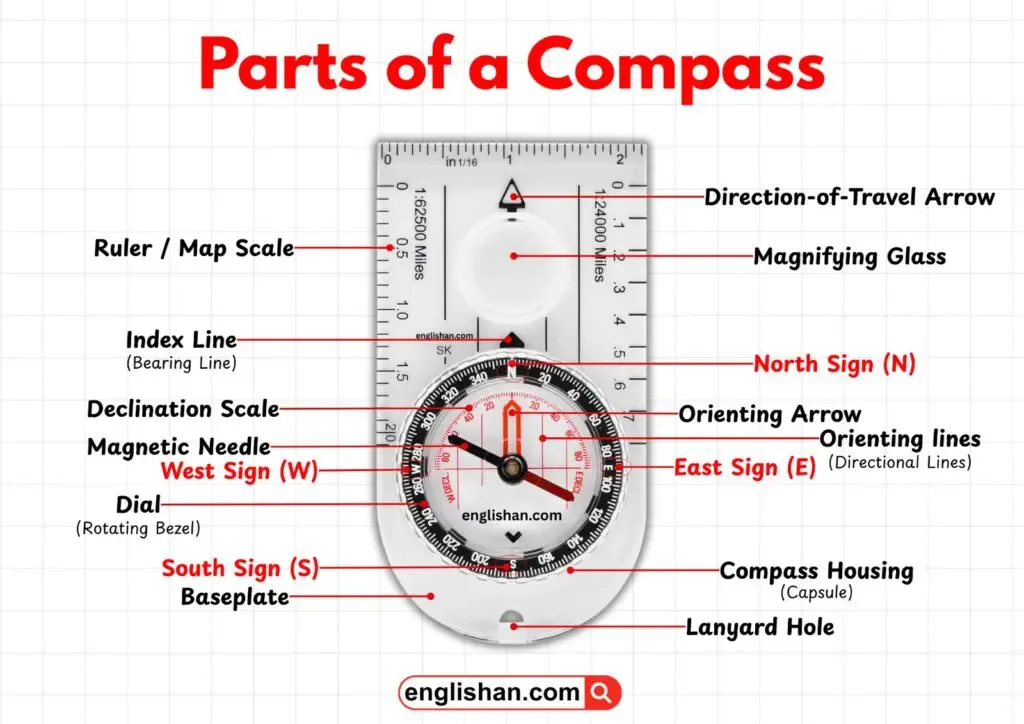
The key insight: there is no universal answer. The system a bird prioritizes depends on a set of conditions. Think of it as a branching decision tree.
If it's daytime and the sky is clear: The sun compass takes the lead. Birds like pigeons and raptors rely heavily on solar position. They calibrate against the magnetic field at dawn and dusk to keep the sun compass honest.
If it's nighttime and stars are visible: Star patterns become the primary cue. This matters most for nocturnal migrants such as warblers, thrushes, and waterfowl. They lock onto the center of celestial rotation to maintain a consistent heading.
If it's overcast or raining: Magnetic sensing becomes dominant. The radical pair mechanism in the retina doesn't need direct sunlight, so birds can maintain a heading even when the sky is blocked. Studies on homing pigeons released on cloudy days show they return with slightly higher variance, but they still get home.
If the bird is flying over open ocean: Visual landmarks disappear entirely. Magnetic cues and olfactory maps take over. Tube-nosed seabirds depend heavily on smell gradients in these conditions.
If the bird is a captive-reared individual with no prior flight experience: Learned celestial cues may be absent entirely. Magnetoreception and innate orientation still function, which is why some hand-raised pigeons can still find their way over short distances.
If there is a strong crosswind: Birds compensate by heading at an angle to the intended course, similar to how you'd swim across a river at an angle to counter drift. The magnetic compass keeps the reference heading stable while the bird adjusts motor output.
It's never one system alone. Birds run a real-time integration of whatever cues are available. Magnetic sensing serves as the most reliable fallback when other options are cut off.
Real-World Navigation: How Pigeons, Terns, and Godwits Actually Do It

Nothing brings the science into focus like real species doing real things.
Homing Pigeons (Columba livia)
Pigeon racing isn't just tradition. It's living proof of avian navigation. Breeders release birds up to 1,500 km from their home loft, and return rates stay between 70% and 90% for distances under 1,000 km.
Research on pigeon behavior shows they use a hierarchy of cues. They start with magnetic sensing to get a rough heading, then cross-check with landmarks once terrain becomes visible. When released on cloudy days, they fly with more error but still find home.
Pigeons also display a behavior called "vanishing bearing." When released, they circle to get oriented, then commit to a direction. Scientists have recorded vanishing bearings that correlate strongly with the magnetic declination at the release site.
Arctic Terns (Sterna paradisaea)
The Arctic tern holds the record for the longest migration on Earth. They travel roughly 70,900 km round trip each year, from Arctic breeding grounds to Antarctic feeding areas and back again.
What makes terns interesting is their navigation under extreme conditions. Long stretches of their route cross open ocean with no landmarks in sight. Researchers believe terns use a combination of magnetic inclination and geomagnetic field intensity patterns to stay on course.
Bar-Tailed Godwits (Limosa lapponica)
Bar-tailed godwits set a different kind of record. Individual birds fly nonstop from Alaska to New Zealand, covering approximately 11,680 km in a single flight. They don't stop to rest, feed, or drink water.
Godwits rely heavily on vector integration, sometimes called dead reckoning. They maintain a heading using celestial and magnetic cues, then estimate how far they've traveled based on wind speed and flight duration. When they arrive at the right region, visual and olfactory cues help them pinpoint final destinations.
These three species show the range of strategies in action. Pigeons stack cues locally. Terns cross oceans on magnetic sensing alone.
Godwits fly on fumes and trust their internal sense of distance and direction. The US Geological Survey's bird banding and monitoring programs provide some of the most comprehensive migration data in North America for anyone wanting to track these populations further.