Non Migratory Birds
If you've ever spotted a bright red bird at your feeder in January and thought "shouldn't it be somewhere warmer," you're looking at a non-migratory bird. Non-migratory birds, also called resident or permanent resident species, stay in roughly the same region all year. They don't make the dramatic seasonal journeys that warblers and thrushes are famous for.
For new birders, this makes them both the easiest species to learn and the most confusing to classify.
There are roughly 250 non-migratory bird species in North America, per data compiled by the Cornell Lab of Ornithology. That's about a third of all species recorded on the continent. These birds breed, feed, and overwinter locally, so you can watch them any day of the year.
Let's start with what actually qualifies as non-migratory.
Quick Answer
Non-migratory birds stay in the same general region year-round instead of migrating seasonally. They include common backyard species like Northern Cardinals, Black-capped Chickadees, and Downy Woodpeckers. Roughly 250 bird species in North America are permanent residents.
That's about one-third of all bird species recorded on the continent.
What Non-Migratory Actually Means and Why It Confuses New Birders
Non-migratory birds are species that breed, feed, and overwinter in the same geographic area without making seasonal long-distance movements. Northern Cardinals, Black-capped Chickadees, and Rock Pigeons all qualify. They live and die within a few dozen miles of where they hatched.
The term gets messy fast, though. Ornithologists break residency into several categories, and backyard birders constantly blur the lines between them.
| Type | What Happens | Example |
|---|---|---|
| True resident | Stays in the same region all year | Northern Cardinal, Chickadee |
| Partial migrant | Some individuals migrate, others stay put | American Robin |
| Irruptive species | Irregular winter movements, not scheduled migration | Evening Grosbeak |
Residency also depends on latitude. A cardinal in Virginia is a year-round resident. The same species in Manitoba isn't, because northern winters are too harsh.
Range maps from the Cornell Lab of Ornithology show that as climate warms, species ranges are creeping north. As of 2026, some populations are becoming more resident than they were a few decades ago. For birders, the takeaway is clear.
Check your local range map, not just a species list.
The Most Common Resident Backyard Birds You'll See Year-Round (With Visual ID Cues)

Image source: Bing (Web (fair-use with source credit))
If you're just getting into backyard birding, these are the species you'll most likely encounter all year. Memorize these visual cues first.
| Species | Key Visual ID Cues | Size |
|---|---|---|
| Northern Cardinal | Bright red male, brown female with red crest and beak | Sparrow-sized |
| Black-capped Chickadee | Black cap, white cheeks, buffy flanks | Chickadee-sized |
| Downy Woodpecker | Black and white barred back, small bill, white stripe on face | Woodpecker-sized |
| Blue Jay | Blue crest, white face markings, bold wing bars | Robin-sized |
| American Robin | Brick-red breast, gray back, yellow bill | Robin-sized |
| Red-bellied Woodpecker | Red cap and nape, barred black-and-white back | Woodpecker-sized |
| White-breasted Nuthatch | Blue-gray back, white face, black cap, long pointed bill | Nuthatch-sized |
| Mourning Dove | Smooth gray-brown, pointed tail, pinkish legs | Dove-sized |
The fastest way to separate resident species from migrants is pattern and color stability. Resident species tend to have bold, easy-to-remember plumage that doesn't change much between seasons. Cardinals stay red.
Chickadees keep their black caps. Downy Woodpeckers maintain their barring all year.
Migrants often show subtle seasonal plumage shifts that make them trickier to ID during a winter feed run. Recognizing the residents first gives you a reliable baseline for everything else.
How to Tell a True Resident from a Migratory Look-Alike: A Step-by-Step Visual Guide
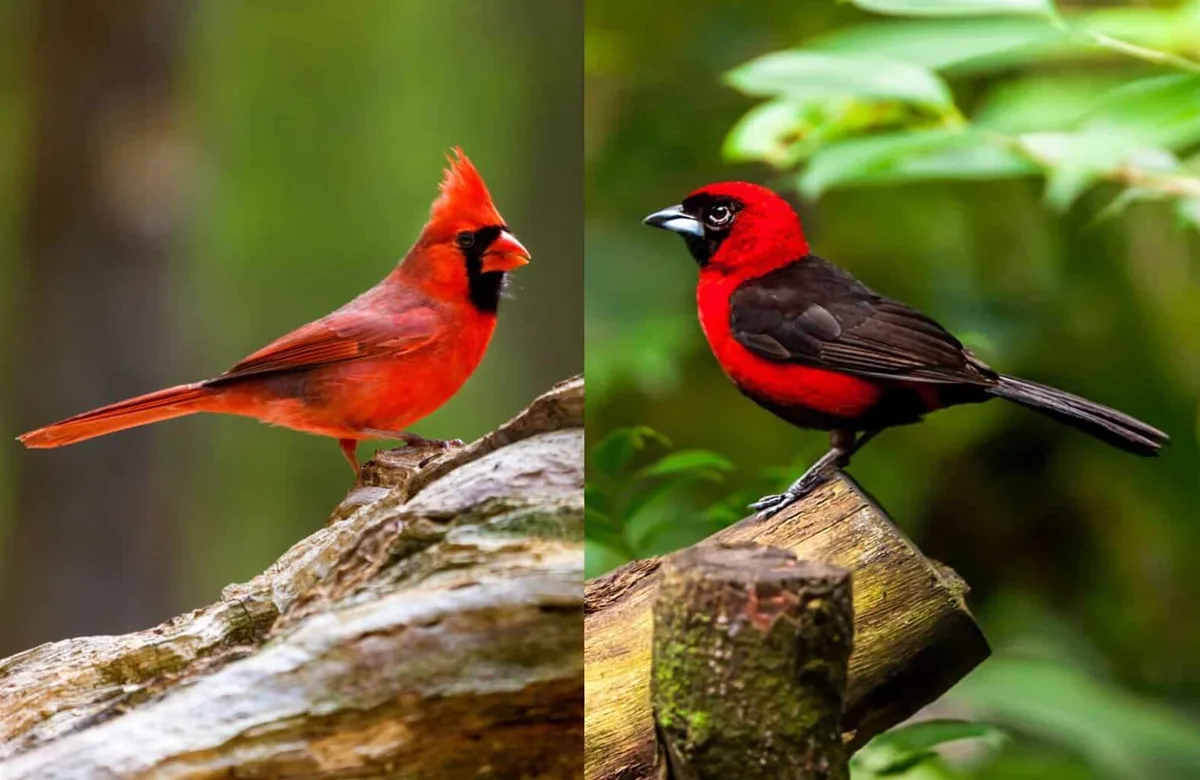
Image source: Bing (Web (fair-use with source credit))
This is where things get tricky. Several migratory species look almost identical to residents, especially at dusk or in poor lighting. Here's a visual workflow that works.
Step 1: Check your local range map. Look up the species on eBird or the Cornell Lab's range map for your exact location. If the species shows year-round residency in your area, start with that assumption.
Step 2: Look at plumage stability. True residents show consistent plumage across seasons. If a bird's coloring seems different in January than it did in June, you might be looking at a partial migrant.
Step 3: Watch behavior patterns. Residents are territorial year-round. They defend feeders and nesting spots even in winter. Migrants tend to move in loose flocks with less aggressive territorial behavior.
Step 4: Count the tail and wing markings. Pay close attention to tail spots, wing bars, and eye rings. These markings are often the only reliable way to separate a look-alike pair.
Step 5: Cross-reference your sighting. Submit the photo or description to eBird. The community verification will confirm or correct your ID within hours.
The Big Visual Mistakes Birders Make When Identifying Non-Migratory Species
Even experienced birders make these errors. Knowing them upfront will save you from bad ID calls.
Mistake 1: Assuming every red bird in winter is a cardinal. Summer Tanagers, Scarlet Tanagers, and Red Crossbills all show red plumage. The beak shape is the giveaway. Cardinals have thick, cone-shaped orange bills.
Summer Tanagers have paler, more elongated bills.
Mistake 2: Ignoring the beak-to-body ratio. A small bird with a disproportionately large bill might be a finch, not a sparrow. Finch bills are conical and thick. Sparrow bills are more pointed and narrow.
This distinction matters more than color.
Mistake 3: Forgetting about juvenile plumage. Many resident species produce juveniles that look nothing like the adults. A young Downy Woodpecker has a red cap like a male, which confuses people into thinking it's a different species.
Mistake 4: Relying on size alone. Without a reference object, size estimates in the field are notoriously unreliable. A Blue Jay at 20 feet can look smaller than a Cardinal at 5 feet. Use shape and marking patterns instead.
Building a Year-Round Birding Spot: Feeders, Habitat, and Observation Workflow
If you want resident birds to show up consistently, you need to set up for all four seasons. Here's a practical workflow.
Set up mixed-species feeders. Different resident birds need different food. Offer sunflower seeds for chickadees and cardinals. Scatter suet for woodpeckers and nuthatches.
Keep a small platform feeder with nyjer seed for finches. Hang feeders within 10 to 15 feet of cover so birds can escape predators.
Plant native shrubs and trees. According to the U.S. Fish and Wildlife Service, native plants produce far more insects and berries than ornamental varieties. That extra food source is what keeps resident birds in your yard through winter.
Species like serviceberry, elderberry, and dogwood are all high-value picks for bird-friendly landscapes.
Maintain a consistent observation routine. Set a regular time to check feeders, ideally early morning. Keep a simple log of species, time, and weather. Over a few weeks, you'll build a reliable baseline of who visits and when.
Clean your feeders on schedule. Resident birds visit feeders daily, which means disease risk accumulates fast. Scrub feeders with a dilute bleach solution every two to four weeks. Replace seed if it looks wet or moldy.
Resident Bird Data: Range Shifts, Climate Impact, and Population Trends
The Breeding Bird Survey, run by the U.S. Geological Survey since 1966, has been tracking North American bird populations for nearly 60 years. The data paints a mixed picture for non-migratory species.
Some residents are holding steady. Others are quietly disappearing.
| Resident Species | Population Trend | Status |
|---|---|---|
| Northern Cardinal | Stable to increasing | Secure |
| Black-capped Chickadee | Stable in core range | Secure |
| Rock Pigeon | Declining in cities | Watch |
| Red-bellied Woodpecker | Increasing northward | Climate-driven shift |
| Evening Grosbeak | Declining sharply | Declining |
Climate change is reshuffling who qualifies as a resident. Species that were once strict migrants are spending more winters in northern latitudes. The Carolina Wren, for example, has pushed its year-round range significantly north of where it was recorded in the 1980s.
Its survival depends entirely on mild winters, which means every brutal cold snap creates local die-offs.
House Sparrow and European Starling populations are also worth monitoring. Both are non-migratory and highly adaptable. They compete aggressively with native residents for nesting cavities and feeder access.
Their numbers stay high because they thrive in human-altered habitats. If you're tracking your local bird counts, watch whether starling density correlates with native species decline in your area.
Frequently Asked Questions
What counts as a non-migratory bird?
A non-migratory bird is a species that remains in the same general region throughout the year instead of migrating seasonally. Northern Cardinals, Black-capped Chickadees, and Blue Jays are all permanent residents across much of their ranges. The classification depends partly on latitude.
The same species may be a resident in one state and a migrant in another.
How many non-migratory bird species are there in North America?
Roughly 250 species in North America qualify as permanent residents, according to Cornell Lab of Ornithology data. That's about a third of all bird species recorded on the continent. Exact numbers vary by region because some species reclassify as climate shifts their winter ranges.
Always check your local range map for the most current classification.
Are non-migratory birds the same as partial migrants?
No. True residents stay in one region year-round. Partial migrants include species where some individuals migrate and others don't.
The American Robin is a good example. Southern populations are year-round residents. Northern populations migrate south for winter.
Both behaviors appear in the same species, depending on location and weather.
Do non-migratory birds still move around?
Yes, but only locally. Resident birds forage within a few miles of their nesting territory. They don't make long-distance seasonal flights, but they do shift locations to follow food sources.
A Cardinal in a food-rich yard may stay put all winter. One in a bare yard might range several miles to find berries and seeds.
Why are some bird species becoming non-migratory?
Climate change is the main driver. Warmer winters allow species to survive farther north than they could decades ago. Milder temperatures reduce the energy cost of overwintering.
Species like the Carolina Wren and Red-bellied Woodpecker are expanding their year-round ranges as a result. This shift changes local birding patterns and can alter which species compete for resources.
What feeders attract the most non-migratory birds?
Black-oil sunflower seeds attract the widest range of resident species. Cardinals, chickadees, nuthatches, and finches all feed on them. Suet works for woodpeckers and wrens.
A nyjer feeder draws house finches and goldfinches. Use at least three feeder types positioned near cover to maximize visitor diversity throughout the year.
Final Recommendation: Where to Start With Resident Bird ID
If you're new to resident bird identification, focus on building a small core list first. Start with five to eight species that are common in your area. Northern Cardinal, Black-capped Chickadee, and Downy Woodpecker cover a wide range of visual patterns and body types.
Learn those three inside and out before moving on.
Once your core list feels solid, expand gradually. Add one new species per week using range maps and a field guide. Cornell Lab's Merlin Bird ID app is useful for quick confirmation, especially when you're working on plumage details.
But always cross-reference with a physical range map. Apps can suggest species outside your local residency zone if you don't set your location correctly.
The real skill develops over seasons, not days. Watch the same feeder or patch of habitat across spring, summer, and winter. You'll start to notice which species stay, which ones shift, and which ones disappear entirely.
That pattern recognition, built slowly over time, is what separates a casual observer from someone who genuinely knows their local birds.