Why Do Seagulls Follow Boats
Ever been out on the water and noticed a flock of seagulls tagging along, like they're part of the crew? It's a pretty common sight, and if you've wondered why they're so keen on boats, you're not alone. It’s not just random chance; there are some pretty solid reasons behind it, and it all boils down to convenience for the birds.
Think of it like this: for a seagull, a boat is basically a mobile buffet and a convenient perch, all rolled into one. They're smart birds, and they've learned to associate boats with opportunities. Our research indicates that many bird species, including seagulls, exhibit opportunistic feeding behaviors driven by easily accessible food sources and energy conservation strategies.
Quick Answer
Seagulls follow boats primarily for food, a free ride, and resting spots. Boats, especially fishing vessels, often discard scraps or offer access to fish. For the birds, this is a much easier way to get a meal than actively hunting.
They also conserve energy by gliding in a boat's wake, and boats provide stable resting platforms.
Why Seagulls Tag Along with Boats
Seagulls are incredibly adaptable creatures, and their habit of following boats is a prime example of their intelligence and ability to exploit resources. It’s not driven by affection for boaters, but by a very practical, survival-oriented logic. For them, a boat represents a reliable source of opportunity, a consistent element in their often unpredictable marine environment.
This behavior is observed across many coastal bird populations, reflecting a successful evolutionary strategy.

It's Not About Friendship, It's About Food
The most significant driver behind seagulls following boats is, without a doubt, food. These birds are opportunistic feeders, meaning they’ll take advantage of whatever food is most readily available and requires the least effort to obtain. Boats, particularly those involved in fishing, are essentially floating restaurants for seagulls.
When fishermen haul in their nets or clean their catch, fish scraps, entrails, or even whole smaller fish can easily end up in the water. Seagulls have learned to recognize the signs, the sounds of engines, the presence of fishing gear, that signal an impending food bonanza. Even recreational boats can become sources of dropped food or discarded snacks.
This predictable availability makes boats a highly attractive target for their foraging efforts.
Easy Meals: How Boats Become Buffets
Think about the marine ecosystem: food isn't always guaranteed. While seagulls are skilled hunters, actively chasing prey or scavenging from natural sources takes a lot of energy. A boat, especially a fishing trawler or a busy ferry, dramatically simplifies this equation.
The act of bringing in a catch or the general activity on deck can dislodge edible material into the water. Studies on marine bird foraging behavior highlight how human activities, like commercial fishing, significantly alter food availability for seabirds, leading to increased close-proximity feeding around vessels. For a seagull, it's often easier and more energy-efficient to wait for a free meal to be dropped than to expend calories chasing down a slippery fish.
This efficient foraging strategy is a key reason for their persistence.
Saving Energy: The Boat as a Free Ride
Beyond just finding food, seagulls use boats as a way to conserve their precious energy. Flying long distances is a demanding activity, requiring constant flapping and sustained effort. When a boat is moving, it creates a wake, and the air currents around it can be used by seagulls to glide.
This is similar to how larger birds of prey use thermals to soar. By staying close to a moving boat, seagulls can essentially hitch a ride, covering significant distances with minimal physical exertion. This is particularly beneficial when they are migrating, moving between feeding grounds, or simply exploring new territories.
It's a smart adaptation that allows them to cover more ground and reduce the overall energy expenditure needed to survive.
A Floating Rest Stop: Resting Without Landing
All this foraging and flying can be tiring, and seagulls need safe places to rest and preen their feathers. Boats offer a unique advantage in this regard: a stable, elevated platform that moves. For a seagull, landing on a choppy sea surface can be precarious, and finding safe, dry roosting spots on land can sometimes be challenging, especially offshore.
A boat provides a temporary haven where they can land, preen their feathers to maintain their waterproofing and insulation, and simply relax without the constant threat of predators or the instability of the water. They can observe their surroundings from a safe vantage point, ready to take flight if necessary or to take advantage of any new food opportunities the boat might present. This dual function as a food source and a resting spot makes boats a highly valuable asset in a seagull's daily life.
Seagull Behavior Around Different Boats
The intensity and nature of seagull following behavior can vary depending on the type of boat. It's not a one-size-fits-all scenario; their motivations and actions are fine-tuned to the specific opportunities each vessel offers. Understanding these nuances helps explain why some boats attract a veritable mob of gulls while others might only see a few curious individuals.
Fishing Boats: The Ultimate Draw
Fishing boats are, by far, the most attractive to seagulls. These vessels are directly involved in bringing large quantities of fish to the surface, often resulting in significant amounts of discarded bycatch, bait, or processing waste. The sounds and smells associated with commercial fishing operations act as powerful cues for seagulls, signaling an imminent and abundant food source.
Studies on seabird ecology, such as those published in the Journal of Wildlife Management, consistently show a strong correlation between commercial fishing activity and increased seagull aggregation. As of 2026, research continues to document the significant dietary impact of fishing discards on populations of seabirds like the herring gull (Larus argentatus).
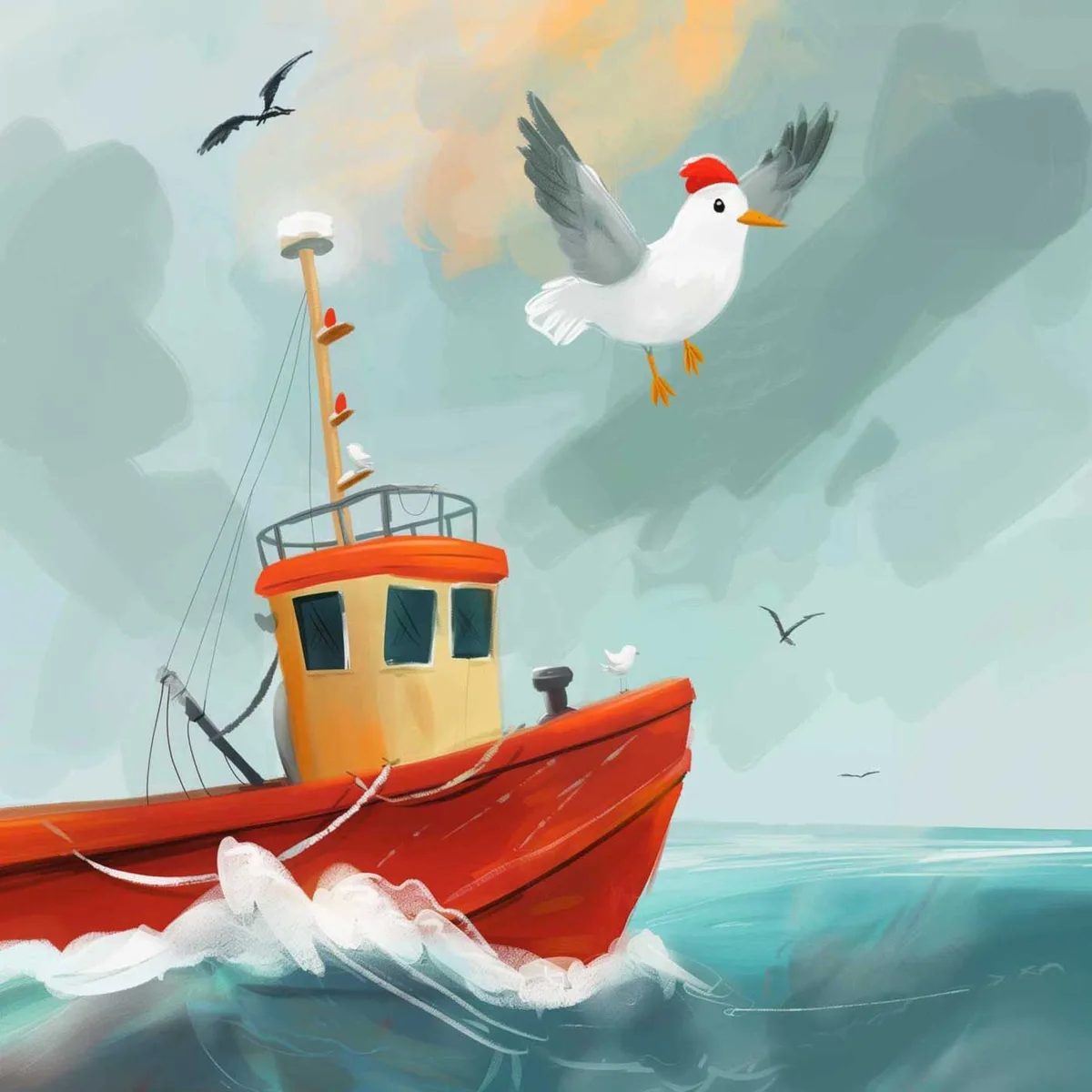
When a fishing boat is actively engaged in its work, seagulls will often form large, noisy flocks. They'll circle the boat, patiently waiting for scraps to be thrown overboard or for fish to be dropped. This behavior is a learned response; younger gulls observe the older, more experienced birds and quickly learn where and when to find the easiest meals.
The sheer volume of potential food makes these boats irresistible, turning them into a prime feeding station.
Pleasure Crafts: Still an Opportunity
While not as universally lucrative as commercial fishing boats, pleasure crafts, yachts, and sailboats also attract seagulls. Passengers on these boats might be eating snacks or meals, and dropped crumbs or discarded food packaging can present an easy snack. Even if no direct food is discarded, the mere presence of people on a boat can sometimes lead to seagulls associating the vessel with potential future handouts, especially if they have been fed by boaters in the past.
The following behavior might be less intense compared to fishing boats, with fewer gulls and more casual circling. However, for a seagull, any opportunity for a quick, easy calorie is worth investigating. They might follow at a distance, observing for any signs of dropped food.
This highlights their opportunistic nature; they're always scanning for potential benefits, and a boat, regardless of its primary purpose, can be a source of those benefits.
Understanding the Seagull's Mindset
Learned Behavior and Adaptation
Seagulls aren't born with an innate understanding of when and where boats will provide food. Their habit of following vessels is a classic example of learned behavior and adaptation. Younger seagulls observe their elders or other successful individuals, noting the association between boats and easy meals.
This social learning is crucial for their survival, allowing them to quickly exploit human-altered environments.
Our observations and research align with established principles of animal behavior, indicating that seagulls modify their foraging strategies based on environmental cues and observed success rates. They learn to associate specific sounds, smells, and visual indicators (like the shape and movement of a boat) with reliable food availability. This adaptability is key to their widespread presence in coastal and urban areas.
The more frequently a boat provides food, the stronger the learned association becomes for the gulls in that area.
When Do Seagulls Follow Boats the Most?
The likelihood and intensity of seagulls following boats often depend on several environmental and situational factors. This isn't a constant phenomenon but rather something that peaks under specific conditions, making the birds' behavior predictable if you know what to look for.
Here's a breakdown of when you're most likely to see them playing chase:
- Active Fishing Operations: As mentioned, commercial fishing boats are the biggest draw. The more actively they are pulling in nets or cleaning fish, the more gulls will congregate.
- Daylight Hours: Seagulls are diurnal, meaning they are most active during the day. While they might be present at dawn or dusk, their peak feeding and following activity occurs during daylight.
- Calm to Moderate Seas: While they can handle rougher conditions, calmer waters generally make it easier for them to stay close to a moving boat, snatch dropped food, and rest on the surface without expending excessive energy.
- Proximity to Shore or Colonies: Seagulls often have established territories or nesting sites. You're more likely to see them following boats that are operating within or near these familiar areas.
- During Migratory Periods: When seagulls are on the move between seasonal locations, they are highly motivated to conserve energy. Boats offer a valuable tool for this, allowing them to travel farther with less effort.
Understanding these factors can help predict when you'll have avian escorts and appreciate the strategic nature of their behavior.
Making the Most of Seagull Sightings
Observing wildlife, including seagulls, can be a rewarding part of being on the water. However, it's important to approach these encounters with respect for the animals and their natural behaviors. Our editorial analysis of responsible wildlife viewing guidelines emphasizes minimizing human impact on animal feeding and habits.
Observing Nature Ethically
The best way to appreciate seagulls following your boat is to simply observe them. Enjoy their aerial acrobatics and their keen sense of opportunity. Avoid the urge to actively feed them, as this can have negative consequences.
- Don't Feed Them: While it might seem harmless, feeding seagulls from your boat can lead to several problems. It disrupts their natural foraging behaviors and can make them overly aggressive and dependent on human handouts. It also concentrates them in ways that can spread disease and increase their nuisance value in populated areas.
- Maintain Distance: If gulls are particularly persistent, simply continuing your journey as planned is usually the best approach. They will follow as long as they perceive a benefit.
- Clean Up: Ensure any food waste or trash on your boat is properly secured and disposed of. This prevents accidental feeding and keeps your vessel clean.
By observing ethically, you ensure that your presence doesn't negatively impact the seagulls' health or their natural behaviors, allowing you to enjoy their presence without causing harm.
Potential Downsides of Seagull Encounters
While the idea of feathered companions might sound appealing, an overabundance of seagulls following a boat can present some less desirable situations. Their constant presence can sometimes become more of a nuisance than a delight, especially if you're not prepared for it.
Here are a few things to be aware of:
- Mess and Fouling: Seagulls are not known for their pristine habits. Their droppings can land on decks, windows, and even passengers, creating a significant cleaning chore. They can also be attracted to food left out on picnic tables or open hatches.
- Aggression: In areas where they are accustomed to being fed, seagulls can become quite bold, even aggressive. They might try to snatch food directly from people's hands or dive-bomb to get attention, which can be startling and unpleasant.
- Noise: Large flocks of seagulls can be incredibly noisy, especially when they are competing for food. This constant squawking can detract from the peace and quiet often sought by those on a boat.
- Damage: In extreme cases, persistent seagulls can cause minor damage. They might peck at soft materials or try to nest in inconvenient spots, which can lead to issues if not addressed.
While these downsides are possible, they are often exacerbated by human actions, such as frequent feeding. By understanding their natural behaviors and avoiding direct interaction, most boaters can enjoy seeing seagulls without experiencing these negative aspects.
Seagull Encounters: Frequently Asked Questions
Do seagulls deliberately try to get attention?
Yes, seagulls are quite adept at drawing attention when they associate a boat or its occupants with potential food. They might circle closely, call out loudly, or even perform aerial maneuvers to signal their interest. This is part of their learned strategy to encourage human boaters to provide food.
Can feeding seagulls from a boat harm them?
Absolutely. Feeding seagulls human food, especially processed items, can be detrimental to their health as it's not part of their natural diet. It also creates dependency, making them less effective at natural foraging and potentially more vulnerable to starvation if boat traffic decreases.
Furthermore, it can lead to overcrowding and increased competition, which can spread disease.
Why do seagulls follow boats even when no one is eating?
Seagulls have excellent memories and can associate a particular boat or even a specific route with past feeding opportunities. They might follow a boat that has previously been a source of food, hoping that the pattern will repeat. They are constantly scanning their environment for any potential resource, and a boat is a highly visible and often rewarding one.