Why Are Wood Ducks Colorful
Ever seen a Wood Duck and thought, "Wow, that bird looks like it stepped out of an artist's palette!"? You're not alone. They're honestly one of the most stunning waterfowl we have, and it's natural to wonder what's behind all that vibrant color.
It’s not just random pretty feathers, though. There are some really cool reasons why these ducks are so, well, extra, and understanding their plumage tells us a lot about their lives and evolution.

Image source: Web (Bing) / digitaldeliverygroup.org (Web image (fair-use with source credit))
Quick Answer
Wood Ducks are colorful primarily due to sexual selection and camouflage needs. Males display vibrant iridescent plumage, particularly on their heads and chests, to attract females and signal health and genetic fitness. These striking patterns also help them blend into dappled light environments, breaking up their outline.
Females are more camouflaged in muted tones to hide while nesting.
The Visual Story of Wood Duck Colors
When we talk about Wood Ducks being colorful, we're really talking about their incredible plumage. Plumage refers to a bird's feathers collectively. Wood Ducks are a prime example of a species where the male's feathers are dramatically different from the female's, a trait known as sexual dimorphism.
This visual distinction isn't just for show; it's deeply tied to their survival and reproductive strategies. Scientists at the Cornell Lab of Ornithology have extensively documented these differences, highlighting how visual cues play a crucial role in avian life.
Why the Flashy Plumage? It's About Survival and Showing Off
Think of it like this: in the natural world, flashy colors can serve a few purposes. For Wood Ducks, it’s a mix of attracting a mate and, believe it or not, helping them blend in. Yeah, I know, flashy and blending in sounds like a contradiction, but let's unpack that.
This dual role of bright colors is a fascinating evolutionary compromise.
The Mating Game: How Colors Help Males Impress
One of the biggest drivers of bright colors in the animal kingdom is for courtship. For male Wood Ducks, their spectacular plumage is a key tool in attracting females. A male Wood Duck's elaborate colors, the iridescent greens and blues on his head, the rich chestnut breast, the striking white patterns, are a big part of his appeal.
It signals that he's healthy, strong, and has good genes, qualities a female would want for her offspring. This is a classic example of sexual selection at play, where traits that enhance mating success become more common over time.

Image source: Bing (Web (fair-use with source credit))
This vibrant display isn't just about being pretty; it's a survival strategy for the species. The males that are more visually appealing are more likely to pass on their genes. It’s a constant evolutionary dance where visual signals are paramount.
Sexual Dimorphism: A Tale of Two Ducks
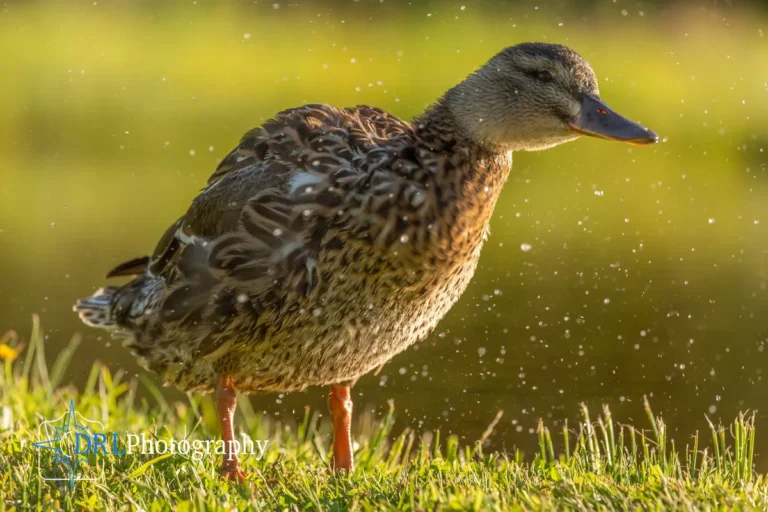
You'll notice the males are way more colorful than the females. This is super common in birds, and Wood Ducks are a textbook example. The females are typically more camouflaged, usually in muted browns and grays.
This smart division of labor, visually speaking, helps them stay hidden while they're incubating eggs and raising young, a critical period for their survival and the continuation of the species.
Camouflage: The Unexpected Role of Bright Feathers
Now, about that blending-in thing. It sounds weird, right? How can all those colors help a duck hide?
In the dappled light of their preferred habitat, swamps, marshes, and wooded areas with lots of vegetation, those varied colors and patterns actually help break up the duck's outline. Instead of a solid shape, they become a mosaic that can easily disappear against reeds, branches, and reflections on the water.
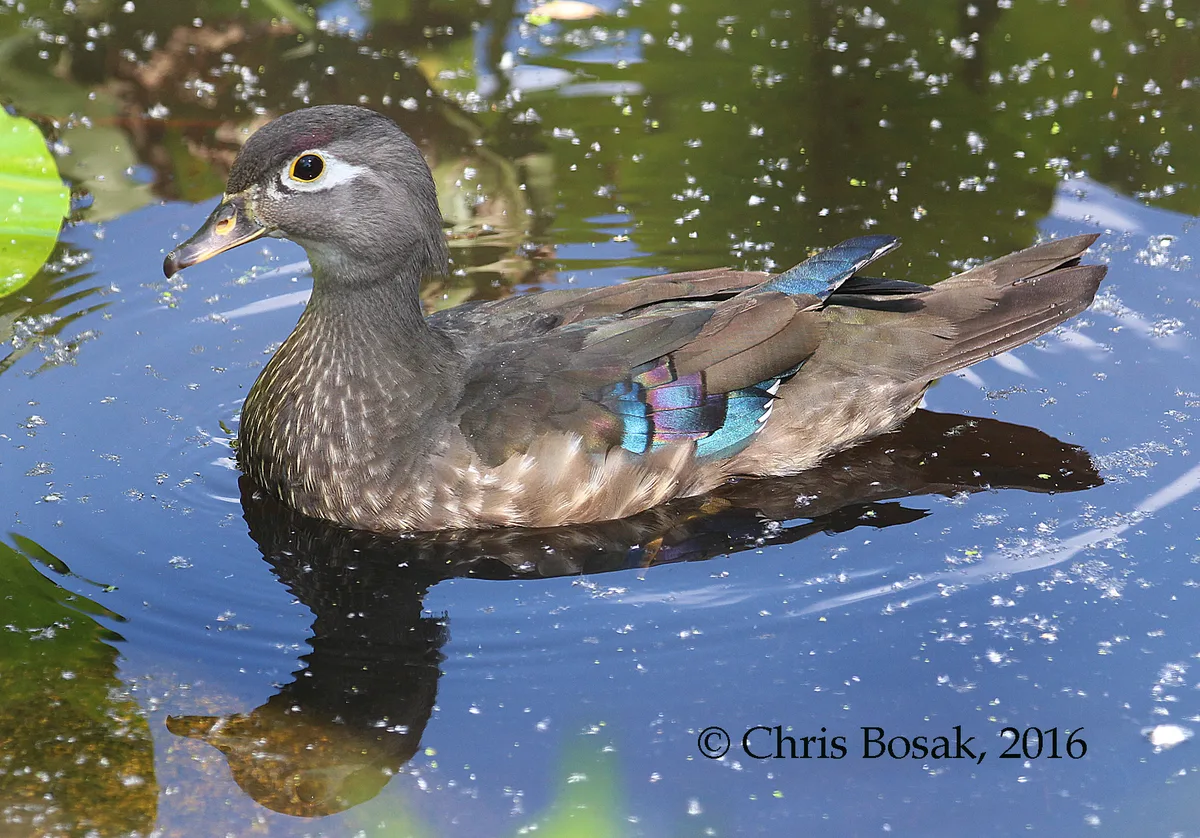
Image source: Bing (Web (fair-use with source credit))
This complex interplay of light and color is particularly effective in their preferred environment. The varied patterns on their feathers can mimic the play of light and shadow in these environments, making them harder for predators to spot. This camouflage is not just about hiding from predators but also about ambushing prey effectively.
Habitat Specificity: Blending into the Background
Wood Ducks are often found in and around trees and dense brush, which are environments rich in varied textures and colors. Their plumage is perfectly adapted to these settings. The iridescence and varied patterns allow them to virtually disappear when still, making them masters of evasion and opportunistic hunting within their natural habitat.
The U.S. Fish and Wildlife Service provides extensive data on waterfowl habitat and conservation, underscoring the importance of these environments for species like the Wood Duck.
How Evolution Shaped Wood Duck Colors
Over countless generations, these traits have been naturally selected. The males that were a bit brighter might have had more success finding mates, and the females that were better camouflaged were more likely to survive to lay more eggs. It’s a constant evolutionary dance, a fine-tuning process where visual characteristics that confer an advantage become more pronounced.
This isn't a quick change; it's the result of millions of years of subtle shifts driven by survival and reproductive pressures.
The concept of natural selection, first detailed by Charles Darwin, explains how organisms with traits better suited to their environment tend to survive and reproduce more offspring. For Wood Ducks, this has led to the striking differences we see between males and females today. The vibrancy of the male is a product of mate choice, while the female's muted tones are a product of predator avoidance.
The Advantage of Iridescence
The iridescent quality of many Wood Duck feathers is also key. Iridescence is what makes colors appear to change as the viewing angle changes, creating shimmering effects. This isn't due to pigment, but rather the physical structure of the feathers themselves, which refract light in a specific way.
This dynamic quality can make it harder for predators to fix on a bird's exact location, adding another layer to their camouflage strategy. As of 2026, research continues into the precise optical physics of bird feathers.
Key Visual Identifiers: What to Look For
To truly appreciate why Wood Ducks are so colorful, it helps to know what specific features to look for. It’s not just about a general "bright" appearance; there are distinct markings that contribute to their dazzling display. Understanding these details helps in identifying Wood Ducks and appreciating the biological reasons behind their unique coloration.
Male Wood Duck: A Masterpiece of Color
The male Wood Duck is undeniably the star of the show when it comes to color. His head is a spectacle of iridescent green and purple, often marked with bold white stripes that accentuate his features. A vibrant crest adds to his dramatic profile.
His chest is a rich, glossy chestnut, bordered by white flecks. The flanks are often a mix of buff and chestnut, and the back is dark and glossy. Even his bill is striking, typically red at the base and fading to black and white at the tip.
Female Wood Duck: Subtlety and Strength
While less flamboyant, the female Wood Duck possesses her own understated beauty and critical camouflage. Her plumage is primarily a mottled brown and gray, with subtle speckling that allows her to blend seamlessly into her wetland surroundings. A distinctive white teardrop-shaped patch around her eye is a key identifier, and her speculum (a patch of iridescent color on the wing) is usually a bluish-green, though far less pronounced than the male's overall coloring.
Her bill is typically dark gray.
Habitat Clues: Where to Spot Them
These vibrant colors are most effectively observed in their natural habitat. Wood Ducks prefer wooded swamps, shallow marshes, and the edges of streams and ponds where trees are abundant. This environment is crucial for understanding how their colors function.
The dappled sunlight filtering through leaves and branches provides the perfect backdrop for both display and concealment, turning their plumage into an advantage rather than a liability.