Why Do Ducks Paddle With Their Feet
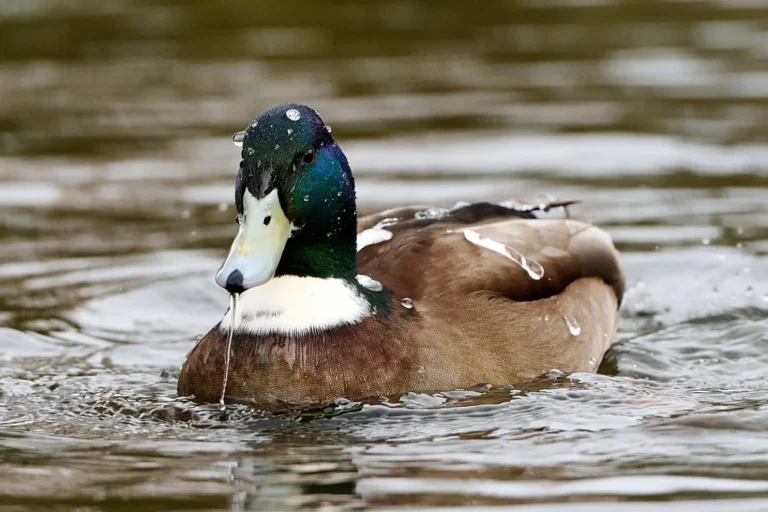
Ever watched a duck glide across the water and wondered about the magic happening beneath the surface? You've probably asked yourself, "why do ducks paddle with their feet?" It's a common question, and the answer lies in a brilliant combination of anatomy and physics that keeps them moving. Their webbed feet aren't just for show; they're the engine that powers their aquatic life.
From a biomechanical standpoint, the duck's paddling motion is a marvel of natural engineering, maximizing thrust while minimizing drag. This efficient system allows them to navigate waterways with surprising speed and agility. As per research in avian locomotion, ducks can generate significant propulsion with each stroke, a principle honed over millions of years of evolution.
Quick Answer
Ducks paddle with their feet to propel themselves forward through water. Their webbed feet act like paddles, pushing water backward to create forward motion. This sculling action also helps them steer and maintain balance.
The Paddling Powerhouse: How Duck Feet Work
At the heart of a duck's ability to move through water are its feet. These aren't just simple appendages; they're highly specialized tools designed for aquatic propulsion. When a duck paddles, it's a coordinated effort involving the entire leg and foot.
The primary action is a backward sweep, where the foot pushes against the water.
This backward push is crucial. It's this force, applied against the water, that translates into forward momentum for the duck. Think about it like a human swimmer kicking their legs, the same principle applies, but with a bird's unique adaptations.
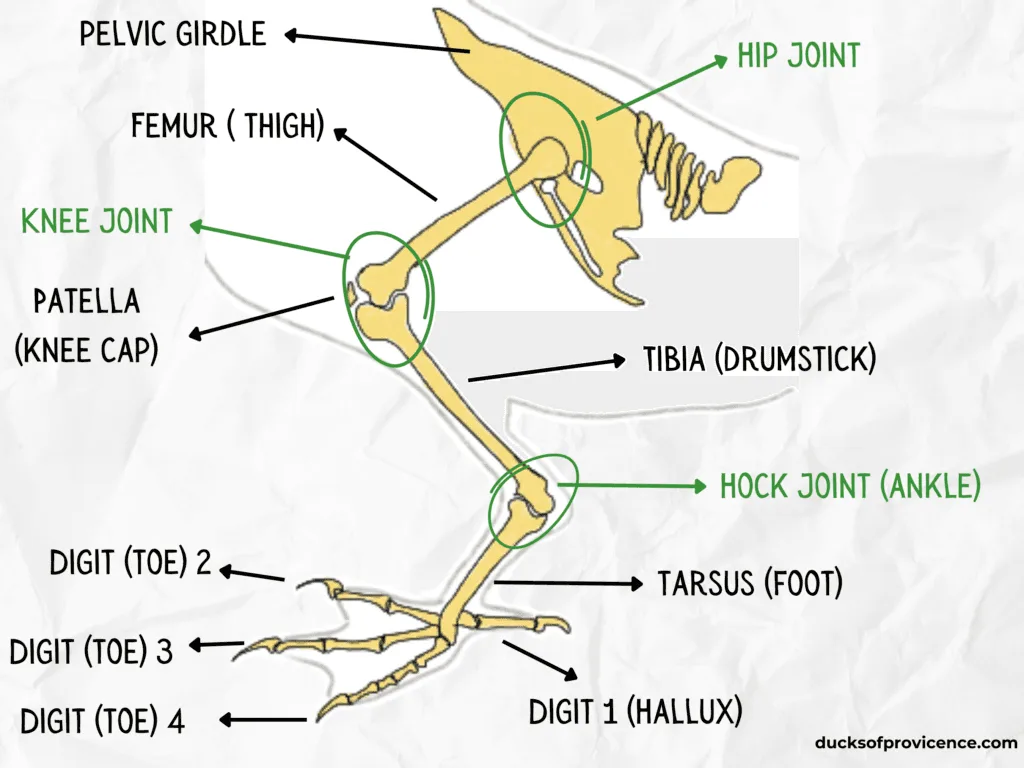
Image source: Bing (Web (fair-use with source credit))
The speed and efficiency with which they can do this are impressive. Research indicates that during a typical paddling stroke, a duck can generate enough force to move at speeds up to 5 miles per hour, depending on the species and conditions. This constant, rhythmic motion is what allows them to travel long distances and effectively forage for food in various aquatic environments.
Seeing is Believing: Visualizing Duck Foot Action
While we can describe the mechanics, seeing how a duck's feet move underwater truly brings the concept to life. If you could watch a duck from below, you'd notice a very deliberate and efficient motion that has two main phases: the sculling stroke and the forward recovery. This visual understanding helps demystify why their paddling is so effective.
The Sculling Stroke
This is where the magic happens for propulsion. During the sculling stroke, the duck extends its leg backward. As it does this, the webbed foot spreads out, creating a larger surface area to push against the water.
It's like a miniature oar, digging in and pulling the water backward. This backward push of water is what propels the duck forward, adhering to Newton's third law of motion.
The foot moves through an arc, sculling the water. This isn't a violent thrashing, but a controlled, powerful sweep designed to maximize the water pushed back. The webbing between the toes is key here, giving the foot that extra grip on the water it needs.
The Forward Recovery
After the powerful backward sculling stroke, the duck needs to bring its foot forward for the next push. This is the recovery phase. To do this efficiently and reduce resistance, the duck retracts its leg and tucks its toes.
The foot flattens and streamlines itself, minimizing drag as it moves through the water.
This reduction in drag is just as important as the thrust generated during the sculling stroke. If the foot created a lot of resistance on the forward movement, it would counteract the forward momentum gained. This two-part, coordinated motion, a powerful push followed by a streamlined recovery, is fundamental to how ducks swim.
More Than Just Propulsion: Steering and Stability
While moving forward is the primary goal, a duck's paddling isn't solely about straight-line travel. Those remarkable feet also play a crucial role in steering and maintaining balance, especially on choppy water. Subtle adjustments to their paddling technique allow for incredible maneuverability.
When a duck needs to turn, it can alter the paddling action of each foot independently. By pushing harder or angling one foot differently than the other, they can pivot or change direction. It’s similar to how a boat uses its rudder or twin propellers to steer, but in this case, the "rudders" are the duck's own feet.
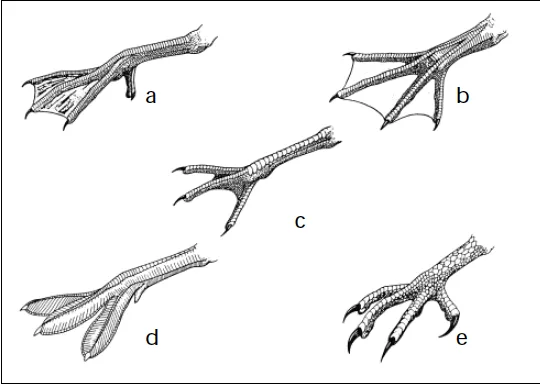
Image source: Web (Bing) / quizlet.com (Web image (fair-use with source credit))
Furthermore, when a duck is simply resting on the water, or when dealing with waves, its feet are constantly making micro-adjustments. These small movements help keep the duck stable and upright, preventing it from tipping over. It’s a continuous, subtle process that ensures they remain steady on the water's surface, allowing them to observe their surroundings or conserve energy.
This stability is vital for survival, enabling them to evade predators or remain hidden.
Webbed Wonders: Foot Anatomy for Aquatic Life
The effectiveness of a duck's paddling is directly linked to its unique foot anatomy. The most obvious feature, of course, is the webbing between their toes. This webbing is not just a single, flat piece of skin; it's a flexible, triangular membrane that significantly increases the surface area of the foot.
When the duck extends its leg and sweeps its foot backward, this webbing spreads out, creating a broad paddle. This enlarged surface allows the duck to push a larger volume of water with each stroke, generating more thrust. Without this webbing, the foot would be much less effective at gripping and moving water.
The structure of the foot itself is also important. Ducks have a relatively long tarsometatarsus (the lower part of the leg) and a flexible ankle joint, which allows for a wide range of motion. This helps them achieve that powerful sculling motion.
Another aspect of their foot anatomy is the arrangement of the toes. They are typically arranged in a way that helps them to both maximize push during the sculling stroke and minimize resistance during the recovery. Some studies suggest a slight degree of rotation at the hip and knee also contributes to the efficiency of the stroke cycle.
This intricate design ensures that every part of the leg and foot works in harmony for optimal aquatic movement.
What Happens Underwater: The Invisible Engine
To truly understand why ducks paddle with their feet, we need to look below the surface. What appears as simple swimming is actually a sophisticated, almost invisible engine at work. The duck's legs and webbed feet act as a sophisticated propulsion system, pushing against the water to create movement.
When a duck is actively swimming, you’ll notice its legs move in a continuous cycle. The primary action is the backward push, where the webbed foot flares out and sweeps backward. This sweep isn't just straight back; it's often a slightly angled motion, pushing water not only backward but also slightly downward.
This creates the necessary lift and forward thrust.
The process involves a synchronized sequence:
- Power Stroke: The leg extends backward, foot splayed, pushing water.
- Recovery Stroke: The leg comes forward, foot flattened and tucked to reduce drag.
This entire motion generates forward velocity. Researchers using high-speed underwater cameras have documented the precise angles and forces involved, showing that the efficiency comes from the combination of the foot's shape and the controlled movement of the leg. This underwater ballet is what allows ducks to move swiftly and gracefully across any body of water.
Comparing Paddling to Other Movement
While paddling is a duck's primary mode of aquatic locomotion, it's helpful to contrast it with how they move in other environments or how other aquatic animals get around. This comparison highlights the specific advantages of paddling with webbed feet for ducks. Think about how different an animal's movement looks on land versus in water; the duck is a prime example of specialization.
Duck Walking vs. Paddling
On land, ducks waddle. Their legs are set relatively far apart on their bodies, which makes them stable for walking but not particularly efficient for speed. Their webbed feet, while useful for traction on mud or soft ground, aren't ideal for running.
This is why ducks tend to prefer staying near water.
In contrast, when they enter the water, their entire biomechanical setup changes. The legs, previously used for an awkward waddle, become powerful engines. The webbed feet, which might seem cumbersome on land, transform into highly effective paddles.
This difference emphasizes that a duck's anatomy is optimized for its aquatic lifestyle.
Ducks vs. Other Aquatic Animals
Consider a fish, which uses its fins and tail for propulsion. Or a beaver, which uses its broad, flat tail for steering and a powerful kick from its hind legs. Ducks, with their webbed feet, occupy a unique niche.
They don't have the streamlined bodies and fin propulsion of fish, nor the specialized tail of a beaver.
Instead, their system relies on a more direct application of force through their feet. This method is highly effective for their typical habitats, which often include shallow waters where the constant need for powerful, deep dives is less critical than efficient surface travel and maneuverability. Their paddling allows them to stay "on top" of the water, an advantage for birds that need to surface frequently.
Common Mistakes in Observing Duck Paddling
When we watch ducks, we often see them gliding effortlessly, and it's easy to assume their paddling is simple or automatic. However, there are a few common misinterpretations about how they move or what their paddling signifies. Understanding these can give you a clearer picture of their behavior.
One common mistake is assuming that constant paddling means the duck is always in a hurry or actively fleeing. While rapid paddling can indicate alarm, ducks also paddle to maintain position, steer, or simply to move to a desired location at a relaxed pace. Their "cruising" speed still requires continuous, albeit less vigorous, paddling.
Another misconception is underestimating the role of steering and stability. People often focus solely on forward propulsion. However, the subtle adjustments ducks make with their feet to turn, brake, or stay balanced in choppy conditions are just as vital.
You might see a duck make a sharp turn without seeming to exert much effort, but this is due to precise foot manipulation.
Expert Tips for Understanding Duck Movement
Observing ducks is a great way to learn about their behavior, and focusing on their paddling can reveal a lot. Here are a few tips from ornithologists and animal behaviorists to help you better appreciate their aquatic locomotion as of 2026.
- Watch the Feet, Not Just the Body: Try to focus your gaze on what’s happening beneath the water's surface, or where the feet are emerging. This is where the engine is. You can often see the splay and recovery motion if the water is clear.
- Note Different Paddling Styles: Pay attention to how different ducks paddle. Do they seem to be exerting a lot of effort, or are they gliding smoothly? This can tell you if they are traveling, foraging, playing, or perhaps feeling threatened.
- Consider the Environment: Is the water calm or rough? Are there obstacles? Ducks will adjust their paddling intensity and technique based on these factors to maintain efficiency and safety.
Why This Discussion Matters
Understanding the mechanics behind why ducks paddle with their feet offers more than just trivia. It connects us to the natural world by highlighting the elegance of biological engineering and evolutionary adaptation. It's a reminder that even the most common sights can hold deep scientific principles.
This knowledge can foster a greater appreciation for avian wildlife. When you see a duck on the water, you can now look past the simple act of swimming to recognize the complex interplay of anatomy and physics that allows it to thrive. It encourages closer observation and a deeper respect for the adaptations that allow different species to occupy their unique ecological niches.
Furthermore, appreciating the efficiency of duck paddling can indirectly inform our own understanding of hydrodynamics and biomechanics. While we aren't suggesting you try to paddle like a duck, studying these natural systems has inspired innovations in fields from robotics to boat design. It’s a small example of how nature continues to be a masterclass in problem-solving.
Frequently Asked Questions
How fast can ducks paddle?
Ducks can paddle at speeds up to 5 miles per hour, but this varies by species, size, and water conditions. Their speed is primarily determined by the power and frequency of their leg strokes.
Do ducks use their feet for anything else besides paddling?
Yes, ducks use their feet for walking (waddling), perching, and maintaining balance. They also use them for preening and sometimes for defense or courtship displays.
Why do ducks sometimes paddle with only one foot?
Ducks might paddle with one foot to steer or make minor adjustments to their position, especially when maneuvering in tight spaces or holding their position against a current. It's a form of fine-tuning their movement.
Is duck paddling noisy?
The actual paddling motion itself is usually very quiet. Any noise might come from splashing if the duck is moving very rapidly or if the water is disturbed by other factors.
Do ducklings paddle the same way as adult ducks?
Ducklings learn to paddle as they grow. Their initial paddling might be less coordinated and powerful than an adult's, but the fundamental sculling motion is the same principle.