Where Do Birds Build Nests
Where do birds build nests? The answer shapes almost everything about how a bird lives and breeds. Nest location isn't random.
It's driven by predation pressure, material availability, climate, and competition.
This matters whether you're identifying a nest on a hike or designing a backyard habitat that works. Nest box hole diameters range from 1 inch for chickadees to 2 inches for screech owls. Get the size wrong and the box goes unused.
Let's break down where birds build nests, what each site looks like, and how to spot them.
Quick Answer
Where do birds build nests depends on species behavior and environment. Most birds nest in trees, either in cavities or on open branches. Some build nests on cliff faces, inside ground burrows, or on floating vegetation.
Others attach mud nests to buildings or rock walls. Nest site choice is always driven by predator avoidance, material access, and climate.
Why Where a Bird Nests Says Everything About the Bird
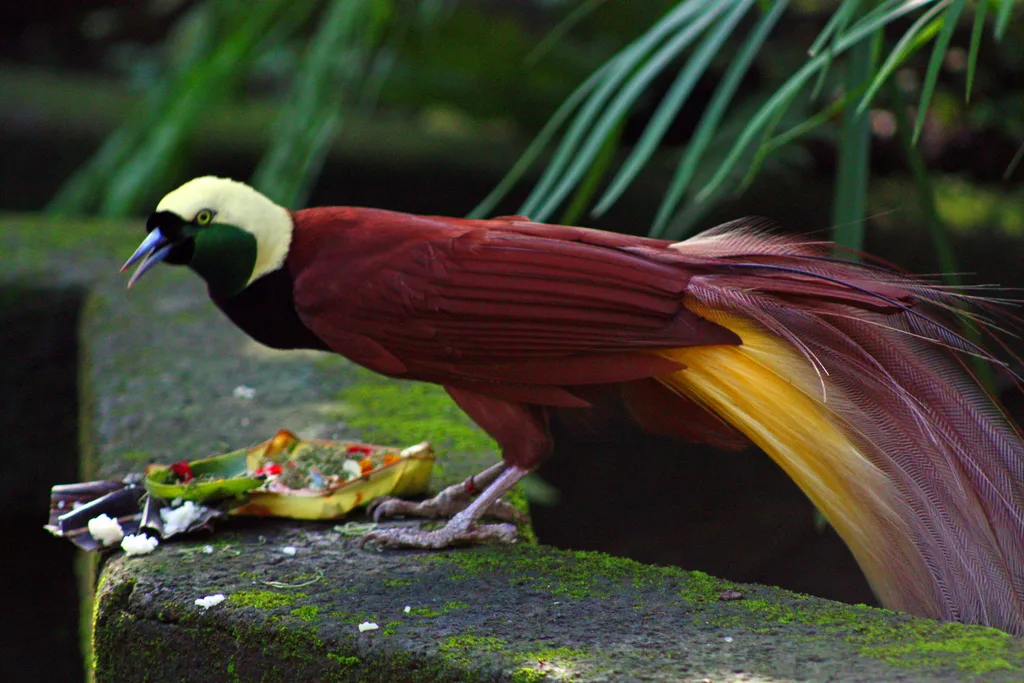
Every nest site a bird chooses tells you something about its strategy. A hummingbird building a tiny cup on a branch is making a different gamble than a swallow that cements mud to a cliff face.
The pattern holds across North American species. If you understand the nest location, you can usually predict the predation pressure, the climate challenges, and even the species family without seeing the bird.
What Drives Nest Site Selection
Nest location isn't a preference. It's a calculation. Research confirms four main factors drive where a bird decides to settle:
- Predation risk: Birds exposed to cats, snakes, raccoons, or crows evolve strategies to compensate. Ground-nesting species stay camouflaged. Tree-nesters build higher or use cavities.
- Material availability: Mud nesters live near clay sources. Cavity nesters depend on woodpecker holes or decaying trees. Weaver birds need flexible grass strips.
- Climate protection: Nesting birds need shelter from rain, wind, and extreme heat. Species in wet climates favor enclosed or domed nests. Arid-region species often nest underground where temperatures stay stable.
- Competition: Some species build in colonies where sheer numbers overwhelm predators. Others nest alone to reduce resource competition and keep their sites hidden.
Nest Location Reflects Habitat Type
The environment available to a bird shapes its nesting options. Urban parks offer tree cavities, building ledges, and hanging baskets. Coastal cliffs offer rock shelves and narrow ledges.
Wetlands offer ground scrapes and floating rafts of vegetation.
If you're working on habitat restoration or trying to attract nesting birds to your yard, understanding this link between habitat and nest site is where most people stop short. The US Fish & Wildlife Service provides guidelines on protecting nesting habitats across the country, which is a solid starting point if you're managing a site.
The 7 Major Nest Sites Birds Use (With Visual Cues for Each)
Seven broad categories cover the vast majority of bird nesting strategies. Knowing these makes field identification much faster.
1. Tree Cup Nests
The most common nest type worldwide. A cup of woven twigs, grass, and bark, often lined with feathers or moss. Look for these on horizontal branches, usually 10 to 50 feet up.
Robins, song sparrows, and chickadees build cup nests.
Visual cue: A small, open-topped basket shape cradled in a branch fork.
2. Tree Cavity Nests
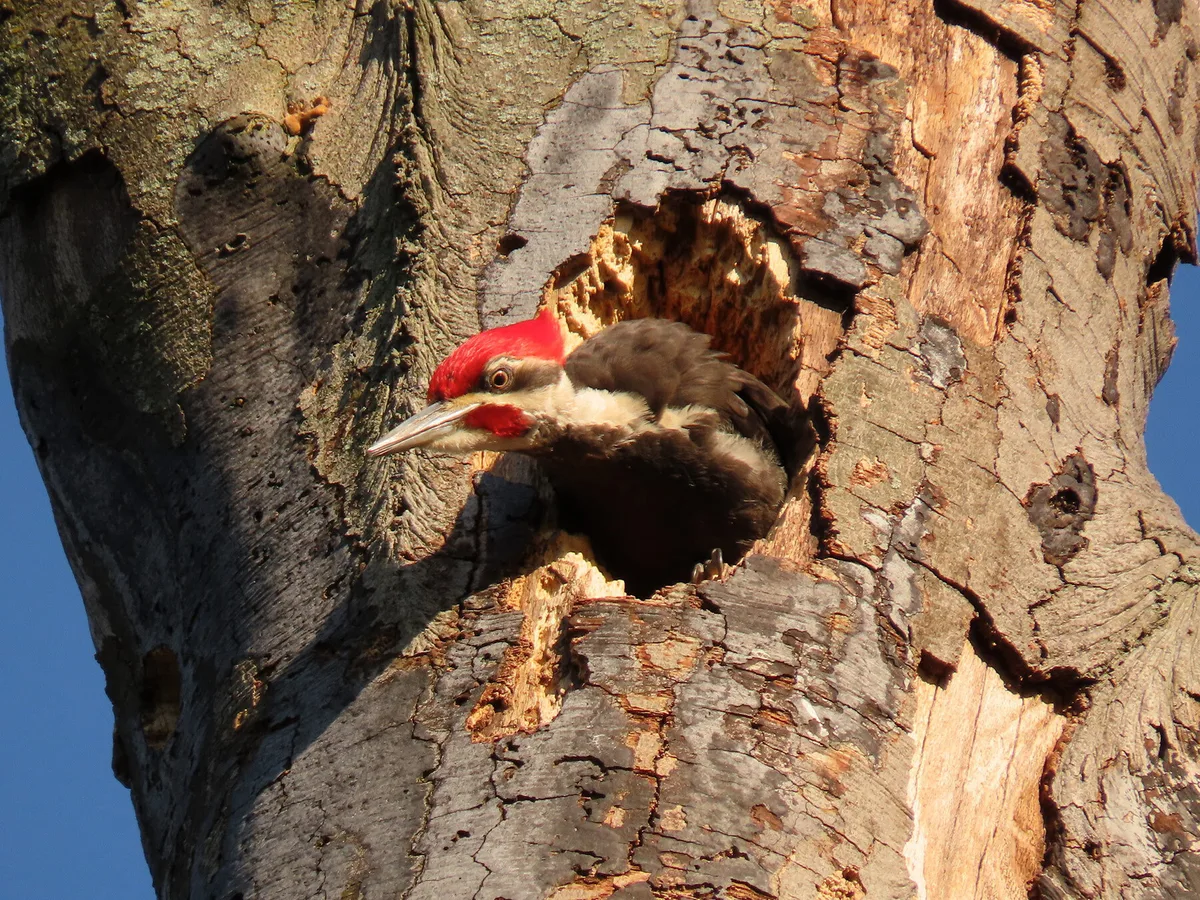
Built inside hollow trees or abandoned woodpecker holes. Species that use these include bluebirds, woodpeckers, chickadees, and screech owls. The cavities are often hard to spot from the ground.
You'll see the entrance hole, but the nest itself sits out of view.
Visual cue: A round or oval hole in a tree trunk or large branch, typically 1 to 2.5 inches across.
3. Cliff-Face Nests
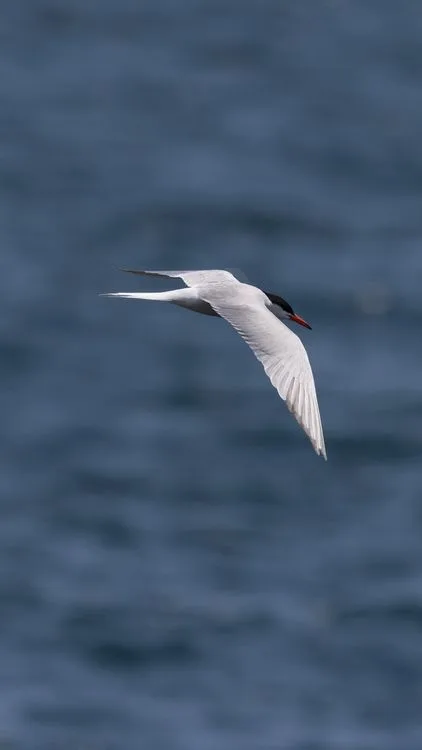
Peregrine falcons, eagles, and seabirds build nests on rock ledges, in crevices, and on cliff shelves. These sites are nearly invisible from certain angles. From other angles, you'll see a flat scrape of gravel or a small platform of sticks wedged into a rock shelf.
Visual cue: A flat or slightly concave shelf of sticks or bare rock on a vertical surface, often with whitewash streaking the rock below.
4. Ground Nests and Scrapes
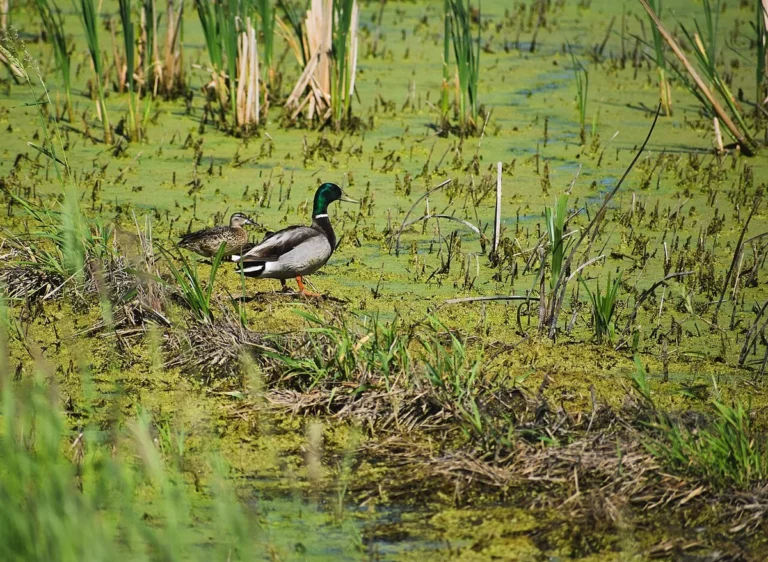
Some of the most vulnerable nests on the planet. Species like killdeer, ground-nesting ducks, and various shorebirds lay eggs directly on the ground or in a shallow scrape lined with pebbles. These are nearly invisible when the bird isn't sitting on them.
Visual cue: A shallow depression in dirt, gravel, or vegetation. Often hard to find without the bird actively incubating.
5. Underground Burrows
Burrowing owls, some kingfishers, and puffins dig tunnels into soil banks or embankments. The entrance is usually a small hole at ground level, sometimes with a mound of excavated dirt around it.
Visual cue: A round hole in a dirt bank, usually 2 to 4 inches across, with scattered soil below the opening.
6. Hanging Nests
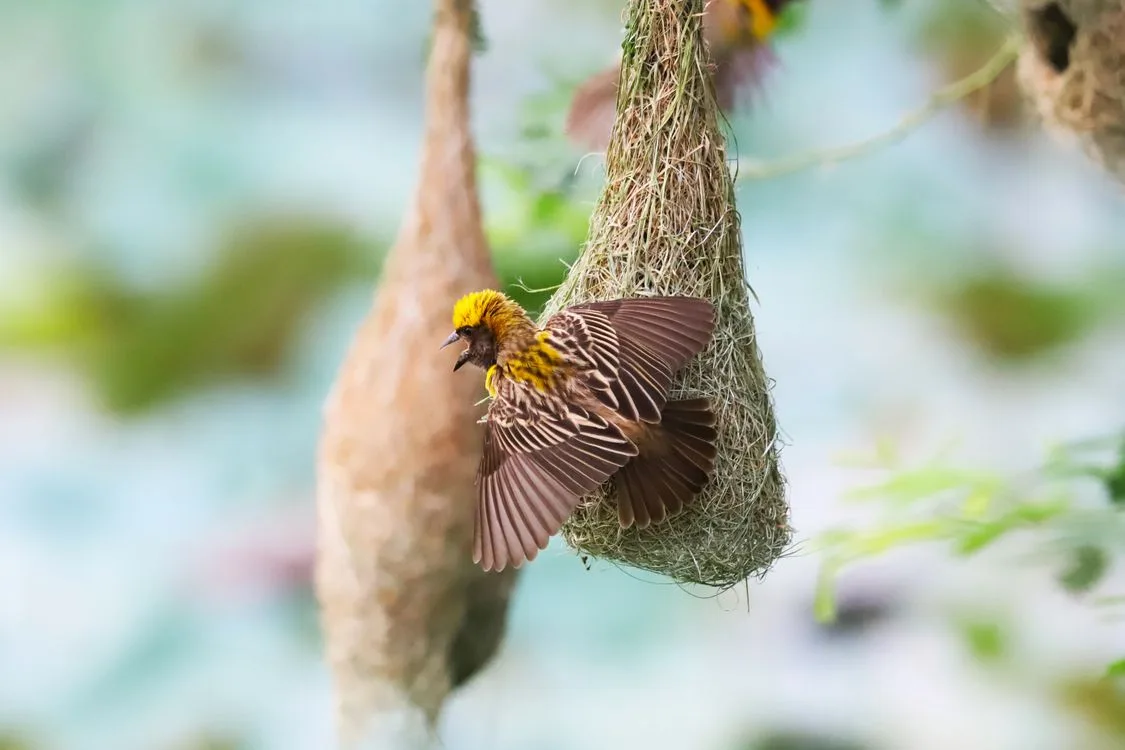
Weaver birds and orioles build elaborate woven baskets that hang from branches. These pendulum-style nests swing in the wind, which discourages many predators. Some take weeks to complete.
Visual cue: An enclosed, bag-like nest suspended below a branch, often with a side entrance tube extending downward.
7. Floating and Platform Nests
Water birds like loons, coots, and grebes build nests from floating vegetation or attach platforms to submerged structures. Muskrat lodges, cattail beds, and lily pad clumps all serve as nesting substrate.
Visual cue: A low mound of vegetation sitting on or just above the water surface.
| Nest Site | Typical Height | Common Bird Families | Predator Risk Level |
|---|---|---|---|
| Tree Cup | 10–50 ft | Robins, Warblers, Sparrows | Moderate |
| Tree Cavity | 5–40 ft | Bluebirds, Woodpeckers, Owls | Low |
| Cliff-Face | 20–500+ ft | Falcons, Eagles, Seabirds | Low |
| Ground | 0 ft | Killdeer, Ducks, Shorebirds | High |
| Burrow | 0–3 ft | Burrowing Owls, Kingfishers | Moderate |
| Hanging | 15–40 ft | Weaver Birds, Orioles | Low |
| Floating | 0–2 ft | Loons, Coots, Grebes | Moderate |
How to Spot Active Nests: Visual Signals to Look For
Identifying a nest site in the field takes practice. Even experienced birders miss them. Here's what to look for.
Bird Behavior Around the Nest
The bird itself is the biggest clue. If you see a bird carrying nesting material like twigs, grass, feathers, or mud, follow it. If a bird is repeatedly flying to the same spot with food, that spot is almost certainly an active nest with nestlings inside.
If a bird suddenly appears agitated and starts scolding you from a nearby branch, you're close. That alarm call means you're near something the bird is protecting.
Signs of an Active Nest
Look for these physical indicators:
- Fresh whitewash (bird droppings) streaking the rock or branch below
- Clean, unbrightened vegetation immediately around the nest
- Mud or spider silk still wet or tacky on the nest structure
- Fecal sacs being carried away by adult birds (white or pale sacs)
- Nestlings or eggs visible from below or the side
- Constant adult activity in and out of the nest site
Seasonal Timing
Peak nesting activity in North America runs from March through August, depending on latitude. In the southern United States, nesting can begin in February. In northern regions, May and June are the busiest months.
As of 2026, the Cornell Lab of Ornithology's NestWatch program continues to collect citizen-science data on nest timing across the continent. It's one of the best free resources for understanding local nesting patterns.
If you find a nest outside the typical window, it could belong to a year-round resident or a late-season breeder. Some species, like cardinals, can produce two or even three broods in a single season.
What If You Can't Identify the Nest?
Don't guess blindly. Match the nest location and structure against what you know about local species. A cup nest in a shrub near water could belong to dozens of species.
But a hanging woven nest with an entrance tube in your backyard almost certainly belongs to a Baltimore oriole or a similar weaver.
The Cornell Lab maintains field guides for nest identification organized by region, which makes this matching process much easier.
Natural Cavities vs. Nest Boxes: What Actually Works Better
This is one of the most common questions from people who want to attract nesting birds. And the answer isn't as simple as "just put up a birdhouse."
Natural Cavities Are Hard to Beat
Wild birds strongly prefer natural cavities. They're already the right size, already insulated, and already surrounded by mature habitat. A natural cavity in a dead or dying tree (a snag) is worth more than most birdhouses.
The problem is availability. Mature trees with natural cavities are getting rarer in maintained landscapes. Tree removal for safety, development, or aesthetics reduces the supply.
Many cavity nesters now depend entirely on artificial boxes.
When Nest Boxes Win
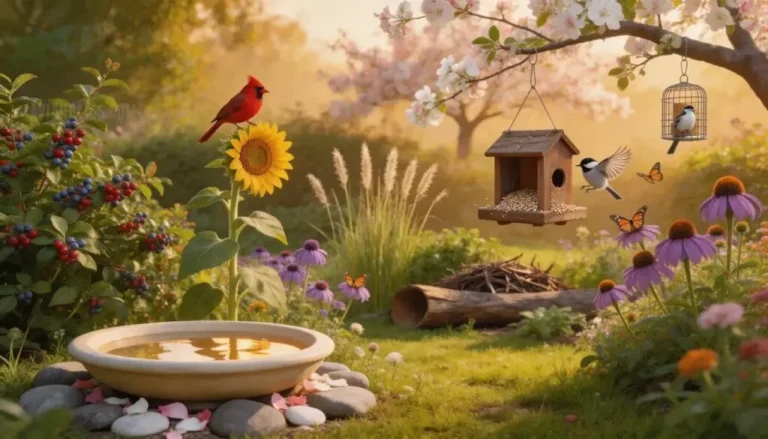
Nest boxes fill the gap. They're especially effective for:
- Eastern bluebirds: Box programs have supported bluebird population recovery in many states since the 1970s
- Chickadees and titmice: These smaller species readily adopt properly sized boxes
- Purple martins: Almost entirely dependent on human-provided housing in many regions
- Barn owls: Frequently nest in large boxes when natural cavities are unavailable
The Specs That Matter
Not all nest boxes work equally. Dimensions drive adoption rates.
| Box Type | Entry Hole Diameter | Placement Height | Best For |
|---|---|---|---|
| Small box | 1 inch (25mm) | 5–10 ft | Chickadees, wrens |
| Medium box | 1.5 inches (38mm) | 6–15 ft | Eastern bluebirds, tree swallows |
| Large box | 1.75–2 inches (44–51mm) | 8–20 ft | Screech owls, kestrels |
| Martin gourd | 2–2.5 inches (51–64mm) | 10–20 ft | Purple martins |
Place boxes so the entrance faces away from prevailing wind and rain. Add predator guards on the pole or trunk. And install boxes in late winter, before spring migration arrives.
Birds scout nest sites weeks before they actually nest.
Mistakes People Make When Identifying Bird Nest Locations
Even people who spend time in nature get this wrong. Here are the most common errors.
Assuming Every Nest Is in a Tree
Plenty of birds never touch a tree. Shorebirds nest on gravel beaches. Killdeer nest in parking lots.
Puffins nest in underground burrows on grassy cliffs. If you're scanning the tree canopy for every nest, you'll miss a lot.
Confusing Wasp Nests With Bird Nests
Paper wasp nests hang from branches and are sometimes mistaken for bird nests, especially in early spring when they're small and fresh. Bird nests always involve biological materials like twigs, grass, mud, or feathers. Wasp nests are made from chewed wood pulp and have a papery, layered texture.
Disturbing Active Nests by Accident
This is the biggest practical mistake. People find a nest during garden cleanup, tree trimming, or porch renovation and move it. Under the Migratory Bird Treaty Act, it's illegal to disturb an active nest of a native migratory bird in the United States.
Always verify whether the nest is active before touching anything.
Installing Nest Boxes in the Wrong Spot
A box in full afternoon sun bakes nestlings. A box near a feeding station invites predators. A box with the wrong hole size lets house sparrows in but keeps bluebirds out.
Placement matters as much as the box itself.
Judging a Nest by Its Size Alone
A tiny hummingbird nest, about the size of a walnut, might be invisible on a tree branch. A massive osprey platform, several feet across, looks like a heap of driftwood from a distance. Size alone won't tell you what species built it.
You need location, materials, and construction style together.