How Do Ducks Keep Their Feathers Waterproof
You've probably watched ducks splash, dive, and swim, emerging from the water looking almost impossibly sleek and dry. Ever wondered how they manage that feat? The answer lies in a remarkable natural system involving their feathers and a special oil they produce.
As of 2026, this biological marvel continues to be a subject of fascination and study in ornithology.
This intricate design is far from accidental. Ducks possess a specialized gland near their tail that secretes an oily substance, which they meticulously spread across their feathers. This oily coating, combined with the unique structure of their feathers, creates a highly effective waterproof barrier, essential for their survival in aquatic environments.
Quick Answer
Ducks keep their feathers waterproof by preening oil from a gland near their tail. This oil coats their interlocking contour feathers. The feather structure itself creates a dense, water-repellent surface.
This system keeps them warm and buoyant.
The Secret to Sleek, Dry Feathers: It's All About Structure and Oil
It's easy to take for granted how effortlessly ducks seem to shed water, but beneath that smooth exterior is a sophisticated biological engineering feat. Their ability to stay dry isn't just about looking good; it's a critical survival mechanism. This waterproof system allows them to regulate their body temperature, maintain buoyancy, and protect their delicate skin from prolonged exposure to cold water.
The entire process hinges on two key elements: the physical structure of their feathers and a specific type of oil produced by their bodies. Together, these components create a barrier that repels water, ensuring the duck remains insulated and comfortable, whether they're just paddling on the surface or diving deep.
Feather Design: Nature's Tiny Shingles
Think of a duck's outer feathers, the contour feathers, as being like incredibly fine, overlapping shingles on a roof. Each contour feather has a central shaft, and branching off this shaft are countless tiny barbs. These barbs, in turn, have even smaller projections called barbules, which are hooked.

Image source: Bing (Web (fair-use with source credit))
These barbules interlock with those of adjacent feathers, creating a dense, solid surface that water has trouble penetrating. When a duck is in the water, this interlocking structure forms a primary layer of defense against moisture. Without this design, water would easily seep through to the insulating down feathers underneath.
The Preen Gland: A Duck's Built-In Water-Repellent
The second, and perhaps most crucial, part of the waterproofing system is a special gland located at the base of a duck's tail, just above the oil-producing organ. This is known as the uropygial gland, or more commonly, the preen gland. This gland is responsible for producing a waxy, oily substance.
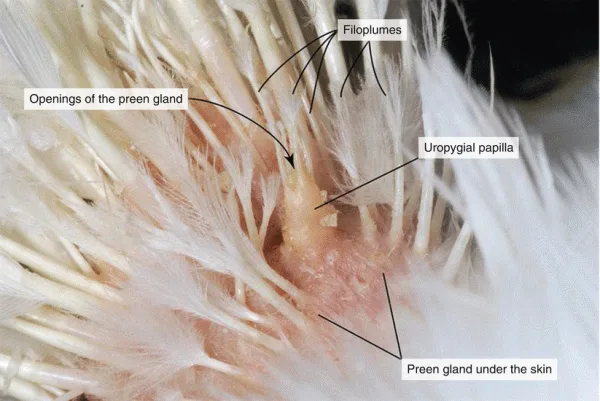
Image source: Bing (Web (fair-use with source credit))
Ducks actively use their beaks to collect this oil and spread it over their feathers during a behavior called preening. This oil acts as a natural waterproofing agent, coating the interlocking barbules and creating a barrier that causes water to bead up and roll off. The consistency and composition of this oil are finely tuned to provide effective water repellency without making the feathers too heavy or greasy.
Research indicates this oil is a complex mixture of fatty acids, alcohols, and waxes, with variations among different species.
How the Oil and Feathers Work Together
The magic truly happens when the feather structure and the preen oil combine. It's not enough to have waterproof feathers alone; they need to be maintained. And it’s not enough to have the oil; it needs to be applied effectively to the right parts of the feathers.
This symbiotic relationship ensures that a duck’s plumage remains functional in all sorts of wet conditions. The physical interlocking of the barbules forms the base layer of defense, while the oil acts as a finishing seal, enhancing the water-repellent properties. This dual system is remarkably efficient at keeping the bird dry and warm.
The Preening Process: Spreading the Waterproofing
Preening is an essential daily activity for ducks, and it's far more than just tidying up. It's the active process of applying and redistributing the waterproofing oil. A duck will repeatedly use its beak to:
- Collect oil: It squeezes the uropygial gland to gather the oily secretion.
- Distribute oil: It then carefully rubs this oil over its feathers, paying special attention to the outer contour feathers.
- Smooth and align: While spreading the oil, the duck also uses its beak to smooth and align the barbules, ensuring they are properly interlocked and that the oily coating is evenly distributed across the entire feather surface.
This diligent grooming ensures that the waterproof barrier remains intact and effective. Studies show that ducks can spend a significant portion of their day preening, especially after being in the water, highlighting the importance of this behavior for maintaining their plumage. Without regular preening, the oil would degrade, and the feathers would lose their waterproofing ability.
Why Feather Waterproofing is Crucial for Ducks
The ability to stay dry is fundamentally linked to a duck's survival and well-being. If their feathers become waterlogged, several critical functions are compromised, putting the duck at risk. This is why their waterproofing system is so highly developed.
Keeping Warm: Insulation in Icy Waters
Water conducts heat away from the body much faster than air does. For a bird like a duck, which relies on its feathers to trap a layer of insulating air close to its skin, waterlogged feathers would be disastrous. The fluffy down feathers beneath the contour feathers are key to this insulation.
If the outer contour feathers lose their water-repellent quality, water can penetrate to the down. This eliminates the insulating air pockets, allowing body heat to escape rapidly. In cold environments, this can quickly lead to hypothermia.
The waterproof barrier provided by the preen oil ensures the down remains dry and fluffy, maintaining critical insulation even when the duck is submerged.
Staying Afloat: Buoyancy and Efficiency
Dry feathers are lighter than waterlogged ones. The interlocking structure of the contour feathers, when properly oiled, traps air. This trapped air contributes significantly to a duck's buoyancy, helping them float effortlessly on the water's surface.
When feathers become saturated, they lose this air-trapping capability and become heavier. This increased weight makes it harder for the duck to stay afloat, requiring more energy to swim and potentially making them more vulnerable to predators. The waterproofing ensures they can maintain their natural buoyancy, allowing for efficient movement and energy conservation while swimming and diving.
Common Misconceptions About Duck Feathers
Despite how well-known ducks are for their aquatic abilities, a few common misunderstandings pop up regarding their feathers. One is that their feathers are inherently waterproof, like a natural plastic. In reality, it's the combination of feather structure and the applied oil that creates the barrier.
Another misconception is that ducks don't get wet at all. While their outer feathers repel most water, a certain amount of moisture might still reach their skin over time, especially during prolonged dives or heavy rain. However, the system is designed to prevent saturation and the subsequent loss of insulation and buoyancy.
The efficiency of the uropygial gland and the duck's diligent preening ensure the feathers are constantly maintained to repel water effectively.
Frequently Asked Questions About Duck Waterproofing
How long does it take for a duck's feathers to become waterproof again after being cleaned?
After a duck's feathers have been significantly cleaned, such as in a laboratory setting or due to an illness affecting the preen gland, it takes consistent preening over several hours for the oily coating to be fully re-established. This process involves the duck collecting oil from its gland and meticulously spreading it across all its feathers. The effectiveness of the waterproofing depends on the bird's health and its ability to preen properly.
Can ducks lose their waterproofing ability if they are sick?
Yes, ducks can lose their waterproofing ability if they are sick or injured, particularly if the uropygial gland is affected or if they are too weak to preen effectively. Conditions that impair the gland's function or the duck's ability to groom itself can lead to waterlogged feathers, which can cause hypothermia and make it difficult for the bird to fly or swim properly. This is why you might see sick or injured waterfowl looking bedraggled and less buoyant.
Do all birds have a preen gland?
Not all birds have a preen gland. While it's common in many species, especially waterfowl and seabirds that spend a lot of time in water, some birds lack it entirely. For example, pigeons and doves do not have a uropygial gland.
These birds often have other adaptations or behaviors to keep their feathers in good condition, such as different feather structures or feather-dusting, where they use dust or soil to clean and maintain their plumage.