What Is the Difference Between a Goose and a Swan
Ever found yourself by a lake, watching those elegant water birds, and wondered what is the difference between a goose and a swan? It's a common question! While they're both in the same family (Anatidae, which also includes ducks), swans and geese have some pretty distinct differences that are easy to spot once you know what to look for.
Let's break it down, like a friendly chat over coffee.
Think of it this way: if you're trying to tell them apart, you're really making a judgment call based on what you see and know. Our research shows that visual cues and specific biological attributes are key. For instance, swans typically have a wingspan of up to 2.4 meters, while geese average around 1.5 meters, a significant distinction in size.
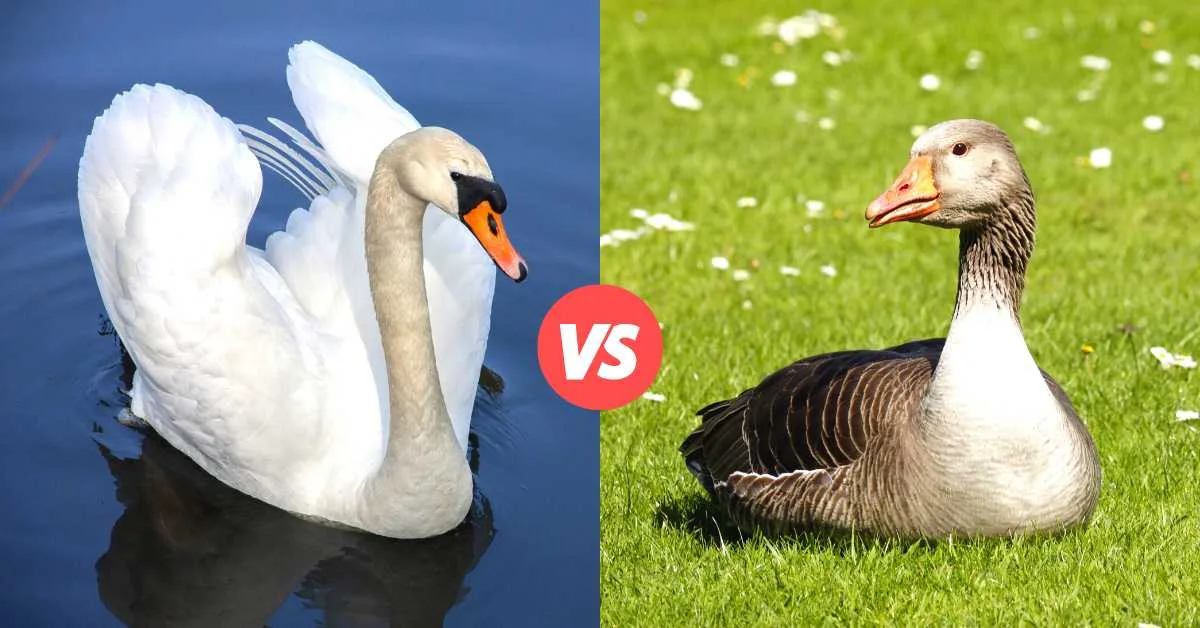
Image source: Bing (Web (fair-use with source credit))
Quick Answer
The primary difference between a goose and a swan lies in size, neck length, and overall body shape. Swans are significantly larger with long, gracefully curved necks, while geese are smaller with shorter, straighter necks. Their bills and vocalizations also differ.
Size and Shape: The First Clues
When you’re trying to figure out if you're looking at a goose or a swan, the first thing that usually jumps out is their size and how they carry themselves. These aren't subtle differences; they're pretty obvious once you tune your eyes to them. Swans are the giants of the waterbird world, while geese, though large birds themselves, are more modestly proportioned.
How Big Are We Talking?
Swans are among the largest flying birds you'll encounter. Their sheer bulk is impressive. For example, a Mute Swan can weigh upwards of 23 pounds (10.4 kg), making it a substantial bird.
Geese, while still large, are generally smaller and more compact. A Canada Goose, for instance, typically weighs between 7 and 14 pounds (3.2 to 6.3 kg). This size difference is often the easiest way to tell them apart from a distance, especially if you can gauge their relative scale.
Neck Length and Posture
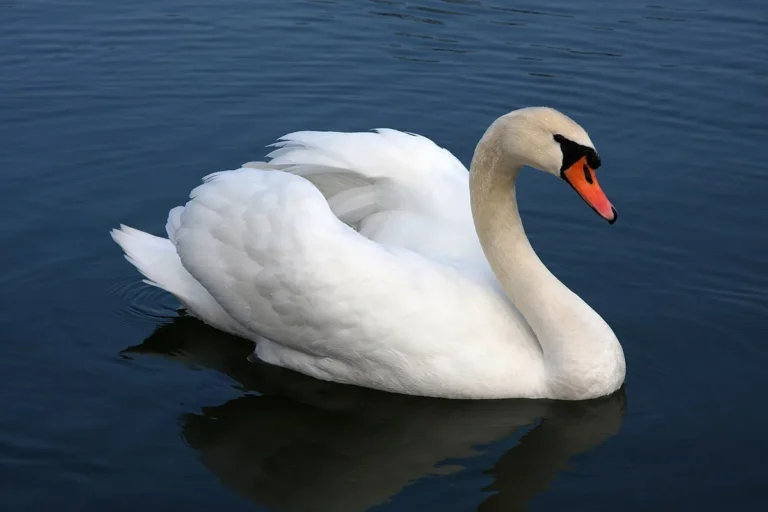
This is perhaps the most iconic differentiator. Swans are famous for their long, elegant, S-shaped necks, which they often hold gracefully curved. This allows them incredible reach when foraging in deeper water.
Geese, on the other hand, have much shorter necks that are relatively straight. Their posture is often more upright and alert, with their necks held less fluidly than a swan's. If the bird looks like it has a long, flowing neck that's a major giveaway for a swan.
Image source: Bing (Web (fair-use with source credit))
Bills and Plumage: Color and Characteristics
Beyond size and shape, the details of a bird's bill and its feathers can offer more clues to its identity. These features are often more pronounced and can help confirm what you're seeing, especially if the bird is further away or its full body isn't clear.
What to Look for on Their Heads
The bill is a key identifying feature. Swans often have prominent, brightly colored bills, which can be red, orange, or black, frequently with distinctive black markings. For example, the Mute Swan's bill is bright orange with a black base and a prominent black knob at its base.
Geese tend to have sturdier, more wedge-shaped bills that are usually less colorful, commonly orange, pink, or black, and generally lack the elaborate knobs or striking patterns seen on many swans.
Feather Colors and Patterns
While many people think of swans as purely white and geese as grey or brown, there's a bit more nuance. The most common swan species found in North America and Europe are indeed pure white. However, species like the Black Swan, native to Australia, are entirely black.
Geese display a wider range of natural coloration, including various shades of grey, brown, and black, often with distinct white markings, such as the characteristic white "chinstrap" on a Canada Goose.
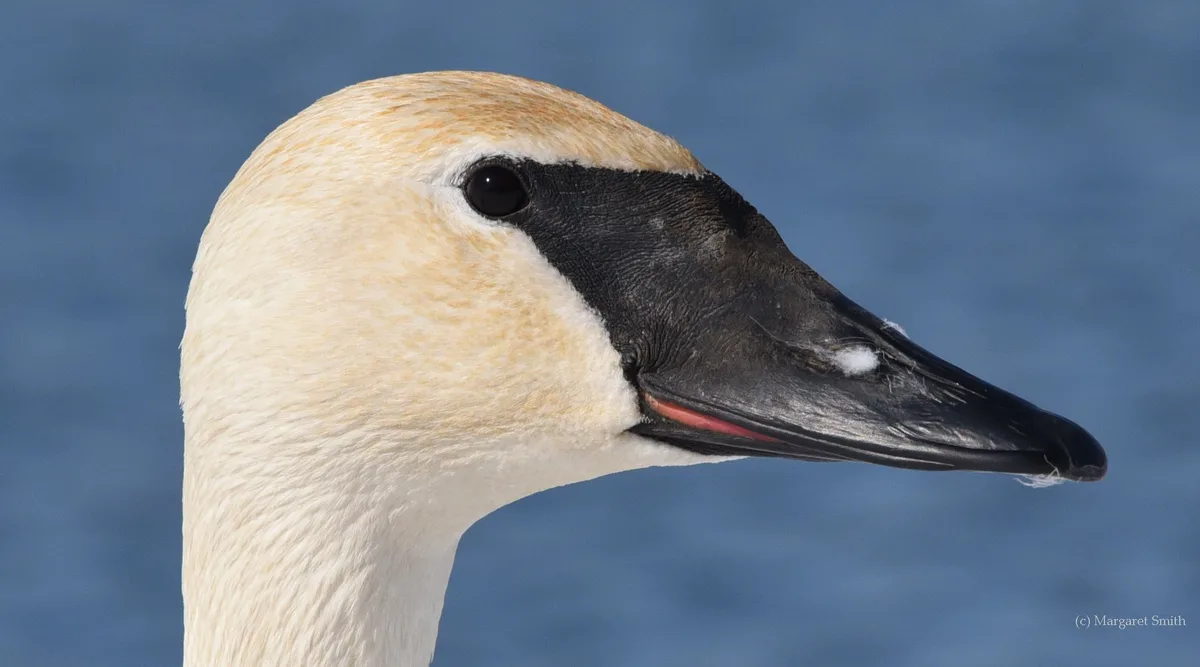
Image source: Bing (Web (fair-use with source credit))
Behavior and Temperament: Personalities in the Water
How these birds interact with their environment and each other can also provide valuable clues for identification. Their general demeanor and social habits are quite different, reflecting their distinct evolutionary paths. Understanding these behavioral traits can enhance your appreciation for these magnificent waterfowl.
How They Act Around Each Other
Swans are often observed in pairs or small family groups, and they tend to be more solitary than geese. While they can be territorial, especially when nesting, their overall presence is often described as more serene or placid. Geese, conversely, are highly social creatures and are frequently seen in large flocks.
Their social dynamics are more boisterous, and they are known for their characteristic honking calls, which they use for communication within the flock, such as signaling danger or maintaining group cohesion.
When to Be Wary
Both species can exhibit territorial behavior, but geese have a reputation for being more assertive and vocal when they feel threatened. Their honking can escalate to aggressive displays, and they are known to charge if they perceive a danger to themselves or their young. Swans will defend their nests and cygnets fiercely, but their defensive posture might appear more imposing due to their size and powerful wings, rather than a relentless pursuit.
Knowing this can help you gauge a safe distance from either bird.
Quick Comparison: At a Glance
To make things crystal clear, let's put the main distinguishing features side-by-side. This makes it super easy to cross-reference what you're seeing with the key identifiers. The goal here is to give you a quick reference tool you can use right there by the water.
Key Differences at a Glance
| Feature | Swan | Goose |
|---|---|---|
| Size | Very Large; among the largest flying birds. | Large, but generally smaller and more compact than swans. |
| Neck | Long, graceful, typically held in an S-curve. | Shorter, straighter, held more upright. |
| Bill | Often brightly colored (orange, red) with black markings; can have knobs. | More stout, typically orange, pink, or black; less ornate. |
| Plumage | Mostly pure white; some species are black. | Various shades of grey, brown, black and white patterns. |
| Body Shape | Elongated, flowing silhouette. | Robust, stocky build. |
| Temperament | Generally placid; territorial when nesting. | Social, often vocal, can be assertive and territorial. |
| Social Unit | Pairs or small family groups. | Often found in large flocks. |
| Vocalization | Muted hisses or trumpeting calls (species dependent). | Loud honking, hissing, and barking sounds. |
Common Mistakes When Identifying Birds
Even with clear distinctions, people often mix up geese and swans. Understanding these common mix-ups can help you avoid them yourself and be more confident in your identifications. It's easy to get them confused if you're not paying close attention to the key features.
What People Get Wrong
One of the biggest mistakes is assuming all large white water birds are swans. While many swans are white, some large white geese can cause confusion, especially at a distance or in poor lighting. Another common error is focusing solely on color; many species of geese are predominantly white or have significant white markings, and some swans are not white at all.
People also tend to overlook the neck length and posture, which are the most reliable visual cues. For instance, mistaking a large adult goose for a juvenile swan or vice-versa is frequent because size can vary within species.
Frequently Asked Questions
How long does it take to learn to tell the difference?
With practice and by focusing on the key features like neck length and body shape, most people can reliably distinguish between geese and swans after a few observations.
Are there any other birds that look like geese or swans?
Yes, some large ducks, like mergansers or eiders, can be mistaken for smaller geese from a distance, but they generally have different body shapes and bill structures.
Can I tell the difference between male and female swans or geese?
In most swan and goose species, males and females (called cobs and pens, respectively) look very similar, making them difficult to distinguish visually without observing specific behaviors like nesting.
Is it safe to approach geese or swans?
It's best to keep a respectful distance from both. While swans are generally more reserved, they will defend their nests. Geese can be quite aggressive, especially if they feel threatened or are protecting their young.
Do swans and geese migrate at the same time?
Many swan and goose species undertake long migrations. The timing can vary by species and geographic location, but they often travel to warmer climates during winter months and return to breeding grounds in spring.
Final Thoughts: Knowing Your Waterfowl
Distinguishing between a goose and a swan is less about spotting one single difference and more about observing a combination of key traits. When you look for the combination of size, neck length, bill shape, and even how they carry themselves, the distinctions become clear. Swans are the larger, more elegant birds with those signature long necks, often appearing serene.
Geese, while large, are more robust, with shorter necks and a decidedly more social, sometimes boisterous, presence. By keeping these differences in mind, you'll find yourself confidently identifying these beautiful waterfowl on your next outing.