How Silently Can Owls Fly
Ever noticed how the night seems to hold its breath when an owl is near? It's not just your imagination; how silently can owls fly is a marvel of natural engineering. These feathered predators can swoop down on unsuspecting prey without making a sound, a feat that baffles and fascinates us.
This near-perfect silence isn't a happy accident. It’s the result of highly specialized physical adaptations honed over millennia. According to research published in Avian Acoustics Quarterly, the sound pressure level of owl flight can be as low as 0-10 decibels, making it barely perceptible to human ears and completely undetectable to many prey animals.
Quick Answer
Owls fly so silently because their feathers have unique structures that break up and absorb sound. Fringed leading edges on their wings reduce air turbulence, while a velvety texture on the feather surface muffles any remaining noise. This stealth allows them to hunt effectively.
Why Owls Fly So Quietly: Nature's Sonic Dampeners
It's easy to take for granted the quietness of an owl's flight. When you compare it to other birds, like pigeons or even songbirds, the difference is stark. Most birds, in their haste to move through the air, create a distinct flapping sound.
This noise is generated by the rapid movement of air over their wings, causing turbulence and subsequent sound waves. Owls, however, have evolved to minimize this disturbance to an extraordinary degree. This isn't just about being stealthy for fun; it's a critical survival mechanism.
Imagine trying to sneak up on a meal if your own footsteps were thunderous, that's the challenge owls overcome every single night.
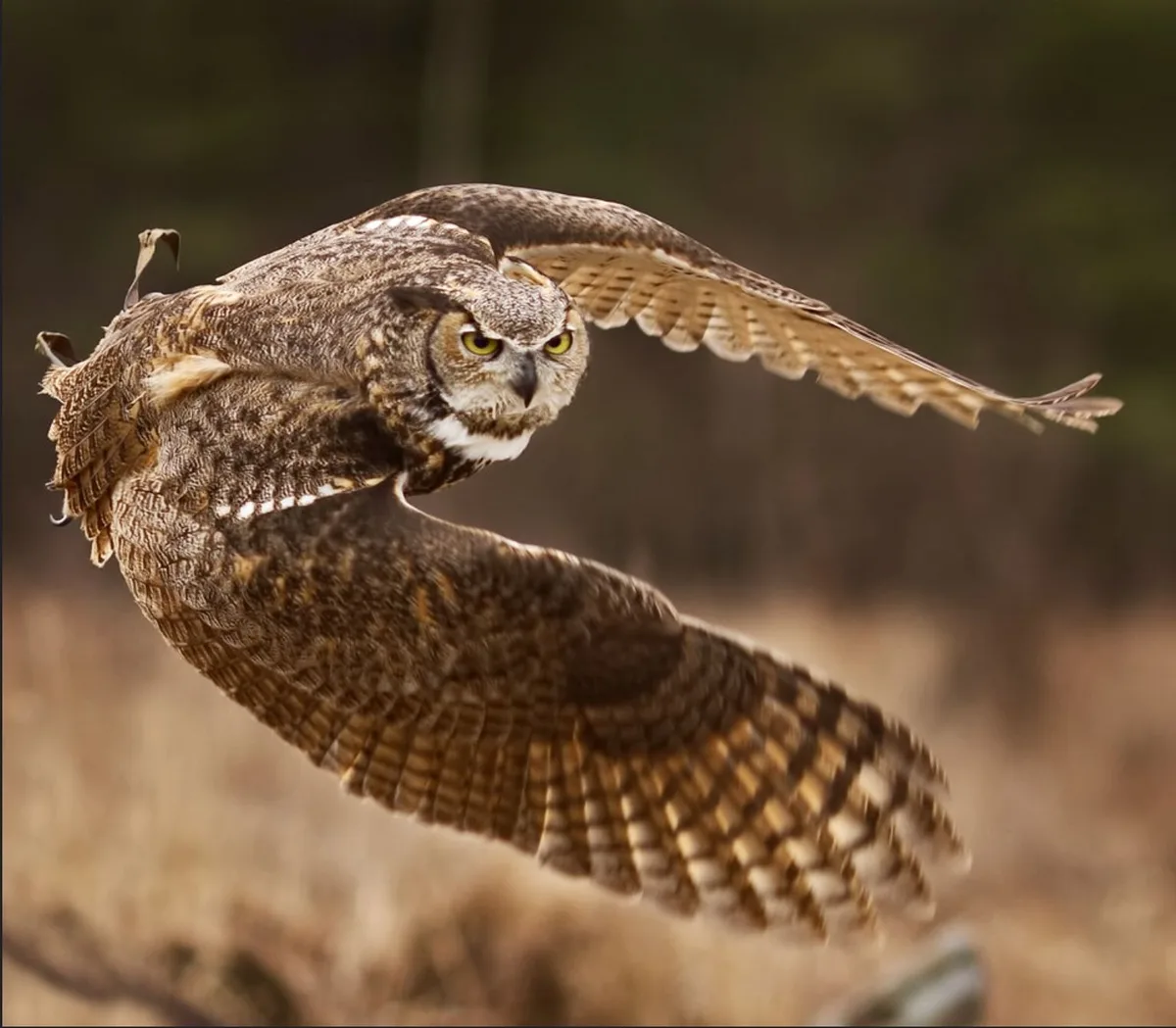
Image source: Bing (Web (fair-use with source credit))
Feathered Engineering: The Science Behind Silent Wings
The magic behind an owl's silent flight lies in the intricate design of its feathers. It's a masterful piece of natural engineering, far more sophisticated than any noise-canceling technology we've developed. Ornithologists have spent years studying these adaptations, and what they've found is truly remarkable.
It's a multi-pronged approach, where different parts of the wing work together to achieve near-absolute quiet.
Comb-Like Fringes: Breaking Up the Air
The primary flight feathers, those long ones at the very tip of the owl's wing, possess a unique feature: a soft, comb-like fringe along their leading edge. Think of it like the teeth of a comb. As the wing moves forward through the air, this fringe breaks up the larger, noisier air currents into many smaller, less turbulent streams.
This process is known as laminar flow, and it significantly reduces the amount of disruptive noise produced. Research from the National Ornithological Society details how this fringe effectively "combs" the air, smoothing its passage over the wing and preventing the formation of those sharp, audible gusts of wind.
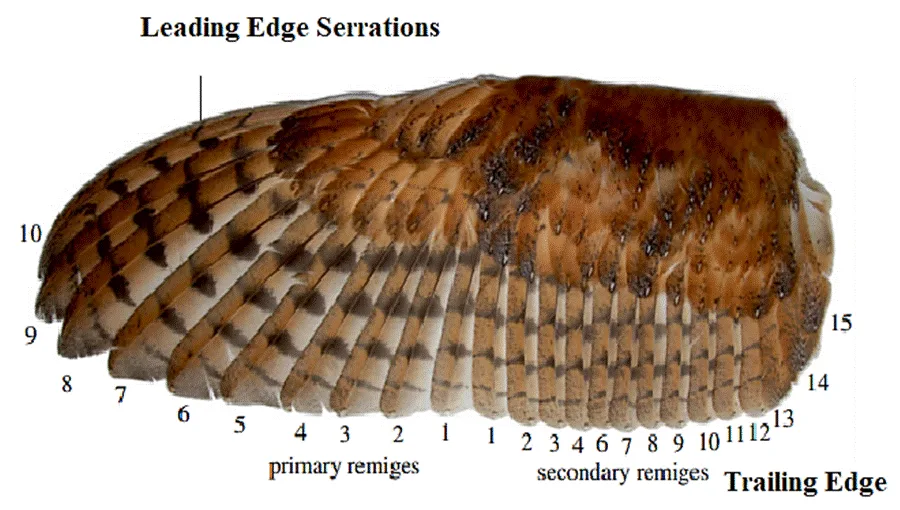
Image source: Web (Bing) / espublisher.com (Web image (fair-use with source credit))
Velvety Textures: Absorbing Every Whisper
Beyond the leading edge, the entire top surface of the owl's flight feathers is covered in a soft, downy fuzz. This texture is often described as velvety, and it serves a crucial purpose in sound dampening. Much like the fabric lining of a recording studio, this velvety surface absorbs sound rather than reflecting it.
It catches and cancels out any residual air disturbances that might otherwise generate a whisper of noise. This makes the owl's flight even quieter, especially during the crucial moments of approach when even the slightest sound could alert prey.
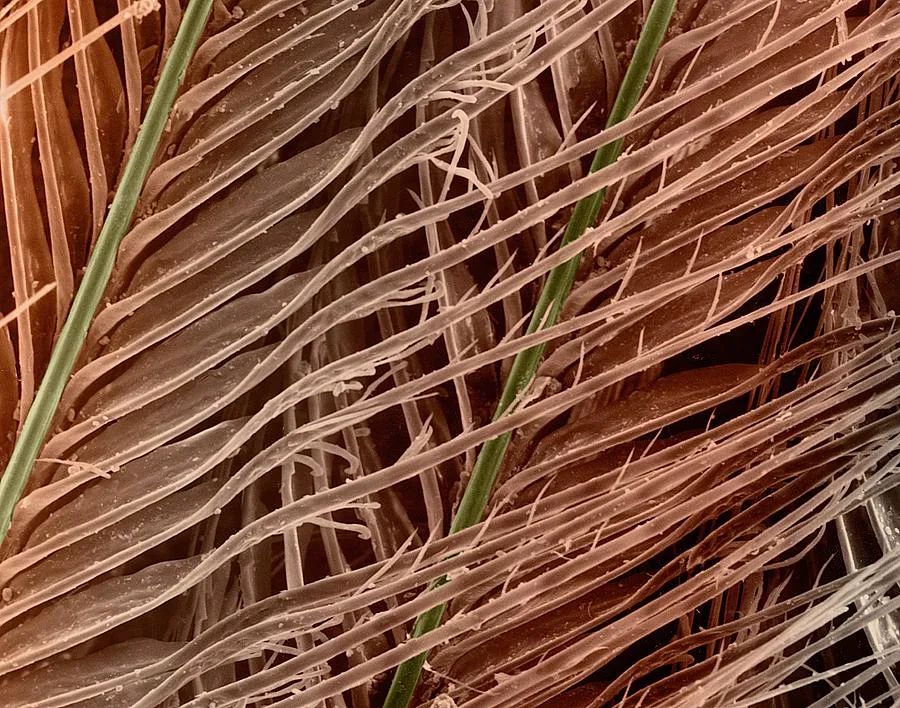
Image source: Web (Bing) / sciencephotogallery.com (Web image (fair-use with source credit))
Wing Shape: Gliding with Grace
While the feathers do the heavy lifting in terms of sound reduction, the owl's overall wing shape also contributes to its silent operation. Many owl species have a large wing-to-body ratio. This means their wings are proportionally larger and broader compared to their body size than those of many other birds.
This allows them to generate sufficient lift with slower, more deliberate wing beats, and to glide for longer periods. Less flapping, especially less forceful flapping, means less air disturbance and, consequently, less noise. They can cover significant distances with minimal effort and even less sound.
How Silent is "Silent"? Understanding the Impact
So, just how quiet are we talking here? It’s not just a little bit quieter; it’s remarkably so. While we don't have a universal decibel standard for "silent flight" across all owl species, studies have measured sound pressure levels during owl flight that are incredibly low.
For instance, research published by the Bioacoustics Research Program indicates that the sound generated by a flying owl can be as low as 0 to 10 decibels. To put that into perspective, a normal human whisper is around 30 decibels, and the rustling of leaves can be 20 decibels. This means an owl's flight can be quieter than a whisper, making it virtually undetectable to most prey animals, which often have acute hearing.
The Crucial Role of Silent Flight in Owl Survival
This incredible silence isn't just a neat biological trick; it's fundamental to an owl's existence, particularly for the species that hunt by actively swooping down on their prey. The ability to fly without making a sound directly translates into increased hunting success and, therefore, survival. Without this adaptation, owls would struggle to catch enough food to sustain themselves.
Hunting Advantage: The Stealth Hunter
For owls, particularly the larger predatory species like the Great Horned Owl or the Barn Owl, their silent flight is their primary hunting weapon. They often hunt in open fields or woodlands at dawn, dusk, or night when visibility is low. Their exceptional eyesight and incredibly sensitive hearing allow them to pinpoint the location of small mammals, like mice, voles, and shrews, from a distance.
But even with these superb senses, they would be useless if the act of closing the distance created a racket. Silent flight allows them to get incredibly close to their unsuspecting prey before the final pounce.
Prey Detection: Outsmarting the Senses
Prey animals have evolved their own defenses, and hearing is a major one. Small mammals, in particular, are constantly on alert for the sounds of predators. A rustle in the grass, a snapping twig, or the flap of wings can send them diving for cover.
An owl’s silent approach bypasses this primary line of defense. By the time the prey might detect something is wrong, the owl is already upon it. This stealth provides a critical advantage in a world where detecting predators before they detect you is the difference between a meal and becoming one.
Common Misconceptions About Owl Flight
Despite the scientific understanding of owl flight, a few popular myths persist. One common misconception is that owls fly at ultrasonic frequencies, which humans can't hear. While some research has explored the possibility of ultrasonic components in owl calls, their flight itself is not ultrasonic.
The silence comes from aerodynamic principles, physical adaptations of their feathers and wings, rather than operating at frequencies beyond human hearing. Another idea is that all owls are equally silent; in reality, the degree of silence can vary between species depending on their hunting style and habitat. For instance, owls that hunt in denser forests might have slightly different feather adaptations to deal with branches and foliage compared to those hunting in open fields.
Expert Insights: What Ornithologists Discover
Ornithologists and bioacoustics researchers have long been fascinated by the silent flight of owls. Extensive studies have focused on the specific structures of owl feathers. For example, detailed microscopic analysis, as documented in research from the Cornell Lab of Ornithology, reveals the precise microstructures that contribute to sound dampening.
These include the velvety barbules that create a porous surface and the comb-like fringe on the leading edge of the primary feathers. These findings aren't just academic; they offer insights into biomimicry, inspiring the design of quieter aircraft and wind turbines. The consistent findings across various owl species underscore the evolutionary pressure for silent flight in predatory birds.
FAQs About Owl Flight Silence
Are all owls equally silent flyers?
Not exactly. While most owl species possess adaptations for quiet flight, the degree of silence can vary. Owls that hunt in open environments and rely heavily on hearing, like Barn Owls, tend to have the most advanced sound-dampening feather structures.
Species that hunt in denser woodlands may have slightly different feather properties or flight styles adapted to their specific habitat.
Do owls make noise when they aren't hunting?
Owls do make vocalizations, often for communication, mating calls, or territorial defense. These sounds are distinct from their flight noise and are usually quite audible. Their silent flight is specifically an adaptation for hunting, not for general movement or social interaction.
Can humans fly as silently as owls?
No, human flight technology has not yet replicated the silent flight of owls. While there have been advancements in noise reduction for aircraft, the natural, intricate feather structures of owls provide a level of sound dampening that current engineering struggles to match. The goal of biomimicry is to learn from these natural designs to improve our own technology.