Why Are African Grey Parrots so Intelligent
Ever looked at an African Grey parrot and just… known there’s more going on in that little head? You’re not imagining it. These birds are seriously intelligent.
Like, astonishingly so. And it’s not just about mimicking sounds, though they’re great at that too. They actually seem to understand and use language in ways that can blow your mind, making them one of the most fascinating avian species to study.
So, what’s the secret sauce behind their smarts? It’s a combination of a few cool things that evolution has cooked up. For instance, research indicates their pallium, a brain region crucial for cognitive function, boasts a high density of neurons.
This means they have more processing power packed into a relatively small space, supporting their advanced learning capabilities and problem-solving skills.

Quick Answer: The Brainy Blend of Biology and Social Life
African Grey parrots are exceptionally intelligent due to a combination of biological factors, including a relatively large brain-to-body size ratio and high neuron density in key cognitive areas. Their complex social structures in the wild also drive the development of sophisticated communication and learning abilities, allowing them to not just mimic, but to understand and use language contextually.
Core Explanation: What Makes Their Brains Tick?
When we talk about bird intelligence, it's easy to just say "smart." But with African Greys, it's a bit more nuanced and fascinating. It’s not just about having a big brain; it’s about how that brain is structured and how it functions.
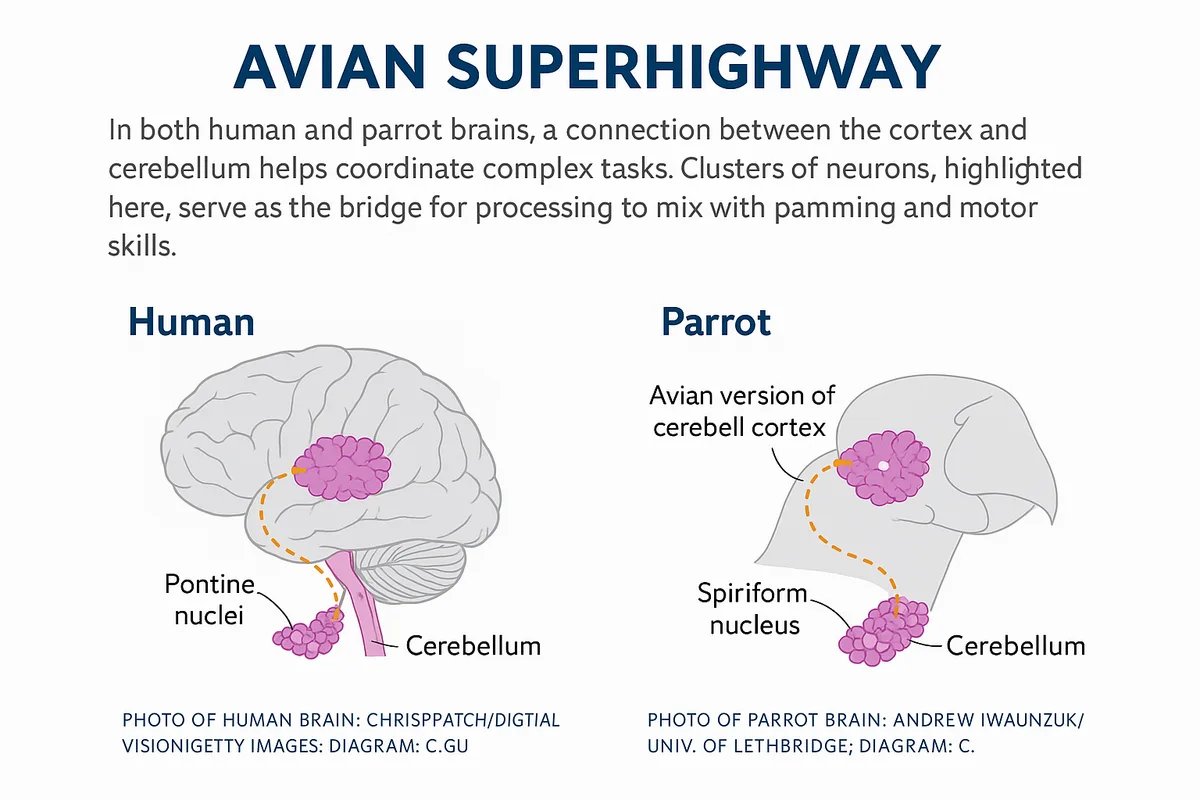
Our research points to a few key biological elements. Firstly, African Greys possess a brain-to-body size ratio that’s quite impressive, often compared to that of primates. This general correlation between brain size and cognitive ability suggests a greater capacity for complex thought.
More importantly, studies have shown a high density of neurons within their pallium, the avian equivalent of the cerebral cortex. This dense neural network is where higher-level cognitive functions like problem-solving, abstract thinking, and language processing are thought to occur. It’s like having a supercomputer packed into a small avian skull.
This biological foundation is what allows them to go beyond simple mimicry.
Features & Attributes: Brain Size, Neuron Density, and More
The intelligence of an African Grey parrot isn't a single trait; it's a package deal of features that work together. Understanding these attributes helps explain why they stand out from other birds.
- Brain-to-Body Size Ratio: While not the sole determinant of intelligence, a larger relative brain size often indicates a greater capacity for complex cognitive processes. African Greys rank high in this regard among avian species.
- Neuron Density: As mentioned, the sheer number of neurons in crucial brain regions, particularly the pallium, is a significant factor. More neurons mean more potential for intricate connections and faster information processing.
- Vocal Learning Ability: Their exceptional talent for learning and replicating a wide range of sounds, including human speech, is a hallmark feature. This isn't just passive absorption; it's an active process of auditory discrimination and motor control.
- Cognitive Flexibility: African Greys demonstrate an ability to adapt their behavior and problem-solving strategies based on new information. They can learn from experience and adjust their approach when faced with challenges.
- Social Understanding: They possess a keen awareness of social dynamics. This allows them to interpret cues, understand social hierarchies, and engage in communication that is contextually appropriate.
These attributes combine to create a bird that can do more than just repeat words; it can learn to use them meaningfully.
Benefits & Advantages: The Perks of a Highly Intelligent Companion
Having an African Grey parrot as a companion offers unique rewards, primarily stemming from their remarkable intelligence and capacity for interaction. It’s a partnership that can be incredibly enriching, provided their cognitive needs are met.
- Deep Bond Through Communication: The ability to communicate, even in a limited way, fosters a profound connection. When an African Grey uses words or phrases relevant to a situation, it feels like genuine interaction, strengthening the bond between bird and owner.
- Constant Engagement and Entertainment: Their intelligence means they are rarely boring. They can learn tricks, solve puzzles, and participate in family activities, providing endless amusement and a dynamic presence in the home.
- Learning Opportunities for Owners: Observing and interacting with such an intelligent creature offers continuous learning. Understanding their needs and motivations can teach owners a great deal about animal behavior and communication.
- Potential for Complex Training: Beyond simple commands, African Greys can be trained to perform complex tasks. This can be a rewarding experience for both the bird and the trainer, tapping into their problem-solving skills.
These advantages highlight why many people are drawn to African Greys, seeking a companion that offers more than just companionship but a true interactive relationship.
Mistakes to Avoid: When Intelligence Becomes a Challenge
The very intelligence that makes African Grey parrots so captivating can also present significant challenges if not properly managed. Understanding these common pitfalls is crucial for their well-being and for a harmonious relationship.
- Underestimating Their Needs: A common mistake is not realizing just how much mental stimulation an African Grey requires. Simply providing food, water, and a perch isn't enough; they need daily engagement to prevent boredom and behavioral issues.
- Confusing Mimicry with Understanding: It’s easy to be impressed by a parrot repeating phrases and assume they grasp the full meaning. However, true understanding involves context and appropriate usage, which requires dedicated training and observation to discern.
- Lack of Social Interaction: As highly social creatures, isolation can be detrimental. Leaving an African Grey alone for extended periods without interaction can lead to stress, anxiety, and destructive behaviors. They are often described as needing social engagement akin to that of a young child.
- Inconsistent Training and Boundaries: Their intelligence allows them to learn quickly, including undesirable behaviors. Without clear, consistent boundaries and training, they can become manipulative or dominant, leading to frustration for the owner.
- Providing Inadequate Enrichment: This includes not offering a variety of toys, puzzles, foraging opportunities, or even just varied interaction. A lack of stimulation can result in feather plucking, excessive vocalization, and other stress-related problems.
Real Scenarios: How Their Smarts Play Out
To truly grasp the intelligence of African Greys, it helps to see it in action through real-life scenarios. These examples illustrate how their cognitive abilities manifest in everyday situations.
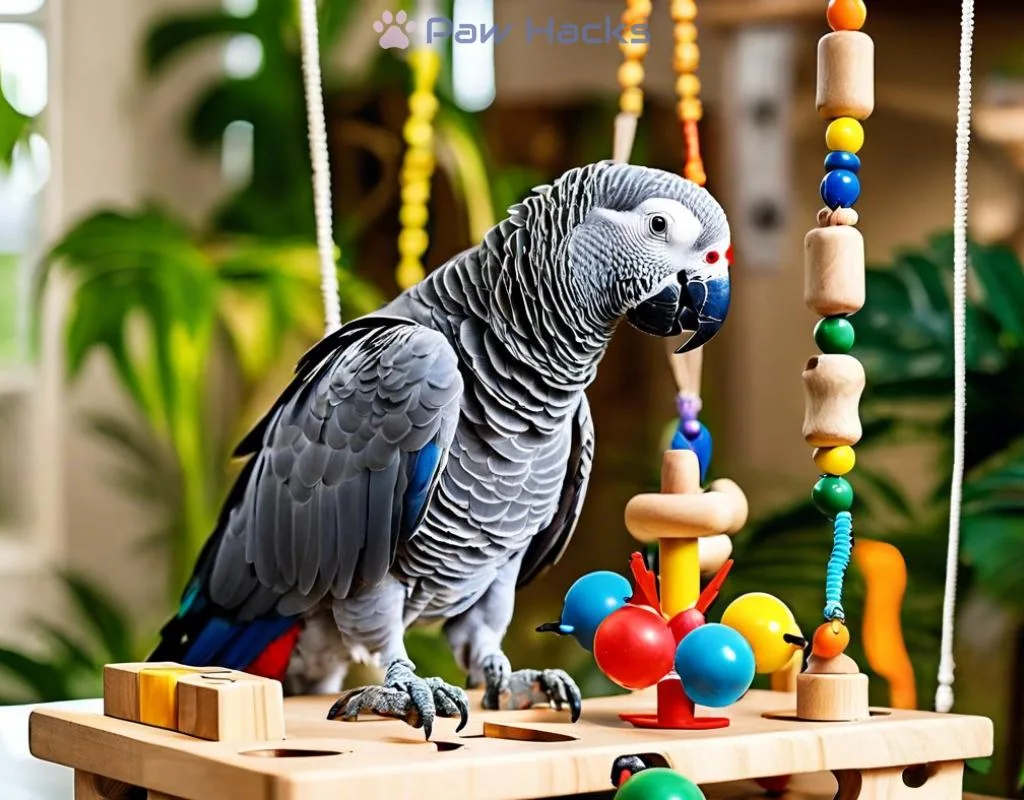
One common scenario involves foraging. In the wild, African Greys are adept at locating and extracting food from various sources. As pets, this translates into a fascination with puzzle toys designed to hide treats.
They will spend considerable time manipulating levers, sliding panels, and turning dials to access their reward. This isn't just random pecking; it's a calculated effort to solve a problem.
Another compelling example comes from controlled studies, like those conducted with the renowned parrot Alex. Alex was trained to identify objects by color, shape, and material, and even to count quantities. He could reportedly distinguish between a "red block" and a "green block," and understand concepts like "bigger" or "smaller." This demonstrates a level of abstract reasoning and symbolic representation far beyond simple mimicry.
For instance, when asked to fetch a specific item, he wouldn't just grab any object, but the one matching the description. This capability highlights their capacity for cognitive categorization and language comprehension, making them more than just feathered imitators.