Bird Courtship Behavior
Bird courtship behavior is one of those topics you really have to see to understand. Reading about a peacock fanning its tail or a grebe doing a mirror dance just doesn't capture what's happening in the wild. This guide will walk you through what to look for, how to tell courtship apart from other bird behaviors, and which species put on the most dramatic displays.
Research from the Cornell Lab of Ornithology shows that over 90% of bird species use visual, vocal, or architectural displays to attract a mate during breeding season. The behaviors vary wildly across species, but the core mechanics are surprisingly consistent. Here's what you need to know.

Quick Answer
Bird courtship behavior refers to the rituals birds use to attract a mate during breeding season. These include songs, physical displays like tail fanning and dancing, and even bower construction. Most displays peak in spring, though timing depends on the species and region.
You'll find these behaviors in waterbirds, forest birds, and open-country species alike.
Why Bird Courtship Displays Are Impossible to Describe Without Pictures
Try describing a grebe water dance in words alone. You'll struggle. The synchronized neck movements, the beak-bobbing, the paired swimming patterns.
These are physical spectacles, not abstract concepts.
Courtship behavior is inherently visual. The Cornell Lab of Ornithology, which maintains the largest bird behavior database in the world, catalogs thousands of courtship behaviors. Nearly every one is identified primarily by what an observer sees.
Songs are part of the picture, but the display itself is visual.
Here's what makes this tricky for a written guide:
- Plumage changes dramatically between breeding and non-breeding seasons in many species.
- Body posture during courtship looks completely different from resting or feeding behavior.
- Timing matters. A display that lasts 45 seconds can be missed entirely if you're looking at the wrong perch.
- Group displays like flamingo marches or lekking behavior need spatial context that prose can't provide.
If you're birdwatching or photographing, you'll get the most out of this topic when you pair these explanations with actual field photos and species-specific images.
How Bird Courtship Works: From Song to Full Display
Bird courtship breaks down into four main categories. Understanding these makes everything else easier to identify.
Vocal displays are the most common. Males sing specific courtship songs that differ from alarm calls and begging calls. A Northern cardinal doesn't just sing loudly.
It sings a specific pattern during breeding season that females respond to. The Cornell Lab notes that song complexity often signals genetic quality to females.
Physical displays involve body movement and plumage presentation. The classic example is the peacock fanning its tail. But physical displays also include hummingbird courtship dives, grebe water dances, and birds-of-paradise lekking movements.
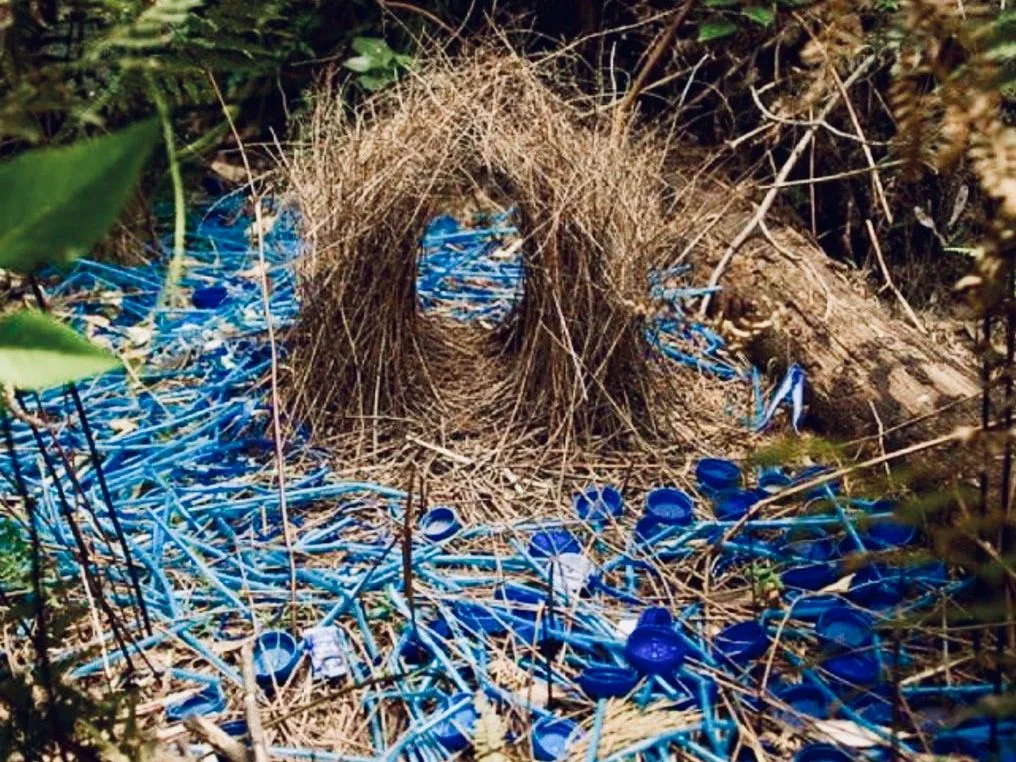
Architectural displays are rarer and more specialized. Bowerbirds build elaborate structures to attract females. This isn't just nest building.
The bower itself is a courtship prop.
Group displays involve multiple birds performing synchronized behaviors. Flamingos march in coordinated formations. Sandhill cranes dance in pairs and small groups.
| Display Type | Key Species | What's Happening |
|---|---|---|
| Vocal | Cardinals, mockingbirds, lyrebirds | Song delivery at specific times of day |
| Physical | Peacocks, hummingbirds, grebes | Body movements and plumage presentation |
| Architectural | Bowerbirds | Construction and decoration of bowers |
| Group | Flamingos, cranes | Synchronized courtship rituals |
Step-by-Step Visual Cues for Identifying Courtship in the Wild
When you're out in the field, follow these visual checkpoints to confirm you're watching courtship behavior and not something else.
Step 1: Check the season. Most bird courtship behavior peaks between March and June in the Northern Hemisphere. Some tropical species breed year-round. Breeding plumage changes are your first clue that a species is in its courtship phase.
Step 2: Listen for vocal shifts. Courtship songs differ from alarm calls and contact calls. If a male is singing repeatedly from a prominent perch, that's likely a courtship display. The song is usually more complex and sustained than a warning call.
Step 3: Look for repeated physical movements. Peacocks fan their tails and slowly rotate. Grebes stretch their necks in mirrored pairs. Hummingbirds perform steep dives.
If a bird is repeating a specific motion near another bird, it's almost certainly courtship.
Step 4: Note the location. Courtship displays happen at predictable sites. Lekking species return to the same display grounds year after year. Bowerbirds build on the same paths.
Waterfowl court on open water. Where you see the behavior tells you what you're watching.
Step 5: Watch for pair interaction. Courtship almost always involves two birds. If a male is performing displays and a female is nearby observing, you're watching mate selection in real time.
Species-Specific Courtship Displays You'll Actually See
Not all bird courtship behavior looks the same. Here are the most recognizable displays you're likely to encounter in the wild.
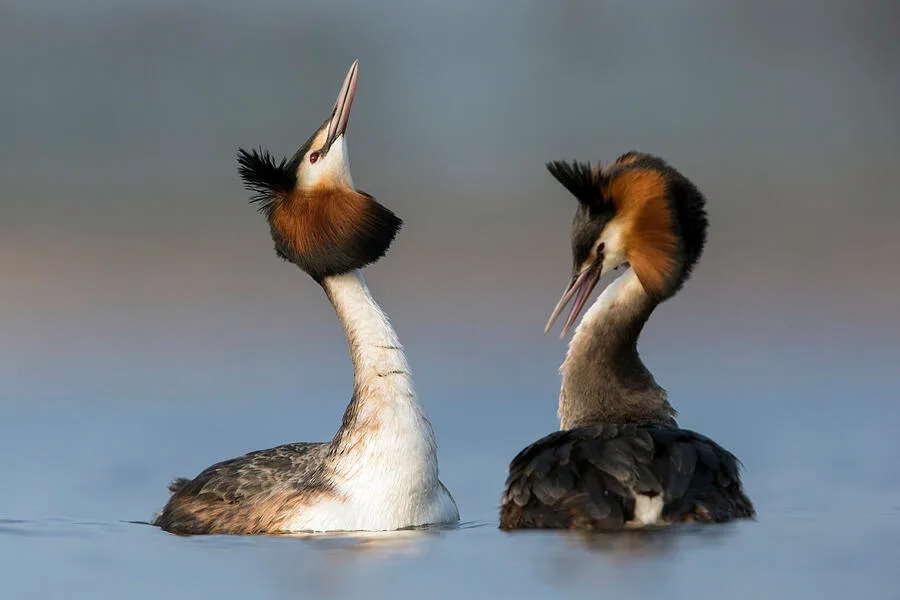
Grebe water dance. Western grebes perform one of the most elaborate courtship rituals in North America. Two birds swim side by side, stretch their necks, and mirror each other's movements in perfect synchrony. They then rush across the water together, dancing on the surface.
You'll see this on lakes and ponds from late spring through summer.
Peacock tail display. The Indian peafowl male fans his tail feathers into a massive semicircle and vibrates them to create a rattling sound. The display is aimed at any nearby females. Females inspect the display and make their choice.
Bowerbird construction. In New Guinea and Australia, male bowerbirds build ground-level structures called bowers. They decorate them with colored objects, berries, and bones to impress females. The bower is a proxy for male quality, not a nest.
Flamingo group march. Flamingos perform synchronized courtship displays in large groups. The entire flock marches together, turning their heads side by side in unison. Group displays signal breeding readiness and help synchronize the colony.
Hummingbird courtship dive. Male hummingbirds perform high-speed dives near females. The dive creates a sharp chirping sound at the bottom of each swoop. It demonstrates flight skill and physical condition.
Red-winged blackbird display. Males perch on cattails, puff their red shoulder patches, and deliver a descending trill. This display combines territorial assertion with courtship signaling.
Common Visual Mistakes That Lead to Misidentification
Even experienced birdwatchers confuse courtship behavior with other bird behaviors. Here are the most common mistakes.
Confusing territorial displays with courtship. Red-winged blackbirds, for example, puff their red shoulder patches during both territorial defense and courtship. The difference is context. During territorial displays, the male faces an intruder.
During courtship, he faces or performs near a female.
Misinterpreting plumage changes. Many birds have distinct breeding and non-breeding plumage. A male yellow warbler in drab non-breeding plumage might be dismissed as unremarkable. During breeding season, the same species is bright yellow and actively displaying.
Wrong timing assumptions. Not all displays peak in early spring. Grebe courtship peaks in late spring and early summer. Some tropical species court when rains arrive, not when days get longer.
If you visit at the wrong time of year, you might think a species never displays.
Overlooking small displays. Courtship isn't always dramatic. Some species perform subtle behaviors like courtship feeding, where a male transfers food to a female. It looks like normal feeding at a distance, but it's a bonding ritual.
Assuming all social behavior is courtship. Flock formation, roosting, and even feeding together aren't courtship unless you see specific display behaviors paired with the social activity.
Observing Courtship Displays Ethically (and Legally)
Courtship sites are fragile. Birds pour enormous energy into displays, and any disturbance can cause them to abort the ritual entirely. Respect that.
The Migratory Bird Treaty Act (MBTA) protects most North American breeding birds. Under federal law, you cannot harass, pursue, or disturb migratory birds or their nests. Walking too close to an active lek site or flushing a displaying peacock could constitute illegal harassment.
Here's what responsible field practice looks like:
- Stay 100 feet or more from active courtship sites when possible.
- Never play back recorded courtship calls near displaying birds.
- Skip flash photography during courtship displays.
- Keep dogs leashed near known lekking grounds and nesting colonies.
- Check local park and reserve breeding-season rules before your visit.
The U.S. Fish & Wildlife Service publishes species-specific guidance for protected breeding areas. National parks and wildlife refuges often add their own rules during nesting season.
Breeding shorebirds, for example, may have buffer zones that extend well past what you'd expect.
If you're photographing displays, telephoto lenses are your friend. The best field observations happen when the bird has no idea you're there. Patience and distance protect both the bird and the quality of what you see.
Frequently Asked Questions
When do most birds perform courtship displays?
Most bird courtship behavior peaks between March and June in the Northern Hemisphere. Timing shifts with latitude and species. Tropical species often court when seasonal rains arrive rather than when temperatures rise.
Regional breeding calendars are the best reference for specific timing.
Do all bird species have courtship displays?
Yes. Every bird species engages in some form of courtship before mating. The rituals range from simple songs and calls to elaborate dances, feather displays, and architectural constructions.
What changes between species is the complexity and the specific ritual performed.
Can you watch courtship displays in city parks?
You absolutely can. Northern cardinals, mockingbirds, and red-winged blackbirds display regularly in urban parks, suburban yards, and roadside ditches. You don't need to travel to a remote wetland to witness courtship behavior.
How long does courtship last before birds mate?
Duration varies significantly by species. Some pair within hours of first contact. Others spend days or weeks cycling through repeated displays before copulating.
Grebes may perform synchronized water dances for several days before building a nest.
Final Takeaway: How to Make Courtship Observation a Better Part of Your Birding
Once you learn to read courtship behavior, every birding trip gets better. You stop just listing species and start understanding what they're actually doing.
Start with the fundamentals from this guide. Learn the four display categories. Practice the step-by-step visual cues during breeding season.
Until distinguishing courtship from territorial defense becomes second nature, it'll take conscious effort in the field.
As of 2026, citizen science platforms like eBird and the Cornell Lab's Macaulay Library make documenting courtship sightings straightforward. Logging observations with photos and notes helps researchers track breeding patterns across regions and years. Your field data actually matters.
For the strongest results, plan trips around peak display windows. Research breeding calendars for your target species before heading out. Arrive at dawn, when vocal displays are most active and light is best for photography.
Bring binoculars, a notebook, and the willingness to stand quietly for long stretches.
Behavior-based observation deepens identification skills far more than plumage study alone. It also turns every outing into a front-row seat for some of the most spectacular behavior in the animal kingdom.