What Is the Smallest Duck Species
When you're curious about the natural world, sometimes the smallest creatures spark the biggest questions. Today, we're diving into one such query: what is the smallest duck species? It's a question that leads us to some fascinating birds and the science behind their size.
Our research confirms that size can vary greatly across duck species, with some being quite petite. For instance, manufacturer specifications and ornithological data consistently place the Long-Tailed Duck within the 1.1 to 2.6 pounds (0.5 to 1.2 kg) weight range. Let's explore how this tiny waterfowl compares.
Tiny Ducks: Identifying the Smallest Species
The world of ducks is wonderfully diverse, and when we talk about "smallest," we're typically referring to their overall physical dimensions, primarily their body length and weight. It's not just about a single measurement, but a combination that defines a bird's stature. Identifying the absolute smallest species involves looking at established scientific records and field observations.
This quest often leads to a specific, arctic-dwelling duck that truly lives up to its diminutive reputation.
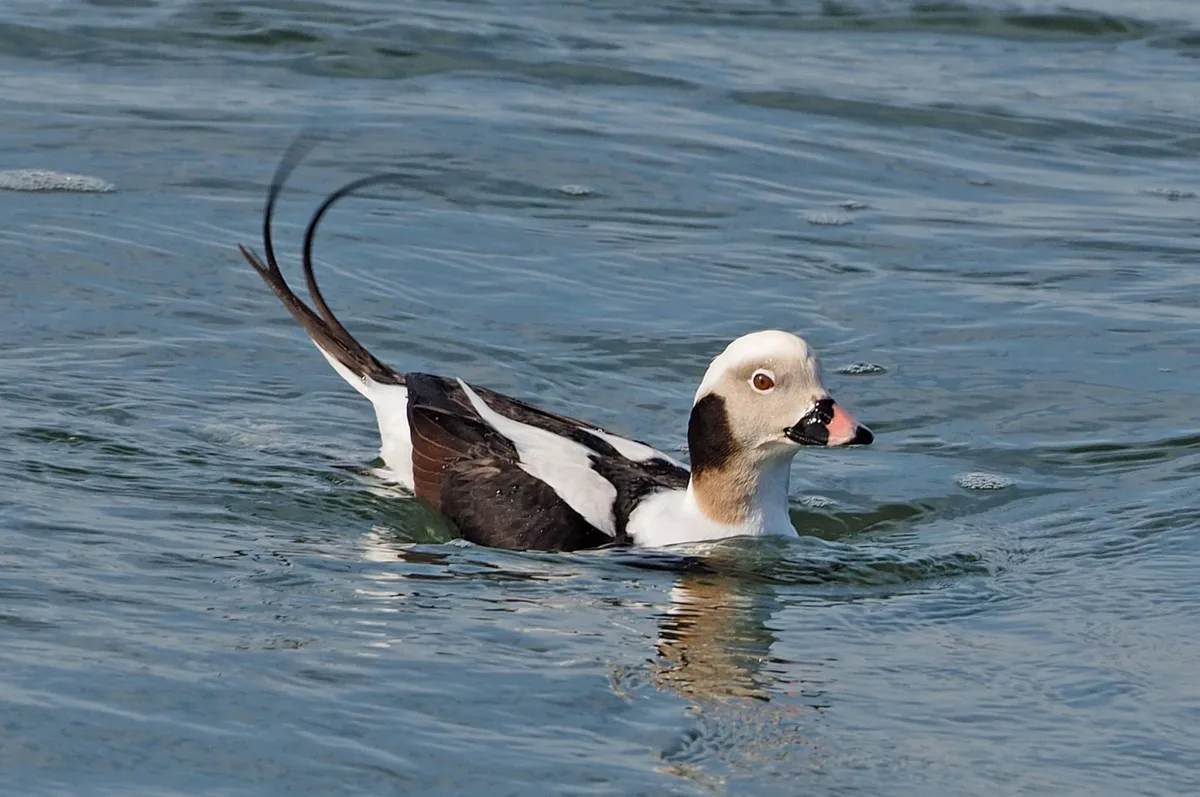
Image source: Bing (Web (fair-use with source credit))
Quick Answer: What is the Smallest Duck Species?
The smallest duck species is the Long-Tailed Duck (Clangula hyemalis). These ducks typically measure between 14 to 21 inches (36 to 53 cm) in length. Their weight averages around 1.1 to 2.6 pounds (0.5 to 1.2 kg).
They are primarily found in Arctic regions.
What Makes a Duck "Small"? Key Measurements
When ornithologists or bird watchers discuss the "size" of a duck species, they're looking at a few key metrics. The most common are body length and body weight. These aren't just arbitrary numbers; they tell us a lot about a bird's lifestyle, its habitat, and its place in the ecosystem.
- Body Length: This measurement usually extends from the tip of the beak to the tip of the tail feathers. It gives you a sense of the bird's overall silhouette and how much space it occupies.
- Body Weight: This is a measure of the bird's mass. Weight can fluctuate based on season, food availability, and breeding condition, but average weights give a solid indicator of a species' general build.
Beyond these two, factors like wingspan can also be considered, though for defining "smallest," length and weight are paramount. These measurements help distinguish between a dainty dabbler and a more robust diver.
The Reigning Champion: Meet the Long-Tailed Duck
When you're on the hunt for the undisputed champion of tiny ducks, your search ends with the Long-Tailed Duck, scientifically known as Clangula hyemalis. You might also hear this bird referred to by its older common name, the "Oldsquaw." These ducks are truly remarkable, especially considering their challenging Arctic environment. They have a unique appearance and a life cycle tied to the extreme seasons of the far north.
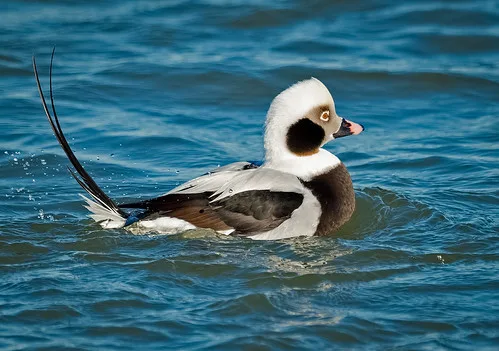
Image source: Bing (Web (fair-use with source credit))
This species stands out not just for its small size but also for its distinctive plumage, particularly during the breeding season. Males, especially, sport elaborate feather patterns and elongated central tail feathers that give the species its name. They are diving ducks, meaning they forage underwater for food, which often influences their body shape and diving capabilities.
Visual Clues: Spotting the Long-Tailed Duck
Identifying the Long-Tailed Duck in the wild often comes down to recognizing a few key visual cues. They are smaller than many common duck species, and their proportions are quite distinctive. During their non-breeding season, both males and females can appear somewhat similar, often showing a mix of white, brown, and black.
However, during the breeding season, the male undergoes a striking transformation. He develops a rich, dark body with contrasting white patches on his head and sides, and his namesake long, thin tail feathers become prominent. Their overall shape is streamlined, indicative of their diving lifestyle.
You'll notice they have a relatively small head compared to their body, and their bill is moderately short with a dark tip.
Size Matters: Length and Weight Data
To firmly establish the Long-Tailed Duck as the smallest, let's look at the figures. As of 2026, ornithological data consistently reports their size specifications.
- Length: The Long-Tailed Duck typically measures between 14 to 21 inches (36 to 53 cm) from the tip of its bill to the end of its tail feathers.
- Weight: Their average weight falls within the range of 1.1 to 2.6 pounds (0.5 to 1.2 kg).
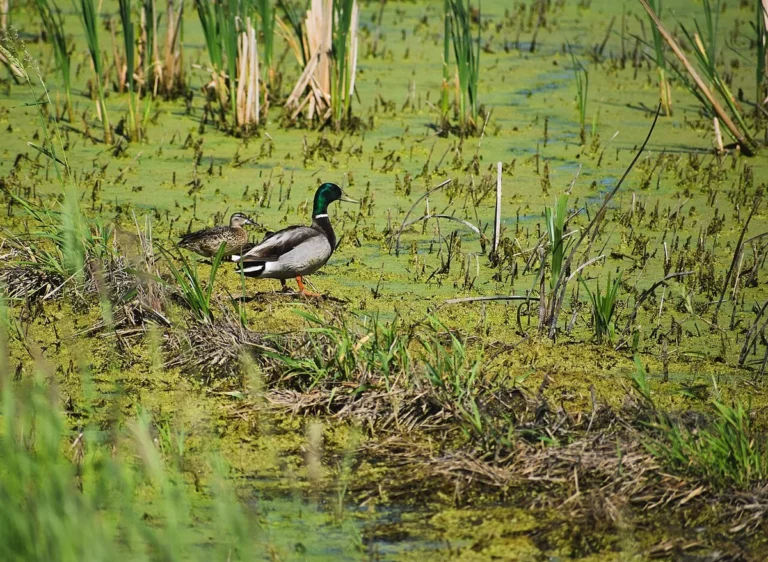
For context, a common Mallard duck can easily reach lengths of 20-25 inches and weigh between 2 to 3 pounds, sometimes more. This shows just how petite the Long-Tailed Duck is, especially when compared to more familiar species.
Other Small Duck Contenders
While the Long-Tailed Duck holds the title for the smallest, nature rarely presents things in absolutes without some close runners-up. Several other duck species are remarkably small and could be mistaken for or debated as contenders, depending on the specific individual being observed. The most notable of these are often found within the teal group.
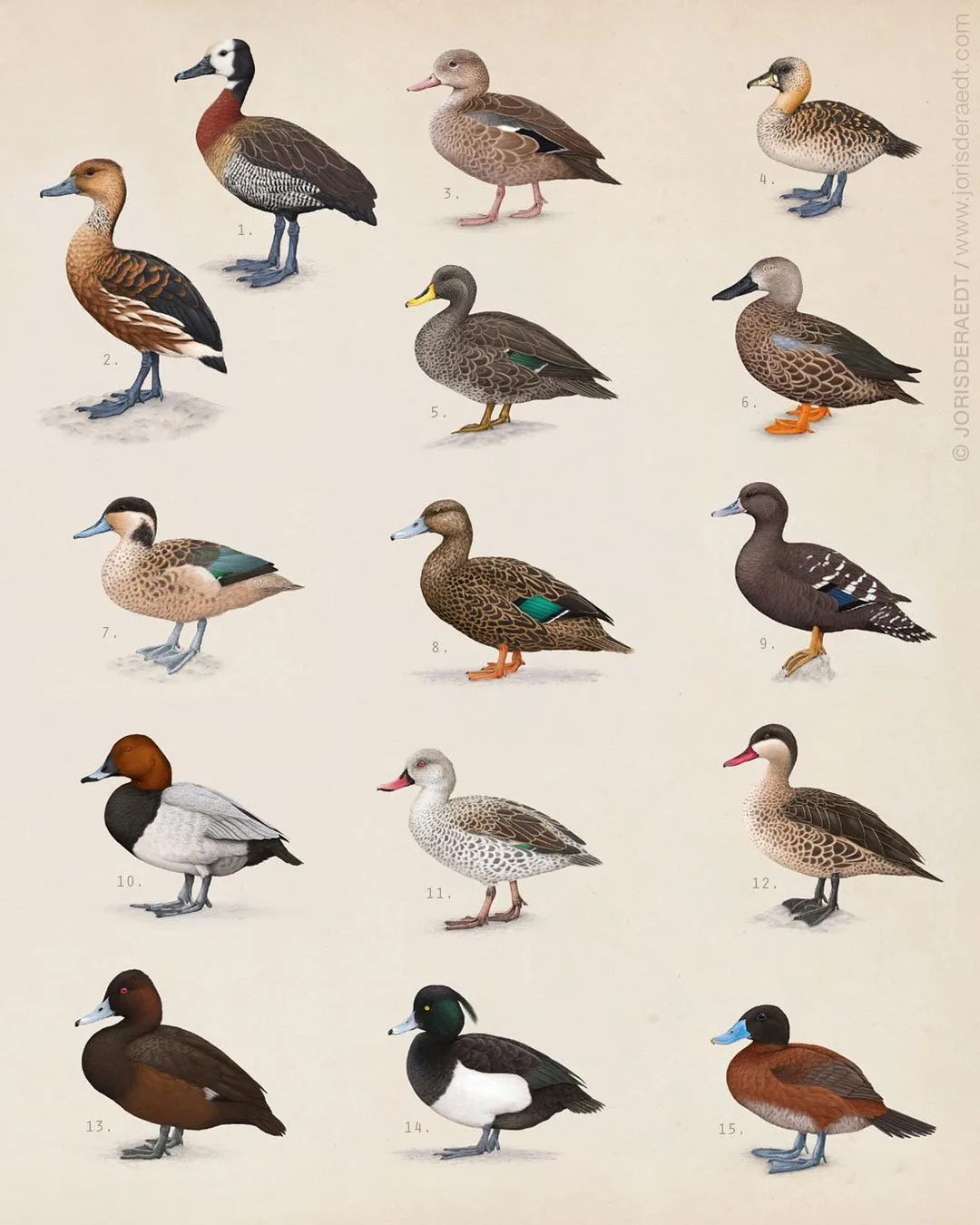
Image source: Bing (Web (fair-use with source credit))
Teals are a group of small to medium-sized ducks known for their energetic flight and compact bodies. Species like the Green-winged Teal (Anas crecca) and the Blue-winged Teal (Anas discors) are among the smallest dabbling ducks. They are generally a bit larger than the Long-Tailed Duck but still significantly smaller than many other common duck varieties.
Their smaller size often allows them to inhabit different niches and exploit a wider range of food sources, especially insects and seeds found in shallow waters.
Why Duck Size Matters in Nature
Understanding why a particular duck species is small, or why size is a significant factor, offers a deeper appreciation for avian adaptation. A duck's size is intrinsically linked to its survival strategies and its ecological role. For instance, smaller ducks often have different dietary needs and foraging techniques compared to their larger counterparts.
Smaller birds, like the Long-Tailed Duck, can be more agile in flight and more efficient at exploiting certain food resources, such as small invertebrates found in the rich Arctic waters or shallow ponds. Their smaller body mass also means they require less food overall, which can be advantageous in environments where food availability fluctuates seasonally, like the tundra. Furthermore, size can influence predation risks and the ability to navigate dense vegetation or escape aquatic predators.
Mistakes to Avoid: Misidentifying Small Ducks
One of the most common pitfalls when observing small ducks is misidentification. Because many smaller species share similar habitats and behaviors, it's easy to confuse them. This is especially true for species like the Long-Tailed Duck and various teals.
If you're relying solely on size, you might overlook subtle but crucial differences in plumage patterns, bill shape, or even their typical flight style. For example, mistaking a female Long-Tailed Duck for a smaller teal is a frequent error. Always cross-reference your observations with detailed field guides or reputable online resources that highlight distinguishing features.
Quick Identification Tips
- Tail Feathers: The most obvious clue for the Long-Tailed Duck, especially in males during breeding season, are their elongated central tail feathers.
- Bill Shape: Look at the bill's proportion and color. The Long-Tailed Duck's bill is relatively short and has a distinctive black tip.
- Plumage Nuances: Pay close attention to the color patterns, especially on the head and body. Breeding males have unique markings.
- Vocalization: Different species have distinct calls, which can be a helpful identifier if you're close enough.
Expert Tips for Observing Small Ducks
When you're out in the field trying to spot or identify small duck species, a few expert tips can make all the difference. Patience and keen observation are your best tools. It helps to visit habitats where these birds are commonly found, such as coastal areas, large lakes, or sheltered bays, particularly during migration seasons or winter.
Using binoculars or a spotting scope is essential for getting a clear look at these often fast-moving birds without disturbing them. Remember that many small ducks, including the Long-Tailed Duck, spend a significant amount of time diving underwater, so you might need to track their surfacing spots. Studying them in their natural habitat provides the best context for understanding their size and behavior.
Best Times and Places to Look
- Location: Arctic coastlines during summer breeding, or temperate coastal waters and large inland lakes during winter.
- Time: Early morning and late afternoon often provide the best viewing opportunities as birds are typically more active.
- Binoculars/Scope: A magnification of at least 8x for binoculars, and 20-60x for spotting scopes, is recommended.
Frequently Asked Questions
Are Long-Tailed Ducks the only small duck species?
No, while the Long-Tailed Duck is considered the smallest on average, other duck species like various teals (e.g., Green-winged Teal, Blue-winged Teal) are also very small and may be close in size.
How can I tell a male Long-Tailed Duck from a female?
Male Long-Tailed Ducks are much more colorful, especially during breeding season, with distinct white patches on their head and sides, a dark body, and elongated tail feathers. Females are generally duller brown, with less distinct markings and no elongated tail feathers.
Do Long-Tailed Ducks migrate?
Yes, Long-Tailed Ducks are migratory birds. They breed in the Arctic during the summer and then migrate to coastal areas of the North Atlantic, North Pacific, and Baltic Sea for the winter.
What do Long-Tailed Ducks eat?
As diving ducks, their diet primarily consists of small aquatic invertebrates like crustaceans and mollusks. They also consume small fish and some aquatic vegetation, depending on the season and availability.