Types of Owls
Identifying the different types of owls begins with understanding that these nocturnal raptors are much more than simple symbols of wisdom. While over 200 species exist globally, most observers encounter only a few common residents based on their local climate and ecosystem.
As of 2026, scientific consensus categorizes these birds into two distinct families that define their physical traits and hunting behaviors. Understanding these baseline differences allows you to accurately identify owls in the wild without needing specialized equipment.
Quick Answer
There are two main families of owls worldwide. The Strigidae family includes typical owls with large round heads. The Tytonidae family contains barn owls with heart-shaped faces.
These birds possess specialized hearing and silent flight. Most species are nocturnal or crepuscular hunters.
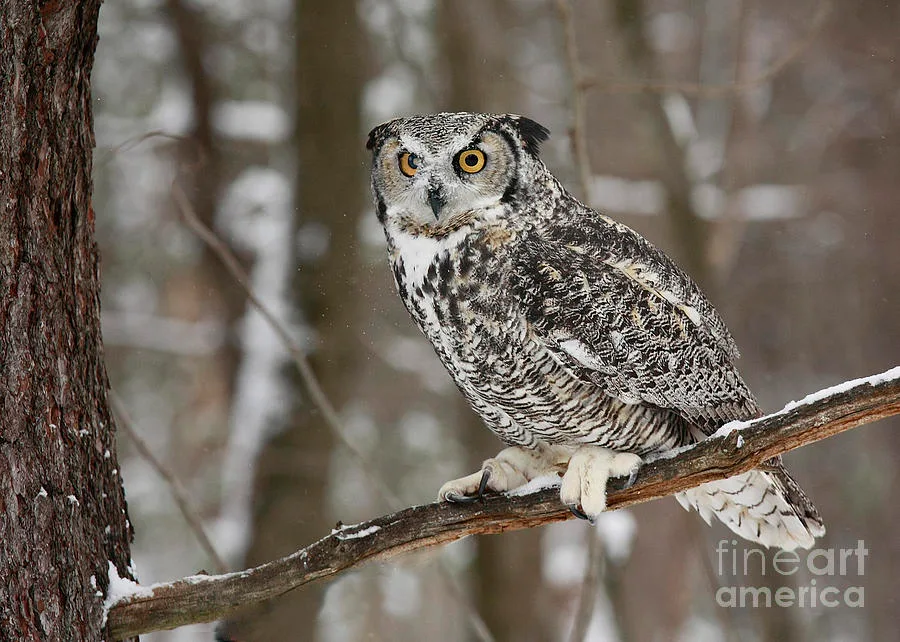
Image source: Bing (Web (fair-use with source credit))
Decoding the Night: Why Visual Cues Matter
Visual identification of owls relies on spotting subtle features that distinguish them from other nighttime birds like nightjars or hawks. Because owls are masters of camouflage, you must look for specific shapes and postures rather than trying to identify them by plumage color alone.
Owls often sit perfectly still for long periods to conserve energy and remain invisible to prey. You will find that most successful sightings occur when you scan the environment for unnatural silhouettes in the tree line.
Always approach an owl sighting with caution to avoid causing unnecessary stress to the bird. Research from the U.S. Fish and Wildlife Service emphasizes that these birds are sensitive to disturbances, especially during their breeding and nesting seasons.
The Anatomy of an Owl: Key Physical Identifiers
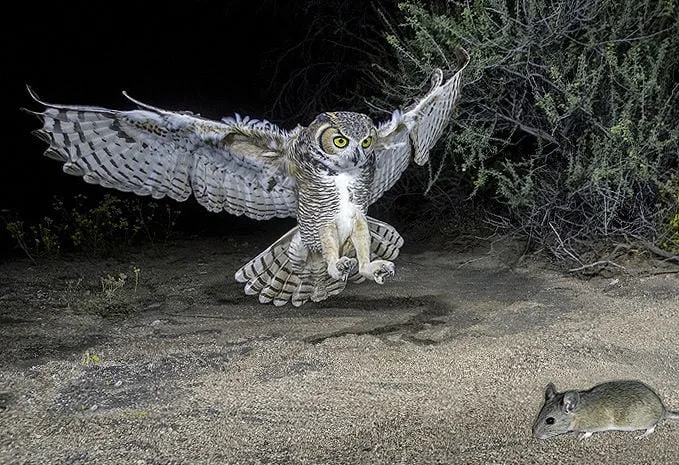
The anatomy of an owl is a highly evolved toolset for silent hunting and high-precision hearing. A defining feature is the facial disk, which is a concave arrangement of stiff feathers that funnels sound directly into the ear openings.
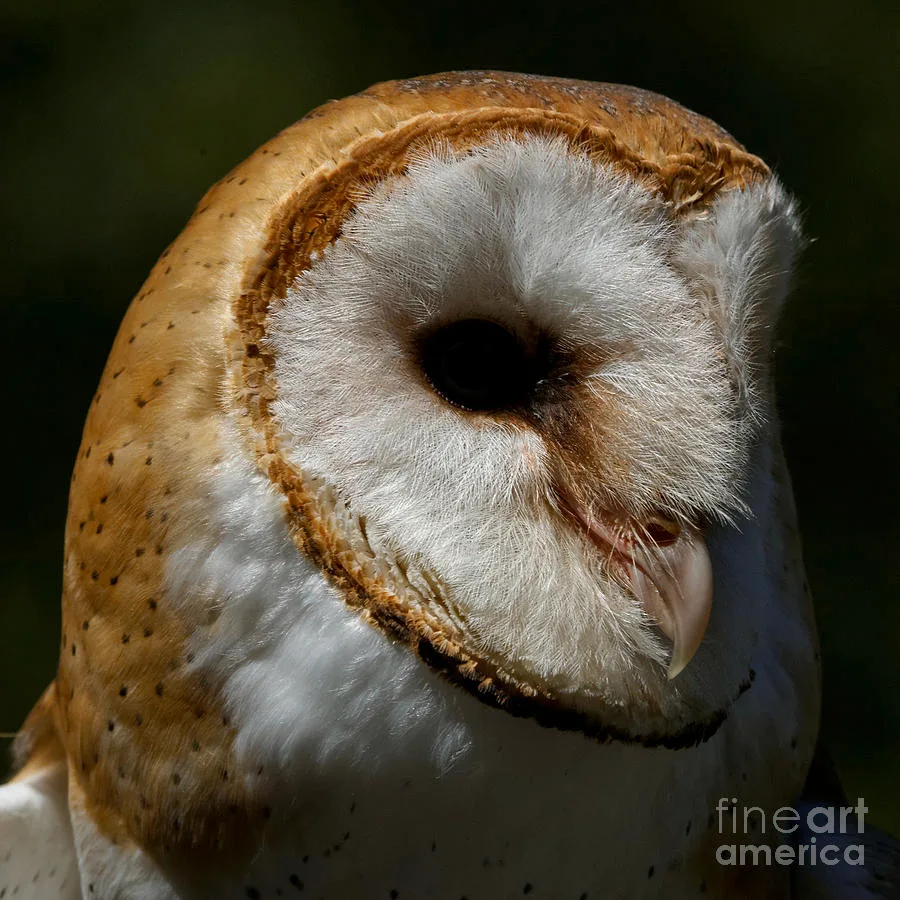
Image source: Web (Bing) / ar.inspiredpencil.com (Web image (fair-use with source credit))
Many species feature asymmetrical ear placement under their feathers to triangulate the exact position of small mammals. This allows them to strike with total accuracy even in complete darkness.
Beyond their hearing, you should observe these physical markers:
- Ear Tufts: Known as plumicorns, these decorative feathers help break up the owl's outline.
- Eyes: Most owls have forward-facing, fixed eyes that provide binocular vision for depth perception.
- Wings: Serrated edges on their primary feathers muffle the sound of air, allowing for near-silent flight.
Strigidae vs. Tytonidae: A Tale of Two Families
The scientific order Strigiformes is split into two primary families. Identifying which family your local owl belongs to is the fastest way to narrow down the species.
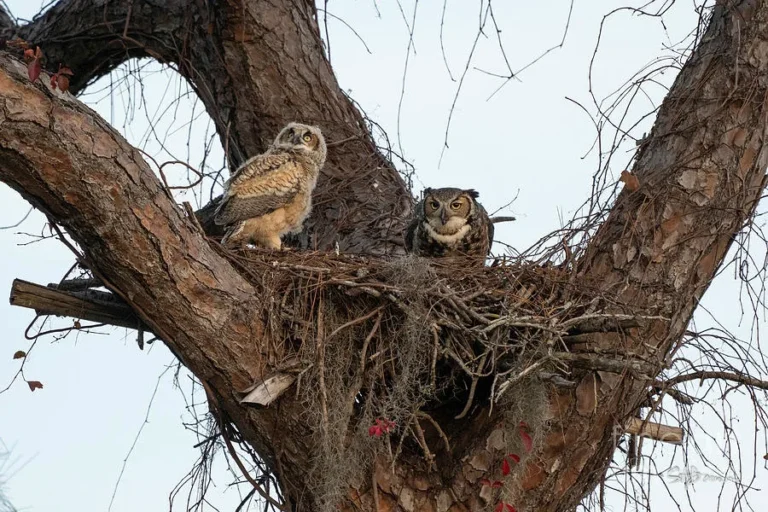
The Strigidae family, or typical owls, includes the Great Horned Owl and various screech owls. These birds typically have rounded facial disks and often sport ear tufts.
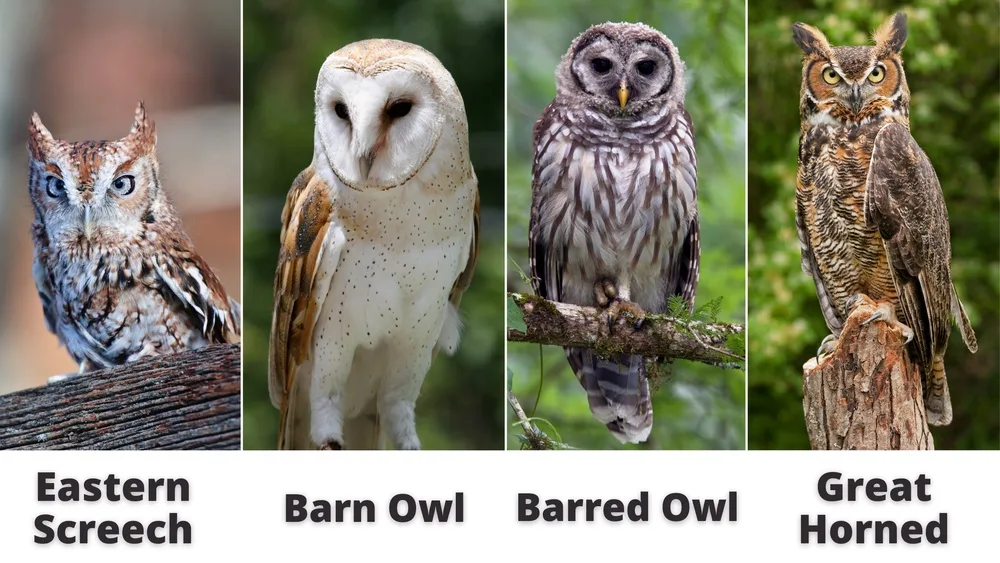
Image source: Web (Bing) / earthofbirds.com (Web image (fair-use with source credit))
In contrast, the Tytonidae family consists of barn owls. They are easily identified by their distinct heart-shaped facial disk and lack of ear tufts.
| Feature | Strigidae (Typical) | Tytonidae (Barn Owls) |
|---|---|---|
| Face Shape | Round | Heart-shaped |
| Ear Tufts | Often present | Never present |
| Eyes | Large, often yellow/orange | Smaller, dark eyes |
| Habitat | Varied forests/trees | Barns, fields, open structures |
Field Craft: How to Spot Owls in Their Natural Habitat
Spotting an owl requires a shift in your observational technique. You should move slowly and prioritize listening over visual scanning during the first half of your excursion.
Look for white wash, which is the accumulation of droppings at the base of a tree. This is a reliable indicator that a bird uses that tree for roosting. If you see a cluster of pellets on the ground, an owl is likely nearby.
Focus your eyes on the junction where a large branch meets the trunk of a tree. This is the most common place for owls to tuck themselves away during the day. Use binoculars to scan these specific nooks rather than panning across the entire canopy.
Avoiding Common Identification and Ethics Mistakes
The most common mistake is assuming every hoot belongs to a Great Horned Owl. Many species have vocalizations that sound like barks, hisses, or even distinct whistles.
Avoid playing recorded bird calls to attract owls for better views. This practice can disrupt their hunting patterns and cause them to expend vital energy defending a territory that isn't under threat.
Always prioritize the safety and comfort of the bird over your desire for a photo. If an owl changes its behavior, stops grooming, or stares directly at you, you are too close. Back away slowly and give the bird the space it needs to feel secure.
Decoding Owl Sounds and Behavioral Clues
Learning to interpret vocalizations is a powerful way to identify species without ever seeing them. While the classic "hoo-hoo" is iconic, most owls have a much wider vocabulary that includes barks, whistles, and hisses.
Many species follow a predictable cadence during their mating season. The male Great Horned Owl, for example, typically produces a series of four to five deep hoots with a specific rhythm. Smaller owls like the Northern Saw-whet Owl emit a repetitive, mechanical whistle that can be mistaken for an insect or a piece of machinery.
Behavioral cues offer another layer of insight. If you observe an owl bobbing its head, it is likely trying to gauge the distance to a potential prey item. This is called triangulation.
It compensates for the fact that their eyes are fixed in their sockets.
Watch for these common behavioral patterns:
- Puffing Up: This is often a sign of aggression or a defensive posture meant to make the owl appear larger to a threat.
- Wing Drooping: A bird might lower its wings toward the ground to hide its catch from scavengers.
- Head Swiveling: Their ability to rotate their heads up to 270 degrees is essential for monitoring their surroundings without moving their bodies.
If you are unsure of the sound you are hearing, consult a regional database from the Cornell Lab of Ornithology. Their archives provide high-quality audio files that allow you to match the call you heard in the wild to the specific species in your area.
Frequently Asked Questions About Identifying Owls
How do I tell a male owl from a female owl?
In most species, you cannot distinguish between males and females by sight alone. The plumage is identical, which is a state known as monomorphism. Females are often slightly larger than males, but this size difference is difficult to judge unless you see both birds side-by-side.
Can owls really turn their heads all the way around?
They cannot rotate their heads in a full 360-degree circle, but they come remarkably close. They can turn their heads up to 270 degrees in either direction. This is possible because they have 14 neck vertebrae, which is double the number found in most other birds.
What should I do if I find an injured owl?
Do not attempt to feed or handle the bird yourself. Contact your local wildlife rehabilitator or state wildlife agency immediately for guidance. Handling a raptor requires specialized training, and improper care can cause severe stress or physical harm to the bird.
Are there any owls active during the day?
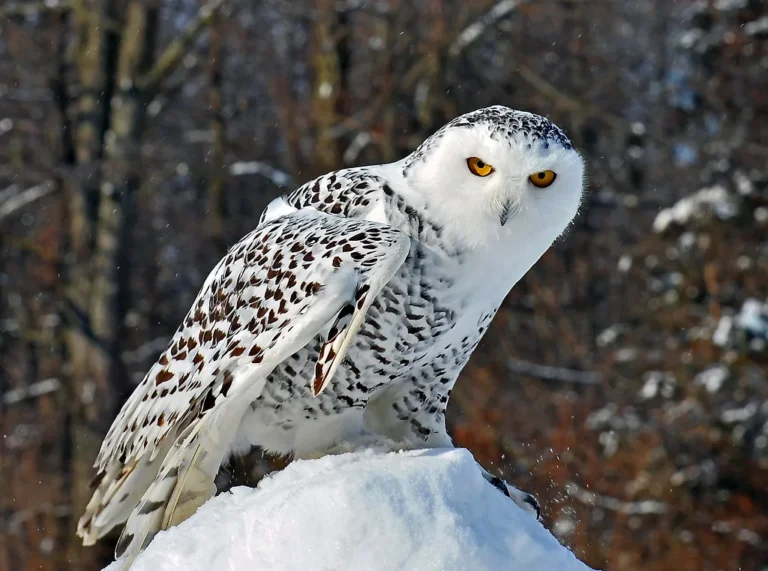
Yes, some species are naturally diurnal or crepuscular. The Short-eared Owl and the Burrowing Owl are frequently seen hunting in daylight hours. Snowy Owls also remain active during the day, especially in the far north where the sun may not set for months at a time.
Why do owls cough up pellets?
Owls lack a crop for grinding up food, so they swallow small prey whole or in large chunks. Their digestive system separates the indigestible matter, such as fur, teeth, and bones, into a tight clump. They regurgitate this pellet a few hours after feeding, which helps scientists learn about their local diet.