How Do Eagles Hunt
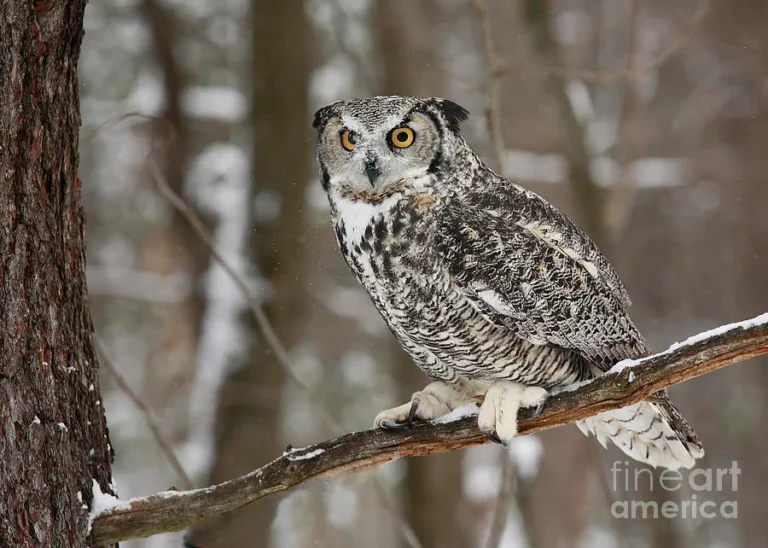
Eagles rely on a combination of extreme aerial agility and precise physical adaptations to secure their prey. Understanding how do eagles hunt requires looking at the physics of flight and the specialized sensory tools that make these raptors some of the world's most successful predators.
These birds use high-altitude scouting to locate targets from miles away. Research from the Cornell Lab of Ornithology confirms that their physiology allows for sustained power and rapid directional shifts. Once a target is locked, the hunt becomes a calculated physical maneuver that tests the limits of avian biology.
Quick Answer
Eagles hunt by combining high-altitude scouting with high-speed aerial strikes. They use extreme eyesight to spot prey from great distances. They tuck their wings to reach high dive speeds.
Talons clamp with immense pressure to secure the target instantly.

Image source: Web (Bing) / artofit.org (Web image (fair-use with source credit))
Why Eagles Don’t Just Fly and Grab
Eagles do not simply fly into prey randomly because that would waste precious calories. Hunting is an expensive investment for a bird of prey. Every stoop, or high-speed dive, consumes energy that they must recover through successful feeding.
They prioritize efficiency over effort. By perching high or soaring in thermals, they cover vast territory without flapping their wings. This passive searching allows them to monitor large landscapes for signs of movement while waiting for a vulnerable target.
The decision to strike depends on environmental variables. If wind speeds are too high or the prey is moving into dense cover, an eagle will often hold its position. They only commit when the probability of a successful capture is high enough to justify the energy expenditure.
The Anatomy of an Aerial Predator
The predatory success of an eagle centers on its specialized physical toolkit. Their anatomy is structured to prioritize grip and visual acquisition above all else.
The primary weapon of an eagle is its feet. The talons are composed of keratin and are curved for maximum penetration. These are not just sharp points.
They are designed to lock around the prey's body to prevent escape.
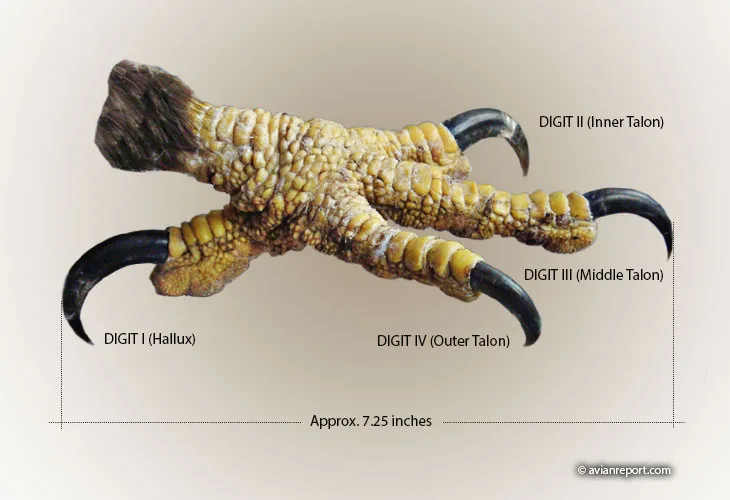
Image source: Web (Bing) / pinterest.com (Web image (fair-use with source credit))
| Feature | Primary Function |
|---|---|
| Hallux Claw | The rear-facing talon that provides the anchor for deep puncture. |
| Grip Strength | Can exceed 400 PSI to crush or immobilize small mammals. |
| Tarsus | The reinforced lower leg bone that absorbs the shock of impact. |
The Mechanics of the Stoop: Physics in Motion
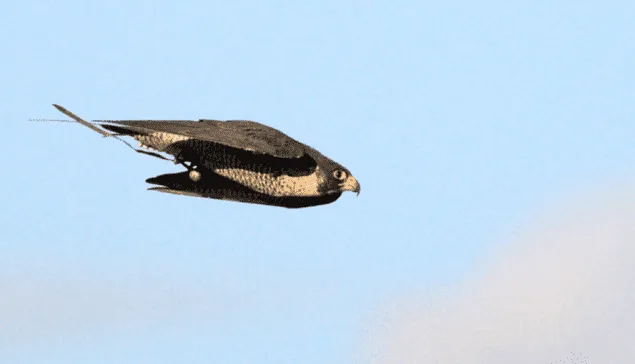
The stoop is the high-speed descent phase of the hunt. Once the eagle identifies prey, it transitions from a soaring bird into a living projectile.
To maximize velocity, the eagle folds its wings tightly against its torso. This maneuver minimizes drag, allowing the bird to accelerate rapidly toward the ground. Gravity does most of the work during this phase, but the bird must maintain control.
They use their tail feathers like a rudder to make micro-adjustments in trajectory. If the prey changes direction, the eagle must tilt its body and adjust its wing position to steer. This requires immense muscle control and near-instantaneous processing of visual data.
Navigating the Environment: Wind, Water, and Refraction
Hunting requires constant compensation for the surrounding environment. Eagles are experts at reading wind currents to predict their own descent path.
When hunting aquatic prey, they face a specific challenge known as light refraction. Water bends light, which makes a fish appear to be in a different position than its actual location.

Image source: Web (Bing) / ar.inspiredpencil.com (Web image (fair-use with source credit))
The eagle compensates for this by calculating the angle of entry. They often strike slightly behind the visual image of the fish to account for the depth distortion. These birds use their bifocal vision, as documented by the [U.S.
Fish and Wildlife Service](https://www.fws.gov), to switch between panoramic scanning and high-resolution tracking during the final seconds of a hunt.
The Critical Moment: Striking, Locking, and Braking
The final seconds of the hunt are a dangerous transition from high-speed flight to impact. The eagle must perform a braking maneuver to avoid injury during the strike.
As they approach the target, they flare their wings and tail to increase surface area and create drag. This acts as an air brake, slowing the bird down just enough to grasp the prey without hitting the ground with lethal force.
The talons are thrown forward during this flare. The strike is almost always directed at the head or the vitals of the prey. Once the claws connect, the grip is absolute.
They don't just grab; they use their weight to drive the talons home before launching back into the air with their meal.
Common Hunting Failures and How Eagles Adapt
Eagles frequently miss their targets, especially when environmental conditions shift at the last second. A sudden gust of wind can push a bird off its trajectory during the final phase of a stoop. When this happens, the eagle must abandon the strike to avoid a collision with the ground.
If a hunt fails, the bird instantly transitions into a recovery phase. It pulls out of the dive, utilizing its massive wingspan to generate lift and climb back to altitude. This transition requires significant energy, forcing the eagle to weigh the risks of further pursuit against the need to conserve calories for a better opportunity.
They also adapt their strategy based on prey behavior. If a target spots them early and dives into thick cover, the eagle often breaks off the attack immediately. They understand that chasing prey into dense brush or tight spaces increases the risk of injuring their wings or talons.
| Failure Factor | Impact on Hunt |
|---|---|
| Wind Shear | Disrupts the flight path, forcing a mid-air abort. |
| Prey Evasion | Triggers a premature pull-up to avoid injury in brush. |
| Visibility Loss | Causes the eagle to lose the "lock" required for a strike. |
Learning to recognize when a hunt is no longer viable is a core skill for survival. Older, more experienced eagles are often more selective. They wait for nearly perfect conditions before committing to a strike, whereas younger birds might waste energy on long-shot attempts.
Frequently Asked Questions
How fast can an eagle dive when hunting?
Eagles can reach speeds exceeding 100 miles per hour during a steep stoop. They reach these velocities by tucking their wings tightly to minimize drag, transforming their body into a high-speed aerodynamic shape. This speed is essential for catching agile prey that would otherwise escape a slower approach.
Do eagles hunt primarily by sight or by smell?
Eagles rely almost exclusively on their highly developed vision. Their eyes are specially adapted to detect tiny movements from great distances, which is far more effective for hunting than scent. They do not have a strong sense of smell, so they rarely hunt using olfactory cues.
How many calories does an eagle burn during a hunt?
A full-speed hunting attempt is a massive caloric investment. The energy cost includes the initial flight to height, the intense muscle activity required for the stoop, and the power needed for a sudden escape if the hunt fails. Because of this, eagles prioritize efficiency by waiting for low-risk, high-reward opportunities.
What happens if an eagle misses its target?
If an eagle misses, it must instantly convert its downward momentum into lift to regain altitude. This recovery maneuver is physically demanding and uses a large portion of the bird's energy reserves. Many eagles will perch for an extended time afterward to recover and resume scanning for easier prey.
Why do some eagles choose to hunt in pairs?
While most eagles hunt solo, some species or individuals may cooperate to flush out prey from cover. One bird might fly low to startle the target, while the other waits at a higher altitude to strike. This technique is more common in complex environments where prey is difficult to capture alone.