Where Do Geese Go During Winter

Image source: Bing (Web (fair-use with source credit))
When we think about wild geese, one of the most common questions that pops up is, where do geese go during winter? It's a natural curiosity, picturing these large birds in flight and wondering about their destination. This isn't just about idle curiosity; understanding their migratory patterns is key to appreciating and protecting these fascinating creatures.
Our research confirms that most geese don't just disappear; they undertake incredible journeys covering hundreds, sometimes thousands, of miles. These movements are driven by basic needs: food and survival. For example, many species rely on specific wetland habitats that freeze over in colder months, forcing them to seek ice-free areas with accessible food sources, a critical factor for their survival.
Quick Answer
Geese migrate south for the winter to find food and ice-free water. Canada Geese often travel up to 3,000 miles. They use flyways like the Atlantic and Mississippi.
Their journey ensures they escape harsh freezing conditions. This protects them from starvation and predation.
The Big Picture: Where Different Geese Go
Not all geese are created equal when it comes to migration, and their winter destinations vary based on the species and even distinct populations within a species. It’s a complex puzzle, with different groups following established routes.
Canada Geese: Common Migrators
Canada Geese are probably the most familiar migratory geese in North America, and their movements are well-studied. While some populations have become year-round residents in more urban or milder climates, the majority undertake significant journeys. These birds typically breed in the northern United States and Canada, and as winter approaches, they funnel into major migratory pathways.
These pathways, often called flyways, are essentially established aerial corridors. For Canada Geese, these include the Atlantic, Mississippi, Central, and Pacific Flyways. Depending on their specific breeding grounds, they might head to the Mid-Atlantic states, the southern U.S., or even northern Mexico.
Our research indicates that migration distances for Canada Geese can range from a few hundred miles to over 3,000 miles, with larger individuals and those from more northerly regions tending to travel farther.
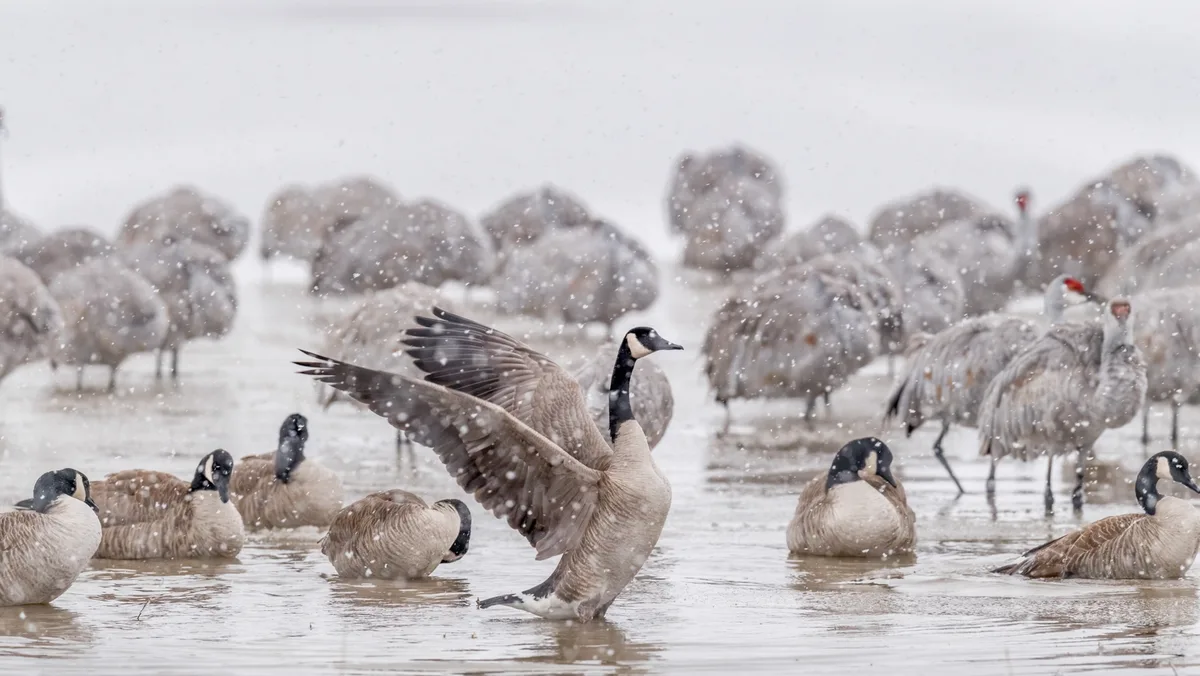
Image source: Bing (Web (fair-use with source credit))
Snow Geese: A Long Journey
Snow Geese are the photogenic white geese often seen in massive flocks. Their migratory pattern is particularly striking due to the sheer numbers involved and the vast distances they cover. Snow Geese breed in the high Arctic, on islands and coastal areas where summers are short but intense.
As soon as the breeding season ends, they begin their southward migration, often starting as early as August or September. Their wintering grounds are primarily along the Atlantic coast, from the Delmarva Peninsula south to North Carolina, and further south into the Gulf Coast states of Texas and Louisiana. Some populations also winter in California.
These journeys can span thousands of miles, with large congregations forming in key feeding areas, often agricultural fields where they can find leftover grains.
Other Goose Species' Winter Habits
While Canada and Snow Geese are the most prominent, other goose species also have distinct migratory behaviors. The Greater White-fronted Goose, for instance, breeds in the Arctic and winters mainly along the U.S. Gulf Coast and in California.
Brant, a smaller goose found along coastlines, migrate shorter distances, typically from their Arctic breeding grounds to coastal areas along the northern U.S. and southern Canada.
Some species, like the Ross's Goose, are also long-distance migrants, often wintering in California's Central Valley and Arizona. The key takeaway is that while the general principle of moving to find food and avoid freezing holds true, the specific destinations and migration lengths are species-dependent. Understanding these differences is crucial for conservation efforts targeting specific populations.
What Drives the Migration? The Science Behind the Journey
The urge to migrate isn't a random decision; it's a finely tuned biological process influenced by a combination of internal clocks and external environmental cues. Geese are equipped with sophisticated mechanisms that tell them when to go and how to get there.
Environmental Triggers
Geese possess an internal biological clock, but external environmental factors act as powerful signals to initiate migration. Our research indicates that changes in day length, known as photoperiodism, are a primary cue. As days shorten in the fall, hormonal changes occur within the geese, signaling a shift in their behavior and physiology.
Temperature also plays a role, but it's often secondary to day length. A sudden cold snap might prompt movement, but the steady decline in daylight hours is the more consistent trigger for initiating the southward journey. The availability of food is also a critical factor; as vegetation dies back and water freezes, the lack of resources becomes a strong motivator to move on.
The U.S. Fish and Wildlife Service notes that these environmental triggers are increasingly being impacted by climate change, leading to shifts in migration timing for some populations.
Navigation Secrets
Successfully navigating thousands of miles to specific wintering grounds requires an incredible innate ability. Geese aren't just flying randomly; they're using a complex set of tools to find their way. This navigational prowess is a marvel of nature.

Image source: Bing (Web (fair-use with source credit))
Our understanding suggests they utilize a combination of navigational cues. Celestial navigation, using the sun and stars, is a significant factor, especially during nocturnal flights. Geese also possess magnetoreception, meaning they can sense the Earth's magnetic field, allowing them to orient themselves even when celestial cues are unavailable.
Furthermore, they rely on learned routes, following familiar landmarks and established flyways passed down through generations, often guided by older, experienced birds. This multi-modal navigation system ensures their remarkable accuracy.
Challenges Geese Face on Their Winter Travels
While migration is a vital survival strategy, it's also fraught with dangers and challenges for geese. Their long journeys and reliance on specific habitats make them vulnerable to a range of threats.
Habitat Loss and Climate Change
One of the most significant threats to migratory geese is habitat loss and degradation. Their wintering grounds, often rich wetlands and agricultural fields, are increasingly impacted by human development, urbanization, and agricultural intensification. As these crucial stopover and wintering sites disappear or are altered, geese have fewer safe places to rest, feed, and escape harsh weather.
Climate change exacerbates these issues. Altered weather patterns can lead to droughts that dry up wetlands or unseasonably warm spells that disrupt natural cues. Extreme weather events, such as powerful storms, can also directly impact migrating flocks.
Research from university ornithology departments indicates that these shifts can desynchronize migration timing with food availability, potentially leading to reduced survival rates and reproductive success.
Dangers Along the Way
The journey itself is perilous. Geese face natural predators like foxes, raptors, and coyotes, especially when they are vulnerable on land or at resting spots. In addition, the constant flight, often at high altitudes and for long durations, is physically demanding.
Human-related dangers are also prevalent. Collisions with man-made structures, such as power lines, wind turbines, and even buildings, can cause significant mortality. Waterfowl hunters, operating under strict regulations from bodies like the U.S.
Fish and Wildlife Service, also represent a mortality factor, though these are managed to ensure population sustainability. Disease can spread rapidly when large numbers of birds congregate in feeding or roosting areas, posing another significant risk.
Staying Safe: Conservation and Respecting Wildlife
Understanding where geese go during winter isn't just about academic interest; it's about understanding how we can best coexist with these migratory birds and ensure their populations thrive. Conservation efforts focus on protecting their crucial habitats and minimizing human-caused threats throughout their migratory routes.
Following Regulations
Governing bodies, such as the U.S. Fish and Wildlife Service and Environment and Climate Change Canada, establish and enforce regulations to protect migratory birds, including geese. These rules are vital for managing populations and preventing overexploitation.
Key regulations cover hunting seasons, bag limits, and methods of take. For instance, the Migratory Bird Treaty Act in the United States provides broad protection for most migratory birds.
Adhering to these regulations is paramount for anyone interacting with geese, whether through hunting, wildlife observation, or simply encountering them in parks. Ignorance of these laws can lead to penalties and, more importantly, can harm vulnerable populations. It's always best to consult local wildlife agency guidelines before engaging in activities that might affect geese or their habitats.
Observing Responsibly
For many people, the joy of geese comes from observing them, whether in flight or foraging. Responsible observation is key to minimizing disturbance and ensuring the birds' safety, especially during their vulnerable migratory and wintering periods. This means maintaining a respectful distance.
When watching geese, particularly large flocks gathering in wintering grounds, avoid approaching too closely. Sudden movements or loud noises can startle them, causing them to take flight unnecessarily. This expends vital energy reserves that they need to survive the winter.
Also, never feed wild geese, as human food can be nutritionally inadequate or even harmful, leading to health problems and encouraging dependency. Supporting conservation organizations or participating in citizen science projects that monitor bird populations are positive ways to contribute to their well-being.
Frequently Asked Questions About Goose Wintering Habits
Do all geese migrate south for the winter?
No, not all geese migrate. While many species, like the Canada Goose and Snow Goose, undertake long-distance migrations, some populations have adapted to remain in their breeding territories year-round. These resident geese typically live in areas with milder climates or abundant food sources that persist through winter, such as urban parks or managed agricultural lands.
How do geese know where to go?
Geese navigate using a sophisticated combination of senses. They can use the sun and stars for celestial navigation and possess magnetoreception, meaning they can sense the Earth's magnetic field. They also learn migratory routes by following older, more experienced birds and recognizing familiar landmarks along established flyways.
Can climate change affect goose migration?
Yes, climate change can significantly impact goose migration patterns. Warmer winters can delay or shorten migration for some species, while extreme weather events can pose dangers during flight. Changes in food availability and the timing of plant growth in both breeding and wintering grounds can also affect their survival and reproductive success.
What do geese eat in the winter?
In wintering grounds, geese primarily feed on grasses, grains, and aquatic vegetation. They are opportunistic feeders and will utilize whatever food sources are available and accessible. This often includes agricultural fields where they forage on leftover crops like corn, wheat, and soybeans.
Their ability to digest a variety of plant matter is crucial for their survival during colder months.
What happens if geese can't find food in winter?
If geese cannot find sufficient food in their wintering grounds, they face severe challenges. Malnutrition can weaken them, making them more susceptible to disease and predation. In extreme cases, starvation can lead to population declines, especially if combined with harsh weather conditions or lack of access to unfrozen water sources.
This is why protecting their wintering habitats is so important.
What It Means for Us: Why This Matters
Understanding where geese go during winter offers a window into the complex ecological web we are part of. Their migratory journeys highlight the interconnectedness of ecosystems across vast distances. Protecting their breeding grounds in the Arctic, their crucial stopover points, and their wintering habitats in temperate and southern regions is essential for their survival and for maintaining ecological balance.
These incredible journeys underscore the importance of conservation initiatives. By supporting organizations and policies that preserve wetland habitats and migratory corridors, we help ensure these birds can continue their ancient cycles. It’s a reminder that our actions, even far from their wintering grounds, can have a profound impact on wildlife populations.
The continued presence of these magnificent birds is a testament to their resilience and the effectiveness of thoughtful conservation strategies.