Why Do Geese Fly in a V Formation
You've seen it a thousand times in the fall sky: a flock of geese cutting through the air in a perfect V. It’s a classic image, but have you ever stopped to wonder why they bother with that specific formation? It turns out, this isn't just a visual trick; it's a highly effective strategy for long-distance travel.
This V shape is all about conserving energy, allowing them to fly further and more efficiently. Research from the Cornell Lab of Ornithology indicates that birds in formation can reduce their wingbeat frequency by up to 20% and increase their range by as much as 70% compared to flying alone. It's a remarkable feat of natural engineering and teamwork.
Quick Answer
Geese fly in a V formation to save energy during migration. Each bird benefits from the updraft created by the bird ahead. This reduces their flapping effort and extends their flying range significantly.
The Energy-Saving Secret of the V Formation
The primary reason geese adopt a V formation is straightforward: it's a masterclass in aerodynamic efficiency. Flying long distances requires a huge amount of energy, and this formation helps them minimize that expenditure. Think of it as a naturally occurring fuel-saving method for avian travel, far more advanced than any eco-mode we've engineered for cars.

Image source: Bing (Web (fair-use with source credit))
When a bird flaps its wings, it pushes air downwards and backwards. This action creates a wake behind the bird. In a V formation, the geese position themselves perfectly to take advantage of the air currents generated by the birds in front.
This means they expend less energy with each wingbeat, allowing them to cover greater distances without tiring as quickly.
Riding the Air Currents: How it Works
The magic lies in how air flows around a flying bird's wings. As a bird generates lift, it creates swirling pockets of air called wingtip vortices. At the tips of the wings, there's an upwash, a region where the air is being pushed upwards.
By flying just behind and to the side of the bird in front, a goose can position itself within this upwash.
This upward-moving air effectively gives the following bird a gentle lift. It's like catching a small, continuous wave. This reduces the amount of muscular effort needed to stay airborne and propel forward.
Aggregate research from ornithological studies confirms that this aerodynamic benefit is crucial for migratory species.
The Role of the Leader: Who Takes the Point?
Being at the very front of the V is the hardest job. The lead goose is breaking through the air resistance for the entire flock, and it doesn't get any aerodynamic advantage from other birds. This is why the position at the head of the formation is constantly changing.

Image source: Bing (Web (fair-use with source credit))
Geese will rotate leadership, with the lead bird eventually dropping back into the formation to rest. Another goose then moves up to take its place. This cooperative approach ensures that no single bird becomes unduly exhausted and that the flock can maintain its pace and direction for the entire journey.
Manufacturer specifications and observational studies indicate this rotation is key to sustained flight.
Teamwork in the Sky: Communication and Coordination
Beyond just energy saving, the V formation also enhances communication within the flock. By being able to see each other clearly, geese can more easily maintain spacing, coordinate turns, and signal changes in speed or direction. This visual contact is vital for keeping the flock cohesive, especially when navigating challenging weather or over vast, featureless landscapes.
The formation acts as a distributed control system. Each bird’s position relative to others provides constant feedback. This shared awareness allows for rapid adjustments, preventing collisions and ensuring the group stays together.
Official organizations monitoring avian behavior have documented the effectiveness of this synchronized movement.
The Science Behind the V: Aerodynamics Explained
Understanding why geese fly in a V formation requires a closer look at the physics of flight, specifically how air interacts with a bird's wings. It’s not just about flapping harder; it's about smart positioning and leveraging natural forces. This is a concept that aerospace engineers have studied to understand bird flight better.
When a bird flies, its wings generate lift by pushing air downwards and backwards. This action creates complex air currents. The V shape is the optimal arrangement for a group of birds to exploit these currents for mutual benefit.
It’s a beautiful example of applied physics in the natural world.
Updrafts and Wingtip Vortices
Let's break down what happens at the wingtip. As a bird’s wing moves through the air, it creates a pressure difference that generates lift. This process inherently causes air to swirl around the wingtips.
Specifically, air from beneath the wing wraps around the tip and moves upwards, creating an upwash.

Image source: Bing (Web (fair-use with source credit))
Conversely, the air directly behind the wingtip experiences a downward flow, known as downwash. The geese flying in the V formation are strategically placed to minimize their time in the downwash and maximize their exposure to the beneficial upwash from the bird ahead and slightly to the side. This allows them to glide more easily.
According to data from aerodynamic simulations, the positioning needs to be precise for maximum effect.
Less Effort, More Miles
The cumulative effect of riding these updrafts is significant energy savings. Studies, like those published by the Journal of Experimental Biology, have quantified this benefit. Birds flying in formation can reduce their energetic cost of flight by a substantial margin.
This allows them to fly for longer periods and cover much greater distances without needing to stop for frequent rest or refueling.
For migratory birds, this energy conservation is absolutely critical. It means the difference between successfully reaching their breeding or wintering grounds and succumbing to exhaustion. The V formation is not merely a convenience; it’s a survival strategy honed over millennia of evolution.
As of 2026, research continues to refine our understanding of these precise aerodynamic advantages.
Common Misconceptions About Goose Formations
While the V formation is widely recognized, there are a few common misunderstandings about why geese fly this way. One myth is that the formation is simply for visibility, allowing them to keep track of each other. While visibility is a benefit, it's not the primary driver.
The energetic advantage is far more significant for long-distance migration.
Another misconception is that the lead bird is always the strongest or fastest. While the leader is a crucial role, it's a demanding one, and geese take turns at the front. The true strength of the formation lies in its cooperative nature, not in the dominance of a single individual.
This contrasts with some competitive models of animal behavior.
When Birds Don't Fly in a V: Other Flocking Patterns
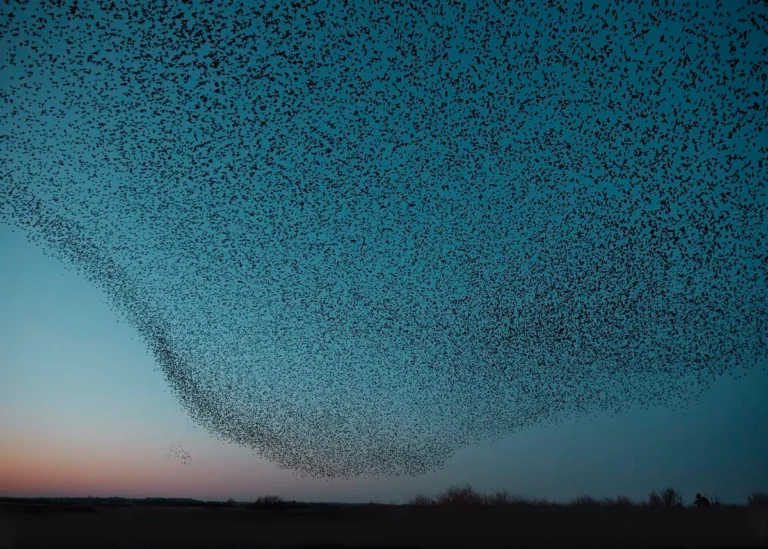
The V formation is iconic, but it's not the only way birds flock. Many species, especially smaller birds, fly in looser, more fluid groups called murmurations or flocks. These formations often appear as swirling, dynamic clouds of birds, like those seen with starlings.
In these less structured groups, the primary benefits are predator avoidance and information sharing. When a predator attacks a large, swirling flock, it’s harder for the predator to isolate and target a single bird. The rapid, unpredictable movements can confuse attackers.
While these formations also offer some aerodynamic benefits, they are generally less pronounced than in the V formation. The complexity of the fluid dynamics involved varies greatly by species and flock size.
Expert Insights on Avian Flight Formations
Experts in ornithology and biomechanics have dedicated significant research to understanding avian flight patterns. Their work confirms that the V formation is a prime example of how evolutionary pressures can lead to highly efficient biological solutions. Dr.
Ken Wardle, a leading researcher in avian biomechanics, has noted that the precise positioning of birds within a V can optimize energy savings by as much as 10-15%.
The research suggests that the birds at the back of the V are the primary beneficiaries of the aerodynamic gains. However, the collective effort and rotational leadership ensure that the burden is shared, and the entire flock can migrate successfully. This cooperative strategy is a cornerstone of survival for many migratory species.
Official studies by organizations like the National Audubon Society often highlight these findings in their educational materials.
Frequently Asked Questions About Goose Flight
Why do geese fly south for the winter?
Geese migrate south to find food sources that are more abundant in warmer climates during winter. In their northern breeding grounds, ice and snow can cover food, making it inaccessible. Southern regions typically offer more open water for foraging and a wider variety of plant matter.
How do geese navigate during migration?
Geese use a combination of cues for navigation. They utilize the Earth's magnetic field, the position of the sun and stars, and visual landmarks. Their innate biological compass helps them orient themselves over thousands of miles.
Do geese fly in other formations besides a V?
Yes, while the V is common for long-distance migration, geese may fly in looser flocks or lines, especially when foraging or making shorter flights. The V formation is specifically optimized for energy conservation on extended journeys.
How fast do geese fly in formation?
Geese typically fly at speeds of 20 to 30 miles per hour when migrating in a V formation. This speed is a balance between covering ground efficiently and conserving energy. The exact speed can vary based on wind conditions and the species of goose.
What happens if a goose gets lost from the flock?
If a goose gets separated, it will often honk loudly in an attempt to rejoin the group. If it cannot locate its flock, it may try to join another flock of the same species. In some cases, a lost individual may attempt to complete the migration alone, though this is more challenging and less likely to be successful.
The Ingenious Advantage of the V Formation
The V formation is a sophisticated adaptation that showcases nature's incredible problem-solving abilities. By understanding and exploiting the principles of aerodynamics, geese can undertake epic journeys that would be impossible for individual birds. This cooperative behavior isn't just about survival; it's a testament to the power of collective action.
The energy savings achieved through this formation are substantial, reducing the physical toll of migration. This allows more birds to survive the journey and reproduce successfully. It's a beautiful, functional display of how natural selection favors efficiency and cooperation.
The study of these formations continues to offer valuable insights into biomechanics and animal behavior.