Lovebird Facts
Thinking about adding a feathered friend to your home is exciting, but accurate lovebird facts are essential for a successful start. These intelligent, high-energy parrots require specific care to thrive in a domestic setting.
Properly understanding their social needs and natural instincts prevents many common ownership mistakes. As of 2026, experts emphasize that their long-term health depends on consistent, species-specific husbandry practices.
Quick Answer
Lovebirds are small, highly social parrots from the genus Agapornis. They typically live 10 to 15 years with proper care. These birds require significant daily interaction to remain mentally healthy.
They need a spacious cage with horizontal room for flight. A balanced diet of high-quality pellets is vital for their longevity.
The Realities of Life with a Lovebird

Image source: Web (Bing) / biologydictionary.net (Web image (fair-use with source credit))
Lovebirds are often misunderstood as "easy" pets due to their small size. In reality, they are intense, demanding, and highly intelligent animals. They act like big parrots shrunk down into a compact frame.
They don’t just sit quietly on a perch. They are active, loud, and constantly busy. If you expect a passive pet that stays in the background, a lovebird will likely challenge your expectations.
They want to be involved in whatever you’re doing.
You’ll need to commit to daily social interaction. These birds are flock-oriented creatures that view their human family as their primary social group. If you leave them alone for long periods, they can become stressed or develop behavioral issues.
Understanding the True Social Needs of Your Lovebird
The most common myth is that lovebirds must always be kept in pairs to survive. While they are social, they do not strictly require a partner to stay alive. A single lovebird often forms a much stronger bond with its owner.
When you keep two lovebirds together, they frequently bond exclusively with each other. This often makes them less interested in human interaction. If your goal is a tame, interactive pet, a single bird can be an excellent companion.
Regardless of whether you have one bird or a pair, enrichment is non-negotiable. They need mental challenges to prevent boredom. Boredom in psittacines often leads to destructive behaviors like feather plucking or excessive screaming.
- Human Interaction: Aim for at least one to two hours of focused engagement every day.
- Target Training: Use positive reinforcement to build trust and provide mental stimulation.
- Observation: Monitor your bird for signs of stress or sudden changes in body language.
Essential Husbandry: Diet, Housing, and Enrichment
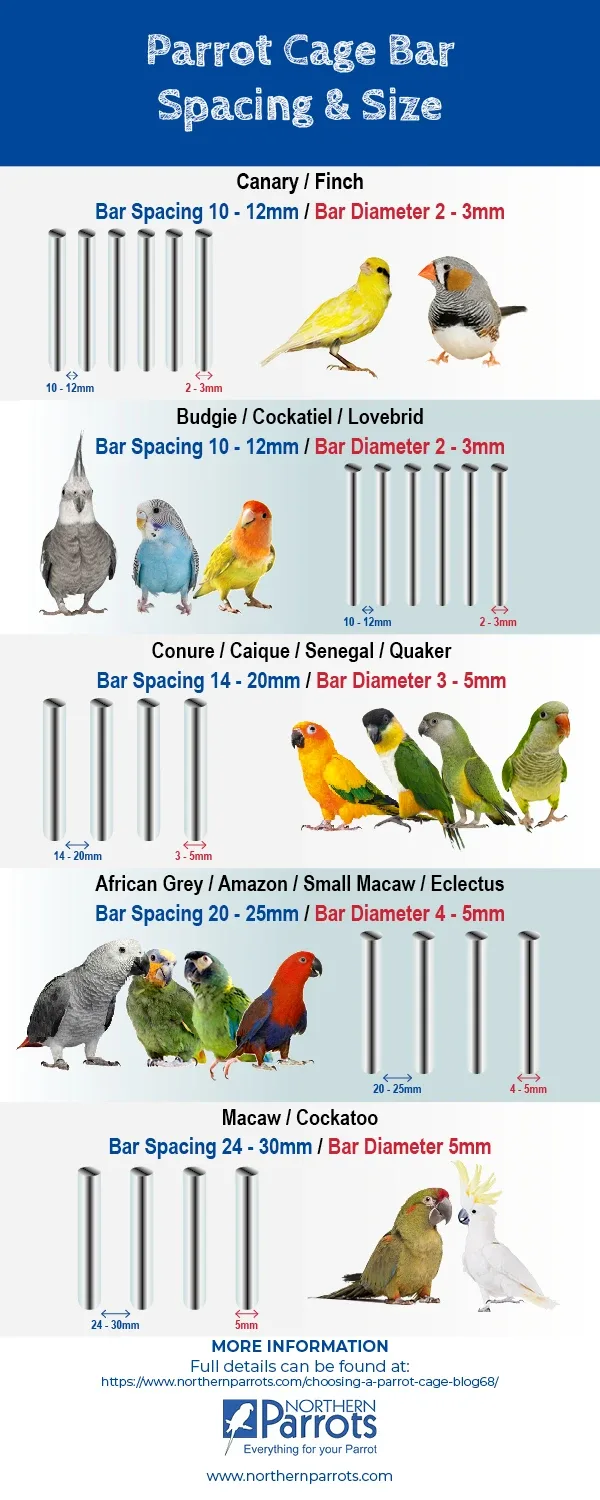
Image source: Web (Bing) / northernparrots.com (Web image (fair-use with source credit))
Providing the right environment is the foundation of long-term bird health. Diet is the biggest factor in preventing common metabolic diseases. Relying solely on a seed mix often leads to nutritional deficiencies and obesity.
Transition your bird to a high-quality, pellet-based diet as their primary food source. Pellets are scientifically formulated to provide the specific vitamins and minerals these parrots need. You can supplement this with fresh, bird-safe vegetables like shredded kale or carrots.
| Feature | Requirement |
|---|---|
| Cage Size | Minimum 24" wide x 18" deep x 18" high |
| Bar Spacing | Maximum 1/2 inch |
| Primary Diet | Pelleted food (70-80% of intake) |
| Enrichment | Foraging toys and shreddable wood |
Cage design matters as much as size. Lovebirds need horizontal space to move their wings. Avoid tall, narrow cages that don’t allow for natural flight paths.
Ensure the bar spacing is 1/2 inch or less to prevent the bird from getting its head caught, a risk documented by the Association of Avian Veterinarians.
Managing Temperament: Territoriality and Interaction
Lovebirds are notoriously feisty. They are famous for being small, spunky, and sometimes surprisingly aggressive. You’ll find they are very protective of their perceived territory.
This territorial behavior is natural, but it can be jarring for a new owner. If they are nesting or sitting near their favorite perch, they may lunge or bite if you reach in. This isn't usually "meanness." It is an instinctive defense of their home.
Respecting their boundaries is the best way to maintain a positive relationship. Learn to read their body language before you try to handle them.
- Fluffed Feathers: A sign of relaxation or a warning depending on the context.
- Pinning Eyes: Rapid contraction and dilation of the pupils often signals high excitement or agitation.
- Lowered Head: Often an invitation for a head scratch, but only when trust is fully established.
If you don't respect these signals, the bird will rely on its beak to send a clearer message. Training takes patience, but it’s the best way to handle their big personalities.
Navigating Toxic Risks and Medical Safety

Image source: Web (Bing) / walmart.com (Web image (fair-use with source credit))
Your home contains many common items that are lethal to birds. The most critical risk is non-stick cookware. When heated to high temperatures, pans coated with PTFE, often branded as Teflon, release fumes that kill parrots within minutes.
Birds have a highly efficient, sensitive respiratory system. They extract oxygen much more effectively than mammals, which means they also absorb airborne toxins faster. Never use non-stick pans in a home with a lovebird.
Avoid these common household dangers:
- Toxic Foods: Avocado, onions, garlic, and chocolate can be fatal if ingested.
- Chemical Fumes: Aerosol sprays, scented candles, and harsh cleaning agents should be kept away from the bird room.
- Heavy Metals: Lead and zinc, found in some old cage paints and hardware, cause slow, painful poisoning.
If you suspect your bird has ingested something toxic, contact an avian-specialized veterinarian immediately. Standard pet clinics often lack the specialized equipment and training required for emergency avian care. Early intervention is the only way to save a bird from acute toxic exposure.
Avoiding Common Husbandry Pitfalls
Many owners fall into the trap of assuming lovebirds are low-maintenance. This assumption often leads to poor outcomes for both the bird and the owner. One of the most frequent mistakes is using round cages.
Round cages offer no corners, which are necessary for a bird to feel secure and retreat from activity.
Another common error is overfeeding fruits and treats. While these are okay in moderation, they shouldn't constitute the bulk of the diet. Relying on sugar-heavy foods can lead to liver complications over time.
Always weigh your bird weekly using a digital gram scale to catch sudden weight fluctuations early.
Consistency in your routine is just as important as the food you provide. Birds thrive on predictability. Try to maintain the same schedule for feeding, light exposure, and social time each day.
Abrupt changes often trigger stress, which manifests as feather damage or erratic vocalization.
Avoid placing the cage in high-traffic, drafty, or dark areas of the home. A quiet corner of a living room is often the best placement. This allows the bird to see the family activity without being overwhelmed by constant movement or noise.
Frequently Asked Questions About Lovebird Ownership
Can lovebirds learn to talk?
Lovebirds are generally not considered talented mimics. While some individuals may learn to whistle a tune or mimic a single word, they aren't known for conversational speech. Don't base your decision to get one on the expectation of a talking bird.
Focus instead on their playful, high-energy companionship.
What is the difference between male and female lovebirds?
Visual sexing is unreliable because males and females often look identical. DNA testing is the only accurate way to determine the sex of your bird. If you aren't planning to breed, the sex of the bird matters less than its individual temperament and health.
Why does my lovebird bite when I put my hand in the cage?
This is usually a territorial response rather than aggression toward you. The cage is their sanctuary, and they may feel the need to guard it from intruders. To minimize this, try interacting with your bird on a neutral perch or table outside the cage instead.
How much exercise does a lovebird need?
They need at least two hours of supervised time out of the cage daily to fly and explore. Physical activity helps them maintain healthy muscles and supports their cardiovascular system. Always ensure the room is bird-proofed and safe before letting them out to fly.
When should I seek help from a veterinarian?
Look for signs of illness like lethargy, fluffed feathers, changes in droppings, or loss of appetite. Birds are masters at hiding illness until it is quite advanced. If you notice any of these symptoms, contact an avian-specialized veterinarian immediately rather than waiting for improvement.