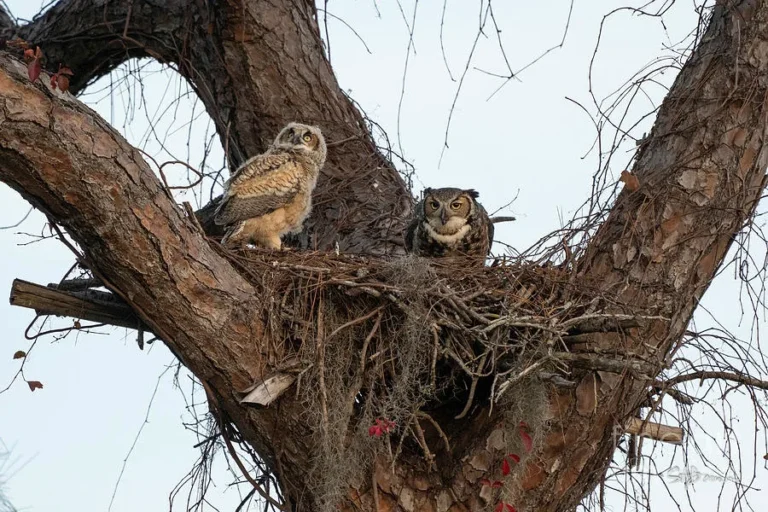
How Do Barn Owls Hunt
Ever wondered how barn owls manage to snag their dinner so effectively, often without a sound? It's pretty incredible, and it all comes down to some amazing natural engineering and some seriously honed skills. Think of them as nature's stealth bombers of the rodent world.
We're going to break down what makes these guys such effective hunters. It’s not just luck; it’s a whole system working perfectly.

Image source: Bing (Web (fair-use with source credit))
Quick Answer
Barn owls hunt using silent flight, exceptional hearing, and keen eyesight to locate and capture small prey like rodents. Their specialized feathers muffle sound, allowing them to approach undetected, while their dish-like faces focus faint sounds to pinpoint prey locations precisely. They then perform a swift, silent dive to capture their meal with powerful talons.
Built for the Hunt: Barn Owl's Special Adaptations
Barn owls are perfectly engineered predators, and their hunting success boils down to a suite of specialized physical traits. These aren't just random features; each one plays a critical role in their ability to hunt effectively, especially under the cover of darkness.
Silent Flight Feathers: The Key to Stealth
This is arguably the barn owl's most crucial adaptation for hunting. Their wing feathers aren't like those of most birds. Instead, they have a soft, velvety fringe and a comb-like leading edge.
These structures are designed to break up the air turbulence that typically creates noise when a bird flaps its wings.
- Noise Reduction: The fringed edges absorb sound waves, dampening the usual whooshing noise of flight.
- Micro-Turbulence Control: The comb-like structure on the front edge of the wing feathers smooths the airflow, preventing sharp eddies that create audible sound.
This silent flight allows the owl to approach prey without being detected, giving it a significant advantage when closing the distance for a capture. It’s a biological marvel that makes them incredibly effective hunters, especially for prey that relies heavily on sound for predator detection.
Dish-Like Face and Asymmetrical Ears: Pinpointing Prey
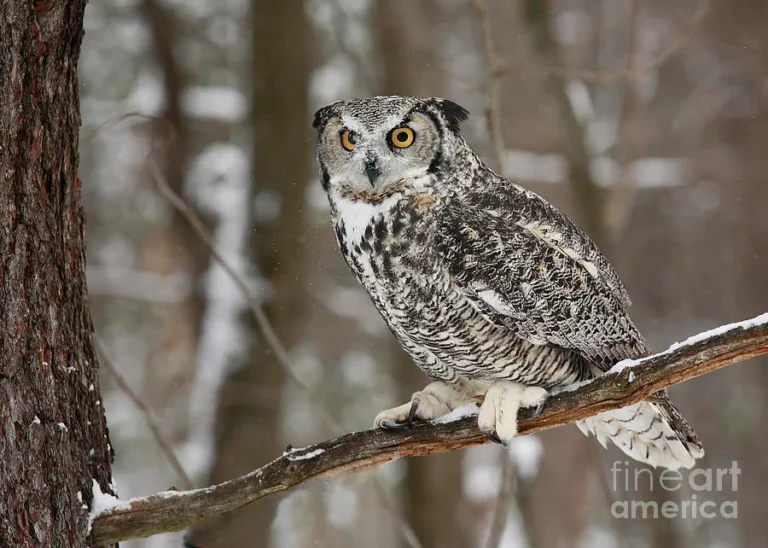
A barn owl's face is quite distinctive, and its unique shape is directly linked to its hunting prowess. The dense feathers forming a facial disc are not just for show; they act like a satellite dish, funneling even the faintest sounds directly towards the owl's ear openings.
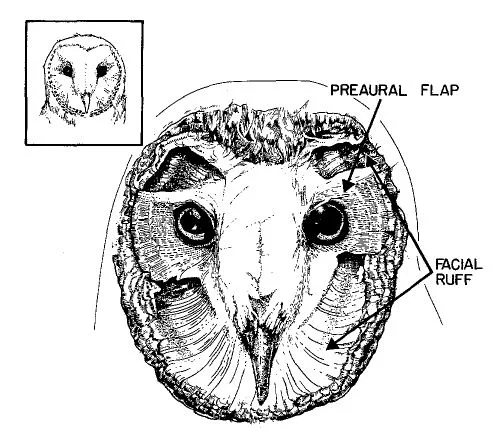
Image source: Bing (Web (fair-use with source credit))
What's even more remarkable is that their ear openings are not symmetrical. One ear is positioned higher than the other. This asymmetry, coupled with the directional sound collection of the facial disc, allows the owl to pinpoint the precise location of a sound in three dimensions.
They can determine not only the direction but also the elevation of their prey, a capability that is essential for hunting in varied terrain. According to research published in journals like Nature, this auditory precision allows them to locate prey moving under snow or dense leaf litter with remarkable accuracy, often down to a few centimeters.
Sharp Eyes and Powerful Talons: The Capture Tools
While sound is their primary hunting tool, barn owls also possess excellent vision for low-light conditions. Their large, forward-facing eyes provide good binocular vision, which helps in judging distances accurately. This is vital when they make their final approach and dive.
- Low-Light Vision: Their eyes are adapted to gather as much light as possible, allowing them to see effectively during dusk, dawn, and throughout the night.
- Movement Detection: They are particularly adept at spotting the slightest movements of potential prey against the background.
Once the owl is positioned correctly, its powerful talons are the instruments of capture. These sharp, curved claws are designed for a quick and firm grip, ensuring that once prey is seized, escape is highly unlikely. The combination of precise auditory targeting, effective low-light vision, and a powerful capture mechanism makes the barn owl a formidable hunter.
The Barn Owl's Hunting Strategy in Action
Understanding how barn owls hunt isn't just about their physical attributes; it's also about how they employ these tools in a strategic sequence. Their entire hunting ritual is a masterclass in efficiency and stealth, optimized for success.
Perching and Listening: The Waiting Game
A common hunting technique for barn owls involves a period of patient observation from a concealed perch. They will often settle on a low branch, a fence post, or even the side of a building, remaining motionless. From this vantage point, they use their acute hearing to scan the environment below.
This listening phase is crucial. They are not just passively waiting; they are actively analyzing every faint sound that reaches them. The rustling of leaves, the tiny scurry of a mouse through grass, or the squeak of a vole, all are potential signals of a meal.
This methodical approach ensures they don't waste energy on unproductive flights.
The Silent Dive and Capture
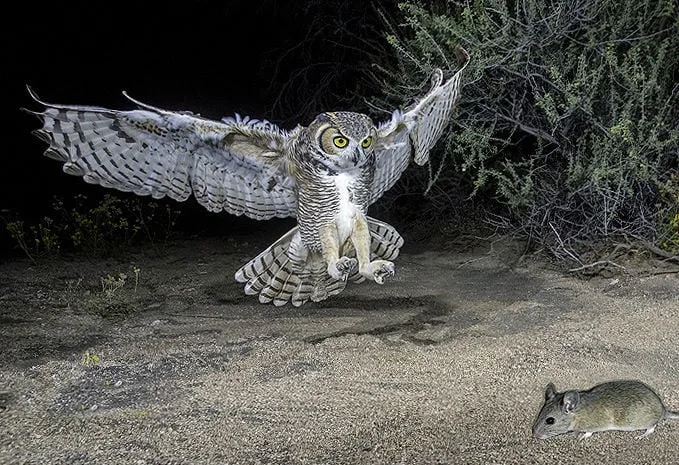
When a barn owl’s exceptional hearing detects the distinct sound of prey, the hunting strategy shifts into high gear. The owl launches itself from its perch, its specialized silent flight feathers ensuring its movement is virtually inaudible. It glides or flaps low to the ground, using the contours of the land for cover if necessary.

Image source: Web (Bing) / pinterest.com (Web image (fair-use with source credit))
The approach is swift and direct, guided by the precise sound cues. As it reaches the optimal point above its target, the owl executes a rapid, controlled dive. Its long legs, equipped with sharp talons, extend forward in anticipation of the capture.
The combination of silent approach and accurate targeting means that by the time the prey realizes danger, it's often too late. This swift, decisive action minimizes the chance of escape and ensures a high success rate for the hunting owl.
What Happens After the Catch: Pellet Regurgitation
Once a barn owl successfully captures its prey, the process isn't quite finished from a biological standpoint. Like many birds of prey, barn owls cannot digest certain parts of their meal, such as bones, fur, and feathers. To deal with this indigestible material, they form it into a compact pellet in their gizzard.
These pellets are then regurgitated, typically expelled from the owl’s mouth as a single, dense mass. This process is essential for the owl’s digestive health, clearing out material that cannot pass through the intestines. For researchers, these pellets are invaluable.
By examining their contents, scientists can gain detailed insights into the barn owl's diet, its hunting patterns, and the types of prey most common in its territory. The consistency and composition of these pellets can even indicate the owl's overall health and the availability of food resources.
Why This Hunting Style is So Effective
The barn owl’s sophisticated hunting method isn't just interesting; it's incredibly effective. This specialization allows them to thrive in environments where other predators might struggle, particularly by minimizing energy expenditure and maximizing prey capture success.
Advantage of Nocturnal Activity
Hunting under the cover of darkness, or at least during twilight hours, offers barn owls several key advantages. Many of their primary prey items, such as mice, voles, and shrews, are themselves most active during these low-light periods. This means that when the owl begins its hunt, its food source is also out and about.
Furthermore, nocturnal hunting reduces competition from diurnal (daytime) predators. By operating when other birds of prey are roosting, barn owls have a wider hunting ground and less pressure to compete for resources. This temporal partitioning of hunting activity is a smart evolutionary strategy that maximizes their feeding opportunities.
As of 2026, research from ornithological surveys consistently shows a strong correlation between barn owl populations and areas with abundant nocturnal rodent activity.
Diet and Habitat Synergy
The barn owl's diet is highly specialized, focusing primarily on small mammals. This specificity dictates their habitat preference, which in turn perfectly complements their hunting style. They thrive in open country, farmlands, meadows, and grasslands, environments rich in the small burrowing rodents they prey upon.
Their silent flight and keen senses are ideal for scanning these open landscapes from a low altitude. The lack of dense forest canopy means their auditory and visual hunting methods are unimpeded. They can effectively patrol large areas, listening for the subtle sounds of prey moving through vegetation or across open ground.
This synergy between diet, habitat, and hunting adaptation creates a predator perfectly suited to its niche.
Understanding Barn Owl Hunting Behavior
Observing barn owls hunt can be fascinating, but their behavior also presents some nuances that can lead to misunderstandings. Recognizing these helps in appreciating their skills and avoiding common misconceptions.
Common Mistakes in Observing Barn Owls
When people watch barn owls, they sometimes expect behaviors similar to diurnal birds of prey. One common mistake is assuming owls hunt primarily by sight, like a hawk scanning from high above. While their eyesight is good in low light, their hunting is predominantly driven by sound.
Another error is underestimating the silence of their flight. Without understanding the mechanics of their specialized feathers, observers might be surprised by how close an owl can get without being heard. Additionally, some may misinterpret the pellet regurgitation process, perhaps seeing it as a sign of illness rather than a normal, healthy biological function.
Remember, these birds are specialized nocturnal hunters; their behaviors are fine-tuned for that role.
What Makes Barn Owl Hunting Unique
The barn owl's hunting technique stands out due to its extreme specialization. Unlike many predators that might have a more generalist approach or rely on a combination of senses equally, the barn owl has honed its auditory perception to an almost unparalleled degree. The asymmetry of their ears, for instance, is a feature rarely seen in other birds of prey and is a testament to evolutionary pressure favoring precise sound localization.
Their silent flight is another defining characteristic. While some raptors fly quietly, the barn owl's feathers are so effective at noise reduction that they are almost entirely inaudible to their prey. This allows for an ambush strategy that is highly effective against creatures that rely heavily on hearing for survival.
This combination of ultra-sensitive hearing and silent movement creates a hunting method that is both unique and remarkably successful.
Frequently Asked Questions
How far can a barn owl hear its prey?
A barn owl's hearing is incredibly acute, allowing it to detect the faint sounds of small prey moving up to 100 meters away in ideal conditions. This sensitivity is critical for locating rodents hidden beneath vegetation or snow.
Do barn owls hunt during the day?
While barn owls are primarily nocturnal hunters, they will occasionally hunt during dawn or dusk, and in some cases, during overcast daylight hours. However, their peak hunting activity occurs after sunset when their prey is most active.
Can barn owls hunt in complete darkness?
Yes, barn owls are well-equipped to hunt in near-complete darkness. Their exceptional hearing allows them to pinpoint prey even when visual cues are minimal or non-existent.