Can Ducks Fly in Rain
It's a question that sparks curiosity, especially when you see ducks unfazed by a downpour. Can ducks fly in the rain, or do they hunker down like most of us? The answer isn't a simple yes or no; it depends on a few key factors we'll explore.
Research shows that many duck species are surprisingly capable of flying in various weather conditions, including rain. Their unique physical adaptations play a huge role in this ability, allowing them to overcome challenges that would ground other birds. We'll break down what makes this possible and when it's still too much for them.
Quick Answer
Yes, ducks can fly in the rain, but not all the time. Their waterproof feathers and strong flight muscles help them manage light to moderate rain. However, severe storms with high winds can make flying too dangerous, even for ducks.
When Ducks Take to the Skies in a Downpour: The Science
You've probably seen them, right? Ducks paddling around in a pond or even a puddle while it's raining, looking completely unbothered. But when the sky opens up and the rain really starts to come down, do they actually take flight?
Our research indicates that, yes, many duck species can and do fly in the rain. It's not just a theoretical possibility; it's a behavior observed frequently in the wild. This capability is a testament to their evolutionary adaptations, allowing them to continue their essential activities like foraging, migrating, or escaping danger, even when the weather turns foul.
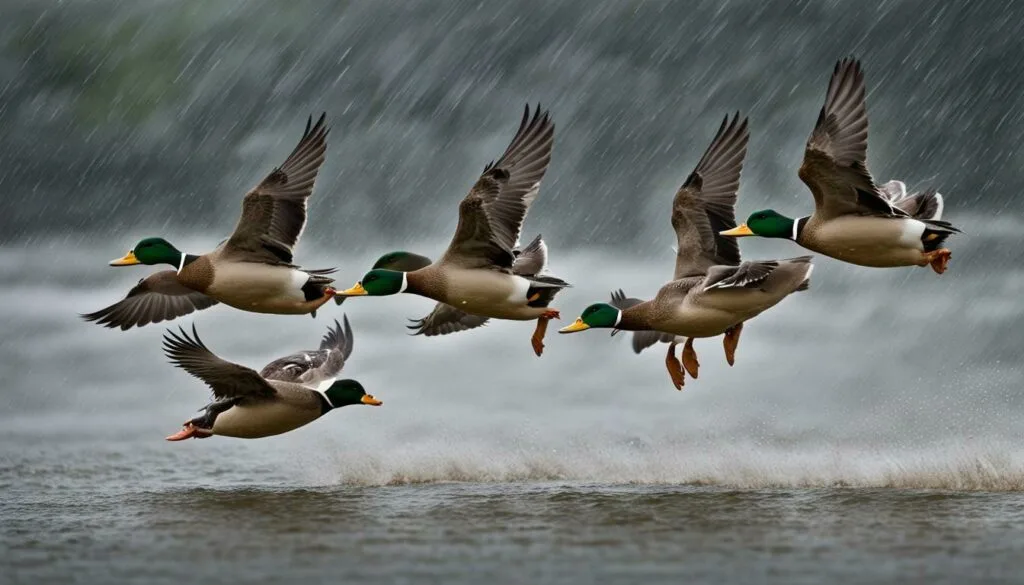
Image source: Bing (Web (fair-use with source credit))
This isn't to say they enjoy it or that it's without its challenges. The intensity of the rain and accompanying wind conditions are crucial factors. Think of it like a human deciding whether to go for a run in a drizzle versus a hurricane, there's a vast difference in risk and feasibility.
For ducks, this means their decision to fly is a calculated one, balancing the need to move with the potential dangers of severe weather.
What Makes Ducks Different: Feather Facts and Flight Physics
What gives ducks the edge when it comes to flying in wet conditions? It boils down to a few key anatomical and physiological features. Their feathers are the unsung heroes here.
Each feather has a complex structure designed to repel water, not absorb it.
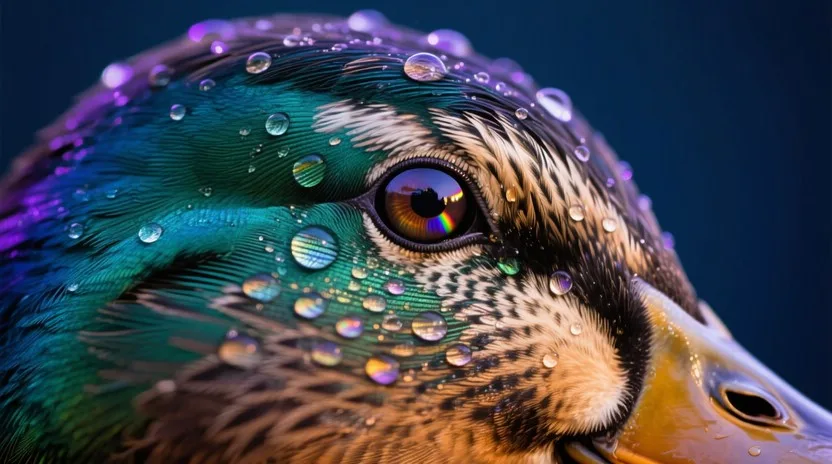
Image source: Bing (Web (fair-use with source credit))
Here’s how it works:
- Uropygial Gland (Preen Gland): Ducks have a special oil gland located at the base of their tail. They use their beaks to spread this oil over their feathers, creating a waterproof barrier. This process, called preening, is vital for maintaining their insulation and buoyancy.
- Barbules and Barbs: The tiny structures within each feather interlock to form a dense, smooth surface. This structure, when properly oiled, sheds water effectively. Any water that does get through is quickly shed, preventing the feathers from becoming waterlogged.
- Downy Underlayer: Beneath the outer contour feathers, ducks have a layer of soft down. This down traps air, providing excellent insulation. Even if the outer feathers get a bit damp, the air trapped by the down keeps the duck warm, which is critical for maintaining energy levels needed for flight.
Beyond their feathers, ducks possess robust pectoral muscles that power their flight. Their overall body shape is also optimized for aerodynamics, allowing them to cut through the air efficiently. These combined features mean that a duck's body is remarkably well-equipped to handle the challenges of flight in rainy environments, as confirmed by ornithological studies that examine avian flight physiology.
The Decision to Fly in Rain: A Duck's Internal Checklist
So, if ducks can fly in the rain, when do they choose to do it? It’s not a random decision. Ducks, like many animals, possess an innate ability to assess risks and make choices based on their immediate needs and the environmental conditions.
Our research suggests they operate on an internal checklist, weighing several critical variables before launching into a rainy sky.
The most significant factors influencing their decision revolve around the intensity of the rain and the strength of the wind. It’s a delicate balance, and these variables are constantly being evaluated by the bird.
Assessing the Storm: Rain Intensity and Wind Factor
When we talk about rain, we're not just talking about a light sprinkle. Ducks can generally handle light to moderate rain with relative ease, thanks to their waterproof feathering. A gentle drizzle might not even deter them from their regular activities, including short flights.
However, as the rain intensifies, so does the challenge. Heavy downpours can overwhelm even the best waterproofing, making feathers less effective at insulation and potentially increasing drag. At this point, the energy cost of flying increases significantly.
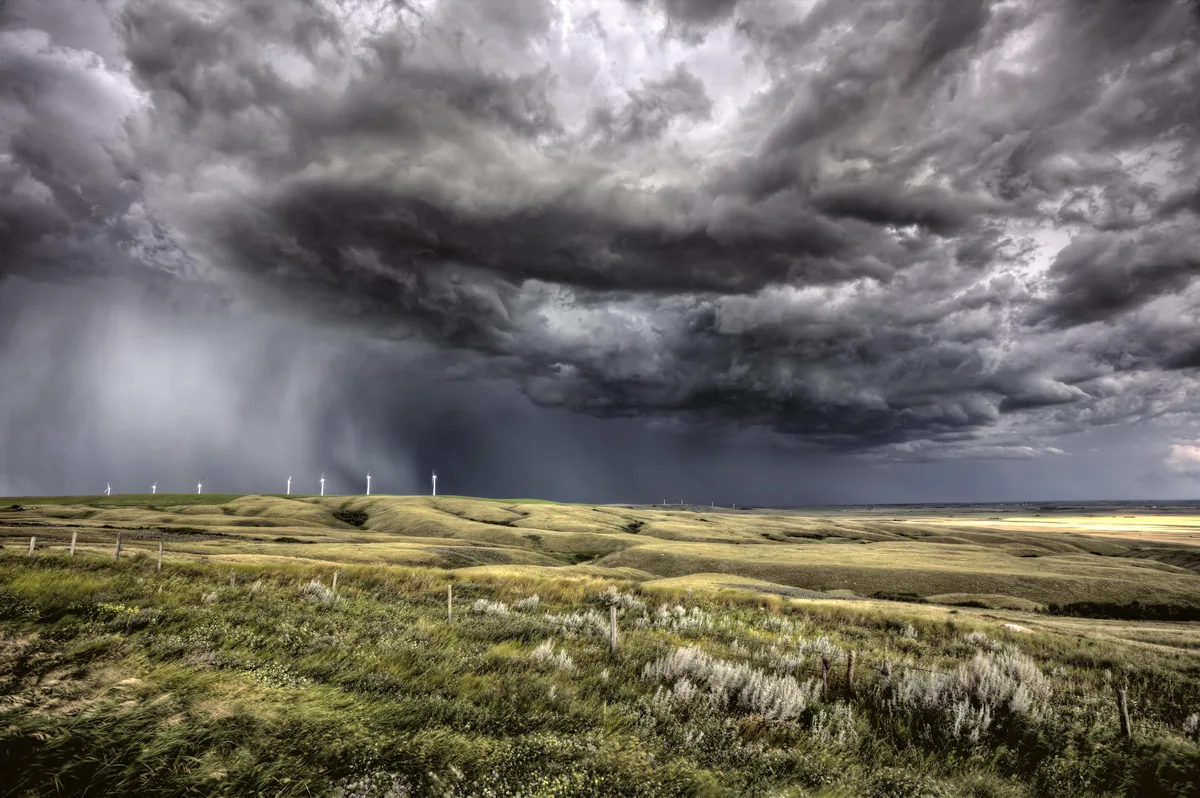
Image source: Web (Bing) / wallup.net (Web image (fair-use with source credit))
Wind is an equally, if not more, critical factor. While ducks are strong fliers, extreme wind speeds can make controlled flight impossible or extremely hazardous.
- Light to Moderate Winds: Ducks can often navigate through these conditions, using the wind to their advantage or simply compensating with stronger wing beats.
- Strong or Gusty Winds: These pose a much greater threat. They can buffet a duck off course, make takeoff and landing treacherous, and drain energy rapidly.
- Turbulence: Rain, especially heavy rain, can create turbulent air pockets, which are difficult for any bird to fly through.
University wildlife biology departments have studied how birds of prey, for example, will often postpone hunts in severe weather, indicating a similar risk assessment is at play across different avian groups. For ducks, a decision to fly in rain is usually driven by a pressing need, like reaching a new feeding ground or escaping immediate danger, and only if the weather is not completely prohibitive.
Knowing When to Stay Grounded: Risks of Flying in Bad Weather
When the rain is particularly heavy, or the wind is fierce, ducks will often choose to stay put. Continuing to fly under such conditions carries significant risks that can outweigh any potential benefits. For ducks, these risks primarily involve energy expenditure, physical danger, and navigational challenges.
- Increased Energy Drain: Flying through heavy rain and strong winds requires substantially more effort than flying in clear, calm conditions. Ducks need to maintain a precise energy balance, especially during migration. Wasting too much energy in bad weather can leave them vulnerable or unable to complete their journey.
- Physical Danger: Severe weather can lead to physical harm. A duck caught in a powerful gust might be blown off course, into obstacles like trees or buildings, or even forced into the water unexpectedly. Exhaustion from fighting the elements is also a major concern, potentially leading to drowning or becoming easy prey.
- Navigation Difficulties: Heavy rain can obscure visibility, making it harder for ducks to see landmarks or other members of their flock. This is especially critical during migration, where precise navigation is essential for reaching specific wintering or breeding grounds. Studies by ornithological societies often highlight how weather impacts migratory patterns.
Think about it from a human perspective: you wouldn't choose to go for a long hike in a blizzard just because it's a Tuesday. Ducks have a similar, instinctual understanding of when conditions are simply too hostile for flight. They will often seek shelter in dense vegetation, under overhangs, or simply huddle together in large numbers to conserve heat and wait for conditions to improve.
How Ducks Navigate Wet Skies: Practical Strategies
When ducks do decide to fly in rainy conditions, they employ a set of practical strategies to manage the challenges. It's not just about powering through; it's about smart adaptation. Their ability to fly in rain isn't a constant state but a calculated maneuver, influenced by the specific type of weather and their immediate objective.
Firstly, the type of rain matters. A light drizzle is far more manageable than a torrential downpour. Ducks have an exceptional natural waterproofing system thanks to their preen gland oil and the structure of their feathers, which repels water.
This allows them to maintain insulation and buoyancy even when wet.
When the rain becomes heavier, or wind picks up, ducks often fly at lower altitudes. This isn't necessarily for better visibility but can be a strategy to reduce exposure to the strongest, most turbulent winds found at higher elevations. They might also fly in tighter formations, which can provide some aerodynamic benefits and mutual protection.
Additionally, their destination plays a role. If they are flying to a known, sheltered roosting site or a reliable food source nearby, they might be more willing to undertake a flight in less-than-ideal conditions. The instinct to reach safety or sustenance can override the discomfort or slight risk associated with flying in the rain.
For example, a flock might push through a rain shower to reach a familiar lake known for its abundant aquatic vegetation. This strategic decision-making highlights their sophisticated understanding of their environment.
Common Mistakes When Thinking About Ducks and Rain
When people think about ducks flying in the rain, there are a few common misconceptions that often come up. These usually stem from anthropomorphizing, or assuming ducks behave exactly like humans would in similar situations, or from a general lack of understanding about avian biology. Getting these details straight helps us appreciate their incredible adaptations.
Here are a couple of common mistakes people make:
- Mistake 1: Assuming ducks can't fly in any rain. This is probably the most frequent error. We see how uncomfortable rain makes us, so we assume it must be equally prohibitive for ducks. But as we've discussed, their specialized feathers and preen gland oil offer significant protection against water. Light to moderate rain is often not a barrier to their flight.
- Mistake 2: Believing ducks always fly in the rain. On the flip side, some might think ducks are completely immune to bad weather. This isn't true. While they're resilient, extreme conditions like severe thunderstorms with high winds absolutely can and do ground them. They are not invincible and will avoid flying when the risks become too great.
- Mistake 3: Overlooking the why. People sometimes wonder why a duck would fly in the rain at all. The answer is usually necessity. They might need to migrate, find food if their current location is depleted, or escape a predator. The instinct to survive and reproduce often drives them to fly, even if conditions aren't ideal.
Understanding these common errors helps paint a clearer picture. Ducks aren't just "toughing it out"; they are making calculated decisions based on a deep biological understanding of their own capabilities and the environmental challenges presented by rainy weather. It’s a fascinating interplay of nature and survival.
Expert Tips: What Ornithologists Say About Rainy Day Flights
Ornithologists, scientists who study birds, offer invaluable insights into why and how ducks manage to fly in the rain. Their observations, often backed by years of field research and studies on avian physiology, confirm that ducks possess a remarkable suite of adaptations. One key takeaway from their findings is the critical role of feather waterproofing.
According to research published by institutions like the Cornell Lab of Ornithology, the uropygial gland, or preen gland, is central to a duck's ability to stay dry. Ducks meticulously apply oil from this gland to their feathers. This oil forms a hydrophobic layer, repelling water and preventing the feathers from becoming waterlogged, which would otherwise lead to heat loss and increased flight resistance.
Furthermore, ornithological studies highlight that the structure of the feathers themselves is engineered for water shedding. The tightly interlocking barbules create a smooth, water-repellent surface. This physical design, combined with the chemical waterproofing from the preen oil, makes a duck’s plumage incredibly effective, even in downpours.
When assessing bird flight, these experts emphasize that physical structure and physiological functions work in concert.
Frequently Asked Questions About Ducks Flying in Rain
Can ducks get cold flying in the rain?
Ducks are generally well-insulated against the cold, even when wet. Their dense underlayer of down feathers traps air, providing excellent insulation. Combined with the waterproofing of their outer feathers and their active metabolism while flying, they can usually maintain a stable body temperature.
Do ducks prefer to swim rather than fly in the rain?
Ducks often swim and feed in rainy conditions because water is their primary habitat and many food sources are aquatic. However, if they need to travel long distances, escape a predator, or reach a better feeding ground, flying is still their preferred method, provided the weather isn't too severe. Their choice depends on immediate needs versus weather risks.
Are there specific duck species that are better at flying in rain?
While most dabbling ducks and diving ducks are adapted to wet conditions, species that spend more time in open water habitats, like mallards or pintails, often exhibit greater tolerance for varied weather. Their consistent exposure to water likely reinforces their feather maintenance and flight capabilities in damp environments.
What happens if a duck's feathers get too wet?
If a duck’s waterproofing fails, or if it encounters extremely heavy rain or gets oil-polluted, its feathers can become waterlogged. This compromises insulation, leading to hypothermia, and increases drag, making flight difficult or impossible. This is why maintaining feather condition through preening is vital for their survival.
Your Guide to Understanding Duck Behavior in Wet Weather
Understanding when and why ducks fly in the rain requires looking at them as adaptable survivors, not just passive creatures. Their ability to take to the skies during a downpour is a direct result of specific biological features, honed over millennia of evolution. It’s a fascinating aspect of avian behavior that showcases nature’s ingenuity.
When you observe ducks, notice their preening. This isn't just for neatness; it's a critical maintenance task that ensures their waterproofing is effective. A duck that consistently preens is a duck better prepared for flight in challenging weather.
The key takeaway is that ducks are not helpless against rain. They possess the physical tools and behavioral strategies to manage it, but they also have limits. They assess the situation, weigh the risks, and make decisions that maximize their chances of survival and success.
Next time you see ducks during a rainy spell, you’ll have a better understanding of the complex factors at play.