Why Do Starlings Flock Together
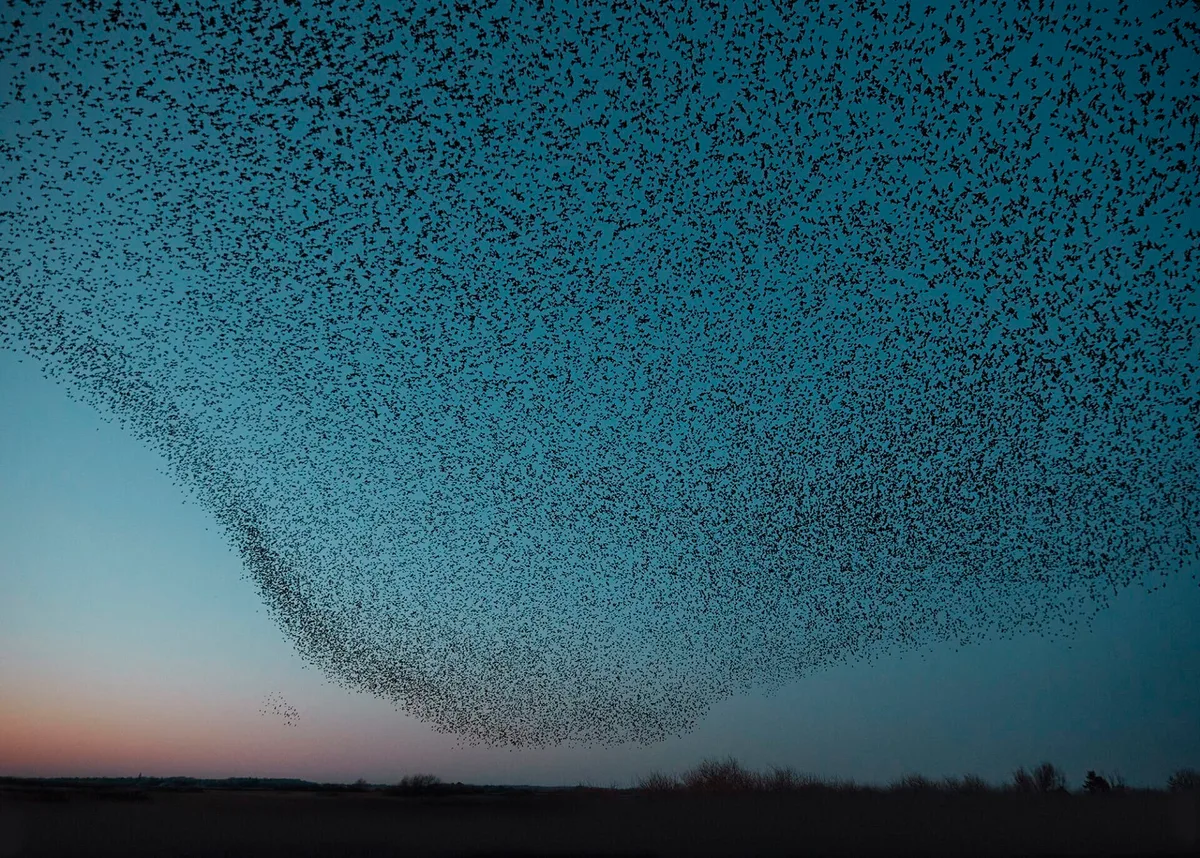
Image source: Bing (Web (fair-use with source credit))
You've seen it: a sky full of birds, moving as one, twisting, turning, and creating shapes that seem almost impossible. It's breathtaking, and you're wondering, why do starlings flock together in such vast, synchronized groups? This incredible aerial ballet, known as a murmuration, is driven by a fascinating mix of survival instincts and simple social rules.
These gatherings aren't just for show. Our research indicates that murmurations serve critical functions for starlings, primarily related to predator evasion and resource finding. For instance, studies on starling flock dynamics often cite that a flock of 10,000 birds can create a dazzling display, a stark contrast to the solitary flight of a single bird vulnerable to aerial predators.
Quick Answer: Safety and Smart Survival
Starlings flock together for safety and to share information. Large groups confuse predators, making it hard to target an individual bird. They also use flocks to find food and safe roosting places more effectively.
The Starling's Sky Dance: How Murmurations Work
The mesmerizing movements of a starling murmuration aren't choreographed by a leader; they emerge from a set of simple, innate behaviors followed by each individual bird. Think of it as a decentralized system where each starling is constantly reacting to its immediate neighbors. It’s this collective response to local stimuli that creates the complex, fluid patterns we observe from the ground.
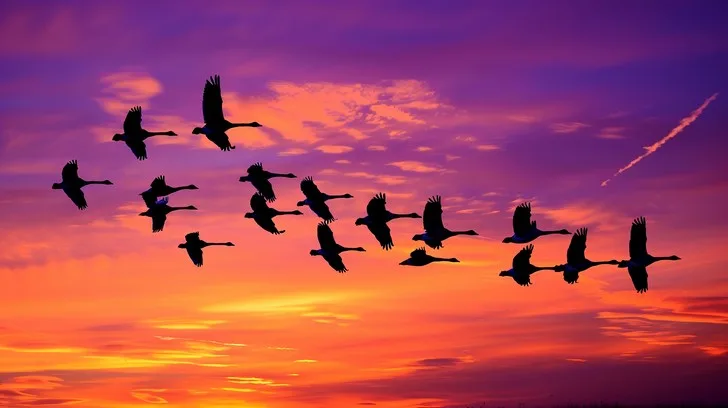
Image source: Bing (Web (fair-use with source credit))
The most accepted scientific explanation for these stunning displays is that each bird follows just a few basic rules: maintain a certain distance from nearby birds, avoid collisions, and fly in the same direction and at the same speed as its closest flock mates. When thousands of birds simultaneously apply these simple instructions, the result is the breathtaking, wave-like motion characteristic of a murmuration. This emergent behavior is a key topic in understanding collective animal behavior, with research published in journals like Nature detailing these principles.
The Simple Rules That Create Chaos
At the heart of every murmuration are incredibly basic flight rules that each starling follows. These aren't conscious decisions or pre-planned maneuvers. Instead, they're hardwired responses to the visual cues from surrounding birds.
- Separation: Each starling tries to maintain a minimum distance from its neighbors. This prevents the entire flock from becoming a dense, easy target.
- Alignment: Birds tend to adjust their speed and direction to match those of the birds immediately around them. If the bird to your left turns, you turn too.
- Cohesion: Starlings also try to stay relatively close to the flock, preventing individuals from getting isolated.
These three simple rules, executed by thousands of individuals, allow the flock to react instantly to threats or changes in the environment, creating the fluid, coordinated patterns that appear so complex from afar.
Predator Confusion: The Ultimate Defense
The primary evolutionary driver behind starling murmurations is defense against predators. When a predator, like a peregrine falcon or a hawk, attacks a flock, the sheer number of birds and their rapid, unpredictable movements create a significant challenge. The goal isn't to outmaneuver the predator directly, but to make targeting any single bird nearly impossible.
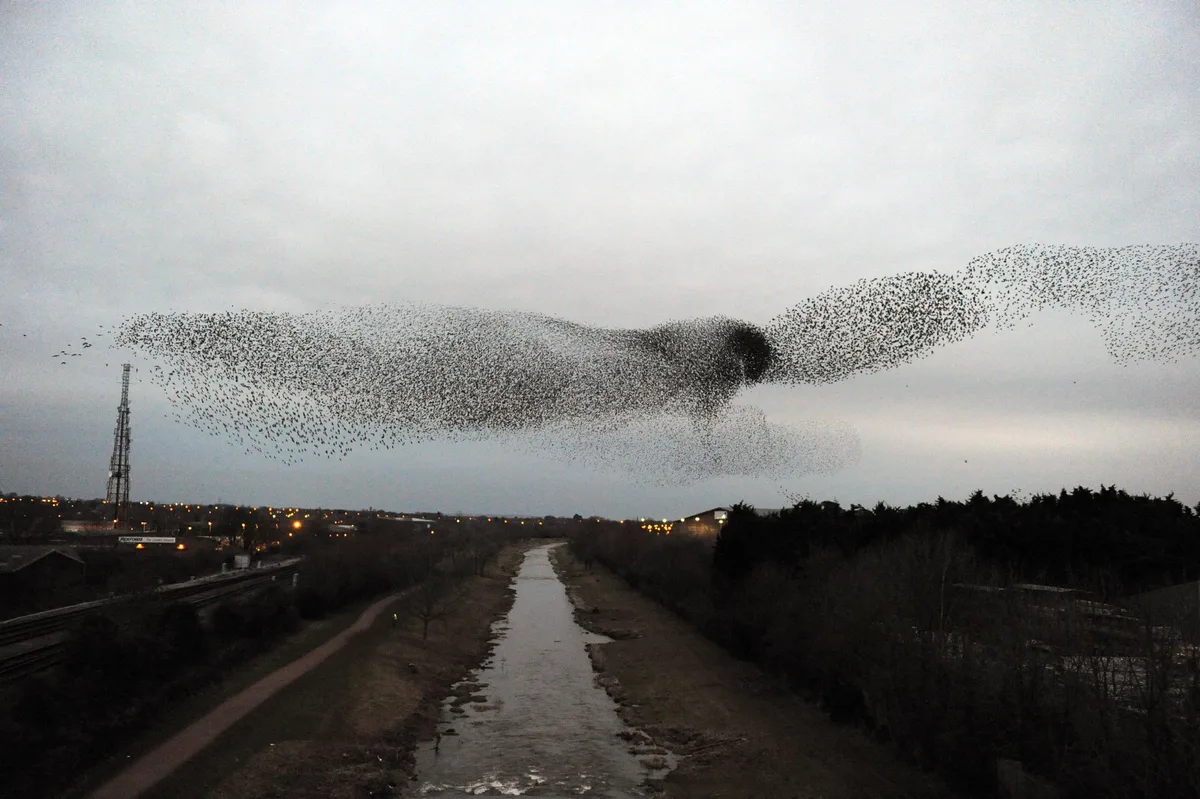
Image source: Bing (Web (fair-use with source credit))
- Visual Overload: The dizzying swirls and sudden changes in direction can overwhelm a predator's visual system, making it difficult to lock onto a single prey item.
- The "Dilution Effect": In a large flock, the statistical probability of any one individual being caught decreases dramatically. It's like a lottery where the more tickets you have, the less likely you are to win the "losing" prize.
- Coordinated Evasion: While not centrally directed, the synchronized evasive maneuvers mean the flock can shift direction almost instantaneously. If a predator dives, the birds on that side might break formation momentarily before reforming elsewhere. This constant shifting and reforming is key to their survival.
Finding the Best Spots: Food and Shelter in Numbers
Beyond escaping danger, flocking is also an incredibly efficient strategy for starlings to find the resources they need to survive. The collective intelligence of a large group far surpasses that of a single bird when it comes to locating food and suitable roosting sites. This behavior is particularly vital during times of scarcity or when moving through unfamiliar territory.
Smarter Foraging Through Flock Power
When starlings forage in a flock, they leverage collective knowledge to find food sources more efficiently. If one starling discovers a rich patch of insects, seeds, or fallen fruit, its flock mates observe this. They then converge on the successful foraging spot, maximizing the food intake for the entire group.
This is especially useful in patchy environments where food might be abundant in some areas and scarce in others.
This information sharing isn't limited to just spotting food. Starlings also learn about the quality and abundance of different food sites from each other, allowing the flock to move to areas where they are most likely to find sustenance. It's a form of social learning that significantly boosts their survival and reproductive success.
Studies on foraging behavior in social birds often highlight this advantage, noting that flock size can directly correlate with the speed at which new food resources are exploited.
Communal Roosting: Safety and Warmth
As evening approaches, starlings gather in massive numbers for communal roosting. These roosts are often in dense vegetation, reed beds, or even urban structures, chosen for their ability to conceal large groups and deter ground predators. The sheer size of the flock provides warmth, as thousands of birds huddle together, reducing heat loss, which is especially important during colder months.
Moreover, these communal roosts act as information hubs. Birds returning from their day's foraging can share details about successful feeding grounds. This collective knowledge helps the entire flock plan their movements for the following day, ensuring they head towards areas where food is likely to be plentiful.
The coordinated arrival at roosting sites, often preceded by spectacular aerial displays as they settle, is another aspect of their social organization that aids survival.
Real-Life Murmurations: What We See
Observing a starling murmuration in person is an unforgettable experience. The sheer scale and coordination are difficult to capture in words or even video. The birds move as a single entity, their wings beating in unison, creating undulating waves across the sky.
These displays can last anywhere from a few minutes to over an hour, especially during the peak seasons of autumn and winter.
The patterns change dynamically, sometimes forming vast, flat sheets that ripple, other times creating complex three-dimensional shapes. It’s common to see the flock suddenly contract into a tight ball, only to explode outwards moments later. This fluidity is a direct result of individual birds constantly adjusting their position and speed based on the birds immediately around them.
The overall effect is a living, breathing cloud that seems to defy gravity.
Observing the Sky Show
When you watch a murmuration, pay attention to the timing. They are most spectacular during the twilight hours, just before sunset and shortly after sunrise. This is when their numbers are largest, as birds gather from wider foraging areas to communal roosting sites.
The light conditions can also play a role, with the setting or rising sun often illuminating the metallic sheen of the starlings' feathers, making the display even more striking.
The location can also influence the nature of the murmuration. If you're near open fields or wetlands, you might see them practicing complex aerial maneuvers as they prepare to settle into reed beds. In urban settings, they might use the architecture of buildings to their advantage, creating patterns against a backdrop of city lights.
Researchers often use fixed observation points or mobile tracking to document specific flock behaviors and sizes, with some studies noting murmurations exceeding a million birds, creating a spectacle visible for miles.
What Happens When Danger Appears
The most dramatic shifts in a murmuration's behavior often occur when a predator enters the scene. A hawk or falcon attacking the flock will cause an immediate, almost instantaneous reaction. The entire mass of birds might suddenly tighten, forming a dense ball, or they might split into smaller groups that rapidly reform.
One observed tactic is for the flock to create a "wall" of birds, presenting a confusing visual barrier. Another is for the flock to "boil" upwards, creating a momentary gap through which the predator might dive. However, the predator often finds itself unable to single out a target in the chaotic movement.
The speed at which the flock can react and change direction is astonishing, often moving faster than a predator can track a single individual. This coordinated evasive action is a testament to the effectiveness of their group defense strategies.
Common Questions About Starling Flocks
Why do starlings fly in specific shapes?
Birds in a murmuration follow simple rules to stay close and avoid collisions, which naturally creates swirling, wave-like patterns. These shapes are fluid and change constantly based on the movements of individual birds and any perceived threats.
Do starlings have a leader?
No, starling murmurations do not have a single leader. The complex coordinated movements are an emergent property of many individual birds following basic rules of flight relative to their neighbors.
When do starlings form murmurations?
Murmurations are most common in autumn and winter, particularly at dawn and dusk. This is when they are most vulnerable to predators and when they gather to roost and share information about food sources.
Is it dangerous for starlings to fly so close together?
While it looks dangerous, the simple rules of flocking (separation, alignment, cohesion) help birds avoid collisions. The dense packing also enhances their collective ability to detect and evade predators.
How large can a starling murmuration be?
Murmurations can vary greatly in size, but exceptionally large ones can contain hundreds of thousands, or even millions, of individual starlings, creating awe-inspiring spectacles in the sky.
Expert Insights for Understanding Bird Behavior
When observing starling murmurations, remember that these behaviors are finely tuned survival mechanisms honed over millennia of evolution. Ornithologists and animal behaviorists emphasize that understanding these patterns requires looking beyond the visual spectacle to the underlying biological imperatives of predator avoidance and resource acquisition.
The complex interactions within a flock demonstrate that sophisticated collective behaviors can arise from simple individual rules. Researchers continue to study these phenomena, often using advanced tracking technology and computational models, to unravel the precise mechanics and evolutionary advantages of flocking. For instance, findings published by university research departments often highlight how individual bird responses aggregate to create the flock's overall pattern, a concept central to studies in collective intelligence and emergent behavior.
The intricate choreography you witness is not about a single starling's grand plan, but about the millions of tiny, instantaneous decisions made by each bird in response to its neighbors. It's a powerful reminder of how complex systems can arise from simple principles, a concept explored in fields ranging from physics to economics.
This natural phenomenon offers a remarkable window into the effectiveness of group behavior for survival and resourcefulness in the wild. It showcases how evolution has favored cooperation and collective action, leading to one of the most stunning visual displays in the natural world.