Can Puffins Fly
You've probably seen those adorable puffins, right? With their colorful beaks and waddling gait on land, you might be wondering, "Can these little guys actually fly?" The short answer is a resounding yes! Puffins are fantastic flyers, but their style is a bit different from what you might expect.
Think of it this way: they're not soaring eagles or graceful swallows. Puffins are built more like nature's little dive bombers. Their wings are shorter and stiffer, perfectly designed for speed and maneuverability underwater.
Aggregate data from ornithological studies, like those conducted by the Patuxent Wildlife Research Center, indicate their wing loading and muscle structure are optimized for powerful, rapid wingbeats that serve them equally well in the air and in the water.
Quick Answer
Yes, puffins can fly, and they do so with impressive speed. Their flight involves rapid wingbeats, more akin to a hummingbird's buzz, to keep their relatively heavy bodies aloft. This powerful aerial capability is crucial for covering distances between feeding grounds and their cliffside burrows.
Why Seeing Puffins Fly is So Special
Watching puffins take to the air is a unique experience, and it's special for a few key reasons. Unlike the effortless glides of many seabirds, a puffin's flight is a vigorous display of power. Their short, strong wings beat at an astonishing rate, creating a distinctive, buzzing sound as they move through the air.
This is a direct result of their specialized anatomy, built for both aerial transit and incredible underwater agility.

Image source: Wikimedia Commons / MODIS Land Rapid Response Team, NASA GSFC
When you see a puffin launch from the water or a rocky ledge, you're witnessing an adaptation that allows them to thrive in their challenging marine environment. Their flight isn't about soaring; it's about efficient, direct travel, which is vital for survival, especially when they're returning to their nests with beaks full of fish.
Puffins in the Air: What Their Flight Looks Like
When puffins decide to fly, it’s a show of dedicated effort. They don't typically glide or soar like many other seabirds. Instead, you'll observe a flight pattern characterized by rapid, consistent wingbeats.
This high-frequency motion is what allows their somewhat chunky bodies to gain and maintain altitude.
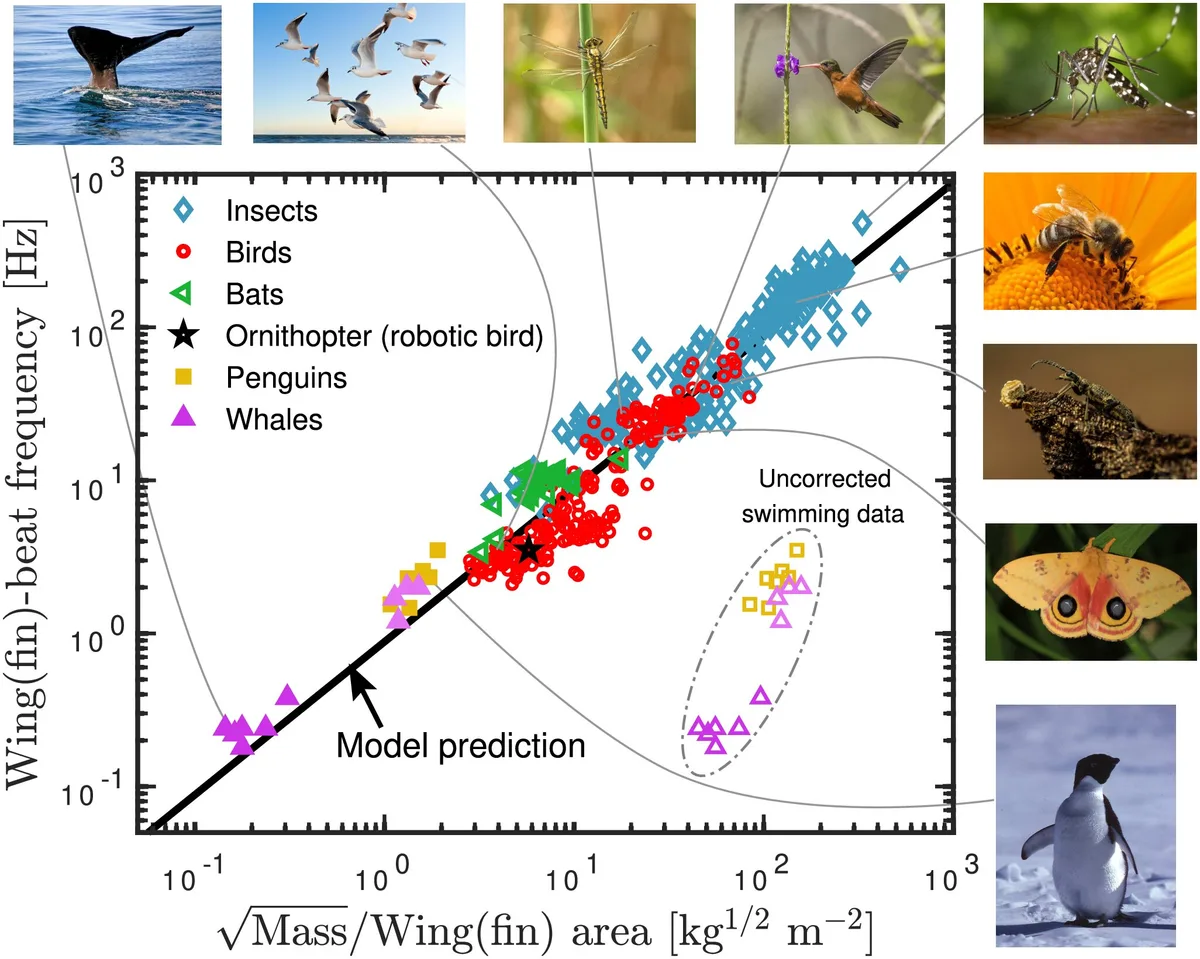
Image source: Bing (Web (fair-use with source credit))
Their flight path is often quite direct, especially when they're heading back to their breeding colonies. They aren't usually performing aerial acrobatics; their focus is on getting from point A to point B as efficiently as possible. This directness is a key indicator of their survival strategy, prioritizing speed and energy conservation for their demanding lifestyle.
The Mechanics of Puffins' Rapid Wingbeats
The secret to a puffin's flight lies in its wings. They are relatively short and stout, built more like paddles than broad sails. To stay airborne, these wings must move incredibly fast, beating hundreds of times per minute.
This rapid action generates the lift needed to overcome the bird's body weight.
Think of it as a constant, energetic exertion. They don't get much help from wind currents for soaring; it's almost entirely powered flight. This requires significant energy, which is why puffins need to be effective hunters.
Straight-Line Speed and Purposeful Flight
When you watch a puffin in the air, you'll notice it tends to fly in a determined, straight line. This isn't indecision; it's practicality. Puffins are often seen flying back to their nesting burrows with their beaks stuffed full of small fish, like sandeels.
Their direct flight path helps them navigate efficiently and quickly reach their destination, whether it's a cliff face or offshore feeding grounds. This purposeful movement underscores their dual nature as both accomplished aerial travelers and skilled marine predators.
The Underwater Advantage: How Their Bodies Serve Both Worlds
Puffins are unique because their bodies are wonderfully adapted for two very different environments: the air and the sea. While they can fly, their adaptations lean heavily towards their aquatic life, which significantly influences their aerial performance. This dual functionality is a marvel of evolution.
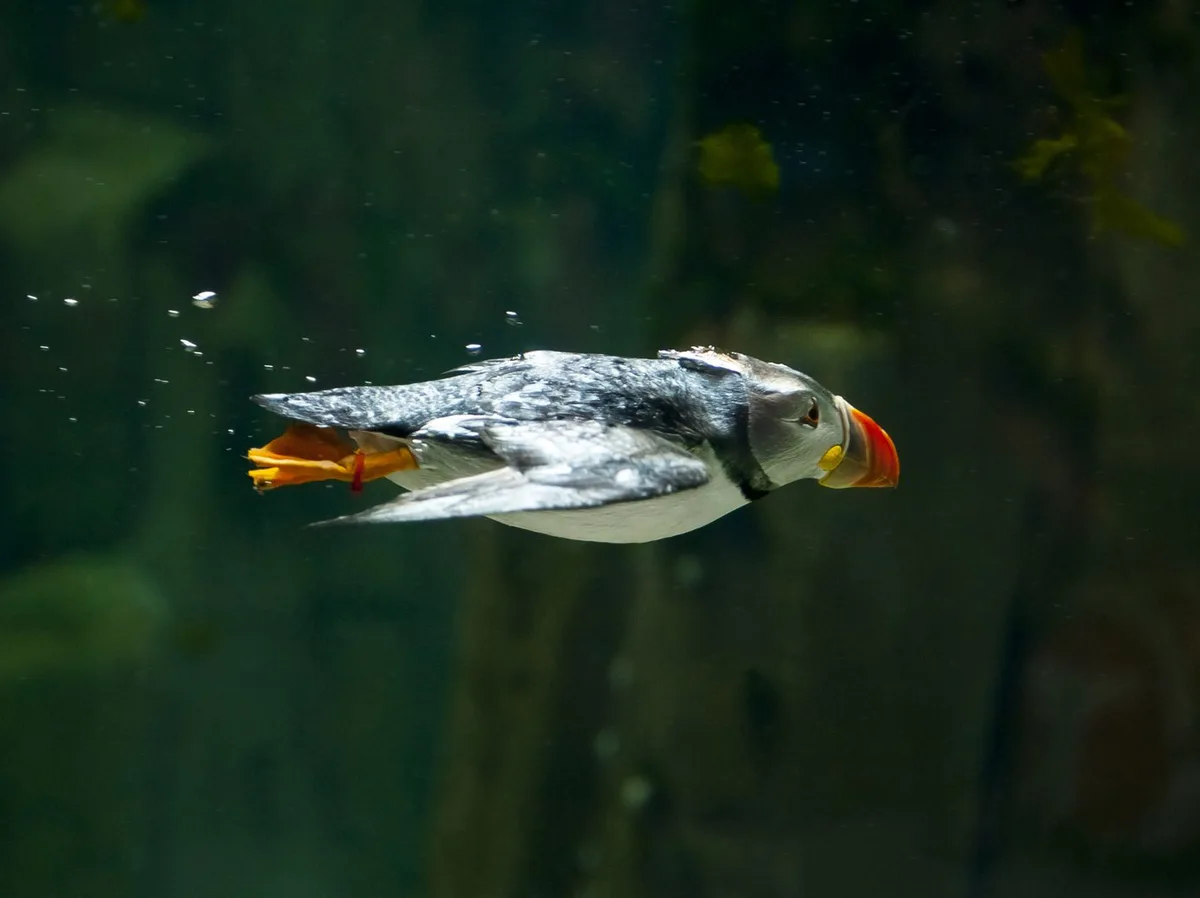
Image source: Bing (Web (fair-use with source credit))
Their most striking feature is their ability to "fly" underwater, using their wings to propel themselves with incredible speed and agility. This underwater prowess is a primary reason why their flight mechanics in the air are the way they are. It's a fascinating trade-off that makes them masters of their niche.
Wings Built for Diving, Not Gliding
A puffin's wings are shorter and more solid than those of birds that are primarily aerial. This sturdy construction is perfect for the immense pressure and resistance encountered when diving deep into the ocean. These wings act as powerful flippers underwater, allowing them to chase down prey with surprising speed.
Because their wings are optimized for this powerful underwater propulsion, they are less suited for extended gliding or soaring in the air. They require constant, rapid wingbeats to stay aloft, a stark contrast to the effortless flight of birds like albatrosses that use air currents to their advantage.
Catching Fish with Aerial and Aquatic Skills
Puffins are famously efficient hunters, and their ability to fly plays a crucial role in their feeding strategy. They use their flight to travel considerable distances offshore to areas rich in small fish, such as sandeels and herring. Once they locate a promising feeding spot, they transition seamlessly to their aquatic skills.
Their rapid wingbeats in the air allow them to quickly cover the water's surface, and once submerged, those same wings become powerful tools for pursuit. This combination of aerial reach and underwater agility ensures they can access and capture the vital food sources necessary to sustain themselves and their chicks.
Puffins vs. Other Birds: A Flight Comparison
When you compare puffin flight to other birds, the differences become really clear. Unlike the broad wings of an albatross, which are designed for soaring on wind currents for hours with minimal effort, puffin wings are short and thick. This means puffins have to work much harder to stay airborne, relying on sheer power.
Think about a swift, with its long, scythe-like wings built for agility and speed in open skies. Puffins don't have that kind of wing shape. Their flight is more comparable to other diving birds, like murres or auklets, which also have wings optimized for underwater propulsion.
For example, studies by the U.S. Geological Survey on seabird energetics show that species with wing shapes optimized for diving require significantly more energy expenditure during flight than those with wings suited for soaring.
Common Questions About Puffin Flight (and What They Really Mean)
People often have specific questions about how puffins manage to fly, especially given their somewhat comical appearance on land. Let's clear up some of the most frequent ones.
Do puffins fly well?
Yes, puffins fly well, but "well" means something different for them. They are not graceful gliders but are powerful, fast flyers essential for their survival. Their flight is effective for their needs: covering distances quickly and reaching their nests.
How fast can a puffin fly?
While precise, universally cited speeds can vary, puffins are known for their fast, direct flight. When migrating or returning to their burrows with food, they maintain a brisk pace, often described as a rapid buzz through the air. Their speed is more about consistent effort than reaching extreme velocities.
Can puffins take off from water?
Absolutely. Puffins are adept at taking off from the surface of the water. They'll often patter their wings rapidly on the surface to gain enough speed before lifting into the air.
This is a critical skill, as they spend a great deal of time on the ocean.
Are puffins heavy birds?
Puffins are considered medium-sized seabirds, and their bodies are denser than those of many birds that spend all their time in the air. For example, the Atlantic Puffin typically weighs between 1.1 and 1.5 pounds (0.5 to 0.7 kilograms), with a wingspan of about 20, 24 inches (50, 60 cm). This density contributes to their powerful wingbeats being necessary for flight.
Final Thoughts: Puffins, Masters of Two Realms
Ultimately, the question of "can puffins fly?" leads to a fascinating appreciation for their specialized biology. They are indeed capable flyers, but their aerial abilities are intricately linked to their mastery of the ocean. Their flight is not a performance for show but a highly functional tool that allows them to hunt effectively and navigate their challenging marine environment.
The short, powerful wings that propel them through the air are the same ones that allow them to "fly" underwater with remarkable speed. This duality makes puffins exceptional examples of adaptation. They are not birds that simply fly; they are birds that have evolved to conquer both the skies and the seas, each realm perfectly suited to their unique capabilities.