Why Are Penguins Black and White
Ever looked at a penguin and thought, "Man, they've got a classic look going on"? That sharp black and white getup isn't just for show; it's a super smart survival strategy. It’s a prime example of nature’s clever design, and it’s called countershading.
Let’s break down why this iconic coloration is so important for our waddling friends.
This coloration is a key adaptation that helps penguins thrive in their challenging marine environments, offering distinct advantages for both predator evasion and prey capture. Understanding this biological feature offers a fascinating glimpse into the power of natural selection.
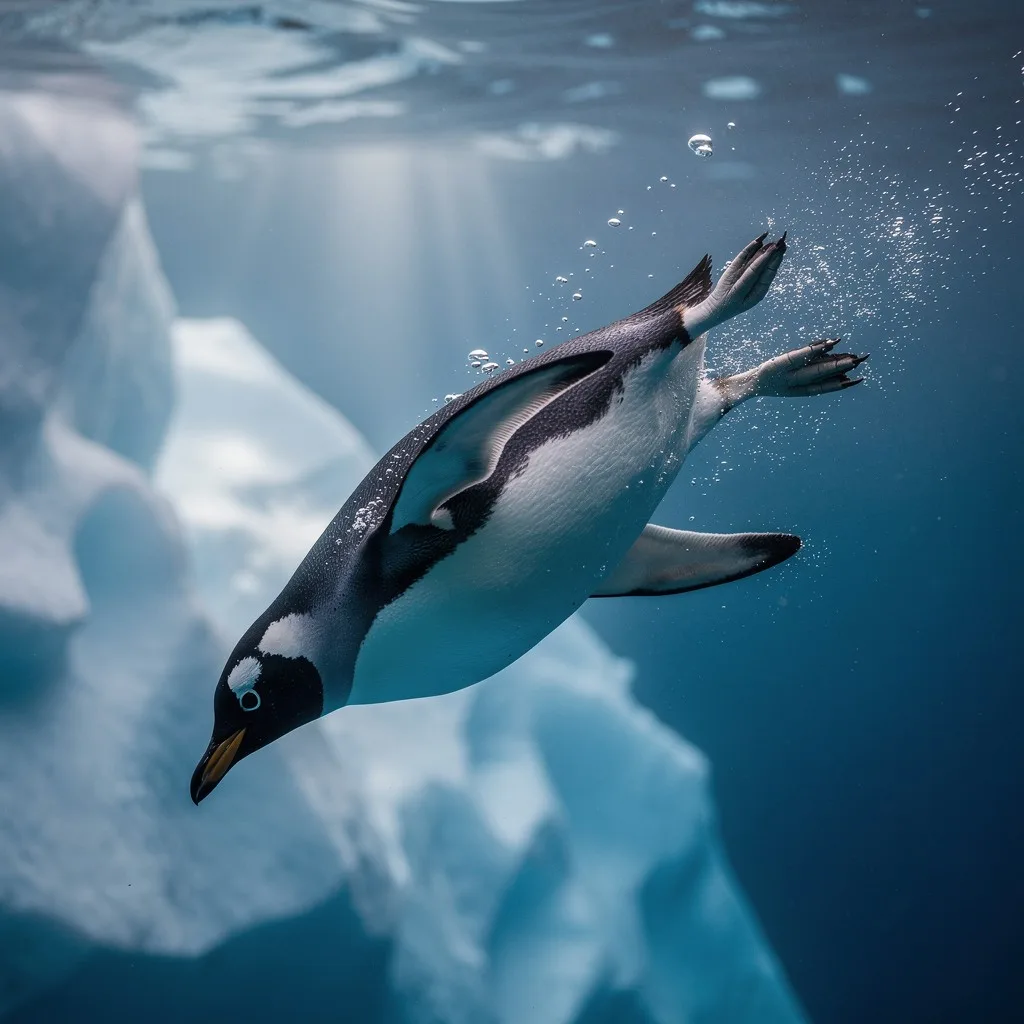
Image source: Bing (Web (fair-use with source credit))
Quick Answer
Penguins are black and white due to countershading. This camouflage pattern helps them survive in water. Their black backs blend with the dark ocean depths when viewed from above.
Their white bellies mimic the bright sky when seen from below. This dual-action coloring makes them harder for predators and prey to spot.
The Underwater Hide-and-Seek Game: How Countershading Works
Penguins live a life that's a constant balancing act between being a hunter and being hunted, primarily in the water. Their distinctive black and white pattern, known as countershading, is the star player in this survival drama. It's a sophisticated form of camouflage that works in two distinct directions, helping them navigate the perils and opportunities of their aquatic world.
When we look at how this works, it really highlights the ingenious solutions nature develops.

Image source: Bing (Web (fair-use with source credit))
Blending in from Above: The Black Back Advantage
When a penguin swims through the ocean, any predator lurking below, like a leopard seal or a large shark, is looking upwards. From that perspective, the dark, shadowy depths of the water are what they see. A penguin's black back perfectly mimics these dark surroundings.
This makes it incredibly difficult for a predator to pick out the penguin's outline against the dim backdrop. It's like trying to spot a black cat in a dark room; the contrast is minimized, and the animal effectively disappears into the environment. This is crucial for avoiding becoming a meal.
Vanishing against the Sky: The White Belly Advantage
Now, let's flip the perspective. When a penguin is near the surface, and something is looking down at it from above, the situation changes. This could be a predator from the air, or perhaps the smaller fish that the penguin itself is hunting.
In this scenario, the bright, sunlit surface of the water or the sky above acts as a blinding backdrop. A penguin's white belly provides excellent camouflage against this bright light. It breaks up their silhouette, making them harder to distinguish from the glare of the surface or the bright sky.
This ability to blend in from multiple angles is what makes countershading so effective.
How This Coloration Protects Penguins
The black and white plumage isn't just a pretty pattern; it’s a critical survival tool for penguins. This evolutionary advantage directly impacts their ability to stay safe from predators and to successfully hunt their own food. For penguins, this coloration is as essential as any tool might be for humans in their daily lives.
Escaping Predators: Staying Off the Menu
One of the biggest threats penguins face comes from marine predators like leopard seals, sea lions, and large fish such as great white sharks. These hunters often approach from below. As we discussed with the black back, this coloration is their first line of defense.
By blending into the darker water column, penguins significantly reduce the chances of being detected by these apex predators. This makes them less appealing targets and increases their odds of reaching safety.

Image source: Bing (Web (fair-use with source credit))
Catching Dinner: Aiding the Hunt
The same countershading that helps penguins avoid being eaten also helps them catch their own food. Their primary diet consists of small fish, squid, and krill, which are often found in the upper layers of the ocean. When a penguin dives to hunt, its white belly, blending with the bright surface above, makes it harder for potential prey to spot it coming from below.
This element of surprise is key to a successful hunt. The less the prey sees the predator, the closer the penguin can get before making its strike, leading to a higher success rate in capturing the necessary calories for survival.
More Than Just Camouflage: Other Potential Perks
While countershading is undoubtedly the primary driver for the black and white coloration in penguins, evolutionary biologists suggest there might be a few other, perhaps secondary, benefits to this distinctive look. These advantages, though less critical than camouflage, could contribute to the overall fitness and survival of penguin species in their varied habitats.
Keeping Cool (and Warm): Temperature Regulation
Penguins live in environments that range from the frigid Antarctic to more temperate regions. Managing body temperature is crucial. Some research indicates that the dark coloration of their backs might help them absorb more solar radiation when they are out of the water, such as when they are resting on ice floes or land.
This extra warmth can be vital in cold climates. Conversely, their white underbellies could potentially reflect some of the sun's heat when they are submerged in the water, helping to prevent overheating in warmer surface waters. This dual-functionality, if present, would be a clever way to manage thermal balance.
Spotting Your Pals: Social Recognition
Within the bustling, often crowded colonies where many penguin species live, the ability to recognize individuals is important for social bonding, mating, and chick-rearing. While not the main reason for their black and white pattern, the distinct contrast and patterns of black and white feathers might play a role in visual recognition among conspecifics. It helps distinguish one penguin from another in a sea of black and white bodies, contributing to the complex social dynamics within a colony.
This visual cue can aid in finding mates, reuniting with chicks, and maintaining social hierarchies.
Common Mistakes in Understanding Penguin Coloration
Even though the black and white pattern of penguins seems straightforward, people sometimes misunderstand its primary purpose or overlook its effectiveness. It's easy to think of it as just a stylish look, but that misses the critical biological function it serves. Getting this wrong can lead to a superficial understanding of animal adaptations.
- Thinking it's purely for show: The most common misconception is that penguins are black and white simply because it looks good or is a fashion statement. While aesthetically pleasing to us, nature prioritizes function over form. This coloration is a direct result of evolutionary pressures for survival.
- Ignoring the environment: Another mistake is not considering the dual environments penguins inhabit, the dark ocean depths and the bright surface or sky. The effectiveness of their camouflage depends entirely on this interplay of light and shadow. Without understanding the context of where and how they are seen, the camouflage makes little sense.
- Underestimating predator/prey dynamics: Some may not fully grasp the sophisticated predator-prey relationships in marine ecosystems. Penguins aren't just avoiding seals; they're also trying to sneak up on agile fish. The same camouflage works for both purposes, highlighting its efficiency.
Frequently Asked Questions About Penguin Colors
### Why are some penguins not black and white?
While the majority of penguin species sport the classic black and white look due to countershading, a few have variations. For instance, the Little Blue Penguin has a blue-grey back instead of black. These variations are still forms of camouflage adapted to their specific aquatic environments and predator types, though classic black and white is the most widespread.
### Do penguins' colors change with age?
Generally, penguin chicks hatch with soft, downy feathers that are often grey or brown, offering camouflage against their nesting environment. As they mature and molt into their juvenile plumage, they typically develop the adult black and white coloration that is essential for their life in the water. This change signifies their readiness to enter the marine environment.
### Does penguin coloration help them attract mates?
While the primary function of the black and white pattern is camouflage for survival, the distinctness of the coloration could potentially play a secondary role in mate recognition and selection. Clear, well-defined patterns might signal good health and strong genes to potential partners within a colony. However, direct evidence points more strongly to camouflage as the dominant evolutionary driver.
### How effective is penguin camouflage against all predators?
Penguin countershading is highly effective against predators that hunt by sight from below or above in aquatic environments. For instance, it works well against marine predators like seals and sharks, and also helps them approach their prey. However, it might be less effective against predators that hunt by scent or sound, or those that may approach from the side in very clear, shallow water where shadows are less pronounced.