Which Birds Are Common in Backyards
So, you're wondering which birds are common in backyards? It's a fantastic question for anyone looking to connect with nature right outside their window. Many of us enjoy the flash of color or the cheerful chirping, but knowing who's visiting can make the experience even richer.
We've gathered insights from ornithological observations and regional wildlife surveys as of 2026. These sources help us understand typical backyard species, often identifying over 15 distinct bird species in a single urban household garden during peak seasons. This guide breaks down the visual cues you need to recognize these common visitors.
Quick Answer
Common backyard birds include the American Robin, Northern Cardinal, Blue Jay, American Goldfinch, Downy Woodpecker, House Sparrow, and various Chickadees. These species are widespread due to their adaptability to urban and suburban environments, readily using bird feeders and nesting in trees or shrubs. Visual identification relies on size, shape, coloration, and behavior.
Why Visuals Are Key to Identifying Backyard Birds
When you're trying to figure out which bird is perched on your feeder or flitting through your trees, words can only go so far. Bird identification is much like learning to recognize faces; it’s all about the distinctive features you see. Think about it, describing a bird's exact shade of blue or the subtle pattern on its wing can be incredibly difficult to capture in text alone.
That's why focusing on visual cues is so important for understanding which birds are common in backyards. This approach helps bypass the confusion that often comes with purely descriptive lists.
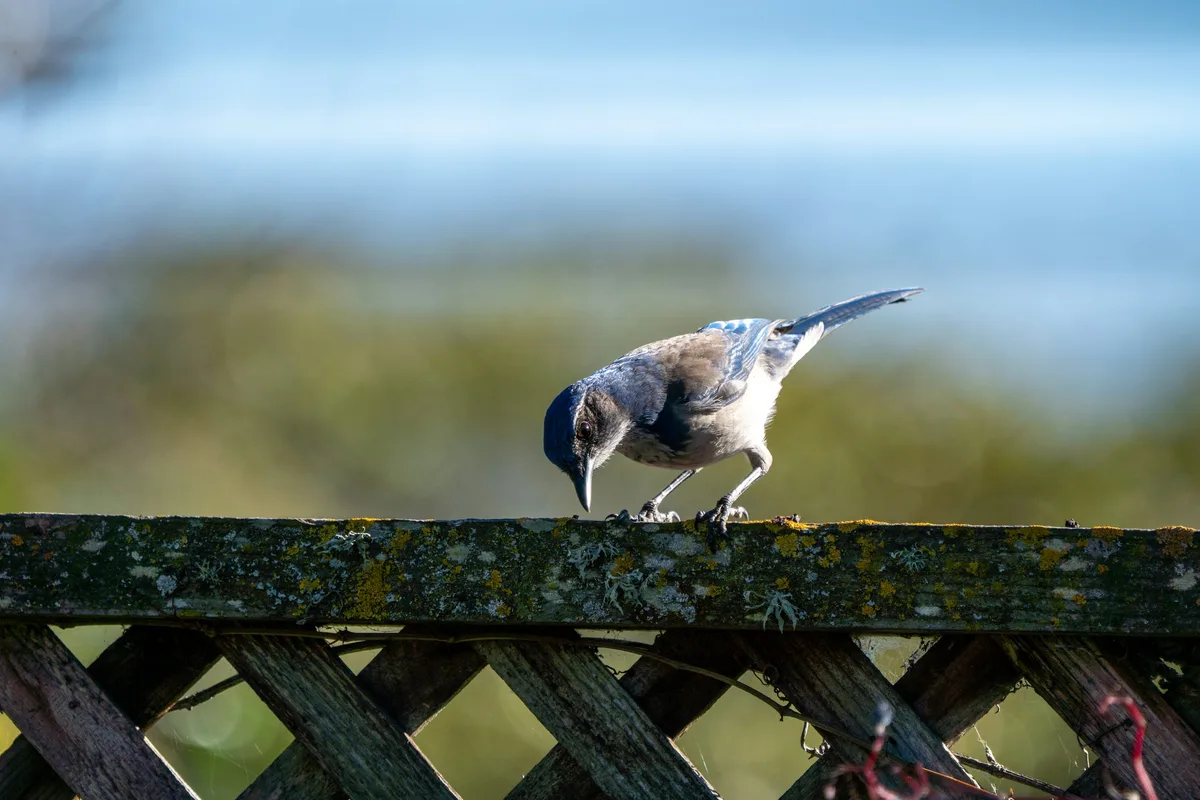
Image source: Bing (Web (fair-use with source credit))
Bird Size and Shape: Your First Clues
The very first thing you'll notice about any bird is its general size and silhouette. Is it a tiny thing that seems to disappear with every movement, or something more substantial that commands attention? Understanding these basic dimensions gives you a starting point for narrowing down possibilities.
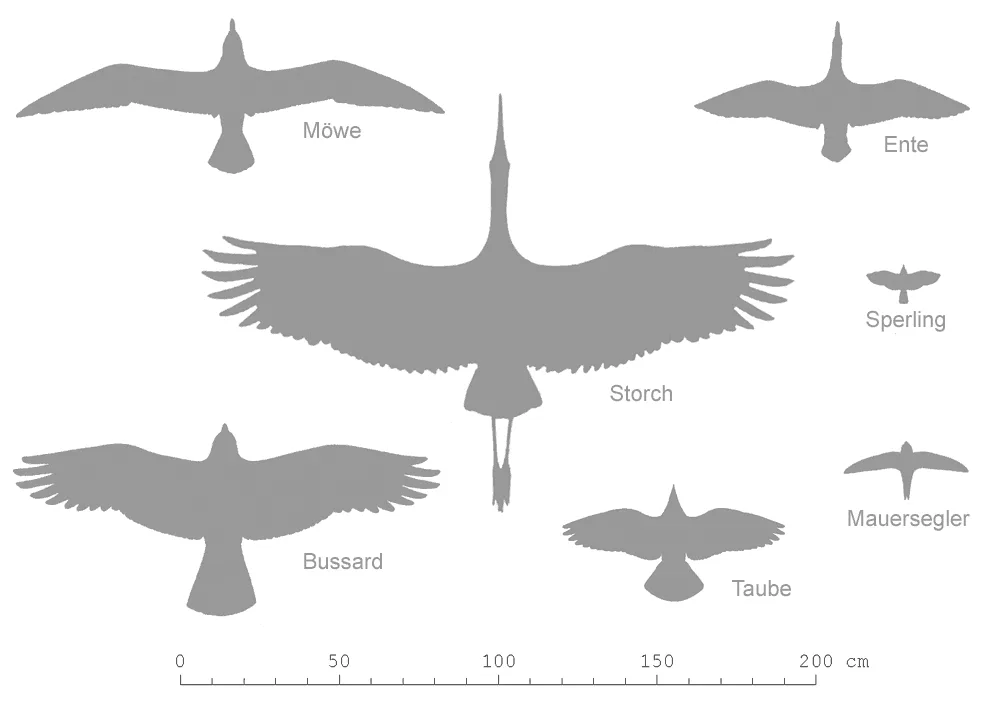
Image source: Bing (Web (fair-use with source credit))
- Tiny Birds: Think smaller than a sparrow, often described as "flitting" or "darting." These are your kinglets and some smaller warblers.
- Small Birds: Similar to a sparrow or finch. Many common backyard birds fall into this category, like chickadees or house sparrows.
- Medium Birds: About the size of a robin or blue jay. Robins, cardinals, and jays fit here comfortably.
- Large Birds: Bigger than a robin, sometimes with a noticeable wingspan. Hawks or larger woodpeckers might fall here.
Beyond sheer size, the overall shape matters. Does the bird have a long, flowing tail, or is it short and stubby? Is its body plump and rounded, or sleek and streamlined?
Even the shape of its beak offers big clues, is it short and thick for cracking seeds, or long and pointed for snatching insects?
Colors and Markings: The Most Obvious Identifiers
This is usually where most people start when trying to identify a bird, and for good reason. Colors and distinct markings are often the most memorable and unique features. A flash of bright red, a stripe over the eye, or a contrasting patch on the wings can be a dead giveaway.
When you observe a bird, try to note:
- Primary Colors: What are the dominant colors on its head, back, chest, and belly?
- Secondary Colors: Are there accent colors on the wings, tail, or throat?
- Distinctive Markings: Look for eye stripes, wing bars (bands of color on the wings), or spots.
For instance, a vibrant red male Northern Cardinal is hard to mistake for anything else. The stark black and white patterns on a Downy Woodpecker are also incredibly distinctive. These visual anchors are crucial for accurate identification, making it easier to sort through the many species you might encounter.
Bird Behavior: Subtle Clues to Who's Who
Beyond looks, how a bird acts can tell you a lot about its identity and what it's doing. Observing a bird's behavior provides context and can help confirm or refine an initial identification. This is especially helpful for birds that might look similar at first glance.
Consider these behavioral traits:
- Foraging Style: Does the bird hop along the ground like an American Robin, searching for worms? Or does it cling to tree trunks and branches, pecking for insects, like a woodpecker?
- Flight Pattern: Is its flight direct and steady, or does it undulate, like a Goldfinch?
- Perching Habits: Does it prefer to sit high on open branches, or does it stay hidden within dense foliage?
Even the way a bird approaches a feeder or interacts with its environment can be a clue. Some birds are bold and will land right on a feeder, while others are more cautious and will only forage nearby. These subtle actions, when combined with visual characteristics, paint a more complete picture of the bird you're observing.
Spotting Common Backyard Birds: A Visual Guide
To help you get started, let's look at some of the most frequently seen birds in backyards across many regions. The key is to match what you see and hear with their distinctive visual traits.
The Energetic American Robin
You've likely seen the American Robin countless times, as it's one of the most common birds in North America, often found in suburban yards, parks, and even city gardens. Its most striking feature is that warm, rusty-red to orange breast, which stands out against its darker gray or brownish back. They typically have a round body and a relatively long tail, and you'll often spot them with their heads cocked, listening for earthworms or insects on the lawn.
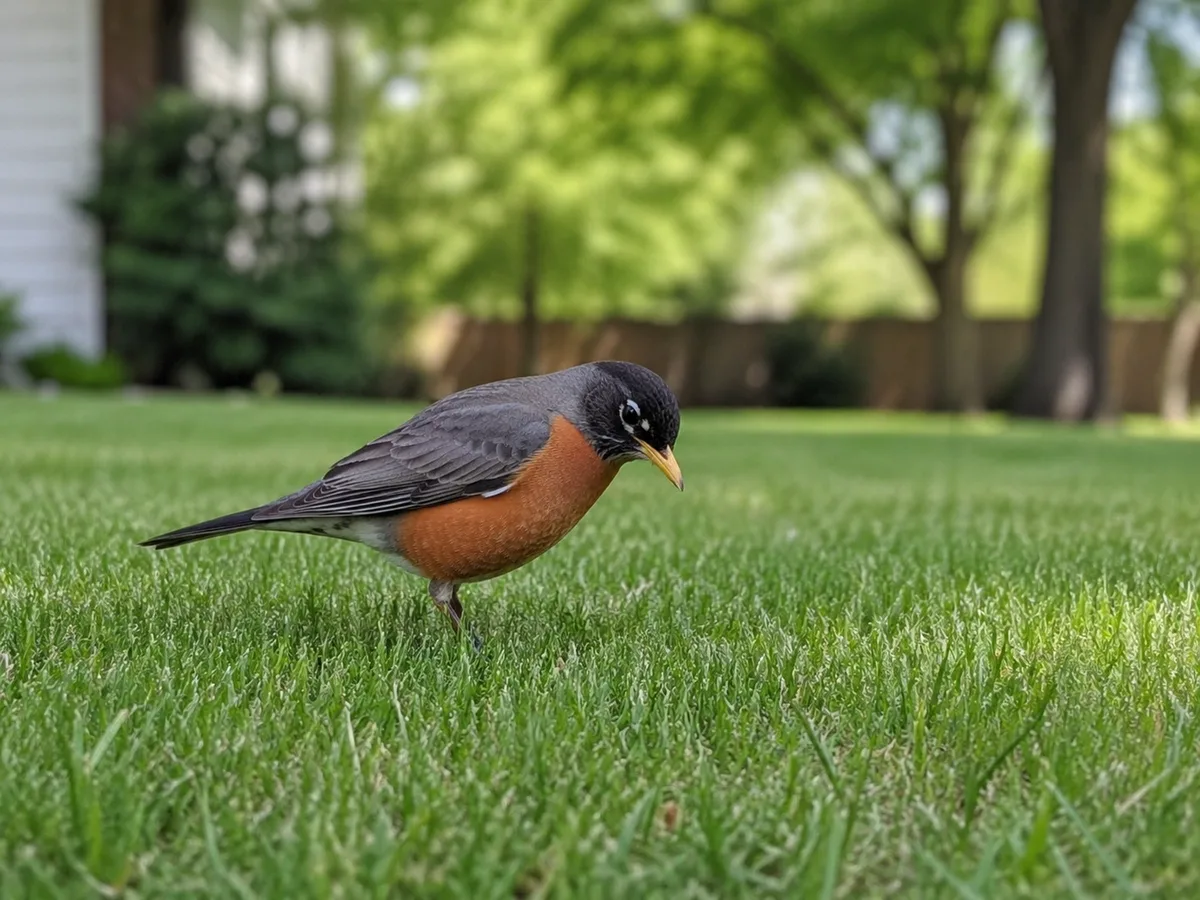
Image source: Bing (Web (fair-use with source credit))
- Size: Medium, about 8-11 inches long.
- Coloration: Dark gray/brown back, rusty-red/orange breast.
- Behavior: Hops on lawns, forages for invertebrates, often seen in pairs or small groups.
- Habitat: Lawns, open grassy areas, gardens, parks.
Their cheerful, melodic song is a familiar sound, especially in the morning. Robins are also known for their nesting habits, often building cup-shaped nests from mud and grass in trees or on ledges. Their widespread presence makes them a great starting point for backyard bird identification.
The Striking Northern Cardinal
The Northern Cardinal is an absolute showstopper, especially the male. If you see a bird that's a brilliant, unmistakable red from head to tail, with a prominent crest and a black mask around its face, you're looking at a male cardinal. The females are also beautiful, sporting a more muted reddish-brown or buff color with lovely red accents on their wings, crest, and tail.
Their stout, conical beak is perfect for crushing seeds, and they are frequent visitors to bird feeders, especially those offering sunflower seeds.
- Size: Medium, about 8-10 inches long.
- Coloration: Male: vibrant red, black mask, crest. Female: reddish-brown with red highlights, crest.
- Behavior: Often seen in pairs, visits feeders for seeds and fruits, has a loud, clear song.
- Habitat: Shrubby areas, woodland edges, suburban gardens, parks.
Cardinals are year-round residents in many areas, meaning you can enjoy their bright presence even in the colder months. Their distinctive "cheer, cheer, cheer" song is a familiar sound in many neighborhoods. Their preference for seeds and fruits makes them adaptable to various food sources provided by human landscapes.
The Bold Blue Jay
Blue Jays are hard to ignore, with their striking blue, white, and black plumage and their often boisterous personalities. They have a prominent crest on their head that they can raise or lower depending on their mood. The back, wings, and tail are a vivid blue, contrasted with white and black barring on the wings and tail, and a white or grayish underside.
Their face often has a grayish hue.
- Size: Medium to large, about 10-12 inches long.
- Coloration: Bright blue on back, wings, tail; white and black markings; gray face; prominent crest.
- Behavior: Intelligent, noisy, often seen in flocks, known for caching nuts, can be aggressive at feeders.
- Habitat: Woodlands, suburban yards, parks, near oak trees.
Blue Jays are known for their intelligence and complex social structures. They have a wide range of vocalizations, from the classic "jay, jay" call to mimicry of hawk calls. They are omnivorous, eating seeds, nuts, insects, and even small eggs or nestlings, making them adaptable to different food sources found in backyards.
The Sunny American Goldfinch
In the breeding season, the American Goldfinch is a real gem of the backyard. The male transforms into a brilliant, almost luminous yellow, with jet-black wings that have white markings, and a black cap on its head. Females and non-breeding males are a more subdued olive-yellow or buff color, but still retain that characteristic finch shape and active demeanor.
They are small birds, often seen in flocks, and they have a distinctive undulating flight pattern.
- Size: Small, about 4.5-5 inches long.
- Coloration: Breeding male: bright yellow, black wings/cap. Female/non-breeding: olive-yellow/buff.
- Behavior: Active, social, often seen in flocks, feeds on seeds, erratic flight pattern.
- Habitat: Weedy fields, gardens, feeders with thistle or nyjer seed.
Goldfinches are particularly fond of thistle (nyjer) seeds, making them frequent visitors to specialized feeders. Their chirping song is often heard as they fly. They are one of the latest birds to nest, often starting in late spring or early summer, and feed their young on seeds.
The Tiny Downy Woodpecker
The Downy Woodpecker is North America's smallest woodpecker, and it's a common sight in backyards with trees. This little bird is primarily black and white, with a distinctive white stripe running down its back. Males have a small, neat red patch on the back of their head, which is absent in females.
They have a typical woodpecker's stiff tail feathers that help them cling to tree trunks and branches as they search for insects and larvae.
- Size: Small, about 5.5-6.7 inches long.
- Coloration: Black and white checkered pattern, white stripe on back. Male: red patch on back of head.
- Behavior: Clings to tree trunks and branches, pecks for insects, visits suet feeders.
- Habitat: Woodlands, parks, suburban yards with mature trees.
Downy Woodpeckers are often seen foraging on smaller branches and twigs compared to larger woodpecker species. They are also frequent visitors to suet feeders. Their relatively small size and distinctive markings make them a joy to observe up close as they go about their busy lives, even in more urban settings.
Learning to See: Common Identification Mistakes to Avoid
Even with the best intentions and a keen eye, bird identification can trip you up. Many common mistakes can lead you astray when you're trying to figure out which birds are common in your backyard. One of the biggest culprits is focusing too much on just one feature, like color, and ignoring other vital clues.
For example, a bird might appear mostly brown, but its size, shape, and behavior could point towards a different species than another brown bird that looks superficially similar. Another common error is relying on fleeting glimpses. Birds move fast, and what you see for a split second might not be representative of their typical appearance.
- Mistake 1: Focusing Solely on Color: Many birds share similar colors, especially in their non-breeding plumage. Always consider size, shape, beak, and markings too.
- Mistake 2: Identifying from Brief Glimpses: Try to get a longer look. If you can't, take notes or a quick photo to study later.
- Mistake 3: Ignoring Behavior: How a bird acts, hopping, perching, flying, can be as telling as its plumage.
- Mistake 4: Assuming Rarity: Don't discount a bird just because you haven't seen it before. Some species become more common seasonally or with environmental changes.
Another pitfall is misinterpreting age or sex differences. Many species look quite different as juveniles compared to adults, or between males and females. As of 2026, comprehensive field guides often provide detailed plates showing these variations, which is invaluable for accurate identification.
Getting familiar with these differences can save you a lot of head-scratching.
Making Your Backyard Bird-Friendly
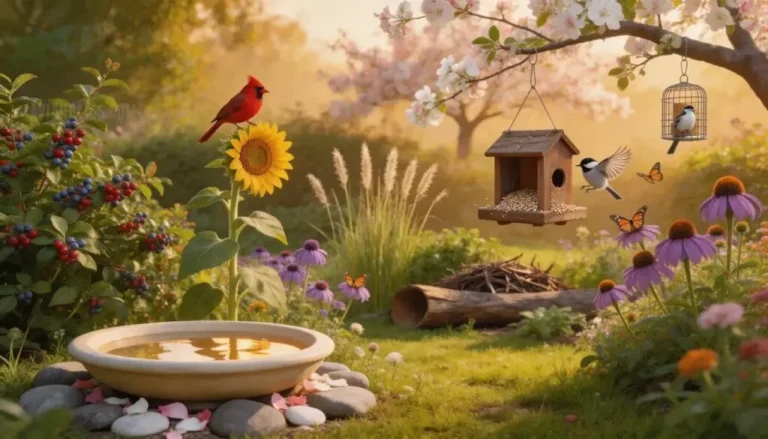
You've learned to spot some of the common feathered visitors, but have you thought about what makes your backyard attractive to them? Creating a welcoming environment is key to seeing more birds more often. It's not just about putting out a feeder; it's about providing the essential elements they need to thrive.
Think of it as creating a miniature bird haven. This involves offering food, water, and shelter. Different birds have different preferences, but generally, a diverse backyard ecosystem will attract a wider variety of species.
Here’s what birds look for:
- Food Sources: Beyond feeders, consider native plants that offer seeds, berries, and nectar. Insects are also a primary food source for many birds, so having a healthy garden can support them.
- Water: A clean bird bath is incredibly attractive. Moving water, like from a dripper or fountain, is even better at drawing birds in. Make sure it's shallow enough for small birds and accessible.
- Shelter and Nesting Sites: Trees, shrubs, and dense plantings offer protection from predators and harsh weather. Some birds also appreciate birdhouses, but placement and design are critical for success.
By providing these resources, you're not just feeding birds; you're supporting their entire life cycle. This can lead to a more dynamic and engaging backyard wildlife experience. Remember, local conditions and native plant choices, supported by resources like the National Wildlife Federation's habitat programs, significantly influence which birds will visit.
Frequently Asked Questions
What's the easiest bird to identify in a backyard?
The American Robin is often considered one of the easiest birds to identify. Its distinctive rusty-red breast, dark back, and common presence on lawns make it instantly recognizable for most people.
Do bird feeders attract specific types of birds?
Yes, bird feeders can attract specific types of birds based on the food offered. For example, nyjer or thistle seed feeders primarily attract finches like the American Goldfinch, while suet feeders are popular with woodpeckers.
How can I attract more birds to my backyard?
To attract more birds, provide a variety of food sources, a clean water source like a bird bath, and shelter through native plants, shrubs, and trees. Offering different types of feeders can also broaden your appeal.
Are there birds that are common year-round?
Many species are year-round residents, including Northern Cardinals and Blue Jays in many regions. Downy Woodpeckers and House Sparrows are also commonly found throughout the year in diverse habitats.
What time of day is best for birdwatching in my backyard?
Early morning and late afternoon are typically the best times for backyard birdwatching. Birds are most active during these cooler parts of the day as they forage for food and sing their territorial songs.