Why Does the Shoebill Have Such a Large Bill
Ever stared at a shoebill stork and wondered why on earth it has such a large bill? It's a question that pops into many minds the first time they see this prehistoric-looking bird. That enormous, clog-like beak isn't just for show; it's a finely tuned tool essential for its survival in the African wetlands.
Our research indicates that the shoebill's massive bill, which can measure up to 9 inches long and 5 inches wide, is a primary adaptation for its unique hunting style and diet. This specialized beak allows it to thrive where other birds might struggle.
Quick Answer
The shoebill stork has such a large bill to act as an effective scoop for catching prey. Its powerful, hooked beak allows it to capture slippery fish and other swamp dwellers. This specialized tool is crucial for its hunting success in murky wetland environments.
Why the Shoebill's Bill is So Uniquely Huge
The sheer scale of the shoebill's bill is its most striking feature, and it's no accident. This isn't just a big mouth; it's a sophisticated adaptation designed for a very specific lifestyle. Scientists believe this extraordinary size evolved because it provided a significant hunting advantage in the shoebill's preferred habitat.
The bill's dimensions are perfectly suited for its primary food sources, fish, amphibians, and reptiles found in dense, shallow waters.
The unique shape, resembling a wooden clog, is key. It creates a wide, gaping opening that is incredibly efficient at scooping up prey from the water. This isn't a bird that can chase down fast-moving targets in open water.
Instead, it relies on stealth and this specialized tool to secure its meals from the murky depths of African swamps.
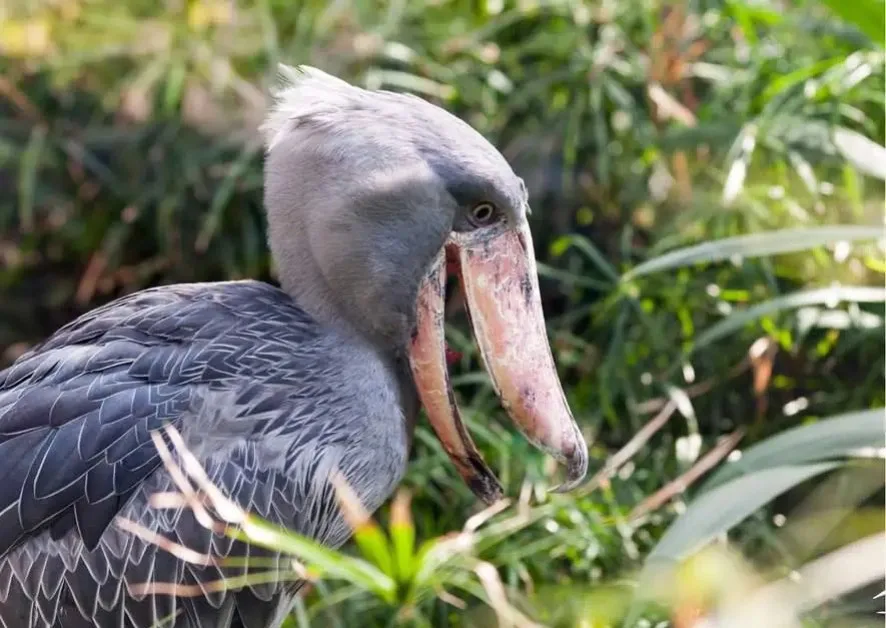
Image source: Bing (Web (fair-use with source credit))
How the Bill Helps Shoebills Hunt Fish and Frogs
The shoebill's hunting method is almost as unique as its bill. It’s a patient predator, and that enormous beak is central to its strategy. Imagine a bird that can stand perfectly still for hours, blending in with reeds and vegetation, waiting for the perfect moment.
When it spots prey, the action is swift and decisive, utilizing the bill's size and shape to its full advantage.
The Scoop and Snap: Hunting Technique
This is where the bill really earns its keep. The shoebill doesn't typically dive or pursue prey aggressively. Instead, it uses a method called "ambush predation." It will stand motionless in the water, often for extended periods, until a suitable meal, usually a fish like a lungfish or tilapia, comes within range.
Then, with surprising speed, the shoebill lunges forward, thrusting its massive bill into the water. The wide mouth opens to scoop up not just the intended prey but also a considerable amount of water and often mud. It’s a broad sweep, designed to trap whatever is within its path.

Image source: Bing (Web (fair-use with source credit))
The Hook and Drain: Securing the Meal
Once the bill is submerged and has scooped up its catch, the powerful muscles snap it shut. The distinctive hooked tip of the bill plays a crucial role here. It acts like a strong clasp, making it incredibly difficult for slippery fish or wriggling snakes to escape the bird's grasp.
After securing its prey, the shoebill tilts its head back. This allows the excess water and mud that were scooped up to drain out from the sides of its bill. The prey, now neatly contained and unable to escape, is then ready to be swallowed whole.
This entire process, from scoop to swallow, highlights how perfectly the bill is adapted for its diet and hunting environment.
The Bill Beyond Hunting: Feeding and Defense
While hunting is the primary function of that enormous bill, it serves other vital roles for the shoebill, especially when it comes to family and survival. It’s not just a tool for acquiring food; it’s also involved in communication and protection.
Parents use their bills with a surprising degree of gentleness when interacting with their young. While the bill is powerful enough to hunt, it can also be used to nudge chicks, helping them to stand or reposition them. This careful handling ensures the vulnerable offspring are not harmed by the very tool that sustains them.
The bill also serves as a potent defensive mechanism. Shoebills are territorial birds, and their impressive beak can be used to ward off rivals or potential predators. While they generally avoid confrontation, the sheer size and strength of the bill make it a formidable deterrent, capable of inflicting serious injury if the bird feels threatened or its nest is endangered.
This dual utility highlights the bill's importance in nearly every aspect of the shoebill's life.
Understanding Shoebill Bill Evolution: Adaptation in Action
The evolutionary pathway that led to the shoebill’s extraordinarily large bill is a fascinating case study in adaptation. Scientists theorize that over millennia, individuals possessing larger and more effective beaks had a distinct survival advantage in the specific ecological niche that shoebills occupy. This advantage translated into greater success in acquiring food, leading to better health, higher reproductive rates, and ultimately, the passing on of those advantageous traits to offspring.
The dense, murky waters of East African swamps present unique challenges for predators. A bill that could efficiently scoop and trap aquatic life, rather than requiring precise targeting, would have been highly beneficial. This environmental pressure likely favored the development of the shoebill’s distinctive, clog-like bill with its powerful crushing and gripping capabilities.
This specialization allowed the shoebill to exploit a food source that might be inaccessible or difficult to catch for birds with different beak morphologies.
Shoebill Stork Habitat: Where This Bill Thrives
The shoebill stork is intimately tied to its specialized environment, and its massive bill is a direct reflection of this habitat. These birds are found in the expansive, shallow freshwater swamps and marshes of East Africa. Key regions include the Sudd in South Sudan, the Okavango Delta in Botswana, and the Bangweulu Swamps in Zambia, among others.
These areas are characterized by slow-moving, often turbid waters, dense aquatic vegetation like papyrus, and a rich diversity of fish, amphibians, and reptiles.

Image source: Bing (Web (fair-use with source credit))
This wetland ecosystem is crucial for the shoebill's survival. The shallow depths are perfect for its still-hunting ambush strategy, allowing it to stand patiently for extended periods. The murky water and thick vegetation make it difficult for prey to escape once the shoebill strikes.
The bill’s unique ability to scoop and hold is perfectly adapted to efficiently capture slippery fish and other aquatic animals from these challenging conditions. It is this specific interplay between the bird, its bill, and its environment that has shaped its evolutionary success.
Frequently Asked Questions About the Shoebill's Bill
How big can a shoebill's bill get?
A shoebill's bill can reach impressive lengths, typically up to 9 inches (23 cm). Its width at the front can be about 5 inches (12.7 cm), making it exceptionally broad.
Is the shoebill's bill sharp?
The tip of the shoebill's bill is sharply hooked. This hook is essential for preventing slippery prey, like fish, from escaping once captured.
Does the shoebill's bill help it fly?
No, the large bill is not adapted for flight. Its primary functions are hunting, feeding, and defense, and its size makes it a significant factor in the bird's weight and aerodynamics.
Can a shoebill injure a human with its bill?
Yes, a shoebill can inflict a serious injury with its bill if it feels threatened. While not typically aggressive towards people, its powerful beak is a formidable defensive weapon.