Can Geese Fly Long Distances
Ever seen a V of geese honking overhead and wondered just how far they're going? It's a pretty common question, and honestly, the answer is pretty mind-blowing. Geese aren't just flapping around the local park; many species are absolute marathon flyers, covering thousands of miles each year.
Think of it like this: you wouldn't expect your average person to run a marathon without training, right? Well, geese are basically built for those kinds of long hauls. According to ornithological studies, some species can sustain flight for over 2,000 miles without a break.
It’s not just a quick hop; it’s a serious, sustained effort that involves some incredible biological engineering and smart travel strategies.
Quick Answer
Yes, geese can fly long distances. Many species migrate thousands of miles annually between breeding and wintering grounds. Their ability comes from biological adaptations and energy-efficient flight strategies.
The Incredible Journeys of Migratory Geese
So, how far are we talking? It varies a lot depending on the specific type of goose, but some species can easily travel 2,000 to 3,000 miles, and sometimes even more! We're talking about journeys from places like the Arctic tundra all the way down to warmer southern regions.
Imagine that kind of flight. No pit stops for gas, no checking the GPS every hour. Just pure, sustained flight.
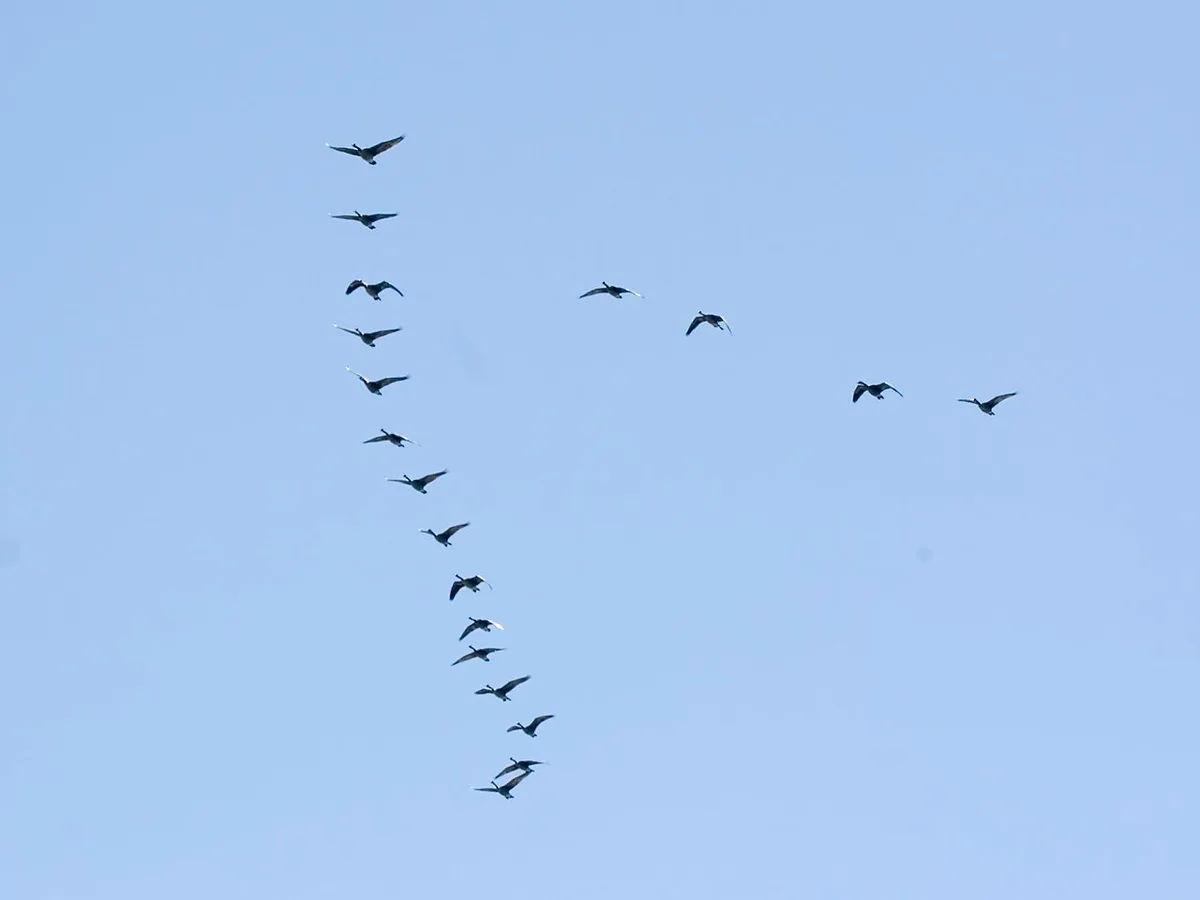
Image source: Wikimedia Commons / Kelly Martin (CC BY-SA)
How Far Are We Talking?
The distances geese cover during migration are truly astounding. These aren't short hops across a county; these are journeys that span continents and cross vast bodies of water. For instance, the Barnacle Goose (Branta leucopsis) is documented as traveling over 2,000 miles between its Arctic breeding grounds and European wintering sites.
Similarly, Greater White-fronted Geese (Anser albifrons) undertake migrations of similar magnitude, moving between remote Siberian breeding areas and destinations as far south as California. These flights are essential for their survival, allowing them to access abundant food sources and escape the harsh conditions of the Arctic winter.
Famous Long-Distance Migrators
Several species of geese are renowned for their epic migratory flights. The Canada Goose (Branta canadensis), while having many resident populations, sees its migratory kin traverse thousands of miles between their nesting sites in the Canadian Arctic and their wintering grounds in the southern United States. These journeys can stretch over 3,000 miles for some individuals.
Another impressive traveler is the Snow Goose (Anser caerulescens), which undertakes some of the longest migrations of any bird, traveling from their Arctic nesting grounds to areas along the Gulf Coast and even down into Mexico. These incredible feats highlight the remarkable endurance and navigational prowess of these birds, showcasing nature's engineering at its finest.
How Do They Pull It Off? It's All About Biology and Strategy.
It's not just about having wings. Geese have a whole toolkit that helps them achieve these epic flights. Their physiology is finely tuned for endurance, and their behaviors are optimized for energy conservation during these demanding journeys.
Fueling Up for the Flight
Before embarking on their long migratory journeys, geese engage in a critical phase of hyperphagia, essentially eating as much as possible to build up substantial fat reserves. This stored energy acts as their onboard fuel tank, providing the necessary calories to sustain flight for extended periods without the need to stop and feed frequently. As documented by research from organizations like the U.S.
Geological Survey, these fat deposits can significantly increase a goose's body mass, forming a vital energy reserve. For example, during the pre-migratory period, an individual’s fat content can increase from a normal level of around 5-10% to potentially 20-30% or more of its body weight, making them effectively a flying energy source. This intense feeding period is crucial for ensuring they have enough fuel to complete their often thousands-of-miles-long flights.
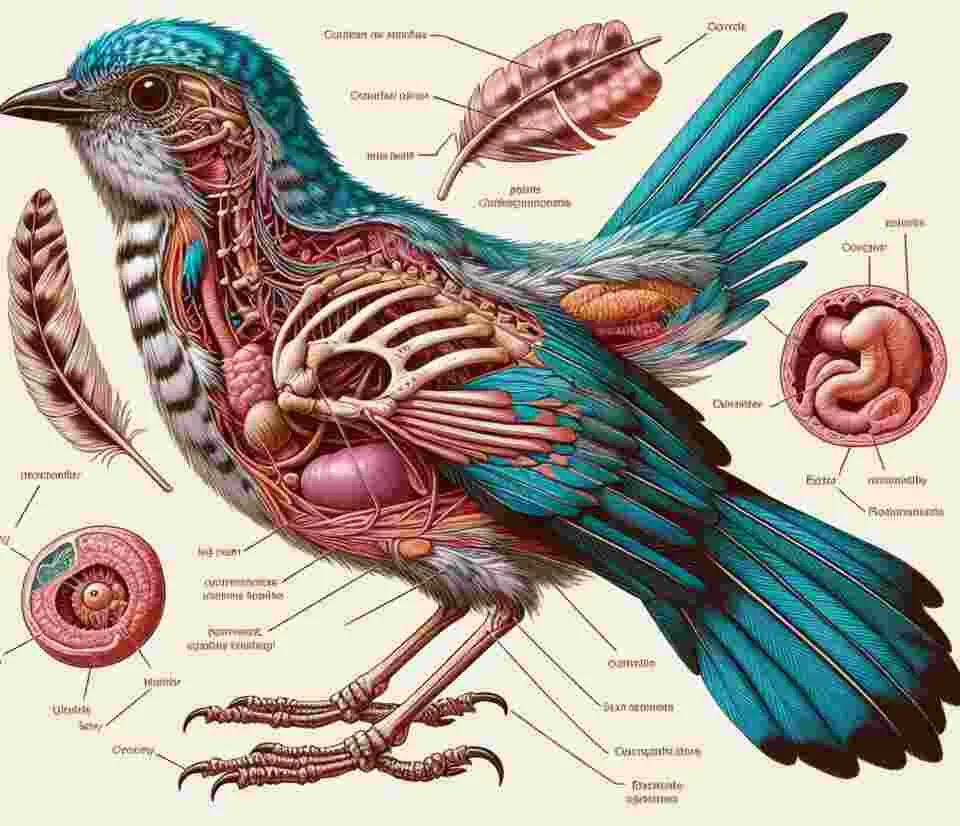
Image source: Bing (Web (fair-use with source credit))
The Power of the V-Formation
Geese don't fly in their iconic V-shaped formations purely for aesthetics. This specific arrangement is a sophisticated aerodynamic strategy that significantly enhances flight efficiency for the entire group. When a goose flaps its wings, it creates an upwash of air with the wingtips.
The bird flying behind and slightly to the side of the leader can position itself to take advantage of this upwash, which provides lift and reduces the energy they need to expend to stay airborne. This phenomenon, known as aerodynamic drafting, allows the flock to conserve energy, enabling them to fly longer distances than they could individually.
Research indicates that flying in a V-formation can reduce the energy cost for individual birds by as much as 20-30%, allowing them to travel further on the same amount of stored energy. When the lead bird tires, it rotates back into the formation, and another takes its place, ensuring the flock maintains optimal efficiency throughout their arduous journey. This coordinated effort is a prime example of cooperative behavior for survival.
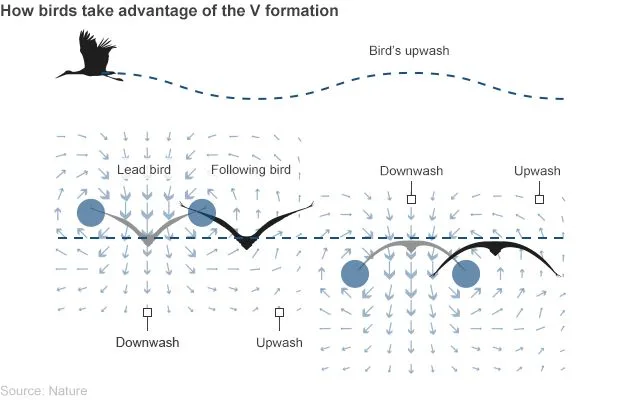
Image source: Bing (Web (fair-use with source credit))
Altitude, Navigation, and Body Power
Beyond fueling and formation, geese possess remarkable adaptations for long-distance flight. They often fly at high altitudes, sometimes reaching elevations of 8,000 to 10,000 feet, or even higher during extreme migrations. At these heights, the air is thinner, which requires more effort to breathe, but it also offers less turbulence and can provide tailwinds that assist their travel.
Their respiratory system is exceptionally efficient, with a unique one-way airflow system that allows for continuous oxygen uptake, a critical advantage in low-oxygen environments.
Their navigation abilities are equally impressive. Geese utilize a combination of celestial cues, such as the sun and stars, the Earth's magnetic field, and even olfactory (smell) cues to find their way across vast, featureless landscapes and bodies of water. This innate navigational sense, honed over millennia, guides them precisely to their traditional breeding and wintering grounds, often returning to the same locations year after year.
These combined biological traits, powerful flight muscles, efficient oxygen use, sophisticated navigation, and the ability to fly at altitude, are what make their long-distance migrations possible.
Are There Downsides to Such Long Flights?
While geese are built for these demanding journeys, migration is far from easy. The extended travel through varied environments exposes them to numerous challenges that can impact survival rates and overall population health. These risks are significant and can make the difference between a successful migration and a perilous one.
Risks on the Migration Trail
The immense distances geese cover mean they face a gauntlet of dangers throughout their journeys. Predation is a constant threat; while in flight, they can be targeted by birds of prey, and on the ground at stopover sites, they remain vulnerable to mammals and other predators. Changes in weather patterns, such as unexpected storms or prolonged periods of strong headwinds, can deplete their energy reserves rapidly, force them off course, or even lead to catastrophic flock losses.
For example, research on avian migration often highlights how severe weather events can cause significant mortality.
Furthermore, the availability of crucial stopover sites, locations where geese can rest and refuel, is increasingly precarious. Habitat loss due to development, agriculture, or environmental degradation means fewer safe places for these birds to recuperate. If they cannot find adequate food and shelter at these vital points, their ability to complete the migration is severely compromised.
This cumulative exposure to risk, from weather and predators to habitat scarcity, underscores the incredible resilience required for geese to successfully navigate their annual migrations.
Frequently Asked Questions About Goose Migration
What is the longest migration ever recorded for a goose?
While specific individual records vary, research indicates that certain species, like the Greater White-fronted Goose, can migrate over 3,000 miles between their Arctic breeding grounds and wintering locations.
Do all geese migrate long distances?
No, not all geese migrate long distances. Some populations, particularly in milder climates, have become resident and do not undertake extensive annual migrations.
How do geese know where to go?
Geese possess remarkable navigational abilities, using a combination of the Earth's magnetic field, the sun and stars, and learned landmarks to guide them.
Can a goose fly non-stop for thousands of miles?
While geese are incredible endurance flyers, they typically make stopovers to rest and refuel during their longest migrations, rather than flying thousands of miles non-stop.