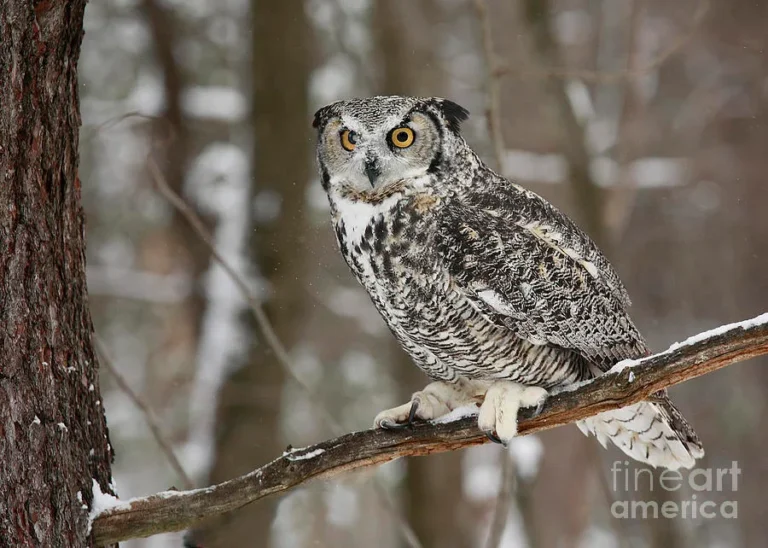
Can Owls See in Complete Darkness
It’s a common image: an owl, a silent hunter of the night, piercing the absolute blackness with its keen eyes. But can owls actually see in complete darkness? The short answer is no, but their vision is so extraordinarily adapted for low light that it often appears that way to us.
They need at least a faint glimmer of light to process visual information, though this can be as minimal as starlight.
This remarkable ability stems from specialized biological features in their eyes, allowing them to perceive details invisible to humans in dim conditions. Understanding these adaptations helps us appreciate the natural world and avoids common myths. Let's dive into the science behind owl vision and what "complete darkness" truly means for these nocturnal predators.
Quick Answer
Owls cannot see in absolute, complete darkness. They require some ambient light, even if it's just starlight or faint moonlight, to function visually. Their eyes are exceptionally adapted for low-light conditions, far exceeding human capabilities, but vision is impossible without any photons.
The Biology of Owl Eyes: Built for the Dark
Owls are masters of the night, and their eyes are the primary reason why. They’ve evolved over millennia to maximize light gathering and sensitivity, allowing them to hunt effectively when most other animals are asleep. It’s not just one feature, but a combination of adaptations working together.
How Owl Eyes Capture Faint Light
When we talk about an owl’s ability to see in the dark, we’re really talking about how efficiently their eyes can collect and process the smallest amounts of light. Imagine their eyes as highly sophisticated cameras, designed to work in near-total gloom. Their sheer size is a major factor; owl eyes are massive relative to their heads, taking up so much space that they can't move within their sockets.
Instead, owls have to turn their entire heads to look around. This fixed position, however, allows for a larger lens and retina, both crucial for capturing more light.
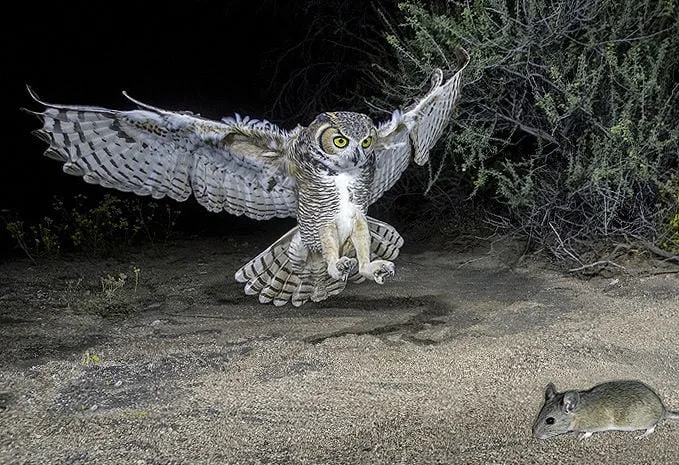
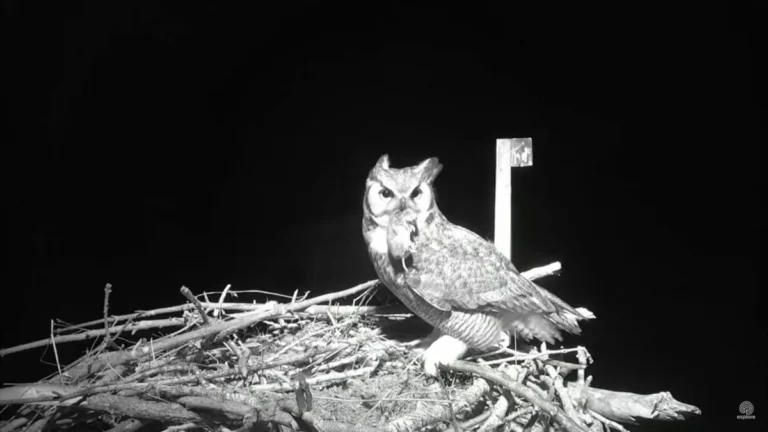
Image source: Web (Bing) / animalia-life.club (Web image (fair-use with source credit))
The Role of Rod Cells and the Tapetum Lucidum
Two key components are vital to understanding an owl's low-light prowess: a high concentration of rod cells and the presence of a tapetum lucidum. Rod cells are photoreceptor cells in the retina responsible for vision in low light. Humans have about 120 million rods, but many owls possess significantly more, giving them superior light sensitivity.
In fact, an owl's retina can be composed of up to 90% rod cells.
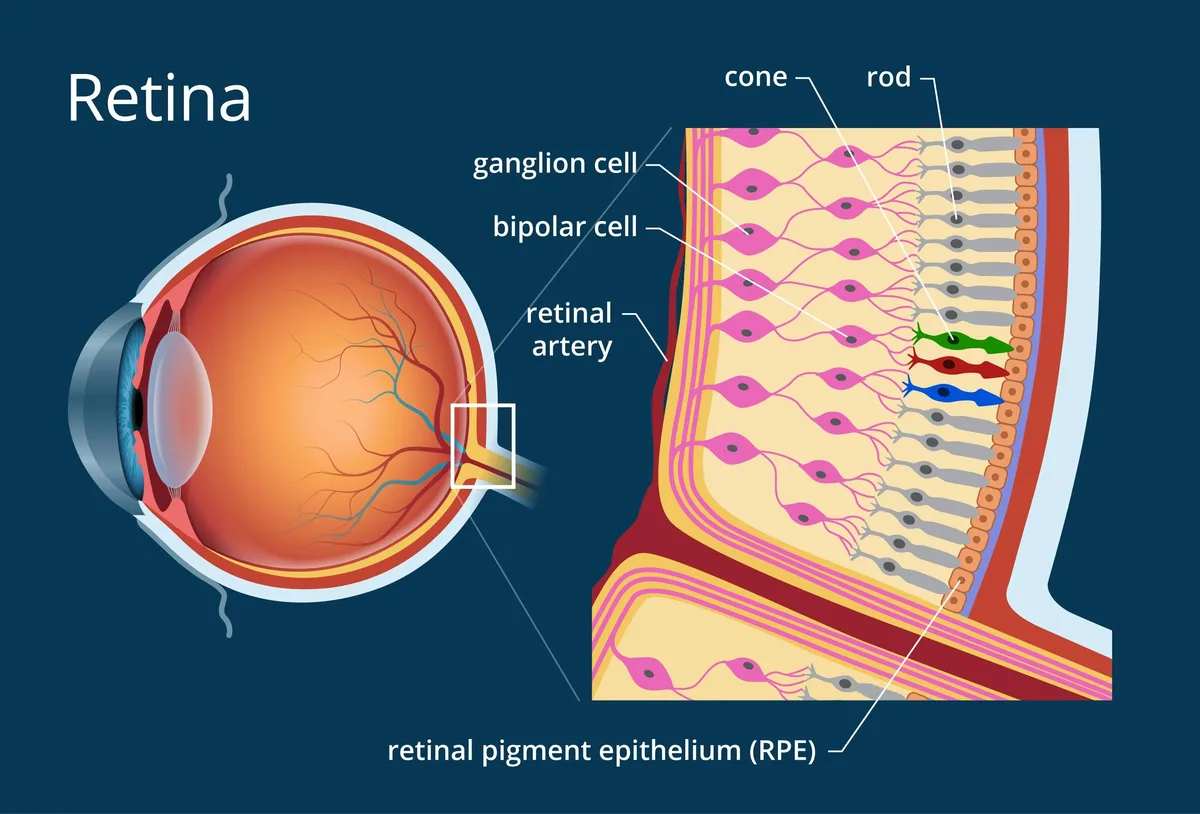
Image source: Bing (Web (fair-use with source credit))
Complementing the rods is the tapetum lucidum. This is a reflective layer located behind the retina. When light passes through the retina, it hits the tapetum lucidum and is reflected back through the retinal cells again.
This gives the photoreceptors a second chance to absorb the available light, effectively doubling the light available to the owl. This is the same feature that causes that characteristic "eyeshine" when a light source hits an animal's eyes at night.

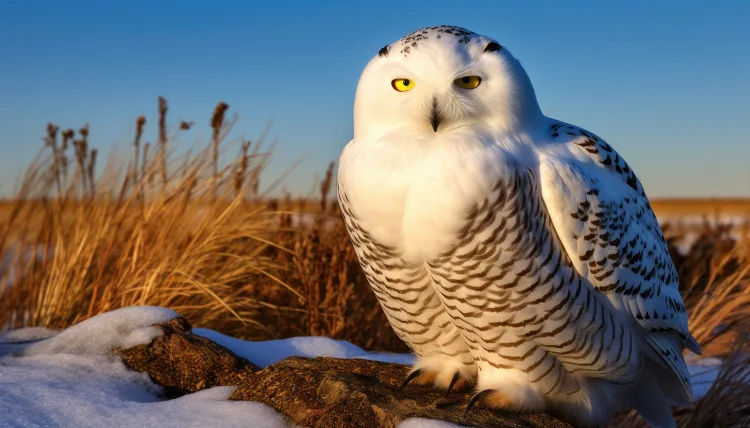
Image source: Bing (Web (fair-use with source credit))
What "Complete Darkness" Really Means for an Owl
The phrase "complete darkness" can be a bit tricky when we talk about animal vision. For humans, it means an absence of all light, where we see nothing but black. For owls, who are adapted for nocturnal activity, their world is still functional when our world goes dark.
However, even their incredible vision has limits.
The Absolute Limit: Zero Light Scenarios
If you were to take an owl into a completely sealed, light-proof chamber, a true absence of all photons, they wouldn't be able to see. Think of a deep cave with no entrance or a specially constructed darkroom. In these environments, there’s simply no light for their specialized eyes to capture and process.
Their vision relies on some light stimulus, no matter how faint. Without it, they would be as blind as we are.
Beyond Darkness: Seeing in Starlight and Moonlight
What often gets mistaken for seeing in complete darkness is actually the owl's ability to see in incredibly dim conditions. This includes light from the moon, stars, or even the faint glow emanating from distant human settlements. An owl can detect light levels far below what humans can perceive.
For instance, some species can see as well in moonlight as humans can in bright daylight. This allows them to effectively hunt and navigate during twilight and night hours, which is their primary period of activity.
Why Owls Aren't Magically Blindless in the Dark
It's easy to see an owl moving effortlessly through a moonlit forest and assume it can see in pitch black. This perception comes from the stark contrast between their nocturnal capabilities and our own visual limitations. Their eyes are a marvel of natural engineering, far exceeding human vision in low-light scenarios.
Their Advantage Over Human Vision
Compared to humans, owls possess a significant advantage when it comes to seeing in the dark. Our eyes have a relatively small number of rod cells and lack a tapetum lucidum, making us much less sensitive to faint light. While our daytime color vision is excellent, we struggle in low-light conditions.
An owl, on the other hand, can detect prey that is almost invisible to us. This stark difference in sensitivity is why owls seem to possess superhuman night vision.
Real-World Hunting Scenarios
Consider a small rodent scurrying across a field under a sliver of moonlight. To a human observer, this rodent might be practically invisible. An owl, however, can pick out its outline, its movements, and even its texture thanks to its specialized eyes.
The owl’s large eyes gather every available photon, and the tapetum lucidum reflects that light back for a second chance at detection. This capability allows them to successfully hunt and survive in environments where other predators would fail.
Common Misconceptions About Owl Night Vision
Because owls are so strongly associated with nighttime, and their hunting prowess is legendary, there are a lot of popular ideas about their vision that aren't quite accurate. These misconceptions often lead people to believe owls have abilities that go beyond their actual biological capabilities.
Separating Fact from Fiction
A widespread myth is that owls can see perfectly in absolute, total darkness. As we've discussed, this isn't the case. They need some light.
Another misconception is that their eyes are like ours but just "better" at night. In reality, their eyes are structured very differently, with adaptations that make them less effective in bright daylight compared to ours. Their fixed eye position means they can't quickly adjust focus the way we can.
Risks of Assuming Perfect Sight
Believing that owls can see in absolute darkness can lead to misinformed ideas about their behavior and conservation. For instance, understanding their true visual limits helps us realize that activities like excessive artificial lighting near their habitats might impact their hunting success, even if they can still see some light. It also means that if an owl appears disoriented or is found in unusual daytime circumstances, it might indicate an underlying issue, rather than just it "not being able to see" in that specific moment.
Expert Insights on Owl Visual Capabilities
From an ornithological perspective, owl eyes are a prime example of extreme adaptation for a specific ecological niche. Researchers consistently highlight the density of rod cells and the reflective properties of the tapetum lucidum as the primary drivers of their exceptional low-light vision. Studies on various owl species, such as those conducted by university research departments focusing on avian biology, confirm that while their night vision is unparalleled among many vertebrates, it is fundamentally dependent on ambient light.
For example, findings from research into the visual systems of Strigiformes (the order of owls) indicate that their eyes are optimized for maximizing light capture rather than fine detail resolution in bright conditions. This specialization means that an owl’s visual acuity in daylight is significantly lower than that of diurnal birds. However, their ability to detect movement and shape in light levels as low as 0.00001 lux, roughly equivalent to faint starlight, is truly remarkable.
This level of sensitivity is crucial for hunting small prey, such as rodents, whose movements would be imperceptible to most other animals in such dim environments.
FAQs About Owl Eyes and Darkness
Can owls see any color in the dark?
Owls likely see in shades of gray in very low light, similar to how humans see in monochrome at night. Their high number of rod cells are more sensitive to light intensity than color. While they might detect some color differentiation in brighter twilight conditions, true color vision is typically a daytime adaptation.
Do owls have eyelids?
Yes, owls have three eyelids. One is a typical upper and lower lid for blinking and sleeping. The third, a nictitating membrane, is a translucent eyelid that sweeps across the eye horizontally for cleaning and protection while maintaining some vision.
This allows them to keep their eyes moist and protected without completely shutting out light.
Are owls completely blind during the day?
No, owls are not blind during the day, but their vision is significantly less effective in bright light compared to their nocturnal capabilities. Their eyes are adapted to gather maximum light, which can cause them to be overwhelmed and less precise in daylight. Many owls will rest during the brightest parts of the day, becoming more active at dawn and dusk.
How does an owl’s hearing compare to its vision for hunting?
Many owl species rely as much, if not more, on their hearing as their vision for hunting. Their facial disc, a ring of feathers around their face, acts like a satellite dish to funnel sound to their ears. Asymmetrical ear openings also help them pinpoint the exact location of prey by processing sounds arriving at their ears at slightly different times.
This auditory acuity allows them to hunt effectively even in conditions where their vision is limited.
What happens if an owl is in a completely dark room?
If an owl is placed in a situation with absolutely zero light, it would be unable to see. Its specialized eyes need at least a minimal number of photons to register visual information. In such a scenario, the owl would rely entirely on its other senses, particularly hearing and touch, to navigate and understand its surroundings.