Most Common Birds
Identifying the most common birds in your neighborhood is a straightforward skill that changes how you experience your daily environment. Once you recognize a few recurring visitors, you will start to notice subtle shifts in your local ecosystem throughout the changing seasons.
As of 2026, data from the Cornell Lab of Ornithology confirms that common backyard species, such as the American Robin and the Northern Cardinal, account for the vast majority of human-avian interactions. You do not need expensive gear to start, as most identification relies on patience and keen observation.
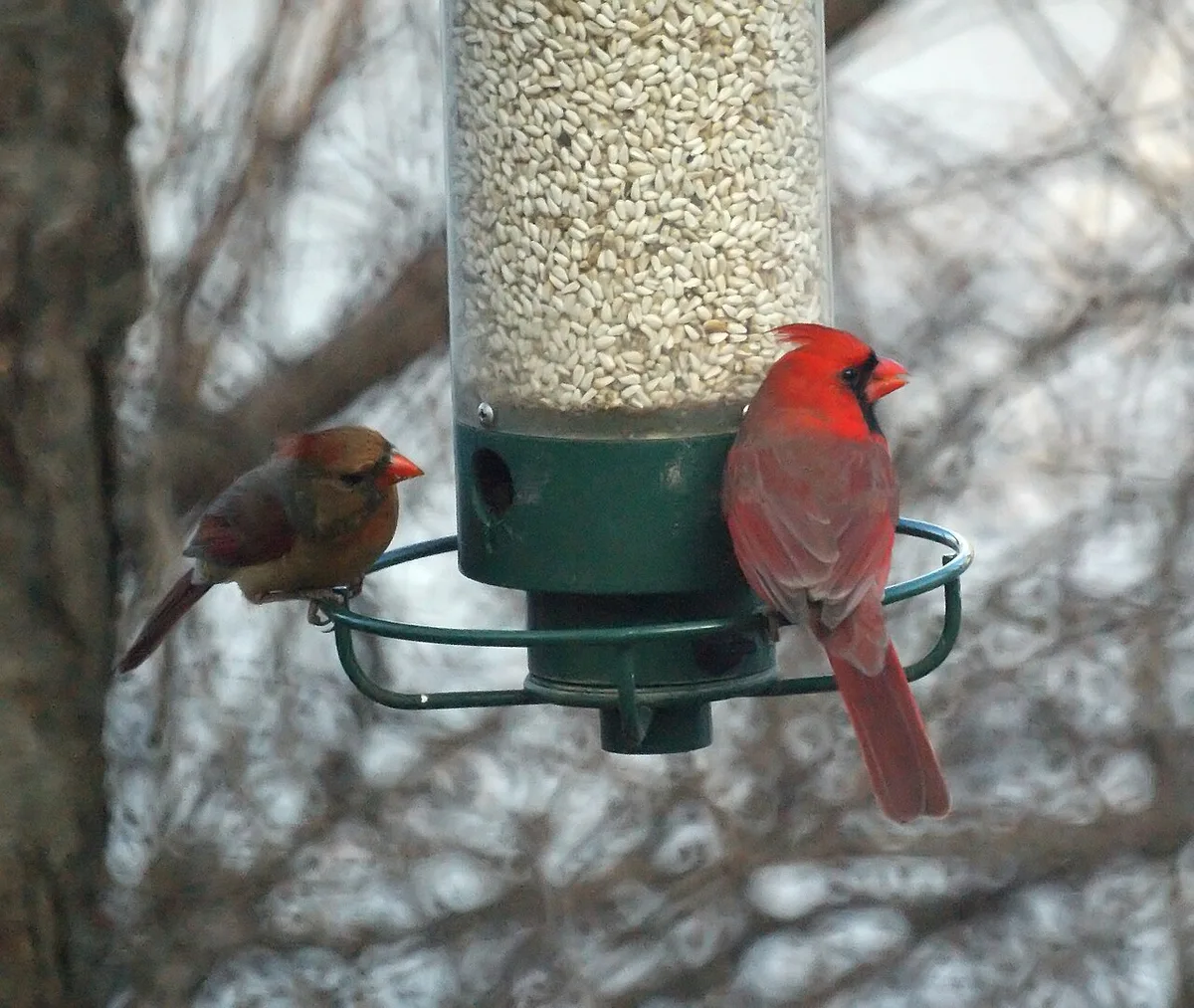
Image source: Wikimedia Commons / Mike's Birds (CC BY-SA)
Quick Answer
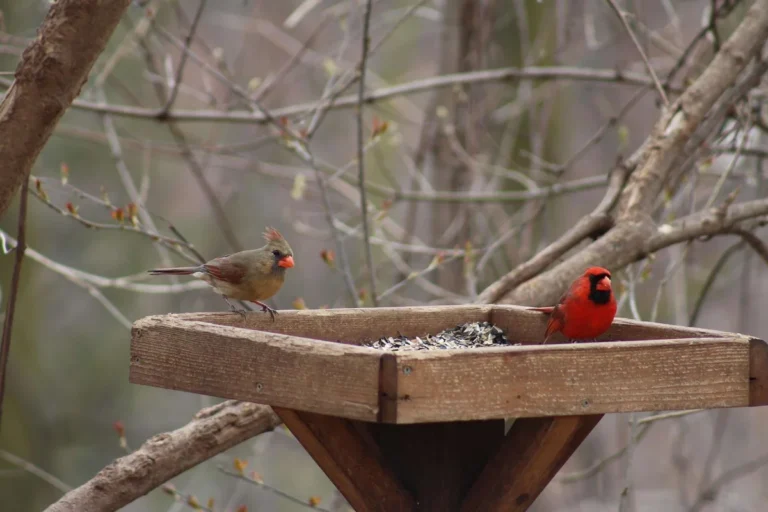
The most common birds are species adapted to human-built environments. House Sparrows and American Robins live in most residential areas. Northern Cardinals and Mourning Doves visit feeders throughout the year.
You can identify them by simple traits like color or size. Regular observation helps you learn their unique local patterns.
The Anatomy of a Backyard Bird: Why Visuals Are Your Best Tool
Visual identification is the foundation of birding. You start by observing the overall vibe of the bird before diving into specific feather patterns. Think of this as assessing a person’s silhouette from across a room.
You identify them by their general stance, height, and how they carry themselves rather than the color of their shirt.
Most common birds fall into distinct groups based on how they interact with their surroundings. Ground-feeding birds like robins have a different posture than tree-dwelling finches. When you look at a bird, ask yourself if it is sleek and aerodynamic or chunky and round.
These physical traits are consistent even when the light is poor or the bird is moving quickly.
| Feature Type | What to Look For | Why It Matters |
|---|---|---|
| Stance | Horizontal or upright | Defines how the bird perches. |
| Tail | Long, short, or notched | Helps distinguish sparrows from finches. |
| Beak | Conical or slender | Indicates what the bird eats. |
Using these visual buckets allows you to narrow down the options before you ever reach for a field guide. You aren't just looking for a specific bird. You are filtering out the species that don't match your visual observation.
This process turns a confusing blur of movement into an organized search.
Decoding the Silhouette: Identifying Birds by Shape and Movement
The silhouette of a bird is its most reliable identifier. Because feathers can fade or look different in changing light, the physical outline remains constant. Pay attention to the length of the tail compared to the body, as well as the thickness of the neck.
A mourning dove, for example, has a small head and a very long, pointed tail that is unmistakable once you learn the shape.
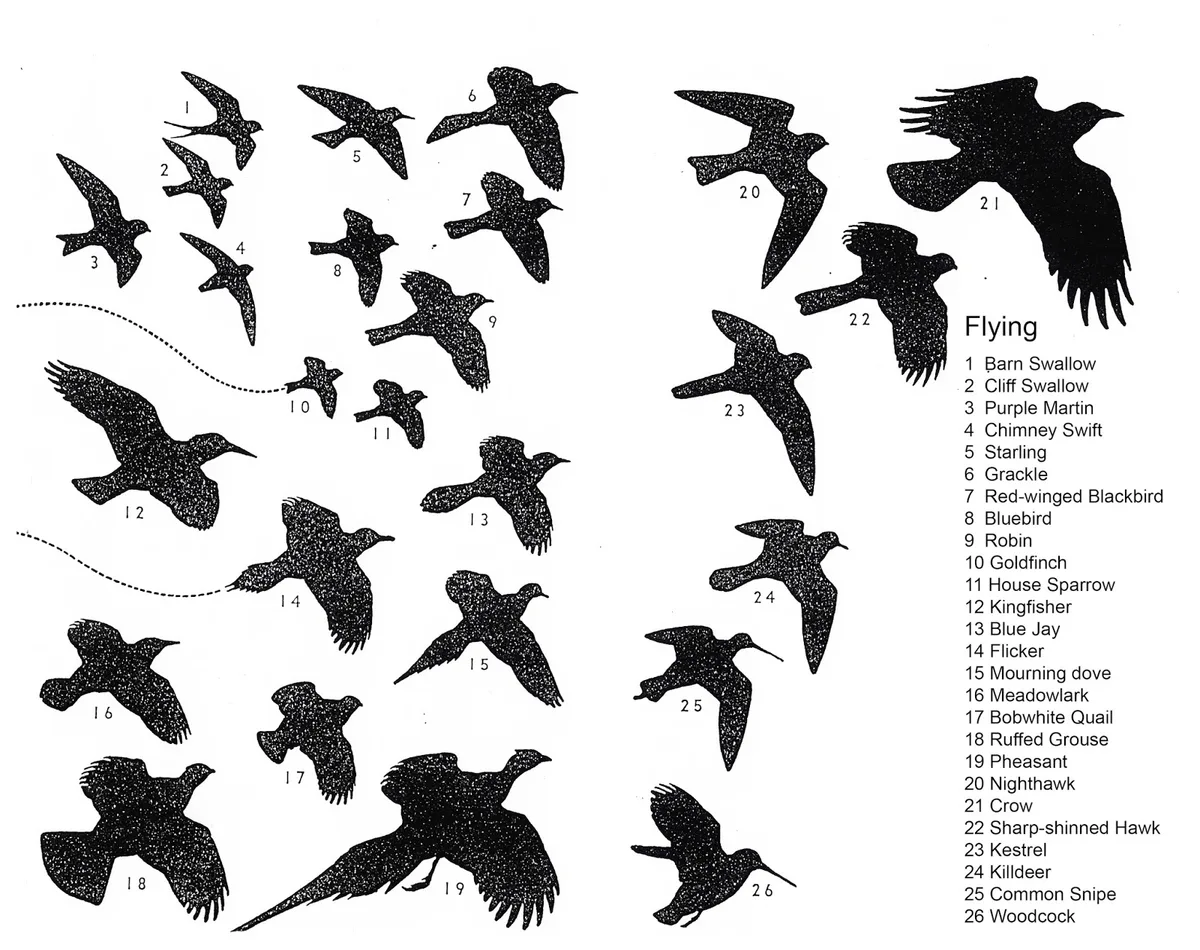
Image source: Bing (Web (fair-use with source credit))
Movement also provides essential clues for your identification. Some birds move with a fluid grace, while others appear jerky and erratic. The blue jay is known for its bold, purposeful flight and high-energy behavior at feeders.
In contrast, smaller birds like chickadees often flit rapidly between branches in short, controlled bursts of motion.
Look for these behavioral patterns as part of the bird's profile:
- Hopping: Common in robins and many sparrows on the ground.
- Creeping: Common in nuthatches that move head-first down tree trunks.
- Swaying: Common in finches that grip swaying branches while eating seeds.
By watching how a bird moves, you can often distinguish between species that look somewhat similar at a glance. You are looking for the personality of the bird's flight and locomotion. This data becomes a permanent part of your mental library, making future identifications much faster.
Mastering the Field Marks: The Details That Actually Matter
Field marks are the specific, consistent patterns on a bird that serve as its identity card. Once you have the silhouette, focus your attention on the head and wings. Look for wing bars, which are the light-colored stripes on folded wings, or eye rings, which are small circles of color around the eye.
These details are the most reliable way to separate similar-looking species.
Image source: Bing (Web (fair-use with source credit))
You should also examine the beak closely. A thick, blunt beak is meant for cracking hard seeds found in garden feeders. A thin, needle-like beak is designed for picking insects off leaves.
This anatomical detail is a direct result of the bird's diet and habitat. If you see a bird with a heavy beak, you can immediately rule out many insect-eating species.
Focus on these key areas for positive identification:
- The Crown: Look for stripes, spots, or a crest on top of the head.
- The Throat: Note if the color is solid, streaked, or different from the chest.
- The Wing Bars: Check for lines running across the folded wing.
These marks are consistent for adults of the species, though you should remember that juveniles often look drabber or lack these distinct patterns. Keep a notebook to jot down these features as you see them. The simple act of writing down a white stripe on wing forces your brain to observe the bird more carefully.
The Seasonal Shift: Why Your Backyard Guests Change Throughout the Year
Birds are dynamic parts of your local environment because they respond to food availability and breeding needs. You might see a surge of goldfinches in the summer when seeds are plentiful, only to find them replaced by different, hardier birds in the winter. This cycle is a fundamental part of the migratory behavior managed by natural instincts and seasonal light changes.
Think of your backyard as a transient hotel. Some species are permanent residents that stay year-round, while others are migratory visitors that pass through for just a few weeks. If a bird you see every day suddenly vanishes in the fall, it is likely heading south to follow its preferred food source.
Tracking these arrivals and departures is one of the most rewarding parts of birding.
Use this general timeline to predict who shows up:
- Spring: Watch for the return of long-distance migrants like orioles or warblers.
- Summer: Expect to see the most variety, including fledglings learning to find food.
- Fall: Look for movement as birds begin their journey toward wintering grounds.
- Winter: Focus on the hardy species that stick around, like cardinals and jays.
Don't panic if your backyard seems empty for a week or two. Population shifts are natural and often mirror the weather patterns in your wider region. By keeping a simple log of when you first see certain birds each year, you'll start to predict their arrival dates with impressive accuracy.
Common Mistakes That Lead to Misidentification
The most common error for new observers is relying solely on color. In the sunlight, a brown bird might look reddish or golden, leading to an incorrect guess. Always balance color with shape and behavior.
If a bird looks like a robin but has a different beak shape, it is likely a different species entirely.
Another frequent pitfall is the confusion caused by juvenile birds. Young birds often have mottled or dull feathers that help them hide from predators in the nest. They rarely look like the vibrant adult photos found in field guides.
Do not assume that a dull-colored bird is a different species; it might just be a younger version of one you already know.
Avoid these common traps to stay on track:
- Ignoring the Habitat: A duck is rarely going to hang out in a dry, suburban shrub.
- Over-relying on Size: Distance is deceptive. A small bird can look huge if it is perched close to your window.
- Guessing from Memory: Always double-check your memory against a reliable source or a photo.
If you are stuck on an ID, stay calm. Take a photo if you can, but don't obsess over it if you can't. Sometimes the best way to identify a bird is to just keep watching it.
Eventually, the bird will perform a signature behavior or call that gives its identity away, and the answer will become obvious.
Pro Tips for Becoming a Confident Bird Observer
The most effective way to improve your skills is by limiting the number of species you try to learn at once. Focus only on the five most common birds in your specific zip code for an entire month. Once you can recognize their calls and flight patterns instinctively, move on to the next set.
This focused approach prevents the overwhelmed feeling that often leads beginners to give up.
Use technology to support your learning rather than letting it do the work for you. Apps like Merlin Bird ID from the Cornell Lab of Ornithology provide helpful references for vocalizations. However, try to identify the bird yourself first before checking the app.
This creates a stronger memory of the bird's unique traits, which is critical for long-term recognition.
Consider these habits to increase your success rate:
- Observe at Dawn: Most birds are significantly more active and vocal during the first two hours after sunrise.
- Stay Still: Movement scares birds away, but if you sit quietly for ten minutes, they will often return to their normal routines.
- Keep a Journal: Tracking dates and locations helps you understand the yearly cycle of the birds in your specific region.
You will eventually develop a birding ear that can pick out a single specific call from a noisy chorus. This skill comes with time and persistent practice. Treat every observation as a chance to add one more detail to your mental guide.
Consistency is much more valuable than spending hours in the field only once a month.
Frequently Asked Questions About Backyard Birding
Which birds are most likely to visit a new feeder?
House Sparrows, House Finches, and Mourning Doves are usually the first to discover a new feeder. These species are highly social and opportunistic by nature. They often watch where other birds congregate, so once a small group finds your food, others will likely follow within a few days.
Why do some birds look like they are fighting at the feeder?
Feeding stations are high-value resources, so birds often establish a pecking order to ensure they get enough to eat. Aggressive behavior, like swooping or tail-flicking, is a common way to defend a spot. This is natural and usually doesn't result in serious injury, though it helps to provide multiple feeders.
Is it safe to feed birds during the winter months?
Feeding is generally safe, provided you keep your equipment clean and in good repair to prevent the spread of illness. Birds rely on consistent food sources when natural supplies are covered by snow or frost. Always ensure your feeder design stays dry to keep the seeds from developing mold or bacteria.
Should I worry about hawks in my backyard?
Hawks are a natural part of the local ecosystem and their presence often indicates a healthy bird population. While they do prey on smaller birds, they are a vital check on the food chain. You cannot stop them, but you can provide dense brush or hedges to give your backyard visitors a safe place to hide.
How do I stop squirrels from eating all the food?
Squirrels are persistent, but you can use weight-sensitive feeders or place baffles on your poles to block their access. Positioning feeders at least ten feet away from jumping points like trees or roofs is also effective. Experimenting with different baffle designs is often necessary, as squirrels are quite clever at solving puzzles.