Types of Birds
Learning the many types of birds turns a simple walk outside into an engaging game of identification. You’ll find that noticing small details in plumage or song makes the natural world feel much more personal.
Bird identification relies on recognizing specific physical traits. According to the Cornell Lab of Ornithology, focusing on body shape and movement provides the most reliable data for accurate classification. That’s how we’ll start our journey today.
Quick Answer
The many types of birds fall into broad ecological categories. Songbirds, raptors, and waterfowl make up the most common groups. You identify them by size, shape, and color patterns.
Behavior and habitat also serve as critical diagnostic clues. These markers help you classify species quickly in the field.
Why Visual Clues Beat Field Guides
While field guides provide a massive database, they can overwhelm a beginner. You often don't have enough time to flip through hundreds of pages before a bird flies away. Learning to spot visual cues lets you make a snap decision.
Visual identification focuses on what you see in the moment. It prioritizes the general silhouette of the bird. You aren't trying to identify every species at once.
Instead, you are narrowing down your choices based on obvious physical evidence.
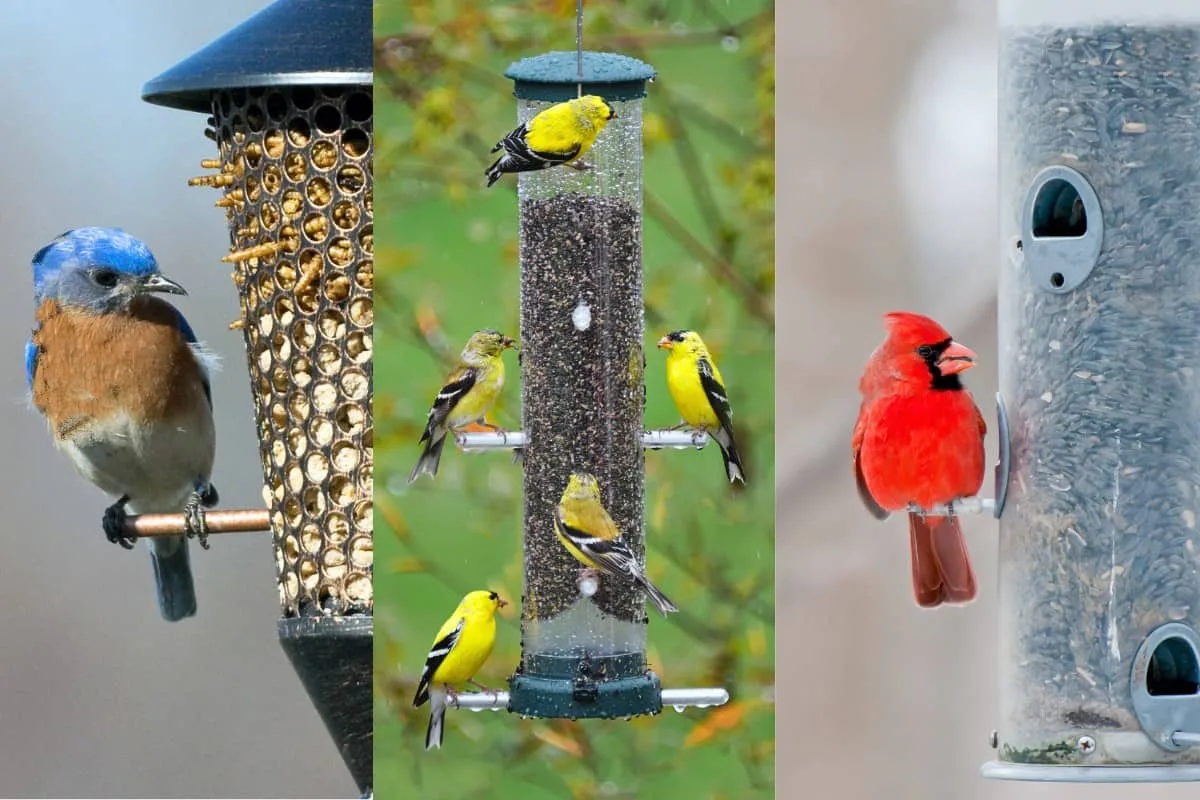
Image source: Bing (Web (fair-use with source credit))
This method transforms how you look at the backyard. You stop seeing a blur of feathers and start seeing specific field marks. Once you train your brain to scan for size, shape, and color, you'll naturally filter out the thousands of species that don't match what you see.
The "Size, Shape, and Silhouette" Workflow
If you want to master identification, you must follow a logical workflow. Start by assessing the overall size of the bird. Is it the size of a sparrow, a robin, or a crow?
This single data point eliminates a massive portion of the possibilities.
Next, observe the shape of the bird. Look at the beak and the tail. A hooked, curved beak suggests a raptor, while a short, thick, conical beak often belongs to a seed-eating songbird.
These shapes are specialized tools evolved for specific diets.
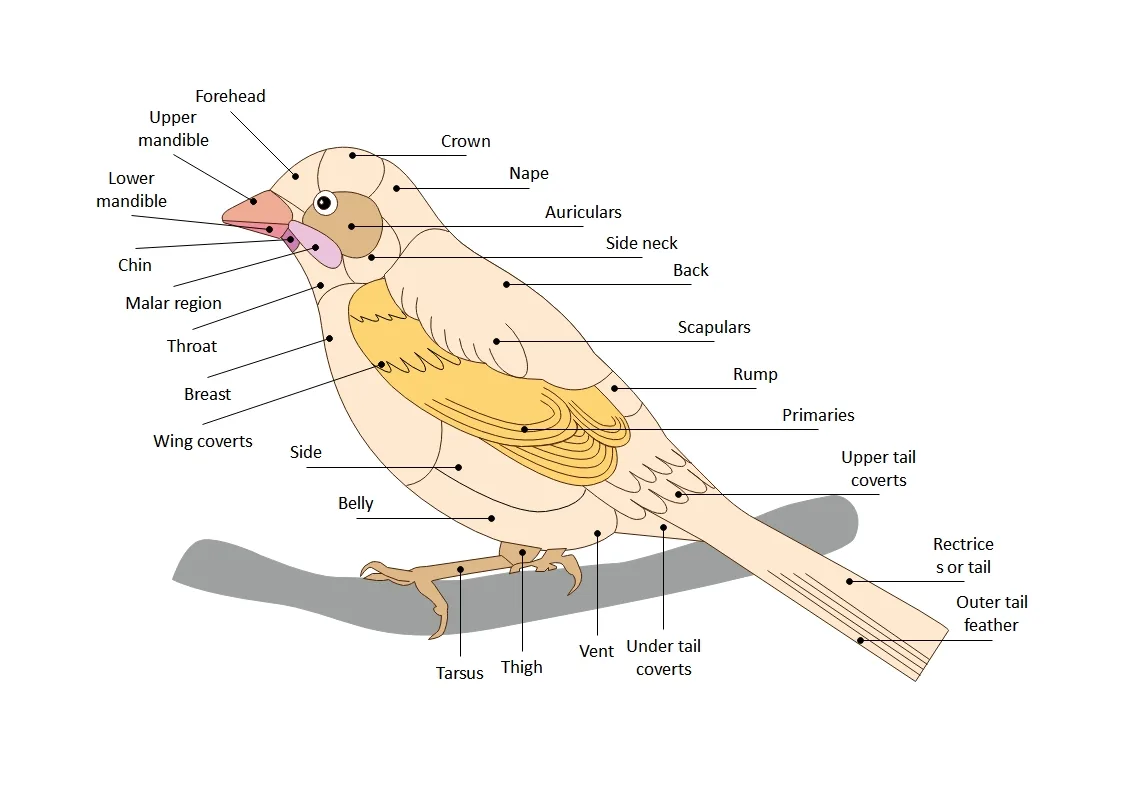
Image source: Bing (Web (fair-use with source credit))
Finally, look at the silhouette against the sky. A bird’s outline is often more telling than its color, especially in poor lighting. The way a bird holds its head or the angle of its wings while soaring provides clues that color alone cannot offer.
Mastering Field Marks: Decoding Color and Patterns
Color patterns, or field marks, are the final pieces of the identification puzzle. Don't just look for a single color, as many birds share similar plumage. Focus on where the color appears on the body instead.
Look for these common high-value field marks:
- Eye Rings: A thin, contrasting circle of feathers around the eye.
- Wing Bars: Lines of color, often white or yellow, crossing the wing.
- Supercilium: A stripe of color running above the eye, acting like an eyebrow.
- Malar Stripes: Bold streaks extending down from the base of the beak.
If you see these marks, note their position and contrast. A bird with a white wing bar is likely a different species than one with a white eye ring. These specific details are the fingerprints of the avian world.
Use them to distinguish between look-alike species.
Behavioral Cues: Reading Movement and Habitat
Behavioral clues often provide the strongest evidence when color or pattern isn't clear. Watch how the bird moves within its environment. A bird that clings vertically to a tree trunk and moves head-first downward is likely a Nuthatch.
Habitat is another crucial filter. You won't find a shorebird in a dense, dry woodland. Pay attention to whether the bird is solitary or part of a mixed-species flock.
Their activity level also serves as a diagnostic trait.
- Foraging Style: Does it scratch the ground or probe the bark?
- Flight Pattern: Does it flap in a steady rhythm or move in a bounding, undulating motion?
- Vocalization: Listening for repetitive songs helps confirm your visual hypothesis.
Knowing your local ecosystem helps you set expectations. If you know what birds inhabit your region, you can rule out hundreds of possibilities. You aren't guessing at random.
You are making an informed deduction based on the bird's natural context.
Common Visual Traps and Identification Mistakes
The biggest mistake beginners make is trying to identify a bird by color alone. Colors change based on lighting and the angle of the sun. A dull brown bird might look vibrant red in the right light, leading to a false identification.
Another common trap is the confusion between juvenile and adult plumage. Young birds often lack the bright patterns of their parents. They might have streaky chests or muted tones that look nothing like the photos in your field guide.
| Mistake | Consequence | How to Fix |
|---|---|---|
| Focus on color | Misidentification | Shift focus to shape and size |
| Ignoring lighting | Blurred colors | Move until the sun is at your back |
| Rushing | Missed field marks | Watch for at least 30 seconds |
Don't get discouraged if you can't name every bird you see. Even experts struggle with birds in heavy shade or quick, erratic flight. Treat every encounter as an opportunity to practice your observation skills rather than a test you must pass.
Essential Tools for Sharpening Your Birding Eye
You don't need expensive gear to identify birds effectively, but a few basics help you see what the naked eye misses. Binoculars are the gold standard for birding. An 8×42 pair is the industry recommendation because it balances magnification with a wide field of view.
When you look for binoculars, check for the 8×42 spec. The first number is the magnification, and the second is the lens diameter in millimeters. A larger diameter lets in more light, which is helpful if you are watching birds during sunrise or sunset.

Image source: Web (Bing) / aceoptics.co.uk (Web image (fair-use with source credit))
Beyond optics, a quality field guide is your best resource for confirming what you see. Whether you prefer a physical book or a digital app, ensure it includes range maps and seasonal plumage variations. These guides turn a quick sighting into a verified discovery by showing you every potential look-alike in your area.
Keep a simple notebook or a dedicated app for recording your observations. Documenting the date, location, and key field marks improves your memory over time. As of 2026, many birders use apps that sync with regional eBird databases to track local migration patterns.
This contributes valuable data to scientific research while helping you build your personal list of species.
Frequently Asked Questions About Bird Identification
How do I tell a male from a female bird?
Many species exhibit sexual dimorphism, meaning males and females have different appearances. Males often display brighter, more vibrant plumage to attract mates or defend territory. Females tend to have more muted, cryptic colors that provide camouflage while nesting.
Consult a field guide for your specific region, as some species look identical regardless of their sex.
Can I identify birds just by their songs?
Yes, you can identify birds by their vocalizations once you learn the distinct patterns. Every species has a unique song or call, much like a signature. Beginners should start by listening for common, repetitive sounds in their yard.
You can use audio-identification apps that analyze sound frequencies to give you a quick, reliable species suggestion.
Why do some birds look different in the winter?
Many birds undergo a process called molting, where they shed old, worn-out feathers for new ones. Some species also undergo a dramatic color change between their breeding and non-breeding seasons. This seasonal plumage change is an evolutionary strategy to ensure survival.
Always check your field guide for winter plumage illustrations to avoid misidentifying a familiar bird.
What should I do if I see a bird that isn't in my book?
If a bird doesn't match your local guide, double-check your location and the current season. You might be witnessing a rare visitor that is off course during its migration. Take a photo if possible, or sketch the key field marks while the bird is still in view.
You can then submit your observation to a regional ornithological society for expert review.
Are all birds migratory?
No, bird populations are classified as either residents or migrants based on their movement patterns. Residents stay in the same general area year-round, while migrants travel long distances between their breeding and wintering grounds. Most birds follow predictable flyways that are documented by the [U.S.
Fish and Wildlife Service](https://www.fws.gov). Understanding these paths helps you predict which species you’ll see in any given season.