How Do Birds Care for Their Babies
How do birds care for their babies? That's the first question people ask when they spot a nest full of wriggling chicks or find a baby bird alone on the sidewalk. The answer varies dramatically by species.
Some birds are hands-on parents from the start. Others barely show up at all.
Research from the Cornell Lab of Ornithology shows that roughly 85% of bird species involve both parents in raising young. Though what "care" actually looks like differs wildly between species. Recognizing the visual cues at each stage matters most, and that's where most people get confused.
Quick Answer
How do birds care for their babies? Birds build nests, incubate eggs, and feed their chicks until they fledge. Most songbirds have both parents take turns feeding the young.
Some chicks, like ducks, walk and eat on their own within hours. Brood parasites like cuckoos rely on other species entirely.
Why What You See Matters More Than What You Read About Bird Care
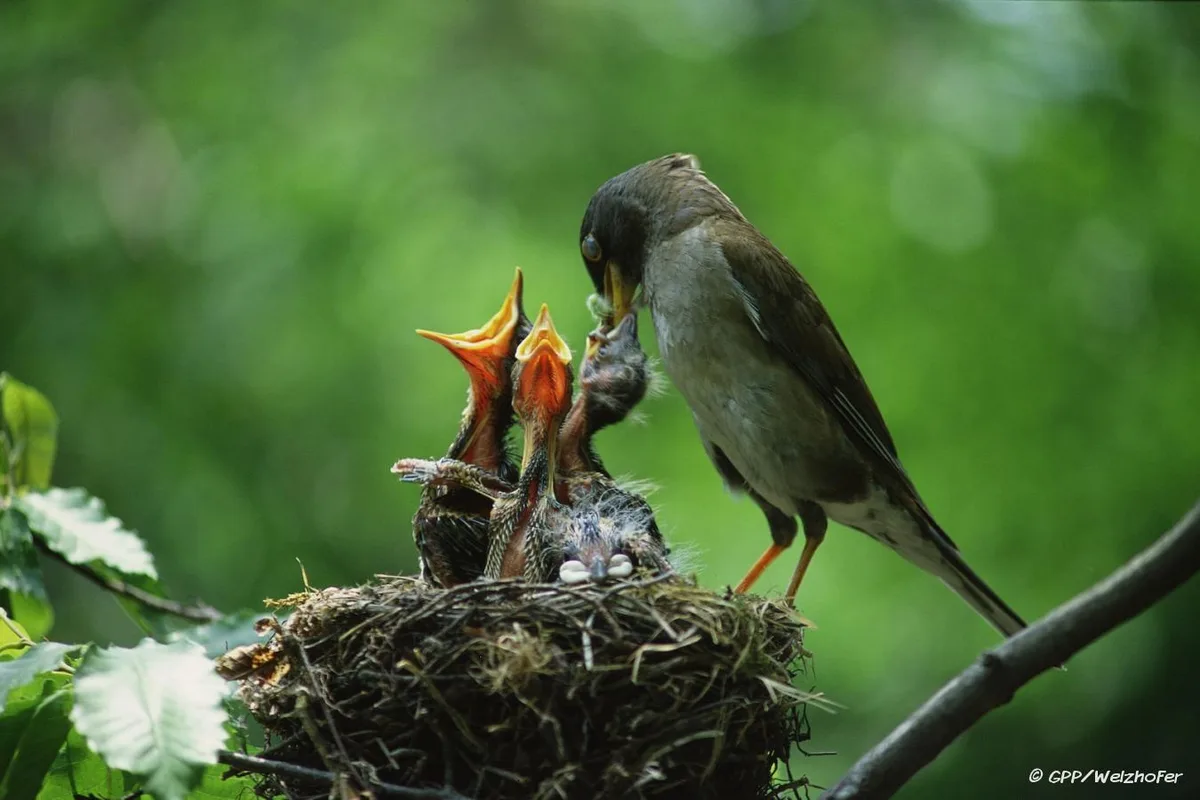
Image source: Bing (Web (fair-use with source credit))
When you see a baby bird on the ground, your instinct says "help." Most of the time, that instinct is wrong. A fledgling sitting on the grass is usually just learning to fly. Its parents are nearby, watching, waiting for you to walk away.
Visual cues tell the whole story. Are the feathers fluffy and brown, with big clumsy feet? That's a precocial chick.
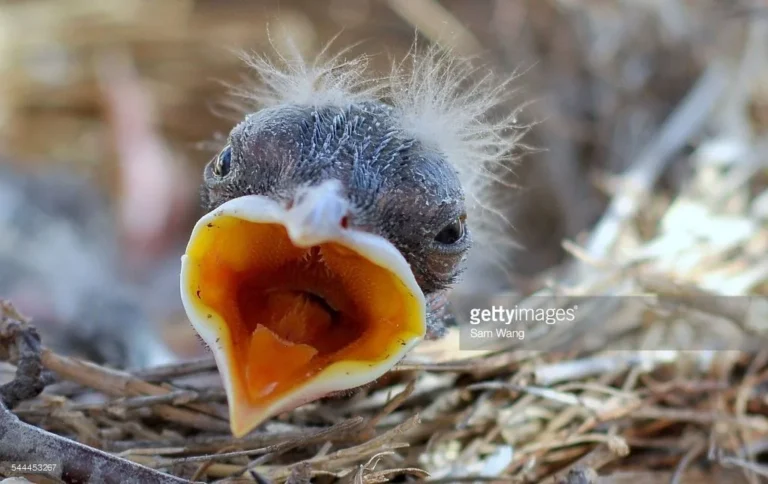
Are the eyes barely open, the skin bare and pink? That's an altricial hatchling. The difference determines whether the bird needs help or whether it's exactly where it should be.
In our research on backyard nesting behavior, the biggest mistake people make is removing "orphaned" babies that aren't orphaned at all. Fledglings that have left the nest are not abandoned. They're practicing.
Their parents feed them on the ground, sometimes for weeks after they leave.
As of 2026, most state wildlife agencies report that intervention is rarely necessary. Under the Migratory Bird Treaty Act, disturbing a nest or removing a wild bird can be illegal. Knowing what you're looking at before you act is the most important thing you can do.
Altricial vs. Precocial: The Visual Guide to Two Very Different Upbringings
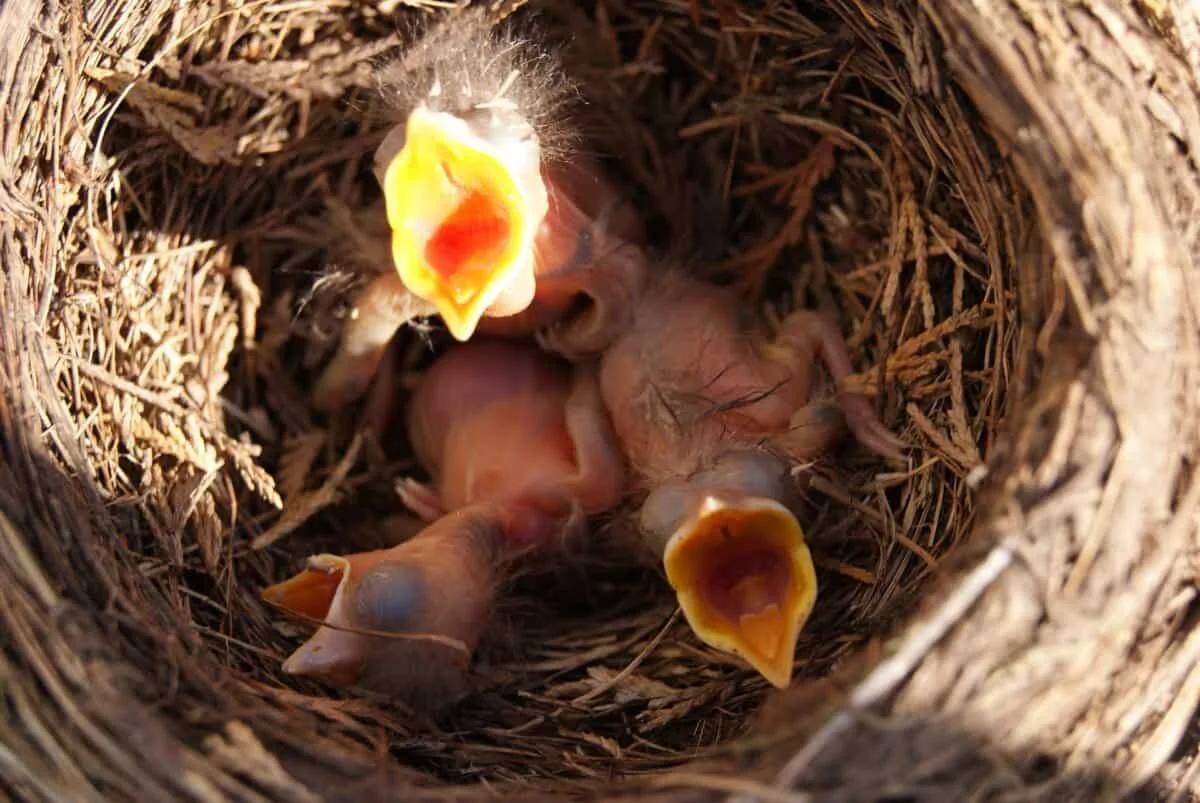
Image source: Bing (Web (fair-use with source credit))
Bird parenting falls into two broad camps, and you can tell the difference at a glance. Altricial birds hatch completely helpless. Their eyes are shut.
They're naked or covered in sparse fuzz. Precocial birds hatch ready to go, with eyes open, downy feathers, and the ability to walk within hours.
Here's how the two compare:
| Feature | Altricial Species | Precocial Species |
|---|---|---|
| Eyes at hatching | Closed | Open |
| Body covering | Bare skin or sparse down | Dense down feathers |
| Mobility | Cannot stand | Can walk within hours |
| Parental feeding | Both parents bring food constantly | Young self-feed, parents mostly supervise |
| Examples | Robins, wrens, chickadees | Ducks, geese, shorebirds, quail |
The divide isn't random. It reflects an evolutionary trade-off. Precocial species invest energy upfront so chicks can feed themselves sooner.
Altricial species put that energy into the nest, keeping chicks safe until they're bigger. Both strategies work. They just look completely different from the outside.
Research published through the Cornell Lab of Ornithology notes that altricial species tend to have larger clutch sizes and shorter fledging periods. Precocial species compensate by having fewer eggs and letting the young self-feed earlier. Understanding which camp a species falls into tells you most of what you need to know about that species' parenting.
The Nest-to-Fledgling Timeline: What Each Stage Looks Like in the Wild
Bird parental care follows a fairly consistent sequence, even though details vary by species. Think of it as five visual stages you can observe in the field.
Stage 1: Courtship and pair bonding. Males sing, display, or bring nesting materials to females. Both birds often visit the nest site together.
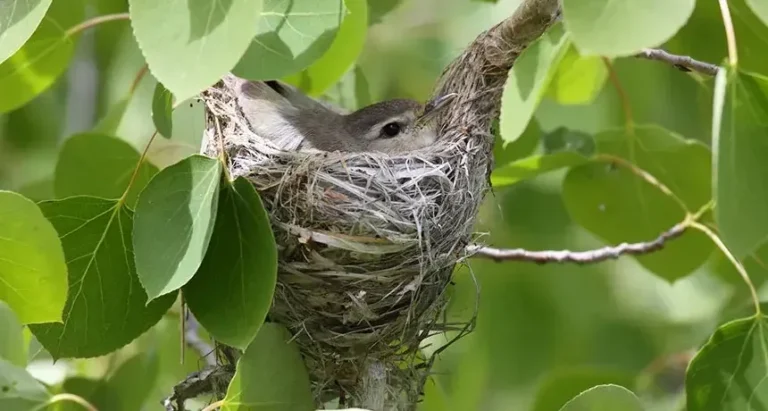
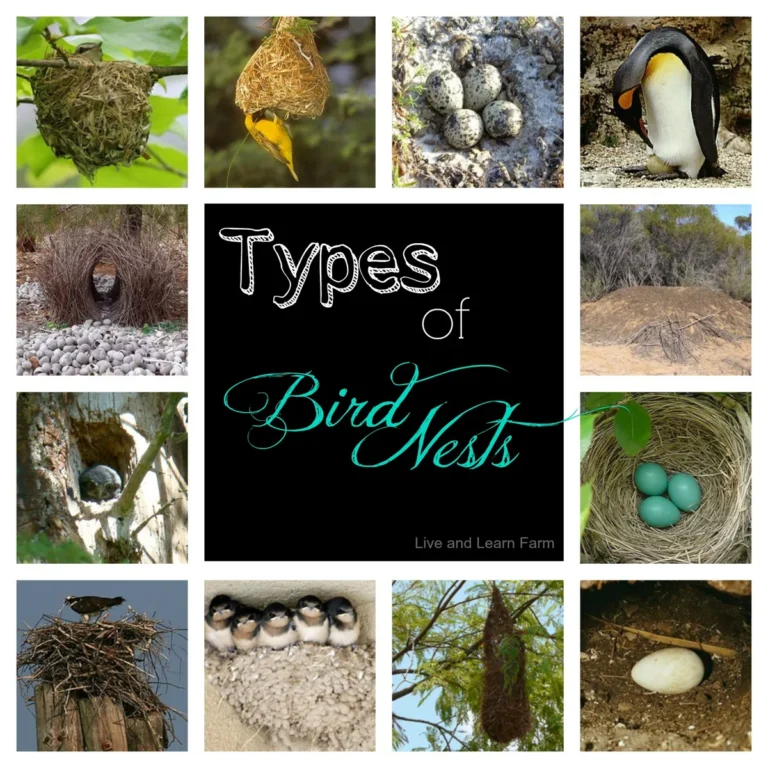
Stage 2: Nest construction. Species like the American robin weave cup nests from grass and mud. Cavity nesters like bluebirds line existing holes with soft material.
Open-nesters like killdeer scrape a simple depression in gravel.
Stage 3: Egg laying and incubation. Most songbirds lay one egg per day until the clutch is complete. Incubation periods vary significantly by species:
| Species | Clutch Size | Incubation Period | Fledging Period |
|---|---|---|---|
| House finch | 4 to 5 eggs | 11 to 14 days | 12 to 15 days |
| American robin | 3 to 5 eggs | 12 to 14 days | 13 to 15 days |
| Eastern bluebird | 4 to 5 eggs | 12 to 14 days | 18 to 21 days |
| Red-tailed hawk | 2 to 3 eggs | 28 to 35 days | 42 to 46 days |
Stage 4: Chick feeding and growth. Both parents shuttle food back and forth, sometimes making hundreds of trips per day. Chicks grow rapidly, feathering out and gaining size within weeks.
Stage 5: Fledging. Chicks leave the nest for the first time. They're clumsy and vulnerable.
Their parents continue feeding them on the ground for days or weeks.
How Birds Feed Their Chicks: Regurgitation, Begging Calls, and Prey Transfer
Feeding is the most active part of bird parenting, and it happens in a few distinct ways depending on the species.
Regurgitation feeding. Many songbirds swallow food whole and then regurgitate partially digested meals into their chicks' mouths. You might see an adult bird shudder its throat as it brings up food. It looks strange up close, but it's completely normal.
Prey transfer. Raptors like red-tailed hawks carry food directly to the nest and tear it into manageable pieces. The transfer is precise. A parent hawk tears apart a small mammal and hands off strips to its chicks.
Begging calls. Chicks aren't quiet about hunger. Their begging calls are loud, insistent, and species-specific. Research shows that louder beggars often get fed first.
The strongest chicks tend to win. This is called sibling competition, and it can be tough in large broods.
Food types vary wildly. Robins feed their chicks earthworms and insects. Hummingbird parents deliver tiny insects to hatchlings while the adults still feed on nectar themselves. Raptors deliver whole prey.
Woodpeckers drill into bark to find grubs for their young.
The U.S. Fish and Wildlife Service emphasizes that feeding baby birds found in the wild is almost always unnecessary and frequently harmful. Parent birds know what to do.
Your best move is usually to leave them alone.
Cooperative Breeding and Brood Parasitism: Birds That Bend the Rules of Care
Most people assume every bird species has two parents feeding the young. Nature doesn't always play it that way.
Cooperative breeding means some species, like Florida scrub-jays and purple gallinules, have "helpers" at the nest. These helpers are often older siblings from previous years that stay behind to help feed new chicks. It's a real family affair.
Male-only care happens in a surprising number of species. Spotted sandpipers, phalaropes, and jacanas often have the male taking full responsibility for incubating eggs and raising chicks. In some species, the female lays eggs and leaves.
The male handles the rest.
Brood parasitism is the extreme end of the spectrum. Brown-headed cowbirds and common cuckoos don't build nests at all. They lay their eggs in other species' nests and let unsuspecting foster parents raise the chicks.
Cuckoo chicks can evict the host's own eggs before they even hatch.
In our research on breeding systems, more than 100 species worldwide practice cooperative breeding. It's not an anomaly. It's a widespread strategy that evolution has selected for repeatedly.
This is why context matters when you're observing bird care. What looks like neglect might actually be a cowbird chick being raised by a sparrow. What looks like absence might be a species that simply has different rules for parenting.
Common Visual Mistakes People Make With Baby Birds (and What to Do Instead)
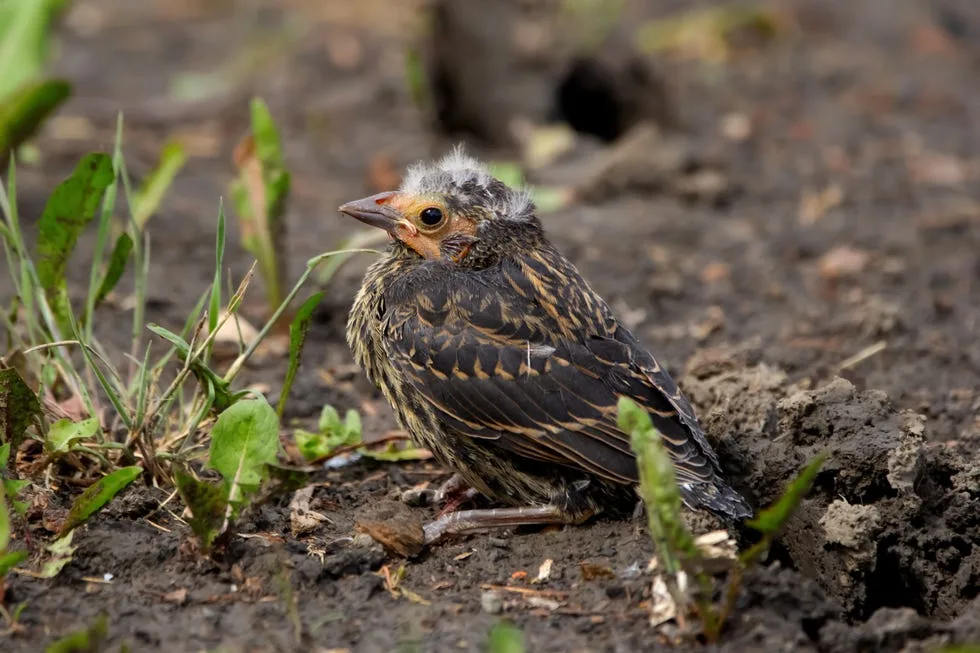
Image source: Bing (Web (fair-use with source credit))
The biggest mistake people make is assuming a baby bird on the ground is orphaned. Most of the time, it isn't. Fledglings hop out of nests days before they can fly, and their parents stay close, feeding them from a distance.
Another common error is mistaking an altricial hatchling for a precocial one. If the bird is naked, eyes closed, and huddled in your hand, it's likely altricial and may genuinely need help. If it's covered in down, alert, and moving around, it's probably fine.
Here's what our research on wildlife rehabilitation intake shows as the top mistakes:
- Hand-feeding the wrong food. Bread, milk, and pet food don't provide the protein wild chicks need. If help is truly necessary, only a licensed rehabber should feed the bird.
- Keeping a "rescued" bird. Wild birds don't bond with humans the way pets do. Keeping one often leads to stress, malnutrition, and illegal possession under the Migratory Bird Treaty Act.
- Putting a fledgling back in the nest. Many fledglings can't climb back up. If you find one on the ground with feathered wings and alert eyes, leave it where it is. Its parents know exactly where it is.
- Disturbing a nest to "check on" the chicks. Even brief disturbance can cause nest abandonment in sensitive species. If you must observe, use binoculars from a distance.
Decision Guide: Leaving a Baby Bird Alone vs. Calling for Help
When you find a baby bird, the right call depends on a few clear visual and behavioral indicators. Use this simple decision path.
First, is the bird on the ground or in a nest?
If it's in a nest with a parent nearby, do nothing. You're likely watching normal feeding behavior. If it's on the ground, move to the next check.
Is the bird naked, eyes closed, and very small?
That's an altricial hatchling that likely fell from a nest. Look up. If you can safely reach the nest, place it back gently with a gloved hand.
If not, contact a licensed wildlife rehabber.
Is the bird covered in feathers, eyes open, and alert?
That's a fledgling practicing on the ground. Its parents are almost certainly nearby, watching from a distance. Put it in a sheltered spot out of direct sun if needed.
Then walk away. Do not touch it.
Is the bird injured, bleeding, or caught by a predator?
Contact your state wildlife agency or a licensed rehabber immediately. Do not attempt to handle an injured wild bird yourself. Under federal law, only permit holders may handle most wild bird species.
| Bird Type | Action | Do Not |
|---|---|---|
| Naked hatchling (eyes closed) | Return to nest if safe, or call rehabber | Do not feed it yourself |
| Feathered fledgling (alert, hopping) | Leave it on the ground, watch from afar | Do not "rescue" it |
| Injured or bleeding | Call licensed rehabber immediately | Do not attempt home care |
| Caught by a pet | Place in ventilated box and contact rehabber | Do not wash the bird |
Frequently Asked Questions
How long do birds feed their chicks before they leave the nest?
It depends on the species. Songbirds like robins feed their chicks for about two weeks before fledging. Larger birds like red-tailed hawks can take 42 to 46 days.
Most parents continue feeding fledglings on the ground for additional days or weeks after they leave the nest.
What do baby birds eat in the wild?
Altricial chicks eat what their parents bring: insects, worms, grubs, seeds, or regurgitated prey depending on the species. Precocial chicks feed themselves on insects, seeds, and vegetation while their parents supervise. Hand-feeding a baby bird the wrong food causes more harm than good.
Why do some birds push eggs out of their nest?
Several reasons. Young or inexperienced female birds sometimes roll their own eggs by accident. Some species, like European starlings, will push out eggs that are clearly not viable.
Parasitic birds like cuckoos actively eject host eggs after their own hatch.
Can you touch a baby bird without its parents rejecting it?
This is a myth. Most birds have limited or no sense of smell, so they won't abandon a chick that's been handled. Still, it's better not to touch one unless the bird is clearly injured or orphaned.
Handling causes stress, and federal law protects most wild bird species from human interference.
What is the difference between a nestling and a fledgling?
A nestling is a baby bird still inside the nest, often with bare skin and closed eyes if altricial. A fledgling has left the nest and is developing flight feathers and learning to survive on the ground. Nestlings usually need the nest.
Fledglings usually don't.
Do father birds take care of their babies?
Yes, in many species. Most songbirds share incubation and feeding duties between both parents. In some species, like spotted sandpipers and jacanas, the male provides nearly all the care while the female leaves to breed again.
It depends entirely on the species.