How Do Birds Choose a Mate
How do birds choose a mate? It's a question that goes deeper than you might think. There's no swiping, no awkward first dates, no second-guessing texts.
What happens instead is a process shaped by millions of years of natural selection.
Research as of 2026 confirms that mate choice in birds is driven by visual displays, song complexity, and genetic compatibility signals. These aren't random preferences. Each one honestly reflects the male's health, diet, and survival ability.
Quick Answer
How do birds choose a mate? Females evaluate males based on plumage quality, song complexity, and territorial size. They also assess genetic compatibility through immune system diversity signals.
Research shows these signals honestly reflect the male's health and survival ability. The process follows sexual selection principles that have shaped bird behavior for millions of years.
Why Bird Mate Choice Matters More Than You Think
Bird mate choice isn't just a fun biology topic. It has real consequences for conservation, captive breeding programs, and how we understand animal behavior.
When programs like the California Condor Recovery Program manage endangered species, understanding natural mate choice helps keepers pair birds successfully. The US Fish and Wildlife Service reports that captive breeding has recovered several species from the brink. But success depends on matching pairs that show natural compatibility, not random pairings.
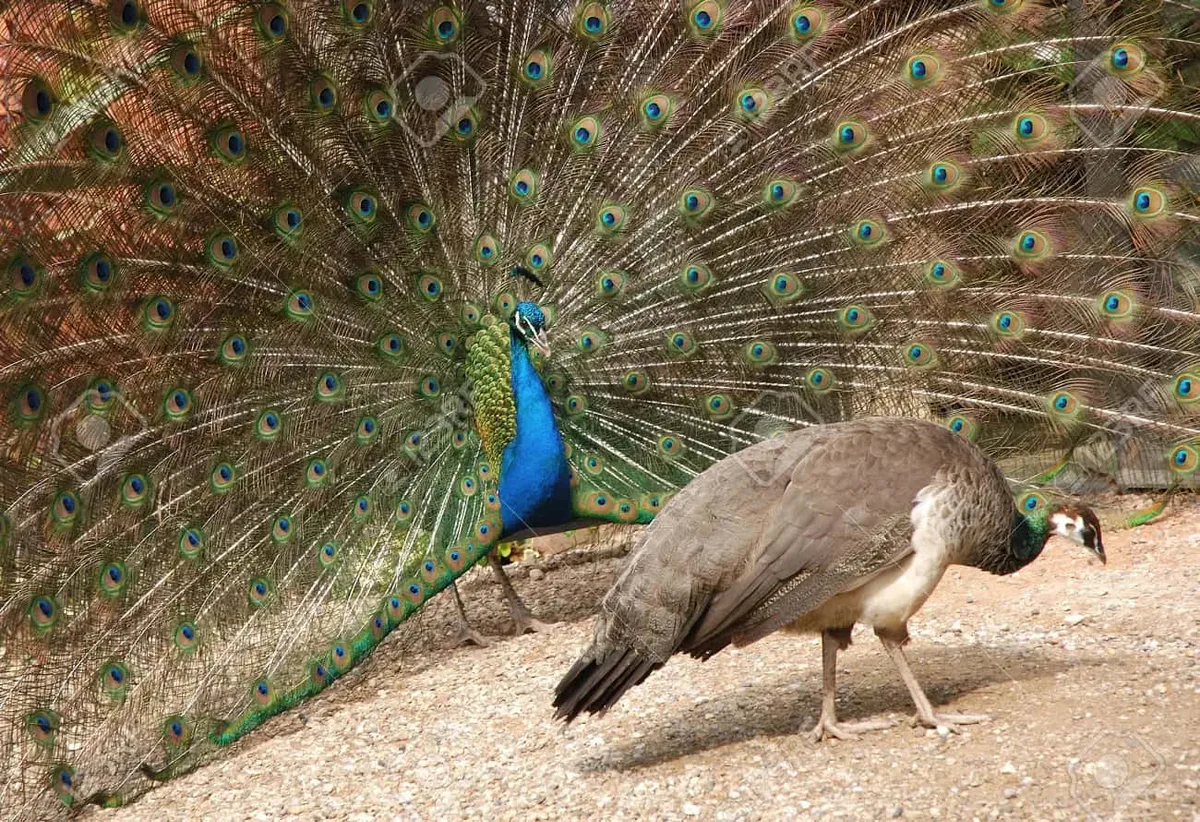
Image source: Bing (Web (fair-use with source credit))
In the wild, mate choice drives the evolution of entire species. The peacock's massive tail, the bowerbird's elaborate decorations, and the nightingale's complex song all exist because females prefer them. Remove that preference, and the trait disappears within a few generations.
Data from the Cornell Lab of Ornithology confirms that courtship and mate selection vary enormously across roughly 11,000 bird species. Each has evolved its own signals and evaluation criteria.
For birdwatchers and field naturalists, understanding mate choice makes every observation richer. You're not just seeing "a pretty bird." You're seeing millions of years of female-driven selection at work.
Here's what makes this especially relevant to conservation. Females in healthier populations with more habitat options tend to be pickier. Females in small, resource-poor populations often accept whatever mate is available.
That directly affects genetic diversity. Smaller populations lose variation over time, making species more vulnerable to disease and environmental change. When biologists design habitat restoration for species like the kakapo or the whooping crane, they need to know what features support natural courtship.
Who benefits from understanding bird mate choice:
- Conservation biologists managing endangered species breeding programs
- Ornithology students studying evolutionary biology and animal behavior
- Birdwatchers who want to interpret field behavior in the wild
- Zoo professionals matching captive pairs to maximize genetic diversity
- Wildlife educators explaining natural selection through real-world examples
The connection between mate choice and species survival is direct and well-documented. That's what makes this topic matter beyond academic curiosity.
What Is Sexual Selection and How Does It Work?
Sexual selection is the process by which traits that improve mating success become more common in a population. Charles Darwin first described it in his 1871 book The Descent of Man, and Selection in Relation to Sex.
In birds, sexual selection operates through two main mechanisms.
Female choice (intersexual selection). This is the dominant mechanism in most bird species. Females evaluate males and decide which ones to mate with. Their preferences drive the evolution of traits like bright plumage, long tails, and complex songs.
Male-male competition (intrasexual selection). Males compete directly for access to females. This involves physical fights, territorial disputes, or display contests where males try to outperform rivals.
The key concept tying both mechanisms together is honest signaling. Traits preferred by females are honest indicators of the male's quality. A male with a bright, symmetrical tail probably has good genetics.
A male that sings a complex repertoire likely has strong neural development.
Amotz Zahavi's Handicap Principle, published in 1975, explained why this works. Expensive traits like a peacock's tail are honest signals precisely because they're costly. Only a high-quality male can afford to grow and maintain them.
Females that prefer these traits end up with healthier offspring.
This is why sexual selection has such dramatic effects on bird populations. The peacock's tail didn't appear overnight. It grew gradually as females consistently chose males with more elaborate trains.
The process doesn't stop at copulation either. Sperm competition adds another layer. Females in many species store sperm from multiple males, and the most competitive sperm reaches the egg.
Sexual selection explains why birds look so different from each other. It's the engine behind some of the most striking displays in nature.
The Signals Birds Evaluate in a Potential Mate
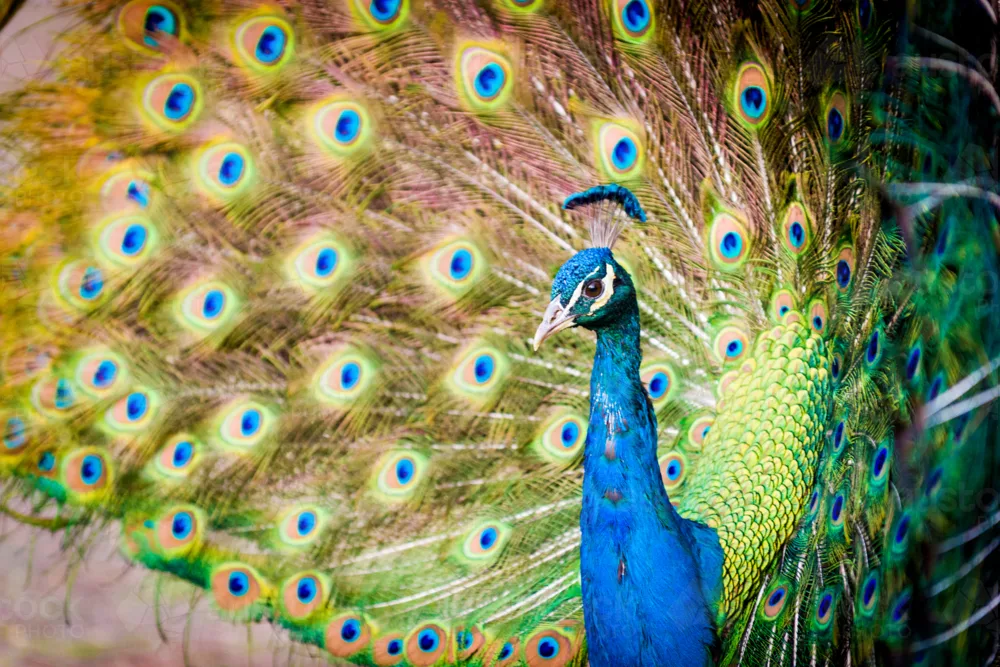
Image source: Web (Bing) / austockphoto.com.au (Web image (fair-use with source credit))
Birds use a wide range of signals to evaluate potential mates. These fall into three main categories: physical traits, behavioral displays, and genetic compatibility cues.
Physical traits are the most obvious. Coloration, size, symmetry, and plumage condition all carry information. Bright plumage signals good nutrition, specifically carotenoid-rich diets that support immune function.
Symmetric features indicate stable development.
Behavioral displays tell females how a male is performing. Song complexity, display persistence, and territorial size all matter. A male that sings more often and with more varied songs is usually healthier and more experienced.
Genetic compatibility signals are subtler. Research shows that many bird females prefer males with different major histocompatibility complex (MHC) genes than their own. This reduces inbreeding and produces offspring with stronger immune systems.
Here's how these signals break down:
| Signal Type | What It Communicates | Example Species |
|---|---|---|
| Plumage color | Diet quality and immune health | Northern Cardinal |
| Song repertoire size | Neural development and experience | European Starling |
| Tail eyespot count | Genetic quality and survival | Indian Peafowl |
| Territory size | Resource access and fighting ability | Red-winged Blackbird |
| Display persistence | Energy reserves and health | Bird-of-paradise |
| MHC gene diversity | Immune compatibility | Barn Swallow |
No single signal tells the whole story. Females typically evaluate multiple traits simultaneously. A male with bright plumage but weak songs may lose to a slightly duller male with a more impressive vocal display.
This is why courtship rituals are often multi-stage. Females don't make snap decisions. They watch, compare, and assess across multiple encounters before committing.
Research on barn swallows, for example, shows that females evaluate tail streamer length, song features, and flight performance together. None of these signals alone predicts mate choice, but together they give females a reliable picture of male quality.
Species-Specific Courtship: What the Research Shows

Image source: Bing (Web (fair-use with source credit))
No two bird species choose mates the same way. Courtship rituals vary enormously across roughly 11,000 species, and the research shows just how diverse these strategies can be.
Peacocks (Indian Peafowl). The classic example. Males display massive tail trains covered in eye-spots called ocelli. Research published in Animal Behaviour shows that females prefer males with more ocelli, and that ocelli count correlates with overall body condition.
A study by Takahashi et al. found that males with symmetrical eyespots got more mating opportunities.
Bowerbirds. Males of species like the satin bowerbird build elaborate structures called bowers. They decorate them with colored objects, arrange twigs precisely, and spend hours maintaining displays. Females inspect bowers before choosing.
The quality of the bower reflects the male's experience and genetic quality.
Songbirds and starlings. These species rely heavily on song. Males sing complex repertoires that can include dozens of unique syllables. Research on European starlings shows that males with larger repertoires attract more females and sire more offspring.
Jacanas and phalaropes. These species flip the script. Sex-role reversal means females compete for males, and males do most of the parental care. Female jacanas are larger and more aggressive, displaying bright plumage while males look comparatively drab.
Birds-of-paradise. In Papua New Guinea, male birds-of-paradise perform some of the most elaborate courtship displays in the animal kingdom. Males perform species-specific dances, contort their bodies, and flash colorful plumage. Females watch and choose.
Conservation programs use species-specific courtship data when designing recovery plans. The US Fish and Wildlife Service and partner organizations account for natural courtship needs when restoring habitat. If a species needs specific conditions to court successfully, restoration projects must provide them.
There's no universal courtship script. Each species has evolved its own signals, displays, and evaluation criteria based on its environment and evolutionary history.
Common Misconceptions About Bird Mating Behavior
A few myths about bird mating keep popping up in popular culture. Here's what the research actually shows.
Myth 1: Most birds are monogamous for life.
Many social bird species form pair bonds, but most are not strictly monogamous. Research shows that extra-pair paternity is common in "monogamous" species. In some populations of house sparrows and blue tits, over 40% of offspring are sired by males other than the social partner.
True lifelong pair bonds exist, but they're the exception.
Myth 2: Peacocks represent how all birds mate.
Peacocks and birds-of-paradise get all the attention, but they're outliers. Most bird species don't have flashy ornaments or elaborate dances. The majority rely on subtler signals like song, territory quality, and body condition.
Extreme ornamentation is driven by very specific ecological conditions.
Myth 3: Females don't compete for mates.
In most species, females choose and males compete. But sex-role reversal does occur. Jacanas, phalaropes, and some species of shorebirds have females that display brightly while males incubate eggs.
These cases prove that the direction of sexual selection can flip depending on the species.
Myth 4: Song is just for singing.
Song serves multiple purposes. It advertises territory, deters rivals, and attracts mates. In species like the European starling, a male's song repertoire reflects his neural development and survival experience.
Females use song complexity as a direct cue of mate quality. It's data, not noise.
Myth 5: Birds mate based on looks alone.
Physical traits matter, but they're only part of the picture. Females evaluate behavioral traits, genetic compatibility, and resource access too. A visually stunning male with a poor territory and weak display may lose to a less attractive male with better resources.
Myth 6: Courtship happens overnight.
Pair formation in many species takes days, weeks, or even months. Females in some species watch multiple males before choosing. They compare song quality, display performance, and territory condition over extended periods.
Accurate observations start with accurate expectations. Understanding these distinctions makes every birdwatching outing more rewarding.