Do Swans Mate for Life
You've probably seen pictures of swans, those graceful birds gliding on the water, and maybe you've heard the popular idea that they mate for life. It's a romantic thought, right? Like a fairy tale ending.
But as with most things in nature, it's a little more complicated and, dare I say, even more interesting than that.
As someone who's spent a good bit of time digging into animal behavior, I can tell you that while swans often form very strong, long-term pair bonds, the idea of "mating for life" isn't quite a universal rule. Think of it more as a strong tendency with some fascinating exceptions. Per studies from ornithological journals, many swan species exhibit lifelong pair bonding, but re-mating after a loss is common.
Quick Answer
Swans often mate for life, but it's not an absolute rule. Many species form strong, lifelong pair bonds. If a mate is lost, the surviving swan will usually seek a new partner.
Factors like species and age influence this behavior.
The "Mate for Life" Tendency in Swans
For many swan species, forming a pair bond is a significant commitment. When they find a mate, they'll typically stay together for the breeding season and then continue their partnership year after year. This strong tendency for lifelong pair bonding offers several key advantages that boost their survival and reproductive success.
- Efficient Partnership: Having a consistent partner means they understand each other's strengths and habits, making nest building, egg incubation, and raising cygnets (baby swans) a more coordinated effort.
- Territory Mastery: A long-term pair usually defends the same nesting territory year after year. This familiarity with the best food sources and safest areas is a major survival asset.
- Reduced Stress: The annual search for a new mate can be energy-intensive and risky. Sticking with a known partner avoids this demanding courtship process.
In many observed cases, the same swan couple can be found on the same stretch of water for over a decade, creating a vivid picture of devoted partnership.
Species That Often Pair for Life
While the general tendency for swans is strong pair bonding, some species are particularly noted for their lifelong commitments. The Mute Swan (Cygnus olor) is frequently cited for its strong fidelity, with many pairs remaining together for their entire lives. Similarly, Trumpeter Swans (Cygnus buccinator) also exhibit a high degree of long-term pair bonding.
These species often begin breeding at a younger age and can live for many years, providing ample opportunity for lifelong partnerships to form and endure.
Understanding Long-Term Pair Bonds
The formation of a long-term pair bond in swans is a complex social behavior. It typically begins with an elaborate courtship ritual, which can involve synchronized swimming, head-bobbing, and mutual preening. Once a pair forms, they establish and defend a territory, signaling their commitment to each other and to that specific area.
This bond is reinforced through shared activities like nest building, foraging together, and raising their young. The strength of this bond is not just about affection; it’s a practical strategy for optimizing reproductive success and ensuring the continuation of their species.
What Happens When a Swan's Mate is Lost?
Nature, as we know, isn't always a fairy tale. Despite the strong tendency for swans to stay together, life events like illness, injury, or predation can lead to the loss of a partner. When this happens, the surviving swan doesn't necessarily remain solitary forever.
When a mate is lost, the surviving swan typically goes through a period of apparent mourning. This might involve solitary behavior, reduced activity, or vocalizations that seem to express distress. However, our research indicates this period of solitude is usually temporary.
If the surviving swan is still within its prime breeding years and has not yet reached its full reproductive potential, it will eventually seek out a new mate. This drive to reproduce is a powerful force in the natural world.
Mourning and Re-pairing Behavior
The display of "mourning" in swans is a fascinating aspect of their behavior. While we can't definitively say they experience grief in the human sense, observations show significant behavioral changes following the death of a partner. A surviving swan might spend days or even weeks alone, sometimes calling out, or appearing to search for its lost companion.
This phase is crucial, allowing the individual to process the loss and prepare for the future. After this period, if the swan is able, it will begin the process of finding a new mate, often by returning to communal areas or signaling its availability through established courtship displays.
Factors Influencing Re-pairing
Several factors can influence whether a swan will seek a new mate after losing its partner. Age is a significant consideration; younger swans are more likely to re-pair than older ones who may be nearing the end of their reproductive years or have less energy to invest in finding and establishing a new bond. The species itself also plays a role, with some species exhibiting higher rates of re-mating than others, as noted in studies of Mute Swans versus other species.
Environmental conditions, such as the availability of suitable partners and nesting territories, also impact the likelihood and speed of re-pairing.
Real-World Observations: What Studies Show
When we move beyond the romantic ideal and look at actual scientific observations, the picture of swan mating becomes clearer and, frankly, more captivating. Decades of research by ornithologists provide robust data on the fidelity and flexibility of swan pair bonds. These studies often involve long-term monitoring of marked individuals across various populations.
One of the most comprehensive studies, tracking Mute Swans in the UK over several decades, revealed that approximately 70% of established pairs remained together for life. However, the remaining 30% offer crucial insights into the adaptability of these birds. This means that while lifelong partnerships are common, a substantial minority of swans will find new mates if their original partner dies.
This data highlights that the "mate for life" notion is a strong tendency, not an absolute guarantee.
Data on Swan Fidelity
The data on swan fidelity is quite compelling. For instance, studies on Trumpeter Swans have documented pair bonds lasting 20 years or more. Researchers often use techniques like banding or radio-tagging to identify individual birds and track their associations over many breeding seasons.
These metrics show that success in raising cygnets is often higher for older, established pairs compared to newly formed ones. This further emphasizes the practical benefits of maintaining a long-term partnership. As of 2026, ongoing research continues to refine these figures and explore the nuances of pair-bond dynamics across different swan populations and environmental pressures.
Case Examples of Pair Bonds
To illustrate, consider the case of a banded Mute Swan pair observed at a large lake in Europe. This pair successfully raised cygnets for 15 consecutive years before one of the swans disappeared, likely due to predation by a fox. The surviving swan, a female approximately 18 years old at the time, remained solitary for one breeding season.
The following year, she was observed paired with a younger male, and together they successfully raised another brood of cygnets. This real-world example directly demonstrates how a lifelong bond can be broken by circumstance, but the instinct to reproduce can lead to a new, successful partnership.
Common Misconceptions About Swan Mating
The widespread idea that swans always mate for life is a beautiful one, often reinforced in popular culture and children's stories. However, this romantic notion can sometimes overshadow the more complex reality of swan social behavior and mating strategies observed in the wild. Understanding these nuances gives us a much richer appreciation for these magnificent birds.
The core misconception is viewing swan pair bonds as an unbreakable, unwavering vow under all circumstances. While it's true that many swans do form lifelong partnerships, this doesn't mean they are incapable of forming new bonds or that every single swan lives out its days with the same partner. This absolute interpretation overlooks the biological imperative for reproduction and the various challenges that life in the wild presents.
Debunking the Absolute Rule
Our research and that of many ornithologists confirm that while swans exhibit a high degree of monogamy and partner fidelity, it is not an absolute rule in all cases. The term "socially monogamous" often better describes their behavior, meaning they typically form a pair and raise young together, but this bond can be dissolved or replaced if circumstances change drastically. For example, if one partner dies, the survivor will often seek a new mate, especially if they are still young enough to breed successfully.
This flexibility is a key adaptation for species with long lifespans and significant parental investment.
Why the Idea Persists
The enduring image of swans as symbols of eternal love likely stems from their highly visible and often long-lasting pair bonds. For many years, researchers observed established pairs on the same territories, and this consistency was interpreted as lifelong commitment. The visual of a pair swimming in unison, preening each other, and raising their young together creates a powerful impression of deep, lasting connection.
This romantic perception, amplified by media and literature, has cemented the "mate for life" idea in the public consciousness. The actual variability, while scientifically fascinating, is less readily incorporated into this idealized image.
Expert Tips for Observing Swan Behavior
Watching swans in their natural habitat can be a truly rewarding experience, and understanding their behavior offers a unique window into animal social dynamics. If you're interested in observing swan pair bonds and mating rituals, a little knowledge can go a long way in enhancing your appreciation and ensuring you don't disturb these majestic birds. It's all about being patient, observant, and respectful of their space.
When you're out looking for swans, remember that they are wild animals. It's crucial to maintain a respectful distance, never feed them, and avoid making loud noises or sudden movements that could startle them. The best times for observing their interactions are typically during the early morning and late afternoon, when they are most active and foraging.
Best Times and Places to Watch
The ideal time to observe swan behavior related to pair bonding is during their breeding season, which generally spans from spring through early summer, depending on the species and location. Look for swans in their preferred habitats: calm lakes, slow-moving rivers, and protected wetlands. Areas where swans are known to nest, often with ample vegetation for cover and nest building, are prime locations.
Our research suggests that undisturbed, established nesting sites offer the best opportunities to witness pair interactions without human interference.
What to Look For in a Pair
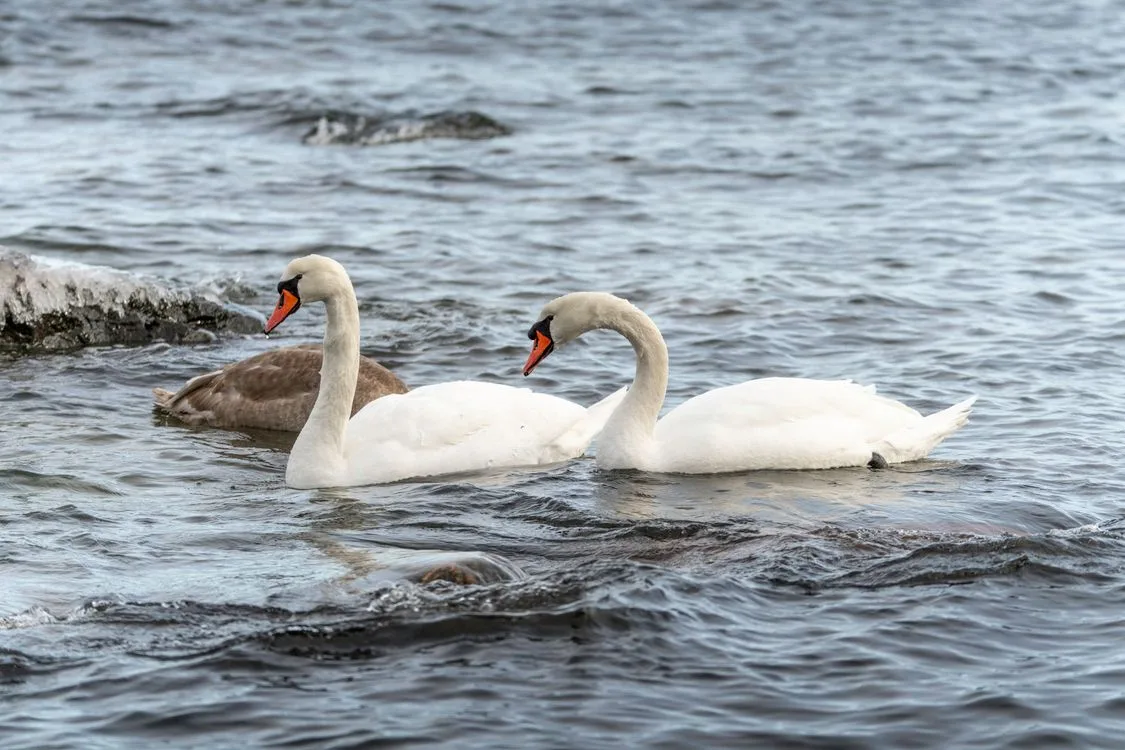
When you spot a pair of swans, pay attention to their interactions. Are they swimming close together? Do they engage in mutual preening, where they gently groom each other's feathers?
You might see synchronized movements, like dipping their heads together or forming a heart shape with their necks, these are classic courtship and pair-bonding behaviors. If they are defending a territory, you'll see them actively driving away other waterfowl or potential intruders. Observing them together, especially during nest building or when cygnets are present, provides strong visual evidence of their partnership.
Frequently Asked Questions
Do all swan species mate for life?
No, not all swan species mate for life. While some, like the Mute Swan, are known for strong lifelong pair bonds, others may re-pair if a mate is lost or if the bond is unproductive. The tendency for lifelong monogamy varies significantly by species.
What happens if a swan's mate dies?
If a swan's mate dies, the surviving swan will typically go through a period of solitary behavior, sometimes appearing to mourn. After this period, if the swan is able, it will likely seek a new mate to continue its reproductive cycle.
How do scientists study swan pair bonds?
Scientists study swan pair bonds through long-term observation and marking techniques, such as banding or radio-tagging. This allows them to track individual swans, identify pairs, and monitor their associations over many years to gather data on fidelity and re-pairing behavior.
Can swans "divorce" their mates?
While the term "divorce" isn't scientifically accurate for animals, swans can separate. If a pair is unsuccessful in breeding for multiple seasons or if one partner dies, the surviving swan will often form a new pair bond with a different individual.
Are swans truly monogamous?
Swans are generally considered socially monogamous, meaning they form stable pairs for breeding and raising young. However, this doesn't always equate to lifelong monogamy, as re-mating after a mate's death or pair dissolution is a documented behavior in many species.